The Real Story Behind Tesla's Color Change Lineup
Search interest in "color change Tesla" has surged as buyers discover that Tesla's paint palette is more curated—and more expensive to customize—than legacy automakers. Unlike Ford or Hyundai, which offer 10+ factory colors per model, Tesla restricts its lineup to five core exterior finishes for the 2026 Model 3, with one included free and the rest costing $1,000–$2,500 at order. This review covers every available color, the aftermarket color-change landscape, and—more importantly—the hard EV data you need to decide if the 2026 Model 3 Long Range RWD is the right electric sedan for your garage.
2026 Tesla Model 3 Color Options Explained
Tesla's configurator for the 2026 Model 3 offers five factory exterior colors. Pearl White Multi-Coat remains the no-cost default. Upgrading to Solid Black, Deep Blue Metallic, or Ultra Red adds $1,000–$1,500, while the premium Quicksilver (introduced on the Highland refresh) costs $2,500 and features a multi-layer metallic finish that shifts tone under direct sunlight.
- Pearl White Multi-Coat — Included. High chip resistance, easy touch-up.
- Solid Black — $1,000. Shows swirl marks and dust quickly; popular for urban aesthetics.
- Deep Blue Metallic — $1,000. Subtle flake, good scratch concealment.
- Ultra Red — $1,500. Multi-coat process; vivid but prone to visible rock chips.
- Quicksilver — $2,500. Liquid-metal appearance; showroom standout.
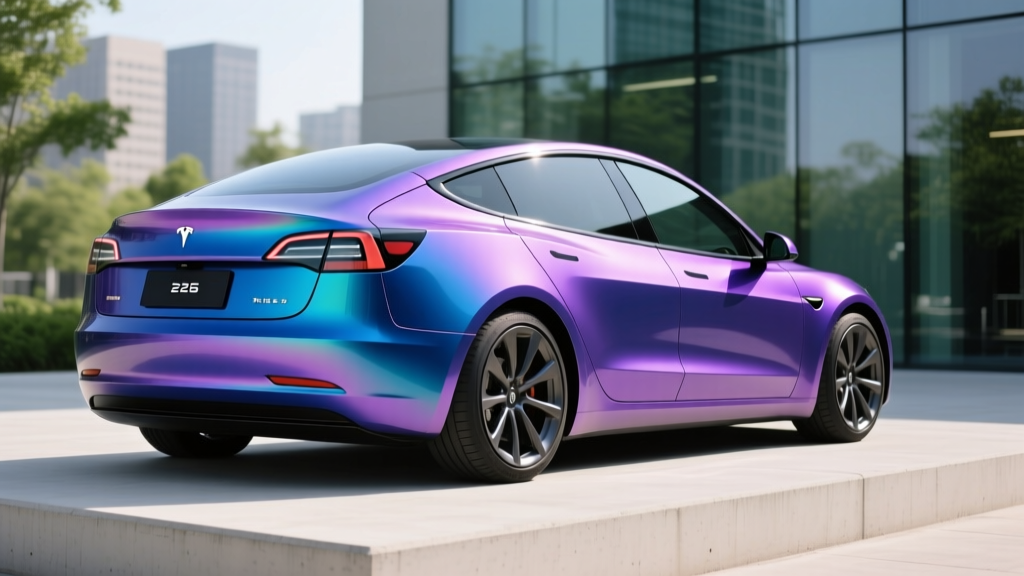
If none of these satisfy, the aftermarket color-change route is thriving. Professional PPF (paint protection film) in custom colors runs $4,500–$7,000 for a full wrap, while a vinyl color-change wrap costs $2,500–$4,000. Wraps last 5–7 years and protect the factory paint underneath, which helps resale value. Ceramic-coated PPF in matte or satin finishes has become the preferred method among Tesla owners who want a unique look without a respray.
Spec Table: 2026 Tesla Model 3 Long Range RWD
| Spec | Value |
|---|---|
| EPA Range | 363 miles |
| Battery (Usable) | 79 kWh, NMC (nickel-manganese-cobalt) |
| Drivetrain | Rear-Wheel Drive, single motor |
| Horsepower | 271 hp |
| 0–60 mph | 5.8 seconds |
| Top Speed | 125 mph |
| Efficiency | 132 MPGe combined / 25 kWh/100 mi |
| Max DC Fast Charge | 250 kW peak (V3 Supercharger) |
| 10–80% DCFC Time | ~25 minutes |
| Level 2 Home Charge | 11.5 kW (44 mi/hr) |
| Cargo Volume | 23 cu ft (rear trunk + frunk) |
| Rear Legroom | 35.3 inches |
| Battery Warranty | 8 years / 120,000 miles |
| Base MSRP | $38,990 (before incentives) |
Source: fueleconomy.gov, Tesla specifications page.
Charging Speed: DC Fast, Level 2, and the Curve Reality
The 2026 Model 3 Long Range supports up to 250 kW on a V3 Tesla Supercharger, but that peak rate only holds between roughly 10% and 30% state of charge. The charge curve tapers significantly above 60%, and by 80% you're pulling closer to 60–70 kW. This is normal lithium-ion behavior—charging slows to protect cell longevity—but it means a 10–80% session takes around 25 minutes, not the "15 minutes" marketing headlines sometimes imply.
| Charging Level | Power | Miles Added per Hour | Typical Use Case |
|---|---|---|---|
| Level 1 (120V outlet) | 1.4 kW | ~5 mi/hr | Emergency / overnight trickle |
| Level 2 (240V, 48A Wall Connector) | 11.5 kW | ~44 mi/hr | Home daily charging |
| DC Fast (V3 Supercharger) | Up to 250 kW | ~175 mi in 15 min (peak) | Road trips |
| DC Fast (CCS adapter, EA/Ionity) | Up to 150–250 kW | Variable by station | Non-Tesla networks |
For home charging, the Tesla Wall Connector at $475 is the benchmark. A 240V/60A circuit installation typically costs $800–$2,000 depending on panel proximity. Most owners charging overnight from 20% to 80% add roughly 250 miles in 5–6 hours—more than enough for daily commuting.
Pricing, Tax Credits, and Total Cost
The 2026 Model 3 Long Range RWD starts at $38,990. Adding Quicksilver paint ($2,500), 19-inch Nova wheels ($1,500), and FSD (Supervised) at $8,000 pushes an as-tested configuration to roughly $50,990 before any incentives.
| Item | Cost |
|---|---|
| Base MSRP (Long Range RWD) | $38,990 |
| Quicksilver Paint | +$2,500 |
| Premium Interior (included) | $0 |
| Destination Fee | +$1,390 |
| Federal §30D Tax Credit (if eligible) | −$7,500 |
| Estimated Net Price | ~$35,380 |
- Buyer modified adjusted gross income ≤ $150,000 (single) or ≤ $300,000 (joint)
- Vehicle MSRP ≤ $55,000 (sedans)
- Battery critical minerals and components must meet phased-in sourcing thresholds
- Credit can be transferred at point of sale as a down-payment reduction since 2024
Performance, Efficiency, and Daily Driving
The single-motor RWD Long Range makes 271 horsepower and hits 60 mph in 5.8 seconds—quick by any sedan standard and more than adequate for highway merging. The 79 kWh NMC battery pack delivers an EPA-rated 132 MPGe combined, translating to roughly 25 kWh per 100 miles. At the U.S. average electricity rate of $0.17/kWh, that's about $4.25 per 100 miles, compared to $12–$14 for a 30 MPG gas sedan at current fuel prices.
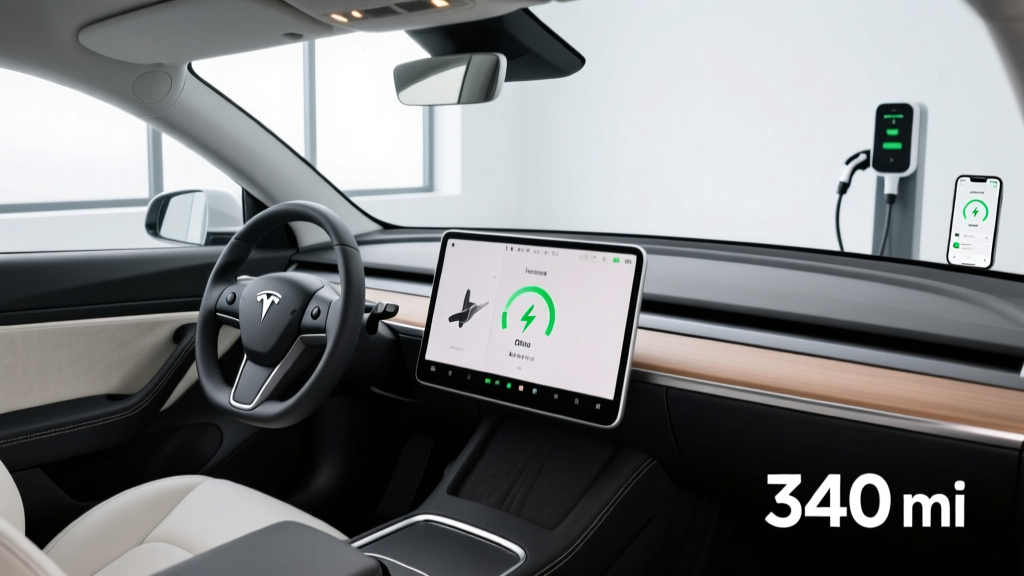
Ride quality in the post-Highland Model 3 is noticeably improved: Tesla retuned the suspension, added acoustic glass, and isolated the subframe to cut road noise. The 15.4-inch center touchscreen handles all controls—no physical instrument cluster or stalks, which remains a polarizing choice. Steering-wheel-mounted turn buttons and a rear passenger screen are now standard.
Pros and Cons
Pros
- Class-leading 363-mile EPA range
- 250 kW Supercharger network access (18,000+ stalls in North America)
- Over-the-air updates continuously add features
- Low cost per mile vs. gas competitors
- Strong resale value retention
- Excellent cargo space (23 cu ft) for a compact sedan
Cons
- Limited factory color palette; upgrades cost $1,000–$2,500
- No physical buttons, stalks, or instrument cluster
- Rear seat legroom (35.3 in) trails Hyundai Ioniq 6 and BMW i4
- FSD (Supervised) is Level 2 driver assist—not autonomous—despite the name
- Panel gap inconsistency still noted on some builds
How It Compares: Model 3 vs. Key Rivals
Against the Hyundai Ioniq 6 (EPA 361 mi, $37,500 base), the Model 3 trades slightly more range for access to the Supercharger network and faster OTA updates. The Ioniq 6 offers more rear-seat room and a traditional control layout. The BMW i4 eDrive40 (EPA 301 mi, $52,200) provides a more premium interior and conventional driving dynamics but costs significantly more and charges at a lower 205 kW peak. For buyers prioritizing color customization, Hyundai offers 11 factory colors and BMW offers individual-program options—both dwarf Tesla's five.
Who Should Buy the 2026 Model 3?
The 2026 Model 3 Long Range RWD fits commuters and road-trippers who value range, charging infrastructure, and software-forward design. If you drive 40+ miles daily and have access to home Level 2 charging, the cost-per-mile advantage over gas is substantial. Families needing maximum rear-seat space should cross-shop the Ioniq 6 or consider the Model Y. Buyers who prioritize bespoke aesthetics should budget for an aftermarket PPF color change ($5,000–$7,000) since Tesla's factory options are intentionally limited.
What is the real-world range of the 2026 Tesla Model 3 Long Range?
EPA-rated at 363 miles, real-world highway driving yields 290–315 miles in moderate weather. Cold temperatures below freezing can reduce range to 240–270 miles. City driving with regenerative braking often matches or slightly exceeds the EPA figure.
How fast does the Model 3 charge at home and on the road?
On a Level 2 home charger (11.5 kW), you add about 44 miles of range per hour, or roughly 250 miles overnight. On a V3 Supercharger (250 kW peak), a 10–80% session takes approximately 25 minutes, with the charge curve tapering significantly above 60%.
Does the 2026 Tesla Model 3 qualify for the federal EV tax credit?
Yes, up to $7,500 under IRS §30D, provided the buyer's income is within limits ($150K single / $300K joint), the vehicle MSRP is under $55,000, and battery-sourcing requirements are met. The credit can be applied at point of sale. Always verify with a tax professional and the IRS clean vehicle credits page.
How much does a Tesla color change wrap cost?
A professional vinyl color-change wrap runs $2,500–$4,000 and lasts 5–7 years. Color PPF (paint protection film) costs $4,500–$7,000 but offers superior chip and scratch protection while changing the vehicle's appearance. Both options preserve the factory paint for resale.
Is the Model 3 worth buying over the Ioniq 6 or BMW i4?
The Model 3 wins on Supercharger network access, OTA updates, and cargo versatility. The Ioniq 6 offers more rear-seat room and factory color options at a similar price. The BMW i4 delivers a more traditional luxury experience at a higher cost. Your decision should hinge on charging access, interior preferences, and how much you value Tesla's software ecosystem.