Quick Answer: Is a Class 8 Electric Truck Worth It in 2026?
A class 8 electric truck (GVWR over 33,000 lbs) makes financial sense today for regional haul and drayage fleets running under 250 miles per shift with predictable depot charging. Expect upfront costs of $250,000–$430,000 per unit before incentives, but fuel savings of $40,000–$65,000 per year versus diesel. Payback typically lands in 3–5 years depending on route density, electricity rates, and available state/federal incentives. Long-haul (500+ mi/day) remains impractical due to battery weight penalties and sparse en-route megawatt charging.
What Defines a Class 8 Electric Truck in 2026?
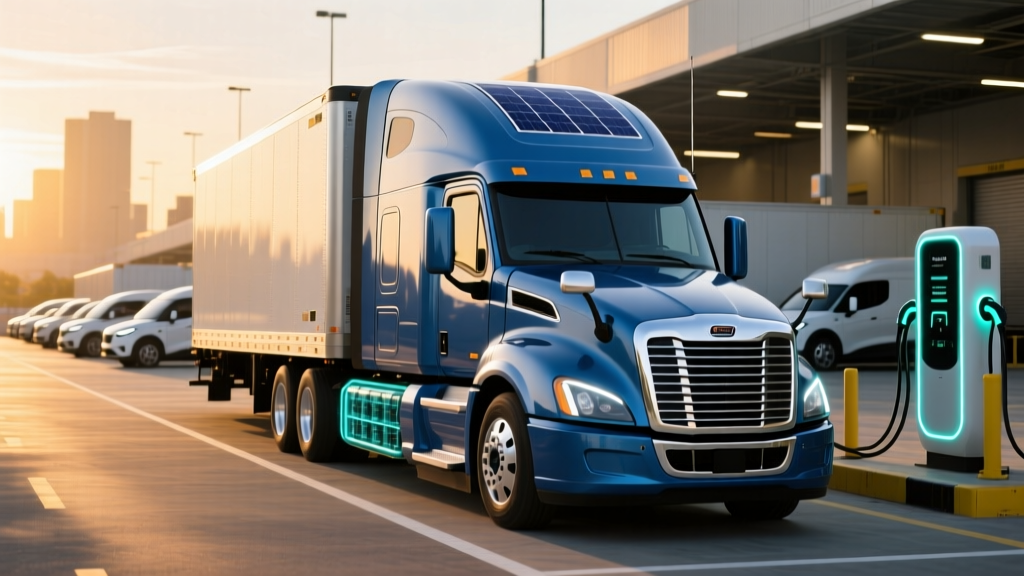
The Federal Highway Administration classifies any truck with a gross vehicle weight rating above 33,000 lbs as Class 8 — the heavy-duty segment covering semi-tractors, dump trucks, and large refuse haulers. In the electric space, three production models dominate North American fleets entering 2026:
- Tesla Semi — 500-mile EPA-estimated range (loaded), ~900 kWh battery, up to 80,000 lbs GCW
- Freightliner eCascadia — 230-mile typical range, 291–438 kWh usable battery, 82,000 lbs GCW
- Volvo VNR Electric — 275-mile range (6x2 tractor), 375 kWh usable battery (6-battery pack), 82,000 lbs GCW
Unlike passenger EVs where EPA range stickers are standardized, heavy-duty electric truck range varies enormously with payload, terrain, ambient temperature, and speed. A Tesla Semi rated at 500 miles fully loaded may deliver closer to 350–400 real-world highway miles at 65 mph with a full 80,000-lb gross combination weight. The eCascadia's 230-mile spec assumes a mixed urban/highway drayage cycle — expect 150–180 miles in sustained highway operation.
Class 8 Electric Truck Specifications Compared
| Specification | Tesla Semi (2026) | Freightliner eCascadia | Volvo VNR Electric | Diesel Baseline (Cascadia) |
|---|---|---|---|---|
| Battery Capacity (usable) | ~900 kWh | 291–438 kWh | 375 kWh | N/A (300-gal diesel tank) |
| Range (loaded, realistic) | 350–500 mi | 150–230 mi | 175–275 mi | 1,200–1,500 mi |
| Peak DC Charge Rate | ~1 MW (Megacharger) | 250 kW (CCS2) | 250 kW (CCS2) | Refuel in ~15 min |
| 10–80% Charge Time | ~30 min (1 MW) | ~90 min (250 kW) | ~60–90 min (250 kW) | ~15 min |
| Motor Output | ~800+ hp (tri-motor) | 400 hp (eAxle) | 455 hp | 400–500 hp |
| GCW Rating | 82,000 lbs | 82,000 lbs | 82,000 lbs | 80,000+ lbs |
| Base MSRP (approx.) | $250,000–$290,000 | $300,000–$350,000 | $330,000–$430,000 | $150,000–$180,000 |
| Warranty (battery) | 8 yr / 1M mi | 5 yr / 600,000 mi | 5 yr / 600,000 mi | 5 yr / 500,000 mi (engine) |
Note: Class 8 electric truck pricing is negotiated at fleet scale and varies by configuration. Figures represent typical 2026 transaction ranges. Tesla Semi pricing reflects announced figures; actual fleet contract terms may differ.
The Real Cost: Electric vs Diesel Class 8 Ownership
The purchase price gap between a class 8 electric truck and its diesel counterpart is substantial — often $100,000 to $250,000 higher per tractor. But total cost of ownership (TCO) tells a different story for the right duty cycle.
| Cost Category (Annual) | Class 8 Electric Truck | Class 8 Diesel Truck | Annual Difference |
|---|---|---|---|
| Fuel/Energy (60,000 mi/yr) | $18,000–$24,000 | $58,000–$72,000 | Save $40,000–$48,000 |
| Maintenance | $5,000–$8,000 | $15,000–$22,000 | Save $10,000–$14,000 |
| DEF / Exhaust Aftertreatment | $0 | $2,500–$4,000 | Save $2,500–$4,000 |
| Insurance | $12,000–$18,000 | $10,000–$14,000 | +$2,000–$4,000 |
| Depreciation (est.) | $30,000–$45,000 | $15,000–$22,000 | +$15,000–$23,000 |
| Net Annual Operating Savings | +$15,000–$40,000 | ||
Energy math that matters: A class 8 electric truck consumes roughly 1.8–2.2 kWh per mile under load. At a commercial electricity rate of $0.12/kWh, that's $0.22–$0.26 per mile. A diesel truck averaging 6.5 mpg at $3.85/gallon burns $0.59 per mile. Over 60,000 annual miles, the energy savings alone approach $22,000–$40,000.
Maintenance advantages are structural: No engine oil changes ($400–$600 per service, 4–6x/year), no diesel particulate filter regeneration or replacement ($4,000–$8,000), no transmission fluid service, no DEF refills. Electric drivetrains have a fraction of the moving parts. Fleet operators consistently report 40–60% lower maintenance spend per mile on electric tractors.
Depreciation remains the wildcard. Heavy-duty electric truck resale values are still establishing themselves. Early adopters face uncertainty as battery health data matures. By 2026, fleets with 3–4 years of operational data are helping stabilize secondary-market valuations, but expect steeper depreciation curves than proven diesel assets for at least the next few model years.
Incentives That Shift the Payback Timeline
The economics of a class 8 electric truck change dramatically with incentive stacking. Key programs available in 2026 include:
- IRA Commercial Clean Vehicle Credit (§45W): Up to $40,000 for qualified commercial electric vehicles with GVWR over 14,000 lbs. This applies to fleet purchases (not the consumer §30D credit). Confirm eligibility with your tax professional and the IRS clean vehicle credit guidance.
- EPA Clean Heavy-Duty Vehicles Program: Funded under the Inflation Reduction Act, this program distributes billions in grants to states and municipalities for zero-emission heavy-duty vehicle replacement. Award amounts vary by state and application cycle.
- State-level HVIP and voucher programs: California's Hybrid and Zero-Emission Truck and Bus Voucher Incentive Project (HVIP) has historically offered $60,000–$120,000+ per Class 8 electric truck. New York, New Jersey, and other states operate similar programs with varying caps.
- Charging infrastructure grants: NEVI formula funding and state utility make-ready programs can cover 50–100% of depot charger installation costs, which is critical since megawatt-scale charging infrastructure is a major capital expense.
Stacking example: A $350,000 Freightliner eCascadia minus a $40,000 federal credit, minus a $90,000 California HVIP voucher, minus $50,000 in utility charging infrastructure support nets to ~$170,000 — effectively matching or beating the cost of a new diesel tractor. Payback on day one in this scenario.
Incentive availability varies by jurisdiction, application timing, and funding exhaustion. Always verify current program status with official state and federal sources.
Charging Infrastructure: The Hidden Capital Challenge
Buying the truck is the easy part. Powering it is where most fleet electrification projects stall.
A single class 8 electric truck charging at 250 kW (CCS2 standard) draws power equivalent to roughly 50–60 homes at peak draw. A fleet of 10 trucks charging simultaneously at depot requires a 2.5–3 MW utility service connection — which may demand a new substation or significant utility infrastructure upgrades.
| Charging Scenario | Power Level | Energy per Session (200 kWh refill) | Time | Estimated Infrastructure Cost |
|---|---|---|---|---|
| Depot AC Level 2 (overnight) | 19.2–40 kW | 200–400 kWh | 8–10 hours | $25,000–$60,000 per stall |
| Depot DC Fast (CCS2) | 120–250 kW | 200–400 kWh | 1.5–3 hours | $100,000–$200,000 per stall |
| Megawatt Charging (MCS) | 600 kW–1.2 MW | 400–900 kWh | 30–60 min | $300,000–$500,000+ per stall |
Key infrastructure considerations:
- Utility lead times: Securing a new high-capacity service connection can take 12–24 months. Engage your utility provider during the truck procurement process, not after delivery.
- Smart charging software: Staggering charge sessions across overnight hours avoids demand-charge penalties that can double your effective electricity cost. Fleet management platforms like Amply, TeraWatt, or Zeem Solutions optimize this.
- Megawatt Charging System (MCS): The emerging MCS connector standard (SAE J3105) supports up to 3.75 MW and is critical for future long-haul electric trucking. As of early 2026, public MCS stations are extremely limited — Tesla's Megacharger network remains proprietary to the Semi.
Common Misconceptions About Class 8 Electric Trucks
| Myth | Fact |
|---|---|
| "Battery weight kills payload capacity" | Tesla Semi batteries weigh ~9,000 lbs, but federal weight exemptions (§23 U.S.C. 127) allow zero-emission vehicles an additional 2,000 lbs on the federal highway system (up to 82,000 lbs GCW). Most fleet operators report negligible payload impact on typical freight lanes. |
| "Electric trucks can't handle cold weather" | Cold reduces range 15–30% in extreme conditions (below 20°F), but thermal management systems and battery preconditioning mitigate losses. Fleets operating in Chicago and Minneapolis report manageable range reductions when depot charging and route planning account for seasonal variance. |
| "Grid can't support fleet charging" | Overnight depot charging at Level 2 or moderate DC rates aligns with off-peak grid capacity in most markets. The challenge is local transformer and distribution capacity, not generation. Utility make-ready programs and smart charging software solve most distribution constraints. |
| "Electric trucks are slower and less capable" | Electric motors deliver peak torque at 0 RPM. The Tesla Semi claims 0–60 mph in ~20 seconds loaded (vs. ~35+ seconds for diesel). Gradeability on 6% grades exceeds diesel equivalents in most configurations due to instantaneous torque delivery. |
| "Battery replacement will bankrupt fleets" | Current warranties cover 600,000–1,000,000 miles. LFP and advanced NMC chemistries in 2026 models are engineered for 3,000–5,000+ charge cycles with less than 20% degradation. Most fleets will retire the tractor before needing a full battery swap. |
Decision Framework: Is a Class 8 Electric Truck Right for Your Fleet?
Choose a class 8 electric truck if:
- Your trucks run under 250 miles per shift with return-to-base operations (drayage, regional distribution, refuse)
- You have depot space for overnight charging infrastructure or can access utility make-ready programs
- Your state offers meaningful voucher/incentive programs that close the purchase-price gap
- You operate in areas with low commercial electricity rates (under $0.15/kWh) or can negotiate fleet charging tariffs
- You face regulatory pressure — California's Advanced Clean Fleets rule, for example, mandates zero-emission truck transitions on defined timelines
- Your ESG reporting or customer contracts require emissions reduction commitments
Stick with diesel (or wait) if:
- Your duty cycle exceeds 400 miles per day without mid-shift charging windows
- You operate in regions with no state incentives and high commercial electricity rates ($0.20+/kWh)
- Your utility cannot provide adequate service capacity within your timeline
- You need long-haul flexibility across routes with no en-route charging infrastructure
- Your fleet turnover cycle is under 5 years and you cannot absorb early depreciation uncertainty
First-Time EV Fleet Buyer Checklist
If you're evaluating your first class 8 electric truck purchase, work through these steps before signing:
- Audit your duty cycles: Pull telematics data for 90+ days. Identify routes under 200 miles/day with return-to-base patterns. These are your electric candidates.
- Contact your utility NOW: Request a service capacity study for your depot. Ask about make-ready programs, demand-response incentives, and time-of-use rates for commercial EV charging.
- Stack incentives before committing: Research federal §45W eligibility, EPA Clean Heavy-Duty grants, and your state's voucher program. Some programs require pre-approval before vehicle purchase.
- Specify charging infrastructure alongside the truck: Order chargers in the same procurement cycle. A truck without a charger is a very expensive paperweight.
- Plan for winter: If you operate below 32°F regularly, spec battery preconditioning and factor 20–30% range reduction into route planning. Consider depot heating infrastructure.
- Train drivers on regen and efficiency: Regenerative braking behavior in a loaded 82,000-lb rig differs significantly from diesel engine braking. Budget for driver orientation and a 2–4 week adaptation period.
Frequently Asked Questions
What is the range of a class 8 electric truck?
Production class 8 electric trucks in 2026 range from approximately 150 miles (Freightliner eCascadia in highway-heavy cycles) to 500 miles (Tesla Semi under optimal conditions). Real-world loaded highway operation typically yields 150–275 miles for the eCascadia and VNR Electric, and 350–450 miles for the Tesla Semi. Payload, terrain, speed, and temperature all affect actual range.
How long does it take to charge a class 8 electric truck?
At a 250 kW CCS2 DC fast charger, expect 60–90 minutes for a partial charge (20–80% SoC) on a 300–400 kWh battery. Overnight depot charging at 40 kW AC fully replenishes most class 8 batteries in 8–10 hours. Tesla's proprietary Megacharger at ~1 MW can deliver approximately 70% in 30 minutes. Full 0–100% times are significantly longer due to charge-curve taper above 80% SoC.
Do class 8 electric trucks qualify for the $7,500 consumer tax credit?
No. The consumer §30D clean vehicle credit caps at vehicles under 14,000 lbs GVWR and is designed for personal-use passenger vehicles. Class 8 trucks qualify for the §45W Commercial Clean Vehicle Credit (up to $40,000) and various state and EPA fleet-incentive programs. Consult a tax professional and review IRS guidance for your specific situation.
What happens when the battery degrades?
Current warranties guarantee 70–80% capacity retention for 600,000 miles (Freightliner/Volvo) to 1,000,000 miles (Tesla). Real-world fleet data from early eCascadia and VNR Electric deployments shows roughly 8–12% degradation over the first 200,000 miles — consistent with warranty projections. Battery replacement costs remain high ($80,000–$150,000+), but most tractors will reach end-of-service life before requiring a full pack swap.
Can a class 8 electric truck tow 80,000 lbs?
Yes. All three major production models — Tesla Semi, Freightliner eCascadia, and Volvo VNR Electric — carry a gross combination weight rating of 82,000 lbs, matching or exceeding federal limits for standard diesel tractors. The federal 2,000-lb weight exemption for zero-emission vehicles helps offset battery mass.
Where can I charge a class 8 electric truck on the road?
Public DC fast charging for heavy-duty trucks remains limited as of 2026. Tesla's Megacharger network serves Semi owners at select Supercharger locations. The National Renewable Energy Laboratory and private operators like TeraWatt Infrastructure and WattEV are building MCS-capable truck charging corridors, but widespread en-route heavy-duty charging is still years away. Depot charging remains the primary fueling strategy.