The Short Answer on Citroën Electric Vehicles
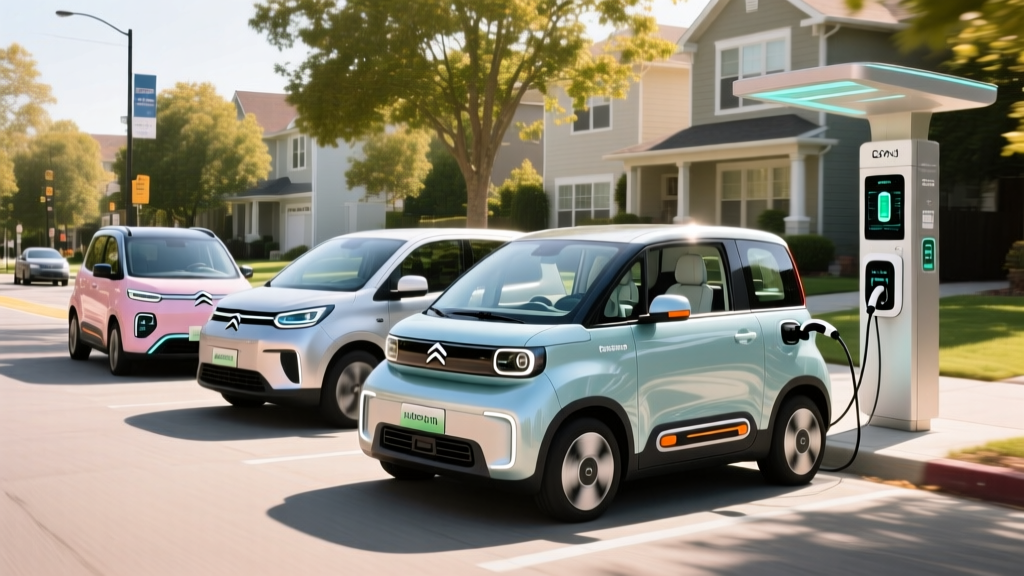
Citroën electric vehicles — including the ë-C3, ë-C4, and ë-Berlingo — are not sold in the United States as of 2026. Stellantis, Citroën's parent company, does not distribute the Citroën brand in the U.S. market. American buyers looking for similar compact EVs should consider the Chevrolet Equinox EV (EPA 319 mi, ~$33,000), Hyundai Kona Electric (EPA 261 mi, ~$32,975), or the Nissan Leaf (EPA 212 mi, ~$28,140) as alternatives. If you're reading this from Europe or the UK, Citroën's EV lineup is very much alive — here's exactly what's available, what it costs, and how it stacks up.
Citroën's 2026 EV Lineup: What Exists Today
Citroën has steadily electrified its lineup under Stellantis, sharing platforms and powertrains with Peugeot, Opel/Vauxhall, and Fiat. The brand's current battery-electric offerings span city cars, compact crossovers, and light commercial vehicles. All use the STLA Medium or legacy e-CMP platform with NMC (nickel-manganese-cobalt) lithium-ion battery packs.
| Model | Battery (kWh usable) | WLTP Range | Peak DC Charge (kW) | 10–80% Time | 0–100 km/h | Base Price (EUR) |
|---|---|---|---|---|---|---|
| ë-C3 | 44 kWh (LFP) | 320 km (~199 mi) | 100 kW | ~26 min | 11.0 sec | €23,300 |
| ë-C4 | 54 kWh (NMC) | 420 km (~261 mi) | 130 kW | ~28 min | 9.2 sec | €35,900 |
| ë-C4 X | 54 kWh (NMC) | 410 km (~255 mi) | 130 kW | ~28 min | 9.5 sec | €37,200 |
| ë-Berlingo (passenger) | 50 kWh (NMC) | 330 km (~205 mi) | 100 kW | ~30 min | 11.5 sec | €33,500 |
WLTP vs. EPA note: WLTP range figures used in Europe are typically 10–15% more optimistic than EPA estimates. An ë-C4 rated at 420 km WLTP would likely receive an EPA sticker closer to 220–235 miles if sold in the U.S. Always adjust expectations downward when converting European range claims.
Why Citroën Doesn't Sell Cars in the U.S.
Citroën withdrew from the American market in 1974, unable to meet increasingly stringent U.S. safety and emissions regulations without costly redesigns. Despite Stellantis (formed from the FCA-PSA merger) now owning Jeep, Ram, Chrysler, Dodge, Alfa Romeo, and Maserato in the U.S., the company has chosen to keep Citroën focused on Europe, Latin America, India, and select Asian markets.
The practical reasons:
- Brand positioning conflict: Citroën occupies an affordable, comfort-focused segment in Europe that would overlap with Stellantis's U.S. brands like Chrysler and Fiat.
- Regulatory cost: Homologating vehicles for U.S. crash standards (NHTSA), emissions (EPA), and lighting (FMVSS) requires significant engineering investment for a brand with no existing dealer network.
- Dealer infrastructure: Building a U.S. dealer network from scratch costs billions, and Stellantis is consolidating, not expanding, its American retail footprint.
Stellantis has not announced any plans to bring Citroën to the U.S. through 2028. If you encounter a Citroën EV in the States, it's likely a gray-market import or a personal import under the 25-year rule — neither of which applies to current models.
If Citroën Were Here: How Would Its EVs Compare?
For readers benchmarking Citroën's European offerings against U.S.-available EVs, here's how the closest competitors stack up on paper. We've converted European pricing to approximate USD equivalents and adjusted WLTP to estimated EPA for a fairer comparison.
| Spec | Citroën ë-C4 (EU) | Hyundai Kona Electric | Chevy Equinox EV 2LT | Nissan Leaf SV+ |
|---|---|---|---|---|
| Est. EPA Range | ~230 mi (est.) | 261 mi | 319 mi | 212 mi |
| Battery (kWh usable) | 54 kWh (NMC) | 64.8 kWh (NMC) | 85 kWh (NMC) | 60 kWh (NMC) |
| Peak DC Charge | 130 kW | 150 kW | 190 kW | 100 kW (CHAdeMO) |
| 10–80% DC Time | ~28 min | ~43 min | ~41 min | ~60 min |
| Power (hp) | 156 hp | 201 hp | 213 hp | 214 hp |
| Connector | CCS2 (EU) | NACS (2026) | NACS (2026) | CHAdeMO |
| Base Price (USD) | ~$39,000 (est.) | $32,975 | $33,000 | $28,140 |
| U.S. Tax Credit (§30D) | N/A | Up to $7,500* | Up to $7,500* | $0 (battery sourcing) |
* §30D credit eligibility depends on MSRP caps, buyer income limits, and battery/critical-mineral sourcing rules. Verify current-year rules at IRS.gov before purchasing. Credit may be transferred at point of sale as a price reduction.
The data makes the U.S.-market picture clear: American buyers get more range, faster charging, and stronger tax credit eligibility at similar or lower prices than what Citroën offers in Europe. The Kona Electric and Equinox EV both outperform the ë-C4 on estimated EPA range, and both qualify for at least partial §30D credits depending on your income and the vehicle's battery sourcing compliance.
Real-World Ownership Costs: EV vs. Gas Baseline
Whether you're shopping in the U.S. for a Citroën alternative or in Europe for the real thing, the ownership economics follow the same physics. Here's a 5-year/75,000-mile cost comparison for a U.S. buyer choosing between the Chevrolet Equinox EV 2LT (closest functional equivalent to an ë-C4) and a comparably priced gas crossover like the Toyota RAV4 LE.
| Category | Chevy Equinox EV 2LT | Toyota RAV4 LE (Gas) |
|---|---|---|
| Base MSRP | $33,000 | $30,090 |
| Est. §30D Credit | –$7,500 (if eligible) | $0 |
| Net Purchase Price | $25,500 | $30,090 |
| Electricity/Fuel (75k mi) | $2,850 (home L2, $0.14/kWh avg) | $7,500 (30 MPG, $3.50/gal) |
| Maintenance (5 yr) | $1,200 (tires, cabin filter, wipers) | $3,800 (oil, filters, brakes, fluids) |
| Insurance (5 yr avg) | $8,750 | $7,250 |
| Est. Depreciation | $12,000 | $10,500 |
| Total 5-Year Cost | $50,300 | $59,140 |
Assumes 15,000 mi/yr, home Level 2 charging at national average electricity rates. Gas prices vary significantly by state. Insurance premiums for EVs are typically 15–25% higher — get quotes before purchasing. Source: fueleconomy.gov for efficiency data.
The EV wins on total cost by roughly $8,800 over five years, driven primarily by fuel and maintenance savings that more than offset higher insurance and purchase price. The §30D credit is the swing factor — without it, the gap narrows to about $1,300. This is why verifying your credit eligibility matters before signing.
Charging Reality: What Citroën Owners (and Equivalents) Experience
Citroën's European EVs charge via CCS2 (the European standard), which uses the same DC fast-charging protocol as CCS1 in North America but with a different physical connector. Here's what charging looks like across levels for a 54 kWh pack like the ë-C4:
| Level | Power (kW) | Miles Added per Hour | Full Charge Time | Where |
|---|---|---|---|---|
| Level 1 (120V) | 1.4 kW | ~5 mi/hr | ~38 hours | Standard outlet |
| Level 2 (240V, 32A) | 7.4 kW | ~25 mi/hr | ~7.5 hours | Home wallbox / public AC |
| Level 2 (240V, 48A) | 11 kW | ~37 mi/hr | ~5 hours | Upgraded home charger |
| DC Fast Charge | 130 kW peak | ~400+ mi/hr (peak) | 10–80% in ~28 min | Public DC stations |
Charging curve reality check: The 130 kW peak only holds between roughly 10–50% state of charge. Above 50%, the rate tapers progressively — expect 80–90 kW in the 50–70% range and 40–50 kW from 70–80%. This is standard NMC battery behavior governed by the battery management system to protect cell longevity. The "28-minute 10–80%" figure assumes optimal battery temperature (preconditioned) and a charger capable of delivering sustained power.
kW vs. kWh refresher: kW (kilowatts) measures power — how fast energy flows into the battery, like water pressure from a hose. kWh (kilowatt-hours) measures energy capacity — how much the battery holds, like the size of the tank. A 130 kW charger fills a 54 kWh battery fast, but only if the battery can accept that rate.
Common Misconceptions About Citroën EVs and Imports
| Myth | Fact |
|---|---|
| "I can import a Citroën ë-C4 to the U.S. and register it." | Current-production vehicles cannot be imported for road use. The 25-year import exemption (NHTSA) only applies to vehicles manufactured before 2001. A 2026 ë-C4 will not be U.S.-legal until 2051. |
| "Citroën EVs use unique, incompatible charging." | Citroën uses the CCS2 standard in Europe, which is electrically compatible with CCS1 in the U.S. The physical plug shape differs, but the communication protocol (ISO 15118) is identical. An adapter would theoretically work, but the car still can't be legally registered. |
| "Stellantis will bring Citroën to the U.S. soon." | Stellantis has publicly stated no plans to introduce Citroën in North America. The company is investing in its existing U.S. brands (Jeep, Ram, Chrysler, Dodge) for electrification. |
| "European EVs are always more efficient than American ones." | Not necessarily. The ë-C4's 54 kWh battery and ~230 estimated EPA miles trail the Equinox EV's 85 kWh pack and 319 EPA miles. European efficiency advantages come from lighter, smaller vehicles — not inherently superior tech. |
| "Citroën's LFP battery in the ë-C3 means no degradation." | LFP (lithium iron phosphate) batteries degrade less than NMC — typically 8–12% over 8 years vs. 10–15% for NMC — but they still degrade. LFP also suffers more capacity loss in cold weather and has lower energy density, which is why the ë-C3 has less range despite a competitive price. |
Decision Framework: What Should You Actually Buy?
Choose based on your situation:
If you live in the U.S. and want a compact electric crossover:
- Budget under $30,000 (after credit): Chevrolet Equinox EV 2LT — 319 mi EPA range, NACS connector, eligible for up to $7,500 §30D credit (verify at IRS.gov).
- Budget under $35,000, want proven reliability: Hyundai Kona Electric — 261 mi EPA, 150 kW DC charging, strong warranty (10 yr/100,000 mi battery).
- Lowest entry price, shorter commutes: Nissan Leaf SV+ — 212 mi EPA, $28,140 base, but CHAdeMO connector limits public fast-charging access as networks shift to NACS.
If you live in Europe and are shopping Citroën:
- City driving, budget-conscious: ë-C3 with LFP battery — €23,300, 320 km WLTP, robust LFP chemistry for daily 100% charging without degradation anxiety.
- Family crossover, highway trips: ë-C4 — 54 kWh NMC, 420 km WLTP, 130 kW DC charging handles 300 km motorway trips with one 20-minute stop.
- Cargo/passenger flexibility: ë-Berlingo — van-based MPV with 50 kWh pack, ideal for tradespeople or large families who need space over range.
If you don't have home charging access: Any EV becomes harder to own. Prioritize vehicles with 200+ kW DC charging (Equinox EV, Ioniq 5) and map your public charging options before buying. Citroën's 100–130 kW peak rates mean longer public charging sessions if you're relying on DC fast charging exclusively.
Battery Warranty and Longevity
Citroën provides an 8-year / 160,000 km (99,400 mi) battery warranty across its EV lineup, guaranteeing a minimum of 70% state of health (SoH) — meaning the battery will retain at least 70% of its original capacity during the warranty period. This is consistent with the European industry standard and aligns with what U.S. competitors offer (Hyundai guarantees 70% for 10 years/100,000 miles; Chevrolet guarantees 60% for 8 years/100,000 miles).
Real-world degradation data from European fleet operators suggests NMC packs in the e-CMP platform lose approximately 2–3% capacity per year under normal use (daily AC charging, occasional DC fast charging, moderate climates). LFP packs in the ë-C3 show slower degradation at roughly 1.5–2% per year but with greater seasonal variance in cold weather.
Frequently Asked Questions
Can I buy a Citroën electric vehicle in the United States?
No. Citroën has not sold vehicles in the U.S. since 1974, and parent company Stellantis has announced no plans to introduce the brand to the American market. Current-production Citroën EVs cannot be legally imported for road use under NHTSA regulations.
What is the closest U.S. equivalent to a Citroën ë-C4?
The Chevrolet Equinox EV (319 mi EPA, ~$33,000) and Hyundai Kona Electric (261 mi EPA, ~$32,975) offer similar compact crossover proportions with better range, faster charging, and U.S. federal tax credit eligibility.
How long does it take to charge a Citroën ë-C4 at home?
On a standard 7.4 kW Level 2 home wallbox, a full charge from 0–100% takes approximately 7.5 hours for the 54 kWh battery. An 11 kW charger (requiring a 48-amp circuit) reduces this to about 5 hours. Level 1 (120V) charging takes roughly 38 hours and is only practical for emergency top-ups.
Does the Citroën ë-C3's LFP battery need special care?
LFP batteries actually prefer being charged to 100% regularly — unlike NMC batteries, which benefit from staying between 20–80%. However, LFP cells lose more range in cold weather (expect 25–35% range reduction below freezing vs. 15–25% for NMC) and provide less accurate state-of-charge readings at partial charge levels.
What is Citroën's battery warranty?
Citroën covers its EV batteries for 8 years or 160,000 km (99,400 miles), whichever comes first, guaranteeing at least 70% of original capacity retention. This is standard for the European market and comparable to U.S. competitors.
Will Stellantis ever bring Citroën to America?
There are no announced plans through 2028. Stellantis is focused on electrifying its existing U.S. brands (Jeep, Ram, Chrysler, Dodge, Alfa Romeo). If Citroën ever arrives, it would most likely be as an affordable entry-level brand, but the cost of building a dealer network and meeting U.S. homologation requirements makes this unlikely in the near term.