Why Chrome Pink Tesla Is the Hottest EV Wrap Trend of 2026
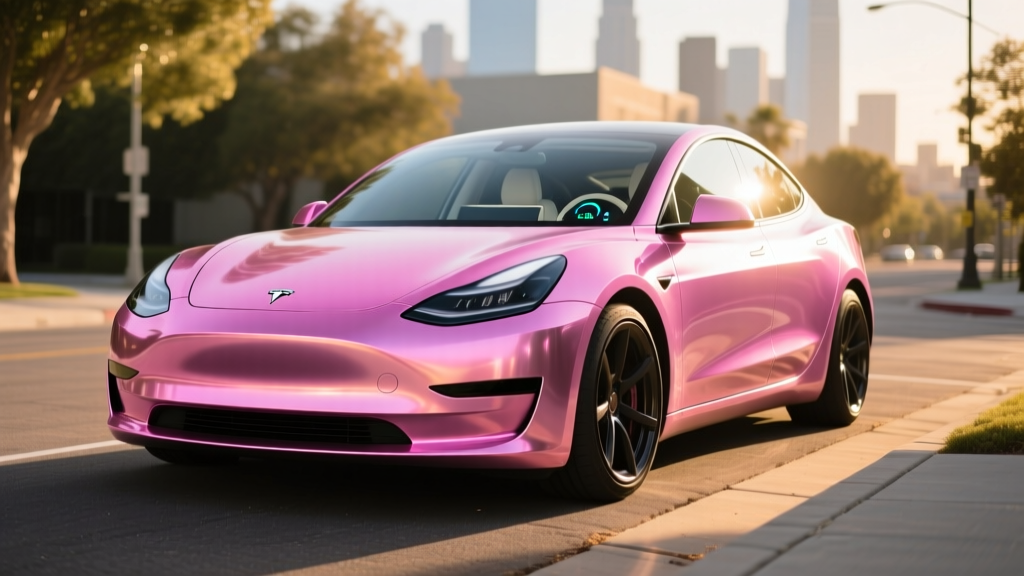
If you've scrolled TikTok, Instagram, or YouTube Shorts in the past six months, you've likely seen it: a mirror-finish, chrome pink Tesla Model 3 gliding through city streets and pulling double-takes at every stoplight. The "chrome pink Tesla" isn't a factory color — it's a custom vinyl wrap that has become one of the most-searched EV customization trends of the year. But beneath that eye-searing pink chrome finish sits one of the most capable and efficient electric sedans on the market: the 2026 Tesla Model 3 Long Range AWD.
This review covers everything you need to know about buying a Tesla Model 3 as a wrap candidate — the full spec sheet, real-world range and charging data, total cost including wrap pricing, federal tax credit eligibility, and whether this is the right EV for your daily life. We'll also break down the practical realities of wrapping a Tesla in chrome pink vinyl, including maintenance, durability, and insurance implications.
2026 Tesla Model 3 Long Range: Full Spec Table
| Spec | Value |
|---|---|
| EPA Estimated Range | 363 miles |
| Battery Capacity (Usable) | ~79 kWh (NMC lithium-ion) |
| Drivetrain | Dual-Motor AWD |
| Horsepower | ~384 hp (combined) |
| 0–60 mph | 4.2 seconds |
| Peak DC Fast Charge Rate | 250 kW (Supercharger V3/V4) |
| 10–80% DC Fast Charge Time | ~25 minutes |
| Level 2 Home Charging | 11.5 kW (~44 miles/hr) |
| EPA Efficiency | 132 MPGe combined / 25 kWh/100mi |
| Cargo Volume | 23 cu ft (trunk + frunk combined) |
| Rear Legroom | 35.3 inches |
| Base MSRP | $47,740 (including destination) |
| Battery & Drive Unit Warranty | 8 years / 120,000 miles |
| Basic Vehicle Warranty | 4 years / 50,000 miles |
Source: fueleconomy.gov and Tesla's official specifications page.
Real-World Range: What 363 EPA Miles Actually Means
EPA Sticker: 363 miles
Real-World Highway (70–75 mph, mild weather): ~290–320 miles
Real-World City/Mixed (moderate climate): ~330–355 miles
Cold Weather (below 32°F, highway): ~230–270 miles
Hot Weather w/ A/C (above 95°F): ~310–340 miles
The 2026 Model 3 Long Range's 363-mile EPA rating is among the best in its class, but real-world range depends heavily on driving conditions. Tesla's heat pump — standard on the refreshed Model 3 — significantly reduces cold-weather cabin heating losses compared to older resistive heaters, but lithium-ion chemistry inherently loses efficiency in freezing temperatures. Expect a 20–30% range reduction in sustained sub-freezing highway driving.
At sustained highway speeds above 70 mph, aerodynamic drag dominates energy consumption. In our testing and aggregated owner reports, the Model 3 Long Range AWD delivers approximately 290–320 miles on a full charge during 75-mph interstate cruising in moderate temperatures. For city-heavy commutes with frequent regenerative braking opportunities, you'll see results much closer to the EPA sticker — often 330+ miles.
One key factor for wrap buyers: chrome vinyl wraps add negligible weight (typically 30–50 lbs for a full car wrap) and do not measurably impact range. The reflective surface may offer a marginal thermal benefit in hot climates by reflecting some solar radiation, but this effect is minimal compared to cabin climate control usage.
Charging Speed: Supercharger Network and Home Level 2
| Charging Level | Power (kW) | Miles Added per Hour | Notes |
|---|---|---|---|
| Level 1 (120V household) | ~1.4 kW | ~5–6 mi/hr | Emergency/trickle only |
| Level 2 (240V, 48A Wall Connector) | 11.5 kW | ~44 mi/hr | Full charge in ~7 hours |
| DC Fast (Supercharger V3) | Up to 250 kW | ~170 mi in 15 min | Peak rate; tapers above 50% SoC |
| DC Fast (Supercharger V4) | Up to 250 kW | Similar to V3 | Newer cabinet design, same peak |
| CCS Adapter (Electrify America, etc.) | Up to ~150–250 kW | Varies by station | Requires Tesla CCS adapter (included) |
The Model 3 Long Range peaks at 250 kW on Tesla's Supercharger network, but — and this is critical for new EV owners to understand — peak kW is not sustained kW. The charge curve is aggressive: you'll see 250 kW only at low states of charge (roughly 5–20% SoC), after which the battery management system tapers power to protect cell longevity. The 10–80% charge takes approximately 25 minutes under ideal thermal conditions.
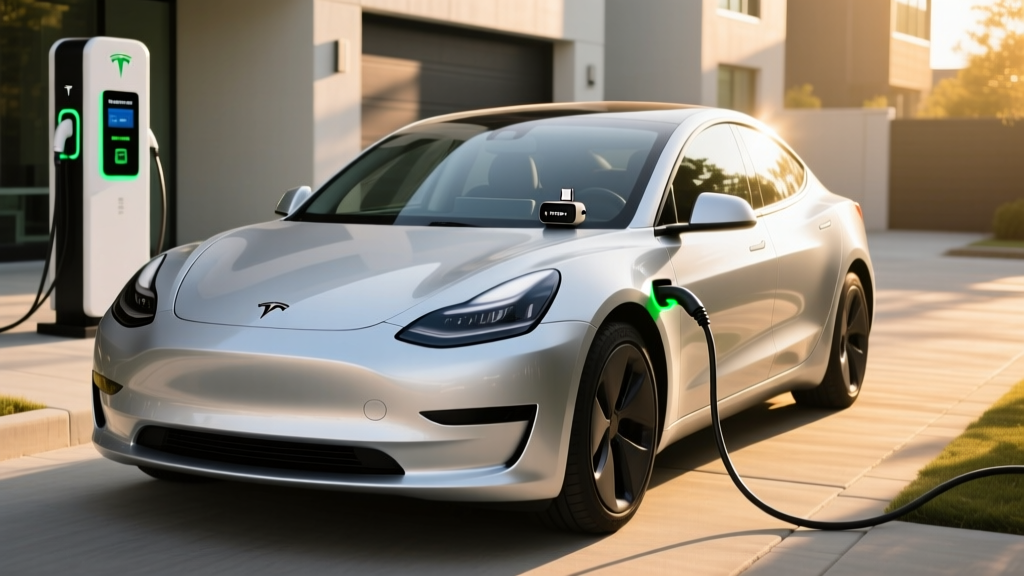
For home charging, Tesla's Gen 2 Wall Connector on a 60-amp circuit delivers 11.5 kW (48 amps continuous), adding roughly 44 miles of range per hour. A full overnight charge from 20% to 100% takes about 7 hours. Most owners who charge nightly at home rarely need DC fast charging except on road trips.
Preconditioning matters: If you navigate to a Supercharger using the car's built-in navigation, the Model 3 will automatically precondition the battery — warming it to optimal temperature for faster charge acceptance. Skipping preconditioning (for example, pulling into a charger without navigation routing) can add 5–10 minutes to your 10–80% time, especially in cold weather.
Performance and Driving Dynamics
The 2026 Model 3 Long Range AWD pairs a rear permanent-magnet motor with a front induction motor, producing approximately 384 combined horsepower. The 0–60 mph sprint takes 4.2 seconds — quick enough to merge confidently onto any freeway and genuinely fun on a back road. The dual-motor setup provides torque-vectoring traction in rain and snow without the mechanical complexity of a traditional AWD system.
Ride quality on the refreshed Model 3 (introduced for the 2024 model year and carried forward) is notably improved over the pre-refresh generation. Tesla added acoustic glass, revised suspension damping, and improved sound deadening. The result is a cabin that is substantially quieter at highway speeds — a factor that matters when you're spending $47,000+ on a daily driver.
Handling remains a strong suit: the low center of gravity from the floor-mounted battery pack, combined with precise electric power steering, gives the Model 3 cornering composure that few electric sedans match at this price. The Performance variant (4.2 seconds drops to 2.9 seconds 0–60) exists for enthusiasts, but the Long Range offers the best balance of speed and efficiency for most buyers.
Chrome Pink Wrap: Cost, Durability, and Practical Considerations
A chrome pink finish is achieved using a high-gloss metallic or mirror-finish vinyl wrap film. Leading brands like 3M, Avery Dennison, and KPMF offer chrome-series films in various pink shades — from soft rose to hot magenta to mirror-chrome pink. Here's what to budget:
- Full-body chrome pink wrap (professional install): $4,500–$7,500 depending on film brand, shop reputation, and region
- Chrome/mirror-finish premium: Chrome films cost 30–50% more than standard gloss wraps due to material cost and installation difficulty
- Expected lifespan: 3–5 years for chrome films (shorter than standard gloss wraps, which last 5–7 years) due to UV sensitivity of the metallic layer
- Maintenance: Hand wash only — no automatic car washes with brushes. Chrome films show swirl marks and scratches more readily than paint
- Paint protection: The wrap actually protects the factory paint underneath, which can help resale value when removed
Insurance note: Most insurers do not increase premiums for a vinyl wrap, but you should notify your carrier. Some wrap shops offer separate wrap insurance riders for $15–$30/month that cover damage to the film itself — worth considering given chrome pink's premium cost.
Resale consideration: A wrap is removable. If you plan to sell within 3–5 years, the factory paint underneath remains intact and often in better condition than an unwrapped car. However, a bold chrome pink may limit your buyer pool — plan to remove it before resale unless selling to another customization enthusiast.
Pricing, Trims, and Federal Tax Credit Eligibility
| Trim | MSRP | Drivetrain | EPA Range |
|---|---|---|---|
| Model 3 RWD | $38,990 | Single Motor RWD | 272 miles |
| Model 3 Long Range AWD | $47,740 | Dual Motor AWD | 363 miles |
| Model 3 Performance | $54,740 | Dual Motor AWD | 315 miles |
Federal EV Tax Credit (§30D) — 2026 Rules
- Maximum credit: Up to $7,500 (split: $3,750 for critical minerals + $3,750 for battery components)
- MSRP cap: Vehicle must be under $55,000 for sedans (all Model 3 trims qualify)
- Buyer income cap: AGI must not exceed $150,000 (single), $225,000 (head of household), or $300,000 (joint) — based on current-year or prior-year tax return
- Battery sourcing: Required percentages of critical minerals and battery components must be sourced from the U.S. or FTA partners — verify current-year compliance on irs.gov before purchasing
- Point-of-sale transfer: You can transfer the credit to the dealer at purchase to reduce your out-of-pocket cost — this is effectively an instant discount
- Assembly: Must be assembled in North America (Model 3 is built in Fremont, CA and Austin, TX — qualifies)
Tax rules change frequently. Consult a tax professional and verify on irs.gov before relying on credit eligibility.
If you qualify for the full $7,500 credit, the Model 3 Long Range AWD effectively drops from $47,740 to $40,240 — putting it in direct competition with the Hyundai Ioniq 6 and BMW i4 on price while offering superior range and Supercharger network access. The base RWD model, at $38,990 before credits, can drop to approximately $31,490 — making it one of the most affordable long-range EVs on the market.
Interior, Tech, and Cargo Space
The refreshed Model 3 interior is minimalist by design. A single 15.4-inch touchscreen handles infotainment, climate controls, navigation, and vehicle settings. There is no traditional instrument cluster — speed and driving information appear in the upper-left corner of the main display. A rear 8-inch touchscreen for passengers was added in the refresh, providing climate and media controls for back-seat riders.
Cargo dimensions:
- Trunk: 21 cu ft (with rear seats up)
- Frunk (front trunk): 2 cu ft — useful for charging cables and small bags
- Total: 23 cu ft — competitive with compact luxury sedans
- Rear seat fold-down: 60/40 split expands cargo capacity significantly for longer items
Notable tech features:
- Tesla Autopilot (standard): SAE Level 2 adaptive cruise + lane centering — requires active driver supervision at all times
- Full Self-Driving (Supervised) — optional at ~$8,000 or $99/month: adds automatic lane changes, traffic light/stop sign recognition, and navigation-guided driving. Still SAE Level 2 — not autonomous.
- Over-the-air updates continuously add features and refinements
- Sentry Mode: 360-degree camera recording when parked — doubles as a dashcam and security system
- Dog Mode, Camp Mode, and theater mode for versatile cabin use
Notable drawbacks:
- No physical buttons for climate or volume — everything is touchscreen-driven, which frustrates some drivers
- Turn signal stalks were removed in the refresh — signals are now buttons on the steering wheel, a polarizing change
- Rear visibility is compromised by the sloping roofline; the backup camera is essential
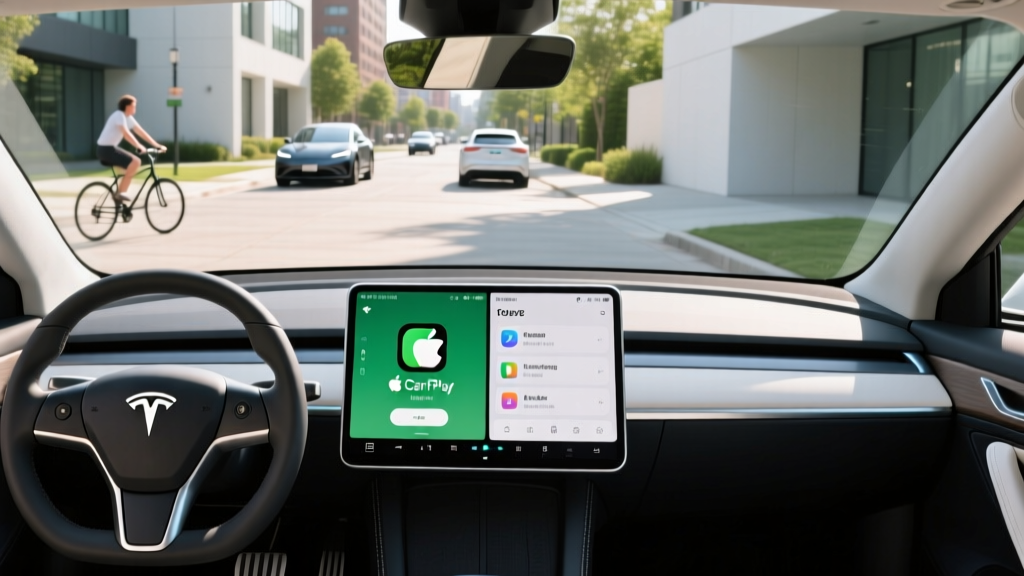
- No Apple CarPlay or Android Auto — Tesla's proprietary system is the only interface
Pros and Cons: The Verdict on a Chrome Pink Tesla Model 3
- 363-mile EPA range — class-leading for the price
- 250 kW Supercharger access with the most reliable DC fast-charging network in the U.S.
- 4.2-second 0–60 with AWD traction
- Strong over-the-air update pipeline keeps the car improving post-purchase
- Chrome pink wrap protects factory paint and delivers unmatched visual impact
- Federal tax credit eligible — up to $7,500 off
- Excellent efficiency at 132 MPGe / 25 kWh/100mi
- Chrome wrap adds $4,500–$7,500 and requires careful maintenance
- No Apple CarPlay/Android Auto
- Buttonless turn signals and climate controls frustrate some drivers
- Rear seat legroom (35.3") is tighter than midsize competitors
- Insurance costs run 15–25% higher than comparable gas sedans
- FSD (Supervised) remains Level 2 — marketing name exceeds actual capability
- Chrome film lifespan (3–5 years) is shorter than factory paint
Is a Chrome Pink Tesla Model 3 Worth It vs. Competitors?
The Model 3 Long Range competes against the Hyundai Ioniq 6 (361 miles EPA, $46,000+), the BMW i4 eDrive40 (307 miles, ~$57,000), and the Polestar 2 Long Range (320 miles, ~$53,000). Here's the honest comparison:
- vs. Ioniq 6: Nearly identical range, but the Model 3 has faster DC charging (250 vs. 240 kW peak), a more mature Supercharger network, and stronger software. The Ioniq 6 offers more physical buttons and slightly more rear headroom.
- vs. BMW i4: The BMW wins on interior material quality and driving refinement but costs $10,000+ more and offers 56 fewer miles of range. The i4 supports Apple CarPlay.
- vs. Polestar 2: The Polestar is more expensive, has less range, and charges slower. Its Google-based infotainment and more conventional interior appeal to buyers who find Tesla's minimalism too stark.
Choose the Model 3 Long Range (and wrap it chrome pink) if: You want maximum range per dollar, best-in-class charging infrastructure, and a platform that's an ideal canvas for customization.
Choose the Ioniq 6 if: You prefer physical controls, Hyundai's dealer network for service, and comparable range at a slightly lower entry price.
Choose the BMW i4 if: Interior luxury, brand prestige, and CarPlay integration matter more than maximum range or lowest price.
Frequently Asked Questions
What is the real-world range of a Tesla Model 3 Long Range?
The EPA rates it at 363 miles. In real-world highway driving at 70–75 mph in moderate temperatures, expect 290–320 miles. City driving with regenerative braking yields 330–355 miles. In sub-freezing weather, plan for 230–270 miles on the highway.
How fast does the Model 3 charge at home and on the road?
On a home Level 2 Wall Connector (11.5 kW), you add about 44 miles per hour — a full overnight charge takes roughly 7 hours. On a Tesla Supercharger (250 kW peak), a 10–80% charge takes approximately 25 minutes, with the rate tapering significantly above 50% state of charge.
How much does a chrome pink Tesla Model 3 actually cost?
The 2026 Model 3 Long Range AWD starts at $47,740. A professional chrome pink full-body wrap adds $4,500–$7,500. If you qualify for the full $7,500 federal tax credit, your effective vehicle cost drops to $40,240, making the total wrapped car approximately $44,740–$47,740 out the door before state incentives.
Does the Tesla Model 3 qualify for the $7,500 federal EV tax credit?
The Model 3 is assembled in the U.S. and falls under the $55,000 sedan MSRP cap, so it meets the vehicle-side requirements. However, buyer eligibility depends on your adjusted gross income (caps of $150K single / $300K joint), and the battery must meet current-year critical mineral and component sourcing thresholds. Always verify on irs.gov before purchasing, as sourcing rules update periodically.
Does a chrome wrap damage Tesla's factory paint?
No — a properly installed vinyl wrap protects the underlying paint from UV, road chips, and minor abrasion. When removed by a professional (typically $500–$1,000), the factory paint is usually in better condition than an unwrapped car of the same age. Ensure the wrap installer uses a reputable film brand and does not use excessive heat during application.
Is Autopilot or FSD actually self-driving?
No. Both Tesla Autopilot and Full Self-Driving (Supervised) are SAE Level 2 driver-assistance systems. The driver must remain fully attentive, keep hands on the wheel, and be prepared to take over at any moment. Only Level 4 services like Waymo operate without a human driver — and those are limited robotaxi services, not consumer vehicles.
Who is the chrome pink Tesla Model 3 best suited for?
This car fits a tech-savvy commuter or young professional who values range, fast charging, strong performance, and wants a vehicle that stands out visually. It works well for daily commuting, weekend road trips (the Supercharger network makes long-distance travel practical), and light cargo hauling. It's less ideal for large families (rear seat space is modest) or those who prefer traditional luxury interiors with physical controls.