The Short Answer
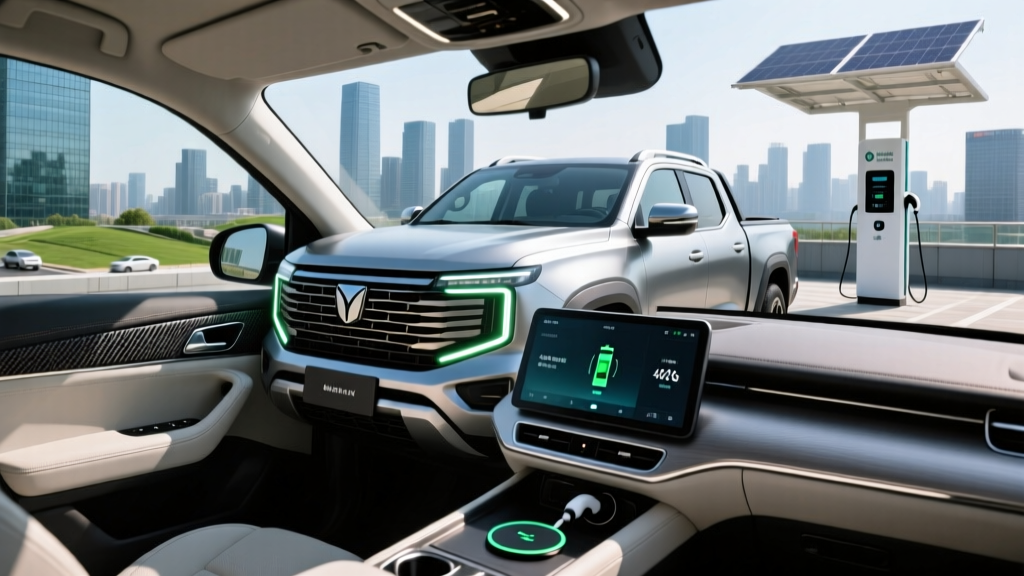
As of 2026, you cannot legally purchase a new Chinese electric pickup truck for street use in the United States. Models like the BYD Shark PHEV, Geely Radar RD6, and JAC T9 EV are sold in markets like Australia, Thailand, Mexico, and South America — but face a combined 27.5% US tariff on Chinese-built light trucks (25% Section 301 tariff + 2.5% standard light-truck duty), no federal crash-test certification from NHTSA, and zero US dealer or service networks. If you need an electric or electrified pickup in the US today, your realistic options are the Ford F-150 Lightning, Rivian R1T, Chevrolet Silverado EV, or the upcoming Tesla Cybertruck variants. If you're shopping outside the US, Chinese electric pickups are a legitimate and increasingly competitive segment.
Why Chinese Electric Pickups Aren't Sold in the US
China's EV industry has produced several electric and plug-in hybrid pickups that compete aggressively on price and technology in export markets. The BYD Shark, for instance, launched in Mexico in mid-2024 at roughly $50,000 USD equivalent and has since expanded to Australia and other markets. The Geely Radar RD6 undercuts most Western rivals on price in Southeast Asia. But three structural barriers keep these trucks off American roads:
1. Tariff Stack. The US imposes a 25% Section 301 tariff on Chinese-origin automobiles (raised from an earlier 10% rate in 2024), plus the longstanding 2.5% "chicken tax" duty on imported light trucks. That 27.5% combined tariff lands on top of the factory price before shipping, making a $35,000 Chinese electric pickup cost US importers roughly $44,600 before any dealer margin, compliance work, or logistics. The price advantage evaporates.
2. Safety Certification. Every vehicle sold in the US must be self-certified to Federal Motor Vehicle Safety Standards (FMVSS) by the manufacturer, with NHTSA oversight. Chinese-market vehicles are typically certified to China's GB standards or UN-ECE regulations used in Europe and Australia — which differ in areas like lighting, crash-test protocols, and electronic stability control calibration. Achieving FMVSS compliance requires significant engineering investment for a market where the tariff stack already kills the business case.
3. Dealer and Service Infrastructure. US truck buyers expect local dealerships for sales, warranty service, and parts. Building that network from zero — while competing against Ford's 3,000+ US dealers and Rivian's growing service footprint — is a multi-billion-dollar, multi-year undertaking that no Chinese automaker has committed to for pickups.
The Chinese Electric Trucks You'll See Headlines About
Even though they're not US-available, these models shape the global conversation about electric truck pricing and capability. Here's how the major players stack up based on published specifications from their launch markets:
| Model | Powertrain | Battery (kWh) | Range (Claimed) | Power (HP) | Approx. Price (USD equiv.) | Markets |
|---|---|---|---|---|---|---|
| BYD Shark PHEV | Plug-in Hybrid (DMO) | 26.7 (LFP Blade) | ~62 mi EV / ~500 mi combined | 430 (combined system) | ~$50,000 | Mexico, Australia, Brazil |
| Geely Radar RD6 | Battery Electric | 86 (NMC) | ~345 mi (CLTC) | 268 | ~$36,000 | China, SE Asia, S. America |
| JAC T9 EV | Battery Electric | 88.6 (LFP) | ~260 mi (WLTP est.) | 201 | ~$45,000 | Australia, Chile, UAE |
| Chery Rely R08 EV | Battery Electric | ~80 (LFP) | ~280 mi (CLTC) | ~230 | ~$38,000 | China, emerging markets |
Range reality check: CLTC (China) and WLTP (Europe/Australia) range figures are more optimistic than US EPA testing. Expect real-world EPA-equivalent range to be roughly 15-25% lower than CLTC claims and 10-15% lower than WLTP. The Radar RD6's 345-mile CLTC figure, for example, would likely translate to approximately 260-290 EPA miles if it were US-certified.
US-Available Electric Pickup Alternatives: Specs and Costs
If you're a US buyer who found this article researching Chinese electric trucks, you likely want an electrified pickup at a competitive price. Here's what you can actually buy, with EPA-verified data:
| Model | Type | EPA Range (mi) | Battery (kWh) | Max DC Charge (kW) | 10-80% Time | 0-60 (sec) | Base MSRP |
|---|---|---|---|---|---|---|---|
| Ford F-150 Lightning (Std Range) | BEV | 240 | 98 (NMC) | 120 | ~36 min | ~5.8 | $54,995 |
| Ford F-150 Lightning (Ext Range) | BEV | 320 | 131 (NMC) | 150 | ~41 min | ~5.5 | $69,995 |
| Rivian R1T (Standard) | BEV | 270 | 95 (LFP) | 200 | ~27 min | ~6.0 | $69,900 |
| Rivian R1T (Max) | BEV | 420 | 149 (NMC) | 220 | ~35 min | ~3.5 (Dual) | $89,900 |
| Chevrolet Silverado EV (4WT) | BEV | ~450 (est.) | ~200 (NMC) | 350 | ~20 min | ~4.5 | $74,800 |
| Ford Maverick Hybrid | HEV | N/A (40 MPG comb.) | 1.1 (HEV) | N/A | N/A | ~7.8 | $28,995 |
Real-World Range Expectations
EPA range figures assume mixed driving at moderate temperatures. For electric pickups specifically, expect:
- Highway-only at 75 mph: 15-20% below EPA (e.g., F-150 Lightning Ext Range: ~255-270 mi real)
- Cold weather (below 30°F): 20-35% reduction depending on cabin heating and battery preconditioning
- Towing: 40-55% range reduction is common — a 320-mile Lightning may deliver 150-180 miles while towing a 5,000-lb trailer
Total Cost of Ownership: Electric Pickup vs Gas Truck
The sticker price of US electric pickups is higher than comparable gas trucks, but operating costs tell a different story over five years. Here's a realistic breakdown comparing a Ford F-150 Lightning (Extended Range, ~$70K MSRP) against a Ford F-150 4x4 with the 3.5L EcoBoost V6 (~$55K MSRP) over 5 years and 75,000 miles:
| Cost Category | F-150 Lightning (Ext Range) | F-150 Gas (3.5L EcoBoost) |
|---|---|---|
| Purchase Price (MSRP) | $69,995 | $54,995 |
| Estimated §30D Federal Tax Credit | -$7,500 (if eligible) | $0 |
| Effective Purchase Price | $62,495 | $54,995 |
| Fuel/Energy (75K mi) | $5,400 (home L2 @ $0.14/kWh avg) | $11,250 (gas @ $3.50/gal, 18 MPG avg) |
| Maintenance (5 yr) | $1,800 (tires, cabin filter, fluid top-offs) | $4,200 (oil, filters, brakes, plugs, trans fluid) |
| Insurance (5 yr est.) | $10,500 (EV premium ~15-20% higher) | $8,500 |
| Total 5-Year Cost | $80,195 | $78,945 |
| Cost Per Mile | $1.07 | $1.05 |
Key takeaway: The Lightning nearly breaks even over five years despite a higher starting price, primarily through fuel and maintenance savings. If you charge primarily at home on off-peak utility rates (often $0.08-$0.12/kWh), the energy cost drops further and the EV pulls ahead. The gap widens significantly if gas prices rise above $4/gallon or if you drive more than 15,000 miles annually. However, EV insurance premiums remain stubbornly higher — get quotes before committing.
§30D Tax Credit Caveats (2026 rules): The $7,500 federal credit requires the buyer to meet income caps ($150K single / $300K joint AGI), the vehicle MSRP must not exceed $80,000 for pickups/SUVs, and the battery must meet critical-mineral and component sourcing thresholds that tighten annually. As of 2026, the F-150 Lightning qualifies, but always verify current eligibility on IRS.gov before purchasing. The credit can now be transferred to the dealer at point of sale, reducing your out-of-pocket cost at purchase.
Common Misconceptions About Chinese EVs in America
| Myth | Fact |
|---|---|
| "Chinese EVs are low quality and unsafe." | Leading Chinese EVs (BYD, Geely, NIO) score well in Euro NCAP and ANCAP crash tests. The BYD Atto 3 earned a 5-star Euro NCAP rating. Quality has improved dramatically since 2020, though US FMVSS certification remains unproven for most models. |
| "You can import a Chinese EV yourself through a loophole." | US individuals cannot import non-FMVSS-compliant vehicles for personal street use without going through a Registered Importer (RI) and meeting all safety standards — a process costing $10,000-$30,000+ with no guarantee of approval. The 25-year exemption applies only to vehicles built before 2001. |
| "Tariffs will be removed soon." | As of 2026, bipartisan support for tariffs on Chinese EVs remains strong. Both the current and prior administrations have maintained or increased these duties. No legislative timeline exists for removal. |
| "BYD is planning US dealerships." | BYD has explicitly stated it has no plans to sell passenger vehicles in the US market due to the tariff and political environment. They sell commercial electric buses and trucks in the US through separate channels, but consumer vehicles are not on the roadmap. |
| "Chinese trucks would cost $20,000 here." | Even before tariffs, the cheapest Chinese electric pickups start around $35,000-$45,000 USD equivalent in export markets. After the 27.5% tariff stack, shipping, compliance, and dealer margin, a realistic US price would be $50,000-$60,000 — not dramatically cheaper than a base F-150 Lightning. |
Real-World Ownership: What First-Time EV Pickup Buyers Should Know
If you're transitioning from a gas truck to an electric pickup, several practical realities shape daily ownership:
Home Charging Is Essential. Public DC fast charging for pickups is still limited — most Electrify America and EVgo stations have narrow stalls that make parking a full-size truck awkward. A home Level 2 charger (240V, 40-48 amp / 9.6-11.5 kW) adds roughly 25-35 miles of range per hour and costs $500-$1,500 for equipment plus $800-$2,500 for professional installation by a licensed electrician. If your electrical panel is at capacity, a 200-amp panel upgrade can add $1,500-$4,000. Without home charging, EV truck ownership becomes significantly less convenient and more expensive (public DC fast charging costs $0.30-$0.50/kWh vs. $0.10-$0.16/kWh at home).
Charging Speed Tapers Above 80%. Manufacturers advertise peak DC fast-charge rates (e.g., 150 kW), but that peak is sustained only between roughly 10-50% state of charge. Above 80%, charging slows dramatically to protect battery longevity — often dropping below 30 kW. A "10-80% in 41 minutes" spec means the last 20% can take another 30-40 minutes. Plan road-trip stops to charge to 80% and move on.
Payload and Towing Crush Range. Electric pickups carry their battery weight low, giving excellent stability, but a heavy payload or trailer increases energy consumption dramatically. Expect to lose 40-55% of rated range when towing near maximum capacity. If you tow frequently over long distances, a PHEV like the forthcoming Ram 1500 Ramcharger (extended-range electric) or the Ford Maverick Hybrid may be more practical than a full BEV.
Battery Degradation Is Slower Than Feared. Modern NMC and LFP truck batteries are warrantied for 8 years / 100,000 miles with a guaranteed capacity retention of 70% (per fueleconomy.gov and manufacturer specs). Real-world data from early Tesla and Chevy Bolt owners shows typical degradation of 8-12% over 100,000 miles — well within warranty thresholds. LFP batteries (used in the Rivian R1T Standard) tolerate daily 100% charging better than NMC and may degrade even less.
Decision Framework: Which Electric Pickup Is Right for You?
Choose Your Path
Choose the Ford F-150 Lightning if: You need a full-size truck for work, want a proven platform backed by a massive dealer network, need Pro Power Onboard (up to 9.6 kW V2L for job-site power tools or tailgating), and have home charging. Best for: contractors, fleet buyers, and families who tow occasionally.
Choose the Rivian R1T if: You prioritize driving dynamics, off-road capability (quad-motor variants offer individual wheel torque vectoring), adventure lifestyle features (the Gear Tunnel), and over-the-air updates from a tech-forward company. Accept that service centers are still expanding. Best for: outdoor enthusiasts, tech-savvy buyers, and those who don't need a traditional truck bed.
Choose the Chevrolet Silverado EV if: You want maximum range (up to 450 miles EPA on the Max Range pack), need the available 4-wheel steering for tight maneuvering, and value GM's Ultium platform. Note: the Silverado EV's unibody architecture differs from the ICE Silverado — it shares more with the GMC Hummer EV. Best for: long-distance drivers and those who want a crew-cab lifestyle truck.
Choose the Ford Maverick Hybrid if: Your actual truck needs are modest (1,500-lb payload, light towing), you want the lowest cost of entry (~$29K), you don't have reliable home charging access (no plug needed — it's a standard hybrid), and you want 40 MPG combined without range anxiety. Best for: urban and suburban buyers who occasionally haul mulch or a small trailer.
Wait if: You specifically need a mid-price ($40-55K) full-BEV midsize pickup. The segment is underserved as of 2026. Watch for updates from Ford (next-gen Ranger EV), GM (Colorado EV), and Rivian (R2T, expected ~2027) that may fill this gap.
Frequently Asked Questions
Will Chinese electric pickups ever come to the US?
Not in the foreseeable future. The 27.5% tariff stack, FMVSS compliance costs, and geopolitical tensions make US market entry economically unviable for Chinese truck manufacturers. BYD, Geely, and others are focusing on markets where they face fewer trade barriers — Southeast Asia, Australia, Latin America, and the Middle East.
Can I buy a used Chinese electric truck that was imported?
There is no meaningful used market for Chinese electric pickups in the US. A handful of individuals have imported vehicles through Registered Importers for show or off-road use, but street-legal, FMVSS-compliant examples are virtually nonexistent. Any listing claiming otherwise should be treated with extreme skepticism.
How does the BYD Shark compare to the F-150 Lightning?
They're fundamentally different vehicles. The BYD Shark is a midsize plug-in hybrid (similar in size to a Toyota Tacoma) with a 1.5L turbo engine + electric motors, 26.7 kWh LFP battery, ~62 miles of electric-only range, and ~430 combined HP. The F-150 Lightning is a full-size, body-on-frame battery-electric truck with 240-320 miles of EPA range and 580 HP. The Shark would compete more directly with the Ford Maverick or a future electric Tacoma — but it's not available in the US regardless.
Do electric pickups qualify for the $7,500 federal tax credit?
Some do, subject to IRS §30D rules. The vehicle must have an MSRP at or below $80,000 (for trucks/SUVs), the buyer must meet income limits ($150K single / $300K joint), and the battery must satisfy critical-mineral and component sourcing requirements that tighten each year. As of 2026, the Ford F-150 Lightning qualifies; verify specific trim eligibility with your dealer and a tax professional before purchase.
What's the cheapest electric pickup I can actually buy in the US?
The most affordable new electric pickup available in the US as of 2026 is the Ford F-150 Lightning Pro (Standard Range) at $54,995 MSRP, potentially dropping to ~$47,495 after the full $7,500 federal tax credit if you qualify. For an electrified truck at the lowest absolute price, the Ford Maverick Hybrid starts at $28,995 — it's a conventional hybrid (not plug-in), but delivers 40 MPG combined with zero charging requirements.
Is it worth buying an electric pickup if I tow regularly?
For short-distance towing (under 100 miles round trip with home charging on both ends), an electric pickup works well and offers strong low-end torque. For long-distance towing (200+ miles), the 40-55% range reduction makes BEVs impractical today — you'll face frequent, lengthy charging stops. A hybrid or PHEV truck is the more pragmatic choice for frequent heavy towing until battery energy density and charging infrastructure improve.