The Quick Answer: Chinese 1500 HP Electric Cars in 2026
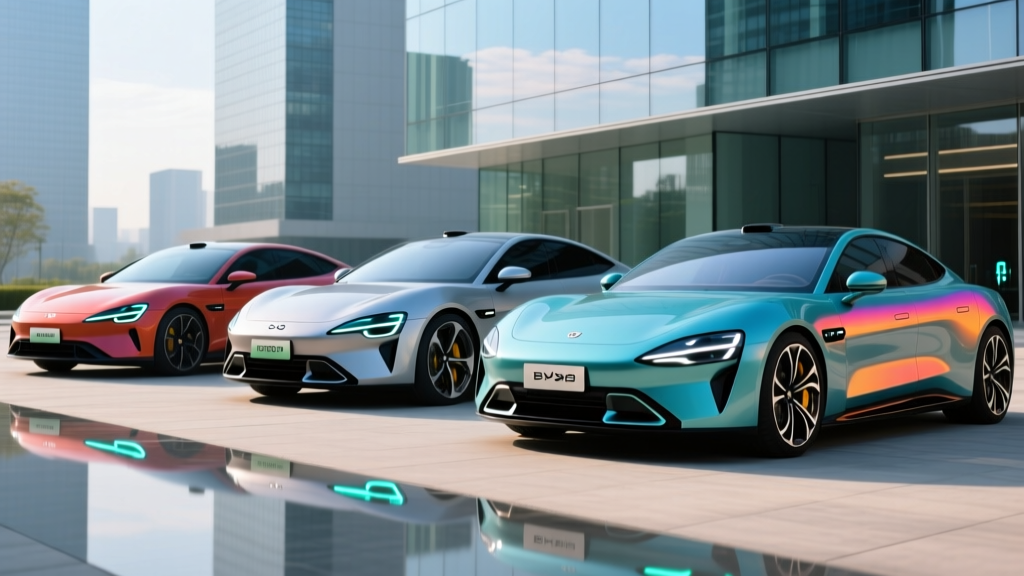
Several Chinese automakers now produce or have announced electric vehicles producing roughly 1,500 horsepower, including the BYD Yangwang U9 (1,287 hp / ~960 kW), the Xiaomi SU7 Ultra (1,548 hp / 1,138 kW), and the Lotus Evija (1,972 hp, Geely-owned). These vehicles are primarily sold in China, the Middle East, and select European markets. As of 2026, none are officially available for US retail sale, and importing one faces steep regulatory hurdles including NHTSA compliance, EPA certification, and 100%+ tariff exposure under current trade policy. If you are a US-based buyer researching these vehicles, this guide breaks down what they actually offer, what ownership would cost, and which domestically available alternatives deliver similar performance.
Which Chinese EVs Actually Produce 1,500 Horsepower?
The "Chinese 1500 HP electric car" search spans several distinct vehicles. Here is the current landscape of hyper-performance Chinese EVs as of early 2026:
| Vehicle | Horsepower | Battery (kWh) | 0-60 mph | CLTC Range | Price (China) | US Availability |
|---|---|---|---|---|---|---|
| Xiaomi SU7 Ultra | 1,548 hp | ~93.7 kWh (CATL Qilin) | ~1.98 sec | ~390 mi (CLTC) | ¥814,900 (~$112,000) | Not available |
| BYD Yangwang U9 | 1,287 hp | ~80 kWh (LFP Blade) | ~2.36 sec | ~280 mi (CLTC) | ¥1,680,000 (~$231,000) | Not available |
| Lotus Evija (Geely) | 1,972 hp | 70 kWh | ~1.8 sec | ~217 mi (WLTP) | ~$2,300,000 | Limited (not China-market) |
| Zeekr 001 FR | 1,265 hp | 100 kWh (CATL Qilin) | ~2.07 sec | ~342 mi (CLTC) | ¥769,000 (~$106,000) | Not available |
Critical note on range figures: CLTC (China Light-Duty Vehicle Test Cycle) range estimates run 15-25% higher than US EPA estimates for the same vehicle. A 390-mile CLTC rating on the Xiaomi SU7 Ultra would likely translate to roughly 290-330 EPA miles if certified in the US. Always discount CLTC numbers when comparing to American-market EVs.
Performance vs. Price: How Do These Compare to US-Available EVs?
If raw acceleration and horsepower are what you're after, several EVs available in the US market right now deliver extraordinary performance — often at lower prices and with full warranty support, service networks, and federal safety compliance.
| Vehicle | HP | 0-60 mph | EPA Range | US MSRP | US Available |
|---|---|---|---|---|---|
| Xiaomi SU7 Ultra | 1,548 | ~1.98s | ~290-330 mi (est.) | N/A | No |
| Tesla Model S Plaid | 1,020 | 1.99s | 396 mi | $89,990 | Yes |
| Lucid Air Sapphire | 1,234 | 1.89s | 427 mi | $249,000 | Yes |
| Rivian R1T Quad-Motor | 1,025 | ~3.0s | 352 mi | $87,600 | Yes |
| Porsche Taycan Turbo GT | 1,019 | 2.1s | 269 mi | $230,700 | Yes |
The Tesla Model S Plaid matches the Xiaomi SU7 Ultra's 0-60 time at roughly half the price (once the Xiaomi is adjusted for import costs, tariffs, and compliance modifications). The Lucid Air Sapphire exceeds 1,200 hp and holds the longest EPA-rated range of any performance sedan sold in the US.
The Real Cost of Ownership: Chinese Hyper-EV vs. US Alternatives
Even if you could legally import a Chinese 1500 HP electric car, the total cost of ownership diverges sharply from buying a domestically available EV. Here is a realistic five-year breakdown comparing a hypothetical imported Xiaomi SU7 Ultra against the Tesla Model S Plaid:
| Cost Factor (5-Year) | Xiaomi SU7 Ultra (Imported) | Tesla Model S Plaid (US) |
|---|---|---|
| Purchase Price (incl. import fees, tariffs) | ~$175,000-$200,000+ | $89,990 |
| Federal §30D Tax Credit | $0 (not eligible) | $0 (MSRP exceeds sedan cap of $55,000) |
| Insurance (annual avg.) | $5,500-$8,000 (specialty) | $3,800-$5,200 |
| Home Charging (Level 2, 11.5 kW) | $1,200 install + $0.13/kWh avg. | $1,200 install + $0.13/kWh avg. |
| Electricity (5 yrs, 75k mi) | ~$4,500 | ~$3,900 |
| Maintenance & Repairs | $6,000-$10,000 (parts scarcity) | $1,800-$2,500 |
| Estimated 5-Year Total | $220,000-$260,000+ | $115,000-$125,000 |
Key ownership realities for an imported Chinese hyper-EV:
- No service network: BYD and Xiaomi have zero US service centers. Any warranty repair would require shipping parts from China or finding an independent EV specialist.
- Insurance challenges: Most US insurers will not write comprehensive policies on non-homologated vehicles, or will charge collector-car premiums.
- Charging compatibility: Chinese-market EVs typically use the GB/T charging standard, not NACS or CCS1. You would need a GB/T-to-NACS adapter (if one is certified for US use) or a dedicated GB/T home charger.
- Software and connectivity: Vehicle infotainment, navigation, and OTA updates are designed for Chinese networks and apps — many features would not function outside China.
Why Can't You Just Buy One in the US? Regulatory Barriers Explained
Several layers of regulation prevent straightforward purchase and operation of a Chinese-market EV in the United States:
Federal Safety Compliance (NHTSA)
Every vehicle sold or imported for road use in the US must comply with Federal Motor Vehicle Safety Standards (FMVSS). Chinese-market vehicles are built to CCC (China Compulsory Certification) standards, which differ in crash-test protocols, lighting requirements, airbag specifications, and electronic stability control calibration. Achieving FMVSS compliance for an individual import is essentially impossible without manufacturer cooperation.
EPA Emissions and Certification
Even though EVs produce no tailpipe emissions, they still require EPA certification for import. The EPA regulates refrigerant systems, electromagnetic compatibility, and manufacturing emissions documentation.
Current Tariff Exposure
As of 2026, Chinese-manufactured EVs face a 100% tariff under Section 301 trade actions, effectively doubling the purchase price before any other import fees, shipping, or compliance modifications. A $112,000 Xiaomi SU7 Ultra would carry at least $112,000 in tariff costs alone.
The 25-Year "Show or Display" Loophole
The only realistic legal pathway is the 25-year rule, which exempts vehicles over 25 years old from FMVSS compliance. This is obviously irrelevant for current-production vehicles. A narrow "Show or Display" exemption exists for historically significant vehicles, but it limits driving to 2,500 miles per year and requires a petition process.
Common Misconceptions About Chinese 1500 HP Electric Cars
| Myth | Fact |
|---|---|
| "Chinese EVs are cheap, so I can import one affordably" | After 100% tariffs, shipping ($3,000-$6,000), compliance modifications ($20,000+), and registration legal fees, the cost doubles or triples. |
| "1,500 HP means it's the fastest car in the world" | Horsepower alone doesn't determine acceleration. Weight, tire grip, torque vectoring, and launch control software matter equally. The Tesla Model S Plaid at 1,020 hp matches or beats most 1,500 hp vehicles to 60 mph. |
| "I can charge it at any US charging station" | Chinese-market EVs use GB/T connectors, not NACS or CCS1. Public DC fast chargers in the US will not physically connect without a certified adapter, and many adapters are not UL-listed for safety. |
| "The range is 400+ miles, so no range anxiety" | CLTC range is inflated vs. EPA. Real-world highway driving at 75 mph in cold weather could reduce a 390-mile CLTC rating to under 230 usable miles. |
| "BYD and Xiaomi will sell in the US soon" | No Chinese EV brand has announced US retail plans as of 2026. Geopolitical tensions, tariffs, and regulatory complexity make near-term US market entry unlikely. |
Real-World Ownership Considerations for High-Performance EVs
Whether you buy a US-available performance EV or somehow secure a Chinese import, the ownership fundamentals of a 1,000+ hp electric car require planning:
Home Charging Is Non-Negotiable
A ~93 kWh battery (like the Xiaomi SU7 Ultra's CATL Qilin pack) takes roughly 8-9 hours on an 11.5 kW Level 2 home charger and over 70 hours on a standard 120V outlet. Without home charging access, daily use of a high-capacity performance EV becomes impractical. Budget $800-$2,000 for a Level 2 charger installation, and $500-$2,500 more if your electrical panel needs a 200-amp upgrade.
Cold-Weather Range Loss
Lithium-ion batteries lose 20-35% of their range in sub-freezing temperatures. A vehicle rated at 330 EPA miles in moderate conditions may deliver only 215-265 miles in a Minnesota January. Battery preconditioning (heating the pack before driving or charging) mitigates this but consumes energy itself.
Tire Costs Are Significant
High-performance EVs are heavy (the Yangwang U9 exceeds 5,400 lbs) and deliver instant torque. Expect to replace tires every 10,000-15,000 miles at $1,200-$2,400 per set for performance rubber. This is the single largest recurring maintenance cost.
Insurance Premiums
Performance EVs carry higher insurance premiums due to repair costs, battery replacement expense, and driver risk profiles. According to industry data, a Tesla Model S Plaid averages $3,800-$5,200/year for full coverage. A non-homologated import would likely be higher or uninsurable through standard carriers.
Decision Framework: Should You Chase a Chinese 1500 HP EV or Buy Domestic?
Choose a US-Available Performance EV (Model S Plaid, Lucid Sapphire, Taycan Turbo GT) If:
- You want full warranty coverage, a service network, and NHTSA/IIHS safety ratings
- You need NACS or CCS1 charging compatibility at 17,000+ US public stations
- You plan to finance the vehicle (lenders require homologated vehicles)
- You want OTA updates, working navigation, and connected services in the US
- Your budget is under $250,000 all-in
Consider Pursuing a Chinese Hyper-EV (Import/Show) If:
- You are a collector with experience navigating NHTSA import exemptions
- You plan to use the vehicle primarily for track days or static display
- Budget exceeds $250,000+ with no financing dependency
- You accept the vehicle may never be street-legal in the US
- You have access to a GB/T-compatible charger or can install one
Wait and Monitor If:
- You are speculating on BYD, Xiaomi, or Zeekr entering the US market
- Tariff reduction or trade agreements could shift the cost equation (unlikely before 2028)
- You want to see if Chinese brands pursue US homologation for the 2027-2028 model years
Frequently Asked Questions
Is the Xiaomi SU7 Ultra really faster than a Tesla Model S Plaid?
On paper, the Xiaomi SU7 Ultra claims a 1.98-second 0-60 mph time, essentially identical to the Model S Plaid's 1.99 seconds. In practice, both vehicles achieve roughly 2.0 seconds on a prepared surface. The Xiaomi's triple-motor setup produces more peak horsepower (1,548 vs. 1,020), but the Plaid's lighter weight and sophisticated launch control equalize real-world acceleration. Above 130 mph, the Xiaomi's power advantage may show on a track, but for street-legal driving, the difference is negligible.
Can I import a BYD Yangwang U9 under the Show or Display exemption?
The Show or Display exemption (49 CFR 593) applies to vehicles of "historical or technological significance" produced in limited numbers. You must petition NHTSA, demonstrate the vehicle's significance, and accept a 2,500-mile annual driving limit. The Yangwang U9 is a current-production vehicle with no established historical significance, making approval uncertain at best. Consult an automotive import attorney before attempting this.
What charging connector do Chinese EVs use?
Chinese-market EVs use the GB/T standard (Guobiao/Tuijian) for both AC and DC charging. This is physically and electrically incompatible with NACS (Tesla/US standard) and CCS1 (used by most non-Tesla US EVs). Adapters exist but are not widely UL-certified for US residential or public charging use.
How does CLTC range compare to EPA range?
CLTC (China Light-Duty Vehicle Test Cycle) is a less demanding test than the US EPA cycle. CLTC range figures typically run 15-25% higher than equivalent EPA estimates. For a rough EPA conversion, multiply the CLTC figure by 0.75-0.85. A 390-mile CLTC rating becomes approximately 290-330 EPA miles.
Will Chinese EV brands sell in the US by 2028?
As of 2026, no Chinese EV brand (BYD, NIO, Xiaomi, Zeekr, XPeng) has announced US retail plans. The 100% tariff on Chinese EVs, FMVSS compliance requirements, and geopolitical friction make near-term entry unlikely. BYD has explored Mexico and South America as markets. Some analysts suggest a Chinese brand could enter via a US or Mexican manufacturing partnership, but this remains speculative. Monitor NHTSA filings for any homologation activity.
What US-available EV comes closest to 1,500 horsepower?
The Lotus Evija (1,972 hp, ~$2.3 million) is technically available in limited numbers in the US, though Lotus is now owned by China's Geely Group. Among mainstream manufacturers, the Lucid Air Sapphire at 1,234 hp and $249,000 is the highest-horsepower US-market sedan currently in production. The Rimac Nevera (1,914 hp, ~$2.4 million) is also available in the US in extremely limited allocation.
Sources: EPA range data via fueleconomy.gov; manufacturer specifications from BYD, Xiaomi Auto, and Tesla press materials; federal tax credit rules per IRS §30D guidelines; import regulations via NHTSA import guidance.