The Quick Answer: Chevy Volt Electric Ownership in 2026
The Chevrolet Volt is a plug-in hybrid (PHEV), not a fully electric vehicle. It was discontinued after the 2019 model year, so every Volt on the market today is used. The Gen 2 Volt (2016–2019) delivers an EPA-rated 53 miles of electric-only range from its 18.4 kWh battery pack, plus a 1.5L gas engine that extends total range to roughly 420 miles combined. Expect to pay $12,000–$20,000 for a used Gen 2 Volt depending on mileage and condition. It remains one of the most practical bridge vehicles for drivers who want daily electric commuting but lack reliable access to public fast charging or need gas-engine flexibility for road trips.
Understanding the Chevy Volt's Electric Powertrain
The Volt uses what GM calls a Voltec powertrain — technically an extended-range electric vehicle (EREV) architecture. Unlike conventional hybrids where the gas engine frequently drives the wheels, the Volt's electric motor handles nearly all propulsion. The 1.5L four-cylinder acts primarily as a generator to recharge the battery once the electric range is depleted, though it can mechanically assist the drivetrain under certain high-load conditions.
Here's how the two generations break down on key specifications:
| Specification | Gen 1 (2011–2015) | Gen 2 (2016–2019) |
|---|---|---|
| Battery capacity (usable) | 10.3 kWh (2013–15) | 14.0 kWh usable (18.4 kWh gross) |
| EPA electric range | 35–38 miles | 53 miles |
| Total range (electric + gas) | ~380 miles | ~420 miles |
| Gas engine | 1.4L 4-cyl | 1.5L 4-cyl |
| Combined MPGe (electric) | 98 MPGe | 106 MPGe |
| Gas-only MPG (combined) | 37 MPG | 42 MPG |
| Level 2 charge time (0–full) | ~4 hours (3.6 kW) | ~4.5 hours (3.6 kW) |
| Electric motor output | 149 hp / 273 lb-ft | 149 hp / 294 lb-ft |
| 0–60 mph | ~9.0 seconds | ~8.4 seconds |
The Gen 2 is significantly more refined and efficient. If you're shopping used, the 2016–2019 models are the stronger choice unless budget forces you into Gen 1 territory. According to fueleconomy.gov, the 2019 Volt achieves 106 MPGe in charge-depleting mode and 42 MPG once running on gasoline — numbers that hold up well against modern PHEVs.
Real-World Range: What the EPA Sticker Doesn't Tell You
The EPA's 53-mile electric rating for the Gen 2 Volt is achievable under moderate conditions — city-suburban driving at 35–55 mph in 60–75°F weather. But real-world results vary considerably based on three factors:
Highway driving: At sustained 70–80 mph speeds, expect electric range to drop to approximately 38–44 miles. The Volt's relatively small battery and modest regenerative braking mean highway efficiency suffers more than in heavier EVs with larger packs.
Cold weather: In temperatures below 32°F, lithium-ion battery chemistry delivers less usable energy, and cabin heating draws significant power. Owners in northern climates report electric range falling to 30–38 miles in winter. The Volt's engine-assisted heating helps cabin warmth but cuts into electric-only operation.
Battery degradation: A 2017 Volt in 2026 is roughly 9 years old. GM's lithium-ion packs have proven reasonably durable — most owners report 5–12% capacity loss over 8–10 years based on data from Volt owner communities. A degraded pack might deliver 44–48 electric miles instead of 53, which is still practical for many commutes.
Real-World Range Expectation (Gen 2 Volt):
EPA sticker: 53 miles electric + 420 miles total
Actual highway (70 mph, moderate temps): ~40 miles electric
Actual winter (below freezing): ~30–38 miles electric
After 8–10 years of degradation: ~44–48 miles electric (summer, mixed driving)
Charging the Volt: Home Setup and Costs
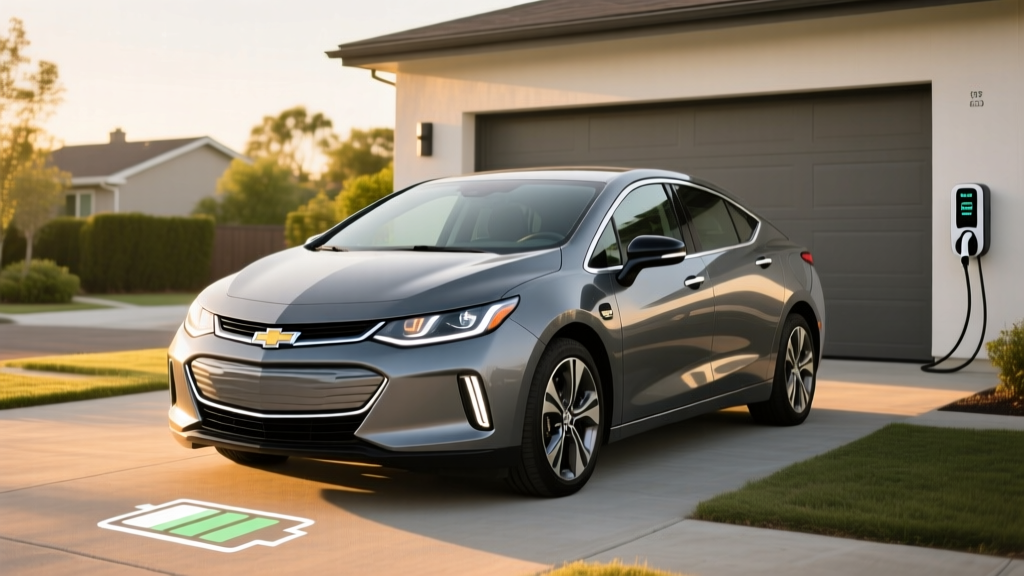
The Volt charges exclusively via Level 1 (120V household outlet) or Level 2 (240V). It does not support DC fast charging — a deliberate design choice by GM to keep costs down and because the 18.4 kWh battery charges quickly enough on Level 2 to be practical overnight.
| Charging Level | Power (kW) | Miles of Range per Hour | Full Charge Time |
|---|---|---|---|
| Level 1 (120V, 12A) | ~1.4 kW | ~4 miles/hr | ~13 hours |
| Level 2 (240V, 16A) | ~3.6 kW | ~12 miles/hr | ~4.5 hours |
Home charging cost: The national average electricity rate in 2026 hovers around $0.16/kWh (per EIA data). Fully recharging the Volt's 14 kWh usable battery costs roughly $2.24. If you drive 40 electric miles per day and charge nightly, monthly electricity cost runs about $45–$55 — compared to roughly $120–$150 in gasoline for the same distance in a 30 MPG compact car at $3.30/gallon.
Level 2 installation: Most Volt owners benefit from a 240V home charger. A basic Level 2 EVSE (like the ChargePoint Home Flex or Emporia Level 2) costs $350–$550 for the unit. Professional installation by a licensed electrician typically runs $400–$1,200 if your electrical panel has capacity. If a panel upgrade from 100A to 200A is needed, add $1,500–$3,000. Total first-year home charging setup: $750–$4,750 depending on your electrical infrastructure.
One practical note: the Volt's included charge cord handles both 120V and 240V (with the appropriate adapter pigtail on Gen 2 models). Many owners run Level 1 overnight and recover 40+ miles in 10 hours — adequate for shorter commutes without any installation expense.
Volt vs. Gas vs. Full EV: Cost and Practicality Comparison
The Volt occupies a specific niche: it's the vehicle for someone who wants electric daily driving but can't commit to a battery-electric vehicle (BEV) due to charging access limitations, road-trip needs, or budget constraints. Here's how it stacks up against alternatives on annual operating costs:
| Vehicle Type | Example | Fuel/Energy Cost | Maintenance | Annual Total |
|---|---|---|---|---|
| PHEV (Volt Gen 2) | 80% electric / 20% gas driving | ~$720 | ~$450 | ~$1,170 |
| Gas compact | 2026 Honda Civic (36 MPG combined) | ~$1,375 | ~$550 | ~$1,925 |
| Full EV | 2026 Chevy Equinox EV (315 mi range) | ~$550 | ~$250 | ~$800 |
| Modern PHEV | 2026 Toyota Prius Prime (44 mi EV) | ~$680 | ~$400 | ~$1,080 |
Key takeaway: The used Volt's operating costs are competitive with brand-new PHEVs and significantly undercut gas-only vehicles. A full EV costs less to run, but only if you have reliable home charging and your driving patterns stay within its range envelope.
The Volt's maintenance profile is a mixed story. On the positive side, brake wear is minimal thanks to regenerative braking — many Volt owners report original brake pads at 80,000+ miles. There's no transmission fluid to change in the traditional sense (the Voltec drive unit uses a simple planetary gearset). On the negative side, you still have a gasoline engine requiring oil changes, coolant service, and eventual spark plug replacement. The cooling system is complex — the Volt uses multiple coolant loops for the battery, power electronics, and engine, and these should be flushed per GM's maintenance schedule to avoid costly failures.
Used Volt Ownership: What to Budget For
Since every Volt is now a used vehicle, buyers need a realistic picture of total acquisition and ownership costs in 2026.
Purchase price ranges (Gen 2, 2016–2019):
- High-mileage (90k–130k miles): $10,000–$13,000
- Average mileage (50k–90k miles): $13,000–$17,000
- Low-mileage (under 50k miles): $17,000–$22,000
Federal tax credit: The Volt no longer qualifies for the new-vehicle §30D credit (discontinued, and GM's credit was phased out during its production run). However, the used clean vehicle credit under §25E may apply: up to $4,000 or 30% of the sale price (whichever is less) for qualifying used EVs and PHEVs purchased from a dealer. Income caps apply ($75,000 single / $150,000 joint filers), the vehicle must be at least 2 model years old, and the sale price cannot exceed $25,000. A Volt purchased for $15,000 from a qualifying dealer could net a $4,000 credit, bringing effective cost down to $11,000. Consult a tax professional to verify your eligibility.
Insurance: The Volt is generally inexpensive to insure. Average annual premiums run $1,100–$1,600 depending on your state, driving record, and coverage level — comparable to a Civic or Corolla and notably lower than most full EVs.
Battery replacement risk: This is the question every used-Volt buyer asks. GM warranted the Volt's battery for 8 years/100,000 miles (10 years/150,000 miles in CARB states like California, New York, and others). Most Gen 2 Volts are now outside the standard 8-year window but may still have coverage under the 10-year CARB extension. If you need an out-of-warranty replacement, a refurbished Volt battery pack runs $3,500–$5,500 installed at an independent EV shop, or $6,000–$8,000 at a GM dealer. In practice, wholesale battery failures are rare — degradation is gradual, and most packs retain 85–92% capacity at 100,000 miles.
Common Volt Misconceptions Addressed
| Myth | Fact |
|---|---|
| "The Volt is fully electric." | It's a PHEV/EREV with a gas engine. It will never strand you if you forget to charge — the engine kicks in automatically. |
| "Used Volt batteries are a ticking time bomb." | Volt packs have proven among the most durable in the industry. Catastrophic failures are rare; gradual 5–12% capacity loss over a decade is normal. |
| "You need a special charger at home." | Level 1 (standard 120V outlet) recovers ~40 miles overnight — sufficient for many commutes. Level 2 is faster but not mandatory. |
| "The Volt qualifies for a $7,500 tax credit." | Not anymore. The new-vehicle credit is gone, but the used-vehicle credit (§25E) can provide up to $4,000 if you meet income and price requirements. |
| "It's too old to be worth buying." | The Gen 2 Volt's powertrain was ahead of its time. 53 electric miles still covers the average American's daily driving (~37 miles per DOT data), and 42 MPG on gas beats most non-hybrids. |
Decision Framework: Is the Chevy Volt Right for You?
Choose the Chevy Volt if:
- Your daily round-trip commute is under 50 miles and you can charge at home (even on a 120V outlet)
- You take 2+ road trips per year exceeding 200 miles and don't want to plan around public charging
- Your budget is $12,000–$18,000 and you want PHEV flexibility without new-car pricing
- You live in an apartment or area with limited public charging infrastructure — the gas engine is your safety net
- You want to reduce fuel costs significantly without full EV commitment
Look elsewhere if:
- Your commute exceeds 60 miles one-way — the electric range won't cover it, and you'll burn gas daily
- You want zero gasoline maintenance — consider a used BEV like the Chevy Bolt EV (238–259 mi range, similar price range)
- You need a third row or significant cargo space — the Volt is a compact sedan with 10.6 cu ft of trunk space
- You want the latest ADAS features — the Volt offers basic lane-keep and forward collision alert, but no adaptive cruise on most trims
- You want DC fast charging capability — the Volt physically cannot accept it
Frequently Asked Questions
Can I still buy a Chevy Volt new in 2026?
No. GM discontinued the Volt after the 2019 model year. All Volt purchases today are on the used market. GM's current PHEV offerings are limited; their strategy shifted to full battery-electric vehicles under the Ultium platform (Equinox EV, Blazer EV, Silverado EV).
How long does a Chevy Volt battery last?
Based on owner-reported data and fleet analysis, Volt battery packs typically retain 85–95% of original capacity at 100,000 miles. Many Volts have surpassed 150,000 miles on the original pack with 80–88% capacity retention. The battery is not a wear item that requires scheduled replacement — it degrades gradually. GM's warranty covered defects and capacity loss below 60% for 8 years/100,000 miles (10 years/150,000 in CARB states).
Does the Chevy Volt save money compared to a gas car?
Yes, substantially — if you charge regularly. A Volt driver who commutes 40 electric miles daily and uses gas only on weekends saves approximately $650–$900 per year in fuel costs versus a 30 MPG gas car, assuming $0.16/kWh electricity and $3.30/gallon gasoline. Over five years of ownership, that's $3,250–$4,500 in fuel savings alone, plus reduced brake maintenance.
What's the difference between the Chevy Volt and the Chevy Bolt?
The Volt is a plug-in hybrid with 53 electric miles plus a gas engine. The Bolt (Bolt EV and Bolt EUV, discontinued after 2023) is a fully electric vehicle with 238–259 miles of EPA range and no gas engine. The Bolt is better for drivers with home charging who want zero gasoline expenses. The Volt is better for drivers who need gas-engine flexibility.
Is the Volt good in cold weather?
It's adequate but diminished. Electric range drops 25–40% in sub-freezing temperatures, so your 53-mile rating becomes roughly 30–38 miles. However, unlike a full EV, the Volt's gas engine provides cabin heat and unlimited range — you'll never be stranded in cold weather. Owners in Minnesota, Michigan, and New England report reliable winter operation, just with more frequent engine running.
Sources: fueleconomy.gov (EPA ratings), IRS §25E Used Clean Vehicle Credit, U.S. Energy Information Administration (electricity pricing). Tax credit eligibility varies; consult a tax professional for your situation.