Quick Answer: What Is the Chevrolet Trailblazer EV?
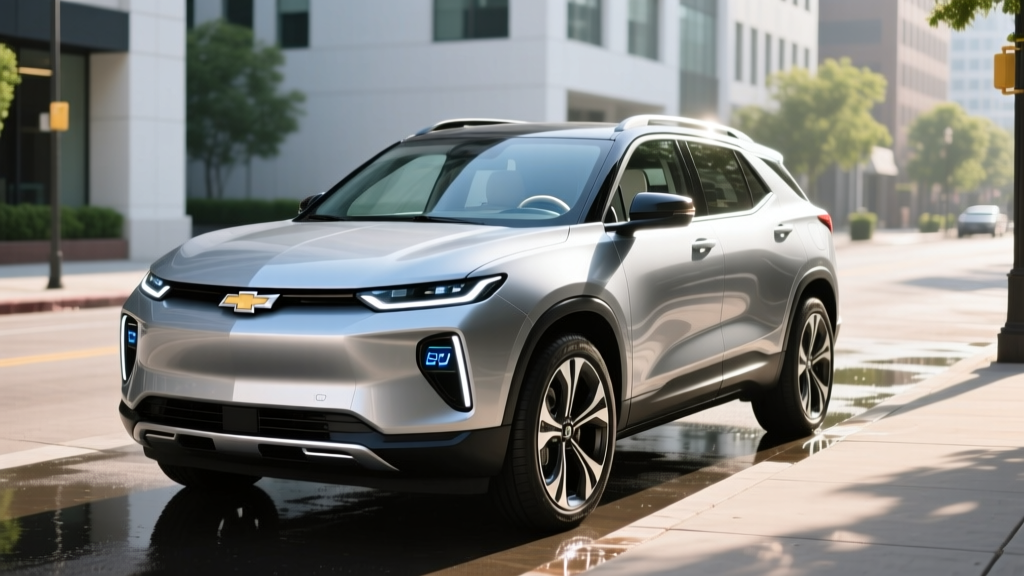
The Chevrolet Trailblazer EV is an announced but not yet released all-electric subcompact SUV from General Motors. As of early 2026, GM has confirmed the Trailblazer will join its Ultium-based EV lineup, but final EPA range, pricing, and on-sale dates remain preliminary. Based on GM's current platform architecture and segment positioning, industry estimates place the Trailblazer EV in the 250–280 mile EPA range bracket with a starting MSRP likely between $30,000 and $35,000 before incentives. If you're researching a purchase, this guide covers what's confirmed, what's projected, and how to prepare.
What We Know (and Don't Know) About the Trailblazer EV
The current gasoline Chevrolet Trailblazer is a popular subcompact crossover with an EPA-estimated 29 MPG combined. GM's decision to bring an electric variant signals its push to electrify high-volume nameplates. However, distinguishing confirmed facts from projections is critical for buyers planning a purchase.
| Specification | Status | Projected / Known Value |
|---|---|---|
| Platform | Confirmed | GM Ultium (BEV3 architecture) |
| Battery Chemistry | Likely | NMC (nickel manganese cobalt) — standard for GM Ultium crossovers |
| Battery Capacity | Estimated | ~65–75 kWh usable |
| EPA Range | Estimated | 250–280 miles (FWD); 235–260 miles (AWD) |
| Peak DC Fast Charge | Estimated | ~150–190 kW |
| 10–80% DC Charge Time | Estimated | ~25–32 minutes |
| Level 2 AC Charge Rate | Estimated | 11.5 kW (adds ~35–40 miles/hr) |
| Horsepower | Estimated | 200–250 HP (single motor FWD) |
| 0–60 mph | Estimated | ~7.0–8.5 seconds |
| Starting MSRP | Estimated | $30,000–$35,000 |
| On-Sale Date | Unconfirmed | Late 2026 or 2027 model year |
These estimates are grounded in GM's published Ultium platform capabilities and the positioning of similar vehicles like the Chevrolet Equinox EV, which shares underlying architecture but sits in a larger, higher-priced segment.
Trailblazer EV vs. Gas Trailblazer vs. Hybrid Alternatives
Most Trailblazer EV shoppers are cross-shopping against the gas Trailblazer, the Equinox EV, and hybrid subcompacts. Here's how the numbers stack up for a typical driver covering 12,000 miles per year.
| Vehicle | Efficiency | Energy/Fuel Cost | Annual Cost |
|---|---|---|---|
| Gas Trailblazer (29 MPG combined) | 29 MPG | $3.40/gal regular | ~$1,407 |
| Hyundai Kona Hybrid | 48 MPG combined | $3.40/gal regular | ~$850 |
| Trailblazer EV (est. 115 MPGe) | 3.0 mi/kWh | $0.14/kWh (home avg) | ~$560 |
| Trailblazer EV (DC fast-charge heavy) | 3.0 mi/kWh | $0.38/kWh (public avg) | ~$1,520 |
Key takeaway: Home-charged EV ownership delivers meaningful fuel savings — roughly $850/year over the gas Trailblazer. But if you rely primarily on public DC fast charging at current national averages, the cost advantage disappears entirely. This is the single most important variable for prospective buyers to calculate.
Against hybrids like the Kona or Toyota Corolla Cross Hybrid, the EV's advantage narrows. A hybrid buyer saves $550/year over gas without any charging infrastructure requirement — a compelling option for apartment dwellers or those without garage access.
Real-World Range: What the EPA Sticker Won't Tell You
If the Trailblazer EV achieves a 270-mile EPA estimate, expect real-world results to vary substantially based on conditions:
- Ideal conditions (city, 65°F, moderate speeds): 270–290 miles achievable; regenerative braking recovers energy in stop-and-go traffic
- Highway driving (70+ mph sustained): Expect 220–245 miles; aerodynamic drag dominates at speed, and EVs lose efficiency faster than gas cars on the highway
- Cold weather (below 32°F): Expect 185–225 miles; battery chemistry slows ion flow, cabin heating draws 2–5 kW continuously, and the charge curve flattens. LFP batteries (if GM offers one) would see even greater cold-weather loss
- Mountain/high-altitude driving: Climbing consumes heavily, but descent regen can recover 30–50% of uphill energy on a round trip
GM's Ultium platform includes a heat pump on higher trims (confirmed on the Equinox EV and Blazer EV), which recovers waste heat from the powertrain to warm the cabin. If equipped on the Trailblazer EV, a heat pump could reduce cold-weather range loss by 10–15%. Confirm this feature when final specs drop.
Charging the Trailblazer EV: Home, Public, and What It Costs
Charging access determines whether an EV is a joy or a burden. Here's the realistic breakdown for a Trailblazer EV owner:
| Level | Power | Miles Added Per Hour | Typical Use Case |
|---|---|---|---|
| Level 1 (120V household outlet) | ~1.4 kW | ~4–5 miles/hr | Overnight top-up for low-mileage drivers (<30 mi/day) |
| Level 2 (240V home charger) | ~11.5 kW | ~35–40 miles/hr | Primary home charging; full charge in 7–8 hours |
| DC Fast Charging | 150–190 kW peak | ~150+ miles in 15 min | Road trips; 10–80% in ~25–32 min |
Home Charging Installation Costs
If you have a garage or driveway with electrical panel access, budget for a Level 2 home charger installation:
| Item | Cost Range |
|---|---|
| Level 2 charger unit (hardwired, 48A) | $400–$700 |
| Electrician labor (standard install, panel nearby) | $500–$1,200 |
| Permit and inspection | $100–$300 |
| Electrical panel upgrade (if 100A → 200A needed) | $1,500–$3,500 |
| Total (no panel upgrade) | $1,000–$2,200 |
| Total (with panel upgrade) | $2,500–$5,700 |
The panel upgrade is the wildcard. Homes built before 1990 often have 100-amp service that can't support a 48-amp continuous EV circuit alongside existing loads like electric dryers and HVAC. A licensed electrician must assess your panel before quoting — never assume your home is ready without this evaluation.
Connector note: GM has transitioned its EV lineup to the NACS (North American Charging Standard) connector beginning with 2025 model-year vehicles. The Trailblazer EV is expected to ship with a native NACS port, granting direct access to Tesla Superchargers (now open to non-Tesla EVs) without an adapter. This is a significant advantage over CCS-only vehicles for public charging network coverage.
Total Cost of Ownership: 5-Year Breakdown
Here's a realistic 5-year/60,000-mile ownership comparison for a buyer in a moderate climate with home charging access:
| Category | Trailblazer EV (est.) | Gas Trailblazer |
|---|---|---|
| Purchase price (base MSRP) | $32,000 | $24,500 |
| Federal tax credit (§30D, if eligible) | –$3,750 to –$7,500 | $0 |
| Home charger install | $1,500 | $0 |
| Fuel / electricity (5 years, home charging) | $2,800 | $7,035 |
| Maintenance (oil, filters, brakes) | $600 | $2,800 |
| Insurance (5-year average) | $7,500 | $6,000 |
| Estimated depreciation | $12,000 | $9,500 |
| Net 5-year cost | ~$19,650–$23,400 | ~$49,835 |
EV cost shown as range reflecting $3,750 vs. $7,500 tax credit. Actual credit depends on battery sourcing, buyer income, and MSRP caps per IRS §30D rules. Consult a tax professional.
Where the EV wins: Fuel and maintenance savings total ~$10,600 over five years. No oil changes, no transmission fluid, and regenerative braking extends brake pad life to 80,000+ miles in typical driving.
Where the EV costs more: Insurance premiums run 15–25% higher for EVs due to battery replacement costs in collision claims. Depreciation is harder to project for a new nameplate, though early Ultium-based GM EVs have seen steeper first-year depreciation than expected — a risk factor.
Federal Tax Credit: Will the Trailblazer EV Qualify?
The federal clean vehicle credit under IRS §30D offers up to $7,500, but eligibility is anything but automatic. Here's what buyers must verify:
- MSRP cap: SUVs must be priced at or below $80,000 — the Trailblazer EV will clear this easily
- Buyer income cap: Modified AGI must not exceed $150,000 (single), $225,000 (head of household), or $300,000 (joint) — verified at purchase or on your tax return
- Battery component sourcing: A percentage of battery components must be manufactured or assembled in North America, escalating annually. For 2026, the threshold is stringent, and GM's Ultium battery plants in Ohio and Tennessee position its vehicles well — but final credit amounts vary by trim and battery pack
- Critical minerals: A separate $3,750 credit tier depends on critical mineral sourcing from the U.S. or free-trade-agreement partners
- Point-of-sale transfer: Buyers can transfer the credit to the dealer at purchase, reducing the drive-off price immediately — this is now standard practice at most GM dealerships
Realistic expectation: Based on GM's current Ultium battery supply chain, the Trailblazer EV is likely to qualify for the full $7,500 credit for eligible buyers. However, sourcing requirements tighten each year, and trim-level variations can affect eligibility. Always verify on the IRS portal at the time of purchase.
Common Trailblazer EV Misconceptions
| Myth | Fact |
|---|---|
| "The Trailblazer EV is available to buy now" | As of early 2026, it is announced but not on sale. The gas Trailblazer is available; the EV is expected late 2026 or as a 2027 model |
| "EVs cost more to own than gas cars" | Over 5 years with home charging, the Trailblazer EV projects $2,800 in electricity vs. $7,035 in gas — a $4,235 savings that offsets the higher purchase price |
| "I need a Tesla to use Superchargers" | GM's NACS connector gives direct Supercharger access. No adapter needed for Trailblazer EV models with native NACS |
| "EV batteries need replacing every few years" | GM's Ultium battery warranty covers 8 years/100,000 miles with a capacity retention guarantee (typically 70% minimum). Real-world degradation for NMC packs averages 10–15% over 150,000 miles |
| "I can charge from any outlet" | Level 1 (120V) adds only 4–5 miles per hour — adequate for <30-mile daily commutes but impractical as a primary charging strategy for most drivers |
Decision Framework: Is the Trailblazer EV Right for You?
Choose the Trailblazer EV if:
- You have access to Level 2 home charging (garage or driveway with 240V circuit capability)
- Your daily driving is under 80 miles round-trip, leaving ample range buffer
- You qualify for the §30D federal tax credit (income below caps, tax liability to offset)
- You want a compact electric SUV under $35,000 with NACS Supercharger access
- You're willing to wait for the on-sale date and accept early-production unknowns
Consider a hybrid (Kona Hybrid, Corolla Cross Hybrid) instead if:
- You live in an apartment or lack reliable home charging access
- You regularly drive 300+ miles in a day through areas with sparse charging infrastructure
- You live in an extreme cold climate (consistently below 10°F) where range loss exceeds 35%
- You need to minimize upfront cost and don't want to invest in home charger installation
Consider the Equinox EV instead if:
- You need more cargo space (Equinox offers ~26 cu ft vs. the Trailblazer's estimated ~22 cu ft)
- You want confirmed, available specs today rather than waiting for the Trailblazer EV launch
- You're willing to pay $5,000–$8,000 more for a slightly larger platform with 300+ mile range
Frequently Asked Questions
When will the Chevrolet Trailblazer EV be available to buy?
GM has not confirmed an exact on-sale date. Based on the brand's EV rollout cadence and Ultium production capacity, industry analysts project late 2026 availability or a 2027 model-year launch. Monitor Chevrolet's EV hub for official updates.
How far can the Trailblazer EV really go on a charge?
The EPA estimate is projected at 250–280 miles for front-wheel-drive trims. In real-world highway driving at 70 mph, expect 220–245 miles. In sub-freezing temperatures, plan for 185–225 miles. These are estimates until GM publishes official EPA data.
Will the Trailblazer EV qualify for the $7,500 tax credit?
Based on GM's Ultium battery manufacturing in Ohio and Tennessee, the Trailblazer EV is well-positioned to qualify for the full $7,500 federal credit. However, buyer income caps and annual sourcing requirement changes apply. Verify eligibility on the IRS §30D page at time of purchase.
Can I charge the Trailblazer EV at Tesla Superchargers?
Yes — GM's transition to the NACS connector means the Trailblazer EV is expected to have native Supercharger compatibility without an adapter. This provides access to the largest fast-charging network in North America.
Is the Trailblazer EV better than a gas Trailblazer?
For home-charging-capable buyers who drive under 80 miles daily, the EV offers lower 5-year ownership costs (~$2,800 in electricity vs. ~$7,035 in gas) and smoother, quieter driving. For apartment dwellers or frequent long-distance drivers in charging-sparse regions, the gas Trailblazer or a hybrid alternative remains more practical.
What is the battery warranty on the Trailblazer EV?
GM's Ultium battery warranty covers 8 years or 100,000 miles against defects and excessive capacity loss (below approximately 70% state of health). This is consistent across the Equinox EV, Blazer EV, and Silverado EV and is expected to apply to the Trailblazer EV.