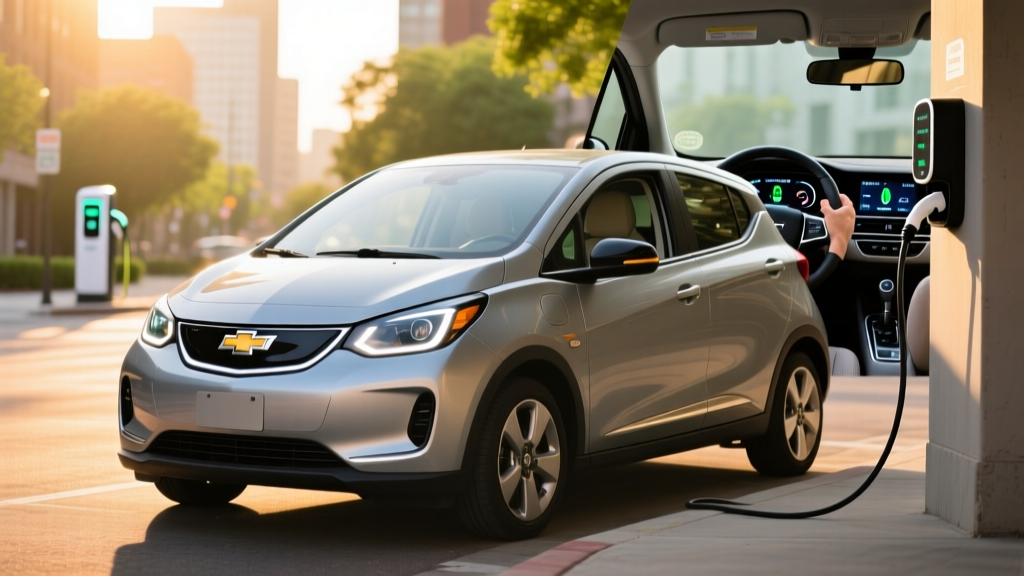
Quick Answer: Is the Chevy Spark EV Still Worth It?
The Chevy Spark electric vehicle (discontinued after the 2016 model year) remains one of the cheapest used EVs on the market, with examples selling for $5,000–$9,000 in 2026. Its 82-mile EPA range and 19 kWh battery make it strictly a city commuter or second car. If you can charge at home, drive under 50 miles daily, and live in a mild climate, it's a bargain. If you need highway range, DC fast charging flexibility, or deal with harsh winters, look elsewhere.
Chevy Spark EV Specifications at a Glance
Before evaluating the Spark EV as a used purchase, here are the exact figures you need to know. Chevrolet produced the Spark EV across the 2014–2016 model years with two battery configurations.
| Specification | 2014–2015 Model | 2016 Model |
|---|---|---|
| EPA Range | 82 miles | 82 miles |
| Battery Capacity (usable) | 19 kWh | 19 kWh |
| Battery Chemistry | NMC (nickel-manganese-cobalt) | NMC |
| Motor Output | 114 hp / 400 lb-ft torque | 114 hp / 400 lb-ft torque |
| 0–60 mph | ~7.6 seconds | ~7.6 seconds |
| DC Fast Charge (CCS) | Up to 50 kW (optional) | Up to 50 kW (optional) |
| Level 2 Charge Rate | 3.3 kW onboard charger | 3.3 kW onboard charger |
| Level 2 Full Charge Time | ~6–7 hours | ~6–7 hours |
| MPGe (combined) | 119 MPGe | 119 MPGe |
| EPA Efficiency | 28 kWh/100 mi | 28 kWh/100 mi |
Source: fueleconomy.gov
Real-World Range: What 82 Miles Actually Means
The EPA's 82-mile figure assumes a mix of city and highway driving at moderate temperatures. In practice, the Spark EV's usable range varies considerably based on conditions.
Spark EV Real-World Range Expectations
- City driving, mild weather (60–75°F): 75–85 miles — regenerative braking maximizes efficiency in stop-and-go traffic.
- Highway driving (70 mph sustained): 55–65 miles — the Spark EV's small frontal area helps, but EVs lose efficiency at speed.
- Cold weather (below 32°F): 45–60 miles — the Spark EV lacks a heat pump, relying on resistive cabin heating that draws heavily from the 19 kWh pack.
- Hot weather with A/C (above 90°F): 60–70 miles — less severe than cold-weather loss, but still meaningful.
This is the critical limitation. With a degraded battery — and any 8-to-12-year-old NMC pack will have lost 15–30% of its original capacity — your effective range could drop to 50–65 miles in mixed conditions. For a commuter who drives 30 miles round-trip with home charging, that's still workable. For anyone without reliable overnight charging or with a longer commute, the math doesn't add up.
Charging the Spark EV: Speeds, Connectors, and Reality
Level 1 (120V Household Outlet)
The Spark EV ships with a 120V portable cord. At roughly 1.2 kW, a full charge from empty takes 16–18 hours. This is viable only for overnight top-ups if your daily drive is under 30 miles. Expect to add about 4–5 miles of range per hour of Level 1 charging.
Level 2 (240V Home or Public Charger)
The onboard charger is limited to 3.3 kW, even when connected to a higher-capacity Level 2 station. A depleted battery takes roughly 6–7 hours to reach full. This is slow by modern standards — a 2026 Chevy Equinox EV charges at up to 11.5 kW on Level 2 — but adequate for overnight replenishment.
DC Fast Charging (CCS Combo)
DC fast charging was an optional extra on the Spark EV, and not all used examples have it. When equipped, the CCS port accepts up to 50 kW, reaching 80% in approximately 30 minutes. However, the charge curve tapers significantly above 80%, and 50 kW is modest — modern EVs peak at 150–350 kW. If the used Spark EV you're considering lacks the CCS option, you are limited to Level 1 and Level 2 exclusively.
Verify CCS port presence before purchase. Look for the two additional DC pins below the J1772 connector on the charge port.
Spark EV vs. Gas Car vs. Modern Used EV: Cost Comparison
| Cost Factor | Chevy Spark EV (Used) | 2020 Honda Fit (Gas) | Used 2019 Nissan Leaf (40 kWh) |
|---|---|---|---|
| Typical Purchase Price (2026) | $5,000–$9,000 | $14,000–$18,000 | $10,000–$15,000 |
| Fuel/Energy Cost per Mile | ~$0.04 (at $0.14/kWh) | ~$0.12 (at $3.40/gal, 33 MPG) | ~$0.04 (at $0.14/kWh) |
| Annual Fuel/Energy (12,000 mi) | ~$480 | ~$1,440 | ~$480 |
| Annual Maintenance Estimate | ~$200–$350 | ~$600–$900 | ~$250–$400 |
| Insurance (annual avg.) | ~$900–$1,200 | ~$1,000–$1,400 | ~$1,100–$1,500 |
| Federal Tax Credit (§30D Used EV) | Up to $4,000* | None | Up to $4,000* |
| 5-Year Total Energy + Maintenance | ~$3,400–$5,750 | ~$10,200–$16,500 | ~$3,650–$6,000 |
*The IRS §25E used EV credit provides up to $4,000 or 30% of the sale price (whichever is less) for qualified used EVs purchased from a dealer, subject to income caps ($75K single / $150K joint) and the vehicle must be at least two model years old. The Spark EV qualifies on age, but the sale price must be $25,000 or less. Confirm eligibility with a tax professional.
The Spark EV's operating costs are genuinely low. At $0.04 per mile for electricity versus $0.12 for gasoline, a 12,000-mile-a-year driver saves roughly $960 annually on energy alone. Combined with reduced maintenance (no oil changes, no spark plugs, regenerative braking extends pad life), the 5-year savings versus a gas subcompact can exceed $8,000.
Battery Health: The Biggest Used Spark EV Risk
The Spark EV uses an NMC lithium-ion pack. Unlike LFP (lithium iron phosphate) chemistry found in some newer EVs, NMC batteries experience more noticeable degradation over time, especially if the previous owner frequently charged to 100% or used DC fast charging regularly.
Expected Degradation
- Year 1–3: 5–8% capacity loss (typical for NMC)
- Year 4–7: Additional 5–10% loss, depending on climate and charging habits
- Year 8–12 (current Spark EV age): Total degradation of 15–30% from original capacity
A Spark EV with 25% degradation will have roughly 14.25 kWh of usable capacity, translating to an effective range of 55–65 miles in mixed driving. Before purchasing, request a battery health report or use an OBD-II scanner with an EV-compatible app (such as Leaf Spy for Nissan, though Spark EV compatibility is limited — a dealer diagnostic scan is the most reliable method).
Battery Warranty Status
Chevrolet provided an 8-year/100,000-mile battery warranty (10 years/150,000 miles in CARB states including California, New York, Massachusetts, and others) covering capacity loss below 60% of original. For a 2014 model, this warranty expired in 2022 in non-CARB states and 2024 in CARB states. A 2016 model's warranty expires in 2024 (non-CARB) or 2026 (CARB). Most Spark EVs on the used market in 2026 are out of battery warranty. A replacement pack, if available, would cost an estimated $4,000–$7,000 through a dealer — potentially exceeding the car's value.
Common Misconceptions About the Chevy Spark EV
| Myth | Fact |
|---|---|
| "The Spark EV qualifies for the full $7,500 federal tax credit." | The §30D new EV credit no longer applies — the Spark EV has been out of production since 2016. The §25E used EV credit of up to $4,000 may apply if purchased from a dealer and income limits are met. |
| "It charges fast on DC." | Peak DC rate is 50 kW — competitive in 2014, but slow in 2026. A 10–80% charge takes ~30 minutes, not the 15–18 minutes modern EVs achieve at 150+ kW stations. |
| "82 miles of range is enough for anyone." | 82 miles is the EPA estimate under ideal conditions. Real-world range in cold weather or at highway speeds drops to 45–65 miles. This car works only for short, predictable commutes. |
| "All Spark EVs have DC fast charging." | CCS DC fast charging was a dealer-installed option. Many used examples lack it entirely. Always verify before purchase. |
| "Maintenance is basically free." | While there are no oil changes or transmission fluid services, the Spark EV still needs brake fluid flushes, cabin air filters, coolant checks, tire rotations, and eventually suspension components. Budget $200–$350 annually. |
Real-World Ownership Considerations
Home Charging Access
The Spark EV is heavily dependent on home charging. With a 3.3 kW Level 2 charger, overnight replenishment is seamless. Without home charging, relying on public Level 2 stations (often $0.25–$0.49/kWh) or the limited DC fast-charging infrastructure erases much of the cost advantage and introduces daily inconvenience. If you cannot install or access a Level 2 charger where you park overnight, the Spark EV is not practical.
Climate Impact
The Spark EV has no heat pump. In sub-freezing climates, resistive heating can consume 20–35% of the battery's energy on short trips, cutting range to 45–55 miles. In the Sun Belt, battery degradation accelerates — a Spark EV in Phoenix or Las Vegas may have lost more capacity than one in Portland or Minneapolis. If you live in a region with extreme temperatures, budget for a larger range buffer or consider a more modern EV with active thermal management.
Driving Patterns
This car excels in one specific use case: a predictable daily commute under 50 miles round-trip with overnight home charging. It does not work for road trips (82-mile range with slow charging), ride-share driving, or as a sole household vehicle for a family that occasionally needs to drive longer distances.
Decision Framework: Should You Buy a Used Chevy Spark EV?
Buy the Spark EV If:
- Your daily round-trip commute is under 45 miles
- You have reliable home Level 2 charging (garage, driveway, or dedicated parking with a 240V outlet)
- This will be a second car — your household has another vehicle for longer trips
- You live in a mild climate (rarely below 30°F or above 95°F)
- Your budget is under $10,000 and you want the lowest possible operating cost
- You can verify battery health (under 20% degradation) before purchase
Skip the Spark EV If:
- Your commute exceeds 50 miles round-trip or includes significant highway driving
- You cannot charge at home and would rely on public infrastructure
- This would be your only vehicle
- You live in a region with harsh winters (regular sub-20°F temperatures)
- You need cargo space, rear-seat room, or towing capability
- You want modern safety features (the Spark EV lacks automatic emergency braking, lane-keeping, and adaptive cruise)
Consider These Alternatives Instead:
- Used Nissan Leaf (2018+, 40 kWh): 151-mile EPA range, CHAdeMO DC charging, ~$10,000–$15,000
- Used Chevy Bolt EV (2017–2019): 238-mile EPA range, CCS DC charging at 55 kW, ~$11,000–$16,000
- Used BMW i3 (2017+, 33 kWh): 114-mile EPA range, CCS DC charging, ~$12,000–$17,000
- New 2026 Chevy Equinox EV (base): 319-mile EPA range, 170 kW DC charging, starts ~$33,000 before credits
Frequently Asked Questions
Can I still buy a Chevy Spark EV new?
No. Chevrolet discontinued the Spark EV after the 2016 model year, and the gas-powered Spark hatchback ended after 2022. Only used examples are available, typically through private sellers, independent used-car lots, and some franchised dealerships.
Does the Chevy Spark EV qualify for any tax credits in 2026?
It does not qualify for the §30D new-vehicle credit. It may qualify for the §25E used clean vehicle credit of up to $4,000 (30% of the sale price, capped at $4,000) if purchased from a licensed dealer, the sale price is $25,000 or less, and your modified adjusted gross income falls within limits ($75,000 single / $150,000 joint). The vehicle must be at least two model years old, which all Spark EVs satisfy. Consult a tax professional for your specific situation.
How long does the Spark EV battery last?
NMC batteries in the Spark EV typically lose 15–30% of capacity over 8–12 years. A well-maintained example (garage-kept, rarely DC fast-charged, charged to 80% daily) may retain 75–85% of original capacity. A neglected one could be at 65–70%. Always request a diagnostic scan before purchase.
Is the Spark EV safe?
The Spark EV received a 4-star overall rating from NHTSA, which is acceptable but not class-leading by 2026 standards. It lacks modern ADAS features like automatic emergency braking, blind-spot monitoring, and lane-keeping assist that are now standard on most new vehicles.
What happens if the battery fails out of warranty?
A replacement battery pack through a Chevy dealer costs an estimated $4,000–$7,000, which could exceed the vehicle's value. Third-party EV battery repair shops can sometimes replace individual degraded cells for $1,500–$3,000, but availability varies by region. Factor this risk into your purchase decision — the Spark EV's low purchase price should leave budget room for a potential battery repair.
Can I use the Spark EV for road trips?
Technically yes, but it's painful. With 55–82 miles of range and a 50 kW DC charge rate (if equipped), you'll stop every 45–70 minutes for 30+ minutes of charging. A 300-mile trip that takes 5 hours in a gas car could take 8–10 hours in a Spark EV. This car is a commuter, not a road-trip vehicle.
Editorial note: Pricing, tax-credit rules, and market availability reflect conditions as of early 2026. Always verify current IRS guidelines and obtain a pre-purchase inspection before buying any used EV.