If you've been searching for Chevy Spark EV lease deals, you've likely noticed something frustrating: there aren't any. General Motors discontinued the Spark EV after the 2016 model year, and Chevrolet ended the entire Spark nameplate — gas and electric — in 2022. That means no dealership is offering a new Spark EV lease in 2026, and the used lease-transfer market for this model has essentially dried up as original 36-month contracts expired years ago.
But if the Spark EV brought you here, you're clearly looking for an affordable, compact electric vehicle with low running costs. That search is still very much alive — and the ownership economics that made the Spark EV appealing a decade ago apply even more strongly to today's budget EVs. Let's break down what owning a used Spark EV actually costs in 2026, what the real fuel and maintenance savings look like, and which current EVs deliver the value the Spark once promised.
Why Chevy Spark EV Lease Deals No Longer Exist
The Chevrolet Spark EV was a compliance car produced in limited numbers primarily for the California market between 2013 and 2016. It featured a 21.3 kWh battery (later revised to 19 kWh in the 2015-2016 models with improved energy density), delivering an EPA-estimated 82 miles of range in its final iteration. With 140 horsepower and a 0-60 mph time of roughly 7.2 seconds, it was surprisingly quick for its size.
Because production was so limited and the car is now 10+ years old, you won't find Spark EV lease deals through any Chevrolet dealer. Your only path to one is the used market, where examples typically sell between $6,000 and $10,000 depending on mileage and battery condition. A used EV lease transfer is theoretically possible but exceedingly rare for this model.
Used Spark EV: 5-Year Total Cost of Ownership
Let's model what owning a used 2016 Spark EV actually costs over five years, assuming a purchase price of $8,000 and 12,000 miles driven annually. We'll compare it against a similarly priced used gas car (a 2019 Chevrolet Spark LT with a gas engine, averaging 30 MPG combined) purchased for roughly the same amount.
| Cost Category | Used Spark EV | Used Gas Spark (30 MPG) |
|---|---|---|
| Purchase Price | $8,000 | $8,000 |
| Fuel / Electricity (60k mi) | $2,520 | $7,000 |
| Maintenance (5 years) | $1,500 | $3,500 |
| Insurance (5 years) | $8,500 | $7,000 |
| Depreciation (est.) | $3,500 | $3,000 |
| Total 5-Year Cost | $24,020 | $28,500 |
The Spark EV saves roughly $4,480 over five years compared to its gas counterpart, primarily through fuel and maintenance reductions. But these savings come with important caveats — particularly around battery degradation on a 10-year-old pack and limited DC fast charging capability (the Spark EV maxed out at about 50 kW on CCS, and many early models used SAE Combo or even CHAdeMO depending on market).
Charging Cost vs. Gas: The Real Per-Mile Math
| Scenario | Cost/kWh or $/Gallon | Efficiency | Cost Per Mile |
|---|---|---|---|
| Spark EV — Home L1/L2 (avg $0.16/kWh) | $0.16/kWh | 3.5 miles/kWh (119 MPGe) | $0.046 |
| Spark EV — Public DC Fast (avg $0.40/kWh) | $0.40/kWh | 3.5 miles/kWh | $0.114 |
| Gas Spark — Regular Unleaded ($3.50/gal) | $3.50/gal | 30 MPG combined | $0.117 |
At home on Level 2 charging, the Spark EV costs roughly 4.6 cents per mile to fuel — less than half the cost of the gas equivalent. Even at public DC fast-charger rates, it nearly matches gas per mile. If you can charge at home (which the vast majority of EV owners do for daily driving), the fuel savings are substantial: approximately $896 per year at 12,000 miles, or $4,480 over five years.
The Spark EV's 19-21 kWh battery charges fully in about 7 hours on a Level 2 (240V, 3.3 kW onboard charger) connection. On a 50 kW DC fast charger, a 10-80% charge takes roughly 30 minutes — slower by modern standards but adequate for a city commuter car.
Maintenance Savings: Where EVs Quietly Win
| Service Item | Spark EV | Gas Spark |
|---|---|---|
| Oil Changes (every 5k mi) | $0 | $600 (12 changes × $50) |
| Brake Pads | $0–$200 (regen extends life) | $600 (2 replacements) |
| Transmission Fluid | $0 (single-speed) | $150 |
| Engine Air Filter | $0 (no engine) | $100 |
| Coolant / Spark Plugs | $0 | $350 |
| Cabin Air Filter / Tires / Wipers | $1,300 (shared costs) | $1,300 |
| Total (5 yrs / 60k mi) | $1,500 | $3,500 |
The Spark EV eliminates the entire engine maintenance schedule. Regenerative braking significantly extends brake pad life — many EV owners report original brake pads lasting 80,000+ miles. The net result is roughly $2,000 in maintenance savings over five years. On a budget commuter car, that's meaningful money.
The one maintenance wildcard on a used Spark EV is the traction battery. GM warranted the battery for 8 years/100,000 miles (10 years/150,000 miles in California and states adopting CARB emissions standards). A 2016 model's federal warranty has expired, meaning any battery failure is an out-of-pocket cost — typically $5,000–$8,000 for replacement. Before purchasing, request a battery State of Health (SoH) reading from a Chevrolet dealer or use an OBD-II reader with EV-compatible software.
Federal Tax Credit: Does a Used Spark EV Qualify?
Here's where the economics shift. The Spark EV does not qualify for the new-vehicle §30D federal tax credit (up to $7,500) because it is no longer manufactured. However, it may qualify for the Used Clean Vehicle Credit (§25E), which provides up to $4,000 or 30% of the sale price (whichever is less) for qualifying pre-owned EVs.
§25E Used EV Tax Credit Eligibility Checklist (2026)
- Credit amount: Up to $4,000 or 30% of sale price, whichever is lower
- Vehicle age: Must be at least 2 model years old (Spark EV qualifies)
- Sale price cap: Vehicle must sell for $25,000 or less (Spark EV qualifies at ~$8,000)
- Buyer income limits (MAGI): $75,000 single / $112,500 head of household / $150,000 joint
- Dealer requirement: Must purchase from a licensed dealer (private-party sales excluded)
- One-time use: Each buyer can claim the used credit once every 3 years
- Point-of-sale transfer: Credit can be applied at purchase to reduce upfront cost
At an $8,000 purchase price, 30% equals $2,400 — that's your credit, not the full $4,000. If your income is within the caps and you buy from a dealer, you could reduce your effective purchase price to roughly $5,600. Always verify current rules at IRS.gov, as credit parameters can change with legislation.
State, Local, and Utility Incentives
Incentive availability varies significantly by jurisdiction. The following are examples — always check your state's energy office and local utility for current programs:
- California (CVRP): Up to $1,000–$2,000 for used EVs purchased through participating dealers, income-dependent
- Colorado: State tax credit up to $5,000 for EVs (check current-year applicability to used vehicles)
- Utility rebates: Many utilities offer $250–$500 rebates for home Level 2 charger installation (e.g., PG&E, SCE, Xcel Energy)
- HOV lane access: Some states grant carpool-lane stickers for EVs, though California's program has been phased out for older models
- Time-of-use rates: Utility EV-specific rate plans can reduce home charging costs to $0.08–$0.10/kWh during off-peak hours
Consult your state energy office and the Alternative Fuels Data Center for programs specific to your ZIP code.
Insurance Reality: The Cost EV Owners Often Overlook
EV insurance premiums typically run 15–25% higher than equivalent gas vehicles. For the Spark EV, the gap is narrower because the car's low value keeps comprehensive and collision premiums modest — expect roughly $1,700/year vs. $1,400/year for the gas Spark, a difference of about $300 annually or $1,500 over five years.
Why are EVs more expensive to insure?
- Higher repair costs: Battery packs require specialized handling; body shops need EV certification
- Total-loss thresholds: Even minor battery damage can trigger a total-loss declaration
- Parts scarcity: For a discontinued model like the Spark EV, replacement body panels and drivetrain components are increasingly difficult to source
- Specialized labor: Fewer certified EV technicians mean higher labor rates
Shop quotes from EV-friendly insurers (Geico, Progressive, and State Farm all have EV-specific rating models) and compare before purchasing.
Depreciation and Resale: What Happens to a 10-Year-Old EV?
The Spark EV has already absorbed most of its depreciation. A $26,000 MSRP in 2016 has compressed to $6,000–$10,000 in 2026 — roughly a 70% loss over a decade. From here, depreciation flattens considerably. You might sell it for $4,500–$6,500 after five years of ownership, representing a $2,000–$3,500 loss.
Key factors affecting used EV resale:
- Battery SoH: A pack retaining 85%+ of original capacity commands a premium; below 75% significantly depresses value
- Range relevance: At 82 miles EPA, the Spark EV's range is increasingly uncompetitive as modern budget EVs (Chevy Bolt EV at 259 miles, Nissan Leaf at 212 miles) dominate the used market
- Charging standard obsolescence: The Spark EV's CCS1 connector is still supported, but the industry's rapid shift to NACS (Tesla's standard, now adopted by Ford, GM, Hyundai, and others) may eventually marginalize CCS-only vehicles at public chargers
- Model discontinuation: No manufacturer support or parts pipeline for a discontinued nameplate accelerates late-life depreciation
Better Alternatives: Budget EVs You Can Actually Lease in 2026
If the Spark EV's economics appealed to you but you want a vehicle with modern range, active warranties, and available lease deals, consider these current alternatives:
| Model | EPA Range | Battery (kWh) | Peak DC Charge | 10-80% Time | Base MSRP | §30D Credit Eligible? |
|---|---|---|---|---|---|---|
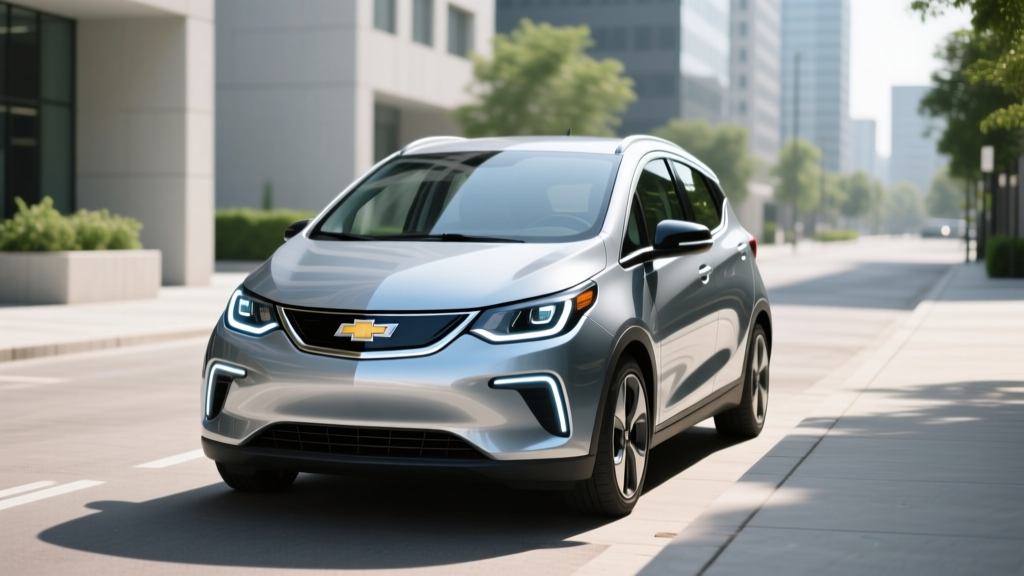
| Chevrolet Bolt EV | 259 mi | 65 kWh (NMC) | 115 kW | ~30 min | $28,900 | Yes — up to $7,500* |
| Nissan Leaf S | 212 mi | 60 kWh (NMC) | 100 kW (CCS) | ~35 min | $29,990 | Yes — up to $3,750* |
| Hyundai Kona Electric | 261 mi | 64.8 kWh (NMC) | 100 kW | ~33 min | $33,550 | Yes — up to $7,500* |
*§30D credit eligibility depends on buyer income (MAGI caps: $75k single / $150k joint for new vehicles), vehicle MSRP caps ($55,000 for cars), battery component and critical mineral sourcing requirements, and point-of-sale transfer availability. Verify at IRS.gov. Real-world range: expect 80–90% of EPA on highway-heavy driving and 20–30% reduction in sustained sub-freezing temperatures.
The Bolt EV is the spiritual successor to the Spark EV's mission — an affordable, practical commuter with dramatically more range. At $28,900 before a potential $7,500 federal credit, it can effectively start near $21,400, making it the value benchmark in the segment. Lease deals on the Bolt EV and Kona Electric frequently appear in the $199–$299/month range with $2,000–$3,000 due at signing, depending on market and creditworthiness.
FAQ: Chevy Spark EV and Budget EV Ownership
Can I still find Chevy Spark EV lease deals anywhere?
No. The Spark EV was discontinued after 2016, and all original leases have long since expired. The only way to acquire one is through the used market (private party or dealer). If you find a "lease transfer" listing for a Spark EV, verify the vehicle and terms carefully — it's likely outdated or fraudulent.
How much does it really cost to own a used Spark EV for 5 years?
Approximately $24,000 all-in over five years and 60,000 miles, including purchase ($8,000), electricity ($2,520), maintenance ($1,500), insurance ($8,500), and depreciation ($3,500). A comparable gas car costs roughly $28,500 over the same period — a $4,500 difference favoring the EV.
Does the Spark EV qualify for any tax credits in 2026?
It does not qualify for the new-vehicle §30D credit (up to $7,500). It may qualify for the §25E Used Clean Vehicle Credit — up to $4,000 or 30% of the sale price, whichever is less. At $8,000, that's a $2,400 credit, subject to buyer income limits ($75k single / $150k joint) and dealer-purchase requirements.
How much do I save on fuel and maintenance vs. gas?
Home-charged Spark EV owners save approximately $896/year on fuel (4.6¢/mile vs. 11.7¢/mile for gas at $3.50/gal). Maintenance savings add roughly $400/year. Combined annual savings: approximately $1,300, or $6,500 over five years — though insurance costs partially offset this.
Are EVs more expensive to insure?
Yes, typically 15–25% more than comparable gas vehicles. For the Spark EV specifically, the gap is about $300/year ($1,700 vs. $1,400) due to the car's low overall value. Higher-value EVs see larger insurance premiums. Always get quotes before purchasing.
How well does the Spark EV hold its value?
It has already lost roughly 70% of its original $26,000 MSRP. Further depreciation will be modest — expect a $2,000–$3,500 loss over the next five years. The main risk is battery degradation; a failing pack could cost $5,000–$8,000 to replace, exceeding the car's value. Always check battery State of Health before purchasing.
Should I buy a used Spark EV or a new Bolt EV?
If your budget is strictly under $10,000 and your commute is under 40 miles round-trip with reliable home charging, a used Spark EV can work as a second car. For everyone else, a new Chevrolet Bolt EV at ~$21,400 (after the $7,500 federal credit) offers 259 miles of range, modern safety tech, an active warranty, and available lease deals — making it the far stronger financial choice for most buyers.