Quick Answer: Is the Chevy Spark Electric?
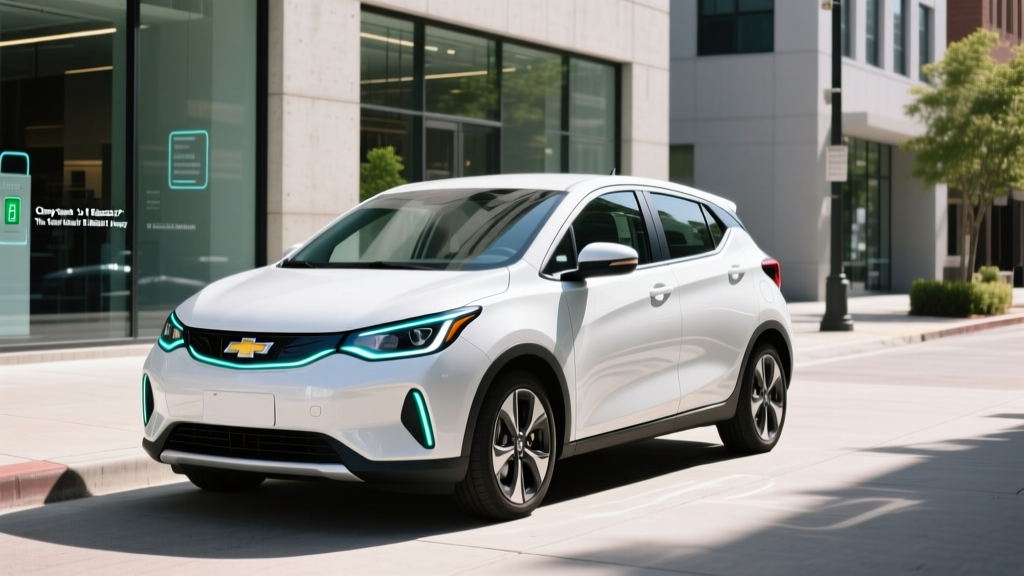
The standard Chevy Spark is not electric — it was a gasoline-powered subcompact hatchback produced through the 2022 model year. However, Chevrolet did sell a fully electric version called the Spark EV from 2013 to 2016. That limited-production EV offered 82 miles of EPA range and a 21 kWh battery. Both the gas Spark and Spark EV are now discontinued, so if you're shopping today, you'll only find them on the used market.
The Spark EV: What GM Built (2013–2016)
The Chevrolet Spark EV was GM's first modern all-electric passenger car, sold primarily in California, Oregon, and Maryland to meet zero-emission vehicle (ZEV) mandates. It wasn't a volume play — GM produced roughly 10,000 units over four model years. Here's what the specs looked like across its production run:
| Spec | 2013–2014 | 2015–2016 |
|---|---|---|
| Battery Capacity | 21 kWh (usable ~19 kWh) | 19 kWh (usable ~17 kWh) |
| Battery Chemistry | NMC (nickel-manganese-cobalt) | NMC |
| EPA Range | 82 miles | 82 miles |
| Motor Output | 130 hp / 400 lb-ft torque | 130 hp / 400 lb-ft torque |
| 0–60 mph | ~7.6 seconds | ~7.6 seconds |
| DC Fast Charging | Optional SAE Combo (CCS), ~50 kW peak | Optional CCS, ~50 kW peak |
| Level 2 Charging | 3.3 kW (~7 hrs 0–100%) | 3.3 kW (~6 hrs 0–100%) |
| MPGe (Combined) | 119 MPGe | 119 MPGe |
| Original MSRP | ~$26,685 (before incentives) | ~$25,120 (before incentives) |
A few things stand out. First, that 400 lb-ft of torque in a 2,900-pound hatchback made the Spark EV genuinely quick off the line — quicker than many gas hot hatches of its era. Second, the smaller 2015–2016 battery actually maintained the same 82-mile EPA rating through improved efficiency. Third, DC fast charging was an option, not standard — many Spark EVs on the used market lack it entirely, limiting them to Level 2 charging only.
According to fueleconomy.gov, the Spark EV achieved 119 MPGe combined, which was competitive for its time. But 82 miles of range was modest even then, and by 2026 standards, it's severely limiting for most drivers.
Buying a Used Spark EV in 2026: What to Expect
If you've found a Spark EV on a used-car lot or marketplace, here's what the ownership picture actually looks like a decade later.
Current Used Pricing
As of early 2026, Spark EVs typically sell for $6,000 to $10,000 depending on mileage, condition, and whether the DC fast-charge option is equipped. The 2014 model with the larger 21 kWh battery commands a slight premium. For a budget-conscious buyer, that's an inexpensive entry point into EV ownership.
Battery Degradation Reality
This is the critical question for any 10-year-old EV. NMC batteries from this era typically lose 15–25% of original capacity over 10 years and 80,000–120,000 miles, depending on climate and charging habits. A Spark EV that started at 82 miles EPA may realistically deliver 60–70 miles of range in 2026 — and considerably less in cold weather or at highway speeds.
GM's original battery warranty was 8 years/100,000 miles, meaning most Spark EVs have already aged out of factory battery coverage. If the battery needs replacement, expect a cost of $5,000–$8,000 from an independent EV shop — a significant fraction of the car's value.
Charging in 2026
The Spark EV's 3.3 kW Level 2 onboard charger is painfully slow by modern standards. A full charge takes 6–7 hours, which works for overnight home charging but limits your flexibility. The optional 50 kW CCS DC fast charge can add roughly 40 miles in 30 minutes — useful, but only if your specific vehicle has the port.
The Spark EV predates the NACS (Tesla-style) connector standard. You'll need a J1772 adapter for Level 2 public stations and a CCS adapter or compatible station for DC fast charging. With the industry's ongoing shift to NACS, CCS availability at new stations may gradually narrow, though existing infrastructure remains.
Spark EV vs. Gas Spark vs. Modern Budget EVs
To put the Spark EV in context, here's how it compares to its gas sibling and to what $30,000 buys you in 2026's new EV market.
| Metric | Spark EV (Used) | Chevy Spark (Gas, 2022) | 2026 Chevy Equinox EV | 2026 Nissan Leaf |
|---|---|---|---|---|
| Powertrain | Battery Electric | 1.4L Gas I4 | Battery Electric | Battery Electric |
| EPA Range | 82 mi (new) / ~65 mi (degraded) | ~297 mi (10.8-gal tank) | 319 mi | 212 mi |
| Battery / Fuel | ~19 kWh usable | 10.8 gal gasoline | 85 kWh usable (NMC) | 60 kWh (LFP) |
| Fuel / Energy Cost per 100 mi | ~$3.50 (at $0.13/kWh) | ~$10.50 (at $3.20/gal, 30 MPG) | ~$3.90 | ~$3.60 |
| 0–60 mph | 7.6 sec | ~10.5 sec | ~7.9 sec | ~7.4 sec |
| Max DC Charge Rate | 50 kW (if equipped) | N/A | 150 kW | 100 kW |
| 10–80% DC Charge | ~35 min | N/A | ~28 min | ~40 min |
| Purchase Price (2026) | $6,000–$10,000 (used) | $15,000–$19,000 (used) | ~$33,000 MSRP | ~$28,140 MSRP |
| Federal Tax Credit | Used EV credit up to $4,000 (§25E) | None | Up to $7,500 (§30D) if eligible | Up to $7,500 (§30D) if eligible |
| Battery Warranty Remaining | Expired | N/A | 8 yr / 100,000 mi | 8 yr / 100,000 mi |
The gas Spark wins on range and refueling convenience, obviously. But the Spark EV's per-mile energy cost is roughly one-third that of its gas sibling — meaningful savings if your daily driving fits within its range envelope.
Real Costs and Savings: Spark EV Ownership
Let's break down what owning a used Spark EV actually costs versus a comparable used gas car over five years.
| Cost Category | Spark EV (Used ~$8,000) | Gas Spark (Used ~$17,000) |
|---|---|---|
| Purchase Price | $8,000 | $17,000 |
| Fuel / Electricity (5 years) | $2,100 (home charging at $0.13/kWh) | $6,300 (30 MPG avg, $3.20/gal) |
| Maintenance (5 years) | $1,200 (tires, cabin filter, brake fluid) | $3,500 (oil changes, filters, brakes, spark plugs) |
| Insurance (5 years) | $5,500 (avg $1,100/yr) | $5,000 (avg $1,000/yr) |
| Home Charger Install | $800–$1,500 (Level 2, one-time) | $0 |
| Battery Replacement Risk | $0–$7,000 (unplanned, out-of-warranty) | $0 |
| Estimated 5-Year Total | $17,600–$25,300 | $31,800 |
The Spark EV wins on fuel and maintenance — electric drivetrains eliminate oil changes, transmission fluid, and most brake wear (regenerative braking extends pad life significantly). But the out-of-warranty battery risk is real and should factor into your decision. If you're a low-mileage commuter (under 30 miles round-trip), the savings are compelling. If you regularly exceed 60 miles daily, the range becomes a daily stressor.
Common Misconceptions About the Spark EV
| Myth | Fact |
|---|---|
| "The Chevy Spark is an electric car." | The standard Spark (2013–2022) was gas-only. Only the Spark EV (2013–2016) was electric, and it was a separate, limited-production model. |
| "The Spark EV can take road trips." | With 82 miles new (and ~65 degraded) plus a 50 kW max charge rate, highway road trips require meticulous planning and frequent 30-minute stops. It's a city car. |
| "Any Spark EV can DC fast charge." | DC fast charging was an optional extra. Many Spark EVs, especially base-trim examples, have only Level 2 (J1772) charging. Always verify the CCS port before buying. |
| "The Spark EV qualifies for the $7,500 federal tax credit." | The $7,500 credit (§30D) applies to new vehicles only. A used Spark EV may qualify for the §25E used EV credit — up to $4,000 or 30% of the sale price, whichever is less, subject to income limits. See IRS guidelines for eligibility. |
| "Electric cars need no maintenance." | EVs need less maintenance — no oil changes, fewer brake replacements — but they still require tire rotations, cabin air filters, coolant checks, and eventually suspension and brake service. Budget ~$200–$300/year. |
Should You Buy a Spark EV or Something Else?
The Spark EV occupies a narrow niche in 2026: ultra-cheap, short-range, city-only electric transportation. Whether it makes sense depends entirely on your situation.
Decision Framework: Is the Spark EV Right for You?
Choose the used Spark EV if:
- Your daily round-trip commute is under 40 miles
- You have reliable Level 2 home charging (garage or driveway with a 240V outlet)
- You're in a mild climate (extreme cold will cut your already-limited range by 25–35%)
- You want the absolute cheapest entry into EV ownership and can accept the battery risk
- You have a second gas or longer-range vehicle for road trips
- You live in an area with good used-EV tax credit eligibility (income under $75K single / $150K joint for §25E)
Look at alternatives if:
- Your daily driving exceeds 50 miles regularly
- You rely on street parking with no home charging access
- You live in a region with harsh winters (below 20°F regularly)
- You want a single vehicle that handles both commuting and road trips
- You can stretch your budget to $25,000–$35,000 for a modern EV with 200+ miles of range and a full warranty
Better Alternatives for Most Buyers
If you can spend more, the value proposition shifts dramatically:
- Used 2020–2022 Chevy Bolt EV ($14,000–$20,000): 259 miles EPA, 55 kW DC fast charging (or 115 kW on 2022+), still within battery warranty. This is the logical step up — same brand, far more capable.
- 2026 Nissan Leaf (~$28,140 new): 212 miles, CHAdeMO DC fast charging, full warranty, and potential $7,500 new-EV credit if you meet §30D eligibility including MSRP caps, income limits, and battery sourcing requirements.
- 2026 Chevy Equinox EV (~$33,000 new): 319 miles, 150 kW DC fast charging, modern NACS connector, full warranty. The Equinox EV is what the Spark EV always wanted to be — an affordable, practical Chevy EV for real life.
First-Time EV Buyer Checklist
Whether you're considering a used Spark EV or any first EV, verify these before signing:
- Home charging access: Can you install a Level 2 (240V) charger? A standard 120V outlet (Level 1) adds only ~3–4 miles per hour — inadequate for a degraded Spark EV battery. Budget $800–$2,000 for a professional Level 2 install, including potential panel upgrades.
- State-of-Health (SoH) check: Have the battery tested via OBD-II scanner or dealer diagnostic. Look for SoH above 80%. Below 75%, negotiate the price down by at least $2,000–$3,000.
- DC fast-charge port: Physically inspect the charge port area. A Spark EV with DC fast charging has both a J1772 connector and a CCS combo plug below it. No lower plug = no fast charging.
- Tax credit eligibility: For a used EV, the §25E credit requires the vehicle to be at least 2 model years old, sold by a licensed dealer, and priced at $25,000 or less. Your income must be under $75,000 (single) or $150,000 (joint). The credit is 30% of the sale price, capped at $4,000. Verify current rules at IRS.gov.
- Insurance quote: Get a quote before buying. Some insurers charge premiums 10–20% higher for EVs due to repair cost assumptions, even on older, low-value models.
Frequently Asked Questions
Is the 2022 Chevy Spark electric?
No. The 2022 Chevy Spark was a gasoline-powered subcompact with a 1.4-liter four-cylinder engine rated at 98 horsepower. It was discontinued after the 2022 model year. The only electric Spark was the Spark EV, produced from 2013 to 2016.
How much does it cost to charge a Spark EV?
At the US average residential electricity rate of ~$0.16/kWh (EIA, 2025 data), fully charging the Spark EV's ~19 kWh usable battery costs roughly $3.00. That delivers about 65–82 miles of range depending on battery health — approximately $0.04–$0.05 per mile, compared to ~$0.11 per mile in the gas Spark at $3.20/gallon and 30 MPG.
Can I use a Tesla Supercharger with a Spark EV?
Not directly. The Spark EV uses J1772 (Level 2) and CCS (DC fast charge, if equipped). Tesla Superchargers use the NACS connector. While Tesla has opened some Supercharger stations to non-Tesla EVs via a built-in CCS adapter at the stall, the Spark EV's older CCS implementation and low 50 kW charge rate make this impractical. You'll rely on Electrify America, EVgo, ChargePoint, and similar CCS-compatible networks.
Is the Spark EV safe?
The Spark EV was never crash-tested by NHTSA or IIHS — a common issue for low-volume, limited-market vehicles of its era. It includes standard front airbags, stability control, and anti-lock brakes, but it lacks any modern ADAS features (no automatic emergency braking, lane-keeping, or blind-spot monitoring). For a city runabout at low speeds, it's adequate; for highway driving, modern vehicles are significantly safer.
Will Chevy make a new Spark EV?
As of 2026, GM has not announced a successor to the Spark or Spark EV. The brand's budget-EV strategy has shifted to the Chevy Equinox EV (starting ~$33,000) and the upcoming next-generation Chevy Bolt, which is expected to use GM's Ultium platform. If you need a cheap, small Chevy EV today, a used Bolt EV or Bolt EUV is the closest equivalent.