Quick Answer: Is the Chevy Spark Electric?
No, the current Chevy Spark is not electric. The gasoline-only Chevy Spark (a subcompact hatchback) was discontinued after the 2022 model year and was never offered as an EV in its final generation. However, Chevrolet did produce the Spark EV — a fully electric version — from 2013 to 2016. That model is now a used-market-only option with an EPA range of just 82 miles and a 21 kWh battery. If you're searching for a new electric Chevy in 2026, you'll want to look at the Chevy Equinox EV, Chevy Blazer EV, or Chevy Bolt EV/EUV (relaunched for 2026 on the Ultium platform).
The Spark EV Story: Chevy's First Modern Electric Car
Before the Bolt, before the Ultium platform, there was the Spark EV. Introduced for the 2013 model year, the Spark EV was Chevrolet's first all-electric passenger car sold in the United States since the EV1 program ended in the early 2000s. It was built in limited numbers primarily to satisfy California's zero-emission vehicle (ZEV) mandate and was sold only in California, Oregon, and Maryland.
Here's what the Spark EV offered in its final 2016 model year:
| Spec | Value |
|---|---|
| EPA Range | 82 miles |
| Battery Capacity | 19 kWh (usable) |
| Battery Chemistry | NMC (nickel-manganese-cobalt) |
| Motor Output | 104 kW (140 hp), 327 lb-ft torque |
| 0–60 mph | ~7.2 seconds |
| DC Fast Charge (CCS) | Up to 50 kW; 10–80% in ~35 min |
| Level 2 Charge (240V) | 3.3 kW; full charge in ~6.5 hours |
| EPA Efficiency | 119 MPGe combined |
| Original MSRP (2016) | ~$25,995 (before incentives) |
By 2026 standards, 82 miles of range is severely limiting. Most modern affordable EVs deliver 230–320 miles EPA. The Spark EV's small battery and 50 kW DC fast-charge ceiling mean road trips require careful planning and long stops. That said, as a city commuter with home charging, the Spark EV remains a capable used-EV bargain — typically selling for $5,000–$8,000 in 2026 depending on mileage and battery health.
What Replaced the Spark EV? Chevy's 2026 EV Lineup
If you came here looking for a small, affordable electric Chevy, the good news is that Chevrolet now offers several modern EVs that dramatically outperform the Spark EV in every measurable category. Here's how the current lineup stacks up:
| Model | EPA Range | Battery (kWh) | Max DC Charge | 10–80% Time | Starting MSRP |
|---|---|---|---|---|---|
| 2026 Chevy Bolt EV | ~259 mi | ~65 (LFP) | 115 kW | ~30 min | $26,995 |
| 2026 Chevy Equinox EV (LT) | ~315 mi | ~85 (NMC) | 150 kW | ~28 min | $33,995 |
| 2026 Chevy Blazer EV (2LT) | ~293 mi | ~102 (NMC) | 190 kW | ~24 min | $44,995 |
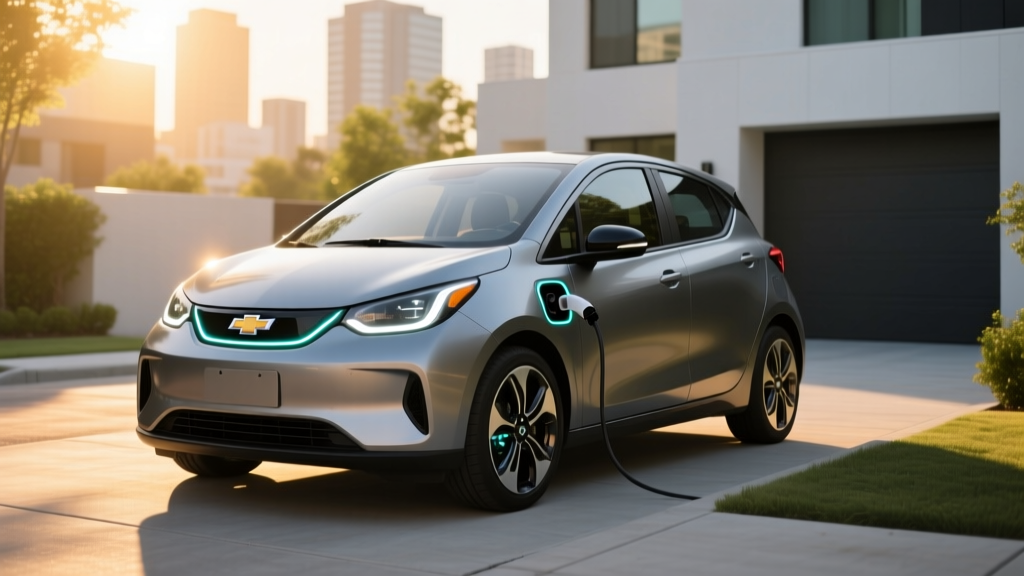
The 2026 Bolt EV is the spiritual successor to what the Spark EV tried to be: an affordable, practical electric hatchback for everyday commuting. At roughly $27,000 before incentives, it's one of the cheapest new EVs on the US market. The relaunched Bolt now rides on GM's Ultium platform, uses an LFP (lithium iron phosphate) battery for improved longevity, and charges considerably faster than its predecessor.
Spark EV vs. 2026 Bolt EV: A Decade of Progress
To illustrate how far Chevy's EV technology has come, let's put the 2016 Spark EV head-to-head with the 2026 Bolt EV:
| Metric | 2016 Spark EV | 2026 Bolt EV |
|---|---|---|
| EPA Range | 82 mi | 259 mi |
| Battery (usable) | 19 kWh | ~65 kWh |
| Chemistry | NMC | LFP |
| DC Fast Charge Peak | 50 kW | 115 kW |
| 10–80% DCFC Time | ~35 min | ~30 min |
| Level 2 Rate | 3.3 kW | 11.5 kW |
| 0–60 mph | 7.2 sec | ~6.5 sec |
| EPA Efficiency | 119 MPGe | ~120 MPGe |
| Battery Warranty | 8 yr / 100k mi (expired) | 8 yr / 100k mi (active) |
| Federal Tax Credit | Expired (used only) | Up to $7,500 (§30D, see IRS rules) |
| Price | $5k–$8k (used) | $26,995 (new) |
The Bolt EV delivers over three times the range of the Spark EV, charges more than twice as fast on DC, and comes with a full factory battery warranty. The efficiency figures (MPGe) are nearly identical, which shows that Chevy nailed the powertrain efficiency back in 2013 — they just needed a bigger, more affordable battery.
Real-World Range Reality: The 2026 Bolt EV's 259-mile EPA rating assumes mixed driving at moderate temperatures. Expect ~210–230 miles on sustained highway driving at 70+ mph, and ~170–200 miles in freezing weather (below 30°F) due to cabin heating demands and reduced battery chemistry efficiency. The Spark EV's 82-mile EPA figure drops to roughly 55–65 miles in winter cold — making it a strictly fair-weather, short-commute vehicle.
The Real Costs: Buying and Owning a Chevy EV in 2026
Whether you're considering a used Spark EV or a new Bolt, understanding the total cost of ownership matters. Here's a practical five-year cost comparison between the 2026 Bolt EV and a comparable gas hatchback (the now-discontinued 2022 Chevy Spark gas model, which returned roughly 30 MPG combined):
| Cost Category | 2026 Bolt EV | Gas Hatchback (30 MPG) |
|---|---|---|
| Purchase Price | $26,995 | $18,000 (est. used equiv.) |
| Federal Tax Credit (§30D) | –$7,500* | $0 |
| Effective Purchase | $19,495 | $18,000 |
| Fuel / Energy (75k mi) | $2,850 (home L2 avg.) | $9,375 ($3.75/gal) |
| Maintenance (5 yr) | ~$1,200 | ~$3,500 |
| Insurance (5 yr avg.) | ~$7,500 | ~$6,000 |
| 5-Year Total | ~$31,045 | ~$36,875 |
*Federal §30D tax credit eligibility depends on buyer income limits (≤$150k single / ≤$300k joint), vehicle MSRP caps ($55k for cars), battery critical-mineral sourcing requirements, and point-of-sale transfer availability. Always verify current rules at IRS.gov and consult a tax professional.
The Bolt EV's effective purchase price after the tax credit nearly matches the gas alternative, and fuel savings over five years exceed $6,500. EV maintenance costs are dramatically lower — no oil changes, no spark plugs, reduced brake wear from regenerative braking — saving roughly $2,300 over five years according to fueleconomy.gov data.
Common Misconceptions About the Chevy Spark and EVs
| Myth | Fact |
|---|---|
| "The Chevy Spark is an electric car." | The standard Spark (2013–2022) was gasoline-only. Only the limited-run Spark EV (2013–2016) was electric, and it was sold only in select states. |
| "Used Spark EVs qualify for a tax credit." | Under §30D, used EVs may qualify for up to $4,000 via the used-clean-vehicle credit, but the vehicle must be purchased from a dealer, priced under $25,000, and meet model-year and buyer-income requirements. Verify at IRS.gov. |
| "EVs need battery replacements every few years." | Modern EV batteries (including the Bolt's LFP pack) are warrantied for 8 years/100,000 miles at ≥70% capacity retention. Real-world degradation data shows most EV batteries retain 85–92% capacity after 100,000 miles. Full replacement costs $8,000–$16,000 but is rarely needed within the warranty period. |
| "You can't take an EV on a road trip." | The 2026 Bolt EV's 259-mile range and NACS port (Tesla Supercharger access) make road trips practical. A 600-mile trip requires two ~30-minute DC fast-charge stops. The Spark EV's 82-mile range, however, genuinely limits it to local use. |
| "Home charging requires an expensive panel upgrade." | A basic Level 2 (240V/40A) home charger installation typically costs $500–$1,500 if your electrical panel has capacity. A panel upgrade (to 200A) adds $1,500–$3,500 but is only needed in older homes with 100A service. Always get a licensed electrician's assessment first. |
Who Should Buy a Used Spark EV in 2026?
The Spark EV still makes sense for a narrow slice of buyers:
- Ultra-budget commuters who need a second car for a sub-40-mile daily round trip and can charge at home overnight on a standard 120V outlet (Level 1 adds roughly 8 miles per hour of charging on the Spark EV).
- California and Oregon residents where the Spark EV was originally sold, making parts and service familiarity easier to find.
- DIY-minded EV enthusiasts who want an inexpensive platform to learn about EV ownership without a major financial commitment.
For everyone else, the value proposition collapses quickly. A used 2020+ Bolt EV (pre-recall replacement units with updated battery) delivers 259 miles of range, modern infotainment, active safety features, and remaining factory warranty — typically for $12,000–$18,000 in 2026.
Decision Framework: What Should You Actually Buy?
Choose the Used Spark EV ($5k–$8k) if:
- Your daily round-trip commute is under 40 miles
- You have reliable home Level 1 or Level 2 charging
- You live in a mild climate (minimal cold-weather range loss)
- You need a cheap second car and can accept limited range
- You understand the battery warranty has expired and accept replacement risk
Choose a Used Bolt EV ($12k–$18k) if:
- You need 200+ miles of real-world range for daily flexibility
- You want modern safety tech (automatic emergency braking, lane-keep assist)
- You want DC fast charging at 55+ kW for occasional road trips
- You may qualify for the up-to-$4,000 used-EV federal credit
Choose a New 2026 Bolt EV ($26,995) if:
- You want a full factory warranty (8 yr/100k mi battery)
- You qualify for the up-to-$7,500 §30D new-EV credit (income and sourcing rules apply)
- You need NACS compatibility for Tesla Supercharger network access
- You want LFP battery chemistry for maximum longevity and 100% daily charging tolerance
- You want the lowest total cost of ownership in a new EV
What First-Time EV Buyers Should Know
If the Spark EV search brought you into the EV world for the first time, here are the essentials that most buyer's guides gloss over:
kW vs. kWh — know the difference. Kilowatts (kW) measure power — how fast you charge or how strong the motor is. Kilowatt-hours (kWh) measure energy — the size of the battery, like gallons in a gas tank. The Spark EV had a 19 kWh battery and charged at up to 50 kW. The 2026 Bolt EV has a ~65 kWh battery and charges at up to 115 kW. Bigger kWh = more range. Higher kW = faster charging.
Charging curves matter more than peak numbers. No EV sustains its peak charge rate for the entire session. A vehicle advertising "150 kW peak" might only hold that rate from 10–30% state of charge before tapering. The 10–80% time is the number that actually matters for road trips.
Cold weather cuts range 20–35%. This isn't a defect — it's battery chemistry and cabin heating physics. If you live where winters drop below freezing, buy an EV with at least 30% more EPA range than your daily needs require. A heat pump (standard on many 2026 EVs) reduces but doesn't eliminate this loss.
Home charging is the backbone. Over 80% of EV charging happens at home. If you can install a Level 2 (240V) charger, daily EV ownership is effortless — you wake up to a full "tank" every morning. If you rely solely on public charging, factor in higher per-kWh costs ($0.30–$0.55/kWh at DC fast chargers vs. $0.12–$0.18/kWh at home) and the time cost of 20–40 minute stops.
Frequently Asked Questions
Can I still buy a Chevy Spark EV new?
No. The Spark EV was discontinued after the 2016 model year. Only used examples are available, typically priced between $5,000 and $8,000 in 2026.
Did Chevy make an electric Spark before the Bolt?
Yes. The Spark EV (2013–2016) was Chevrolet's first modern all-electric car, predating the original Bolt EV (introduced for 2017). It was a compliance car sold only in California, Oregon, and Maryland with 82 miles of EPA range.
Is the 2026 Chevy Bolt EV a good replacement for the Spark?
The 2026 Bolt EV is a dramatically better vehicle in every way: 259 miles of range (vs. 82), faster charging (115 kW vs. 50 kW), modern safety tech, NACS Supercharger access, and a full factory warranty. At $26,995 before potential tax credits, it's the best value in Chevy's EV lineup.
What's the cheapest electric Chevy I can buy new in 2026?
The 2026 Chevy Bolt EV at $26,995 MSRP is the most affordable new electric Chevrolet. After the potential $7,500 federal §30D tax credit (subject to income, MSRP, and battery-sourcing eligibility per IRS rules), the effective price can drop to approximately $19,495.
How long will a used Spark EV battery last?
A 2013–2016 Spark EV battery is now 10–13 years old. NMC chemistry typically retains 80–90% capacity at this age if the vehicle was garage-kept and not repeatedly DC fast-charged to 100%. However, the original 8-year/100,000-mile battery warranty has expired on all Spark EVs. Budget $6,000–$10,000 for a potential replacement if you plan to keep the car long-term.
Does the gas Chevy Spark still exist?
No. The gasoline-powered Chevy Spark was discontinued after the 2022 model year. Chevrolet has not announced a direct gas-powered successor. The brand's subcompact segment is now served by the Bolt EV and the Trax crossover.