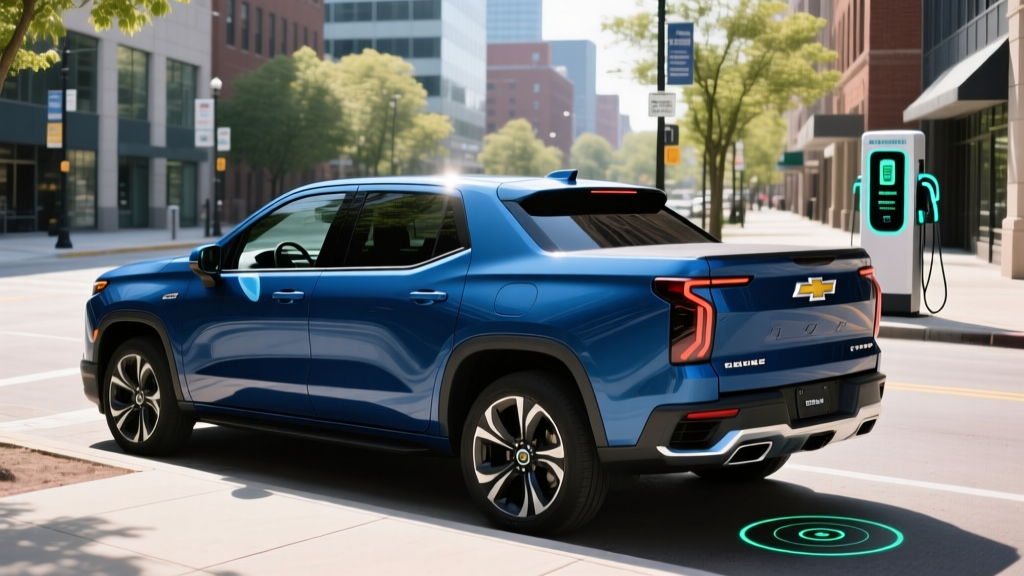
If you're researching a Chevy Silverado EV lease in Rochester, you're likely weighing the appeal of a 390-mile-range electric pickup against the realities of monthly payments, charging logistics in Western New York winters, and whether the math actually pencils out. The Silverado EV is a compelling truck — but ownership economics for electric pickups are nuanced, especially when leasing rather than buying.
This guide breaks down the real numbers behind leasing or buying a 2026 Chevy Silverado EV in the Rochester, NY area: federal and state incentives, fuel and maintenance savings, insurance premiums, depreciation trends, and the total cost of ownership over five years. We'll also cover what Rochester-specific factors — cold weather, utility rates, and charging infrastructure — mean for your wallet.
2026 Silverado EV: Quick Specs and Lease Pricing
Before we get into the cost analysis, here's what you're working with for the 2026 model year. Chevrolet has streamlined the Silverado EV lineup, with the Work Truck (WT) and RST trims forming the core offerings.
| Spec | 4WT (Fleet/Base) | RST |
|---|---|---|
| Base MSRP | ~$55,000 | ~$87,300 |
| Battery (usable) | ~200 kWh (NMC) | ~200 kWh (NMC) |
| EPA Range | ~390 mi | ~440 mi |
| Real-World Range (Rochester winter) | ~290-320 mi | ~330-360 mi |
| Peak DC Fast Charge | 350 kW | 350 kW |
| 10-80% DC Fast Charge | ~20 min (peak conditions) | ~20 min (peak conditions) |
| Level 2 Charge Rate | 19.2 kW | 19.2 kW |
| Horsepower | 510 hp | 754 hp |
| 0-60 mph | ~4.5 sec | ~4.0 sec |
| Max Towing | 10,000 lbs | 10,000 lbs |
| Battery/Powertrain Warranty | 8 yr / 100,000 mi | 8 yr / 100,000 mi |
As for leasing, GM Financial and Chevrolet dealers in the Rochester area (think the Henrietta and Greece corridors) have been advertising Silverado EV leases starting around $549-$799/month depending on trim, term length (typically 36 months), and down payment ($3,000-$5,000 due at signing). Lease deals fluctuate monthly, so check current dealer inventory and GM Financial offers directly.
Federal Tax Credit: Does the Silverado EV Qualify?
The federal EV tax credit under IRS §30D offers up to $7,500 for qualifying new clean vehicles. But eligibility hinges on several requirements that change periodically, and the rules as of 2026 are strict.
- MSRP Cap: Trucks, SUVs, and vans must have an MSRP at or below $80,000. The Silverado EV RST at ~$87,300 exceeds this cap and does not qualify. The 4WT at ~$55,000 clears the cap.
- Buyer Income Limits: Modified AGI must not exceed $300,000 (joint filers), $225,000 (head of household), or $150,000 (single filers).
- Battery Sourcing: The credit is split into two halves — $3,750 for meeting critical-minerals requirements and $3,750 for battery-component requirements. Sourcing rules tighten annually; verify current-year compliance on the fueleconomy.gov credit lookup.
- Point-of-Sale Transfer: As of 2024, you can transfer the credit to the dealer at purchase, reducing your out-of-pocket cost immediately rather than waiting to claim it on your tax return.
- Leasing Loophole (Commercial Credit): When you lease an EV, the lessor (GM Financial) technically claims the credit under §45W (commercial clean vehicle credit). Many lessors pass savings to the lessee via lower monthly payments — but this is not guaranteed. Ask the dealer whether the lease quote already reflects the $7,500 credit pass-through.
Bottom line for Rochester buyers: If you're leasing the 4WT, there's a strong chance the lease rate already reflects some or all of the $7,500 federal incentive. The RST, above the MSRP cap, won't qualify for §30D regardless of purchase or lease structure. Always confirm with your dealer exactly how the credit is being applied.
New York State and Local Incentives
New York offers some of the better state-level EV incentives in the country, though program details and funding availability change. As of 2026:
- NY Drive Clean Rebate: New York's point-of-sale rebate program has offered up to $2,000 for qualifying EVs, though funding has been intermittent. Check current availability through NYSERDA before relying on it.
- RG&E (Rochester Gas & Electric) Utility Rebates: RG&E has historically offered rebates for Level 2 home charger installation (up to $500-$1,000 in some program years). Contact RG&E directly for current EV programs and time-of-use rate plans that can lower your charging costs.
- NYC Clean Trucks Program (if applicable): For fleet/commercial buyers in certain zones, additional incentives may apply — though this is more relevant downstate.
- Home Charging Installation: Expect $800-$2,500 for a Level 2 (240V, 40-48 amp) home charger installation in the Rochester area, depending on panel capacity and wiring distance. A 200-amp panel upgrade can add $1,500-$3,000.
State and local incentives change frequently. Always verify current programs through NYSERDA and your local utility before making purchase decisions.
Charging vs. Gas: What Rochester Drivers Actually Pay Per Mile
The fuel-cost advantage of an EV depends entirely on your electricity rate and driving patterns. Let's run the numbers for a Rochester-area driver comparing the Silverado EV against a gas-powered Silverado 1500 (EPA combined ~19 MPG).
| Scenario | Silverado EV | Gas Silverado 1500 (19 MPG) |
|---|---|---|
| Home Charging (RG&E avg ~$0.16/kWh) | $0.050/mi (at 3.2 mi/kWh) | — |
| Home Charging (off-peak TOU ~$0.09/kWh) | $0.028/mi | — |
| Public DC Fast Charging (~$0.40/kWh avg) | $0.125/mi | — |
| Gasoline ($3.50/gal avg) | — | $0.184/mi |
| Annual Fuel Cost (12,000 mi/yr, 80% home / 20% DCFC) | ~$780 | ~$2,208 |
At typical Rochester residential rates and an 80/20 split between home and public charging, the Silverado EV saves roughly $1,400-$1,500 per year on fuel. Over five years, that's $7,000-$7,500 in fuel savings.
A critical note: the Silverado EV's 200 kWh battery means a full home charge from empty costs about $32 at $0.16/kWh. But you'll rarely charge from 0% — most daily top-ups from 40-80% cost $10-$13. If you rely exclusively on DC fast charging (say, apartment-dwelling with no home access), the cost advantage narrows significantly to about $730/year in savings.
Maintenance Savings: Fewer Parts, Lower Bills
Electric pickups eliminate many routine maintenance items. Here's how the Silverado EV stacks up against its gas counterpart over five years / 60,000 miles:
| Maintenance Item | Silverado EV | Gas Silverado 1500 |
|---|---|---|
| Oil Changes (every 5,000-7,500 mi) | $0 | $600-$900 |
| Transmission Fluid | $0 | $150-$300 |
| Brake Pads (regen extends life significantly) | $0-$200 | $400-$800 |
| Coolant Flush | $0-$100 | $150-$250 |
| Air Filters / Spark Plugs | $0 | $200-$400 |
| Tire Rotation / Replacement (EVs wear tires faster due to weight and torque) | $1,200-$1,800 | $900-$1,400 |
| Cabin Air Filter / Wipers / Misc. | $300-$500 | $300-$500 |
| Total Estimated 5-Year Maintenance | $1,500-$2,600 | $2,700-$4,550 |
The Silverado EV saves an estimated $1,200-$2,000 over five years in maintenance. The biggest offset is tire cost — at roughly 8,500 lbs, the Silverado EV chews through tires faster than a gas truck. Budget for a tire replacement around year 3-4.
Regenerative braking is the key maintenance win: one-pedal driving means you use the friction brakes far less, and many EV owners report original brake pads lasting 80,000+ miles.
Insurance: The Cost Reality EV Buyers Often Miss
This is where the EV math gets less rosy. Electric vehicles typically cost 15-25% more to insure than comparable gas vehicles. For the Silverado EV in the Rochester area, expect annual premiums in the range of $2,400-$3,600 depending on your driving record, coverage level, and insurer.
Why the premium?
- Higher repair costs: EV battery packs and specialized powertrain components are expensive to replace after a collision. Insurers factor this into premiums.
- Vehicle price: A $55,000-$87,000 truck simply costs more to insure than a $40,000 gas truck.
- Specialized labor: High-voltage system repairs require certified technicians, which drives up claim costs.
- Total-loss thresholds: Battery damage in even moderate collisions can push an EV to a total loss, increasing insurer risk exposure.
Over five years, the insurance premium difference between a Silverado EV and a gas Silverado 1500 could add $2,500-$5,000 in additional costs. Get quotes from multiple insurers (Geico, Progressive, State Farm, and Erie are competitive in Western NY) before committing.
Depreciation and Resale Value Trends
EV depreciation has been a moving target. After significant EV price cuts across the industry in 2023-2024, resale values for used EVs took a hit. By 2026, the market has stabilized somewhat, but electric trucks still face depreciation headwinds:
- 5-year depreciation estimate for Silverado EV: 45-55% (compared to ~40-50% for a gas Silverado 1500).
- Battery health concerns: Used buyers remain cautious about battery degradation, even though the 200 kWh NMC pack and 8-year/100,000-mile warranty provide substantial coverage. GM warrants the battery to retain at least 60% capacity over the warranty period.
- Technology obsolescence: As newer EVs offer faster charging and better efficiency, older models can lose appeal faster than gas trucks.
- The lease advantage: When you lease, depreciation is the lessor's problem. If the Silverado EV depreciates more than expected, you simply return it at lease-end. If it holds value well, you can exercise the purchase option. Leasing effectively caps your depreciation risk.
For a Silverado EV 4WT leased at $55,000 MSRP with a residual value set at 50% ($27,500), you're paying for roughly $27,500 in depreciation over a 36-month lease (before incentives). That math is baked into your monthly payment.
Total 5-Year Cost of Ownership: Silverado EV vs. Gas
Let's pull everything together into a five-year ownership comparison. This assumes the Silverado EV 4WT (purchased at ~$55,000 MSRP, with $7,500 federal credit applied) versus a comparably equipped gas Silverado 1500 LTZ (~$52,000 MSRP). Both driven 12,000 miles/year in the Rochester area.
| Cost Category | Silverado EV 4WT | Gas Silverado 1500 LTZ |
|---|---|---|
| Purchase Price (after incentives) | $47,500 | $52,000 |
| Financing (5-yr, 6.5% APR) | $8,550 | $9,360 |
| Fuel / Electricity (5 years) | $3,900 | $11,040 |
| Maintenance (5 years) | $2,100 | $3,600 |
| Insurance (5 years) | $15,000 | $11,500 |
| Home Charger Installation (one-time) | $1,500 | $0 |
| Estimated Depreciation (5 years) | $26,125 | $23,400 |
| Total 5-Year Cost | ~$104,675 | ~$110,900 |
| Cost Per Mile | ~$1.74 | ~$1.85 |
The Silverado EV comes out approximately $6,200 ahead over five years when purchased with the full federal credit. The savings come primarily from fuel and maintenance, partially offset by higher insurance and depreciation. Note: if you don't qualify for the full $7,500 credit (due to income limits or battery-sourcing rules), the gap narrows to roughly $2,000-$3,000 or could flip to the gas truck being cheaper.
For leasing, the math shifts: lower monthly payments (if the lessor passes through the credit), no depreciation risk, but no equity at lease-end and potential disposition fees. A well-structured Silverado EV lease in Rochester can be competitive with buying, especially if you prefer swapping vehicles every 36 months.
Rochester-Specific Considerations for EV Truck Owners
Western New York presents both advantages and challenges for EV ownership:
- Cold-weather range loss: As noted, expect 20-30% range reduction in January/February. The Silverado EV's massive battery means you still have 290+ miles of real winter range — far more than most EVs — but plan accordingly for longer trips to Syracuse, Buffalo, or the Adirondacks.
- Battery preconditioning: Use the Silverado EV's navigation-based preconditioning to warm the battery before arriving at a DC fast charger. This is critical in Rochester winters — without it, charging speeds can drop from 350 kW peak to under 100 kW on a cold-soaked battery.
- Public charging: Rochester's DC fast-charging network has grown, with Electrify America, EVgo, and Tesla Superchargers (now open to NACS-equipped or adapter-equipped non-Teslas) available along I-90 and I-390. For road trips, the Silverado EV's NACS port (standard on 2026 models) grants access to the Tesla Supercharger network — a significant infrastructure advantage.
- Home charging necessity: With Rochester's cold winters and limited public charging density compared to metro areas, a Level 2 home charger is essentially mandatory. At 19.2 kW, the Silverado EV can add roughly 55-60 miles of range per hour on Level 2 — meaning a full overnight charge easily covers daily driving.
- Salt and corrosion: Rochester's road salt is brutal on vehicles. EVs have fewer underbody mechanical components to corrode, but the battery enclosure and charging port area still need regular rinsing. GM's battery pack is sealed and rated for water/dust ingress (IP67), but keep the charge port clean.
Frequently Asked Questions
How much does it really cost to own a Chevy Silverado EV over 5 years in Rochester?
Based on our analysis, the total 5-year cost for a Silverado EV 4WT (purchased with the $7,500 federal credit) is approximately $104,000-$105,000, or about $1.74 per mile. This includes purchase price, financing, electricity, maintenance, insurance, home charger installation, and depreciation. The gas Silverado 1500 LTZ comes in around $111,000 over the same period — a roughly $6,000 advantage for the EV, driven largely by fuel savings.
Do I qualify for the $7,500 federal EV tax credit on the Silverado EV?
Possibly. The 4WT trim (~$55,000 MSRP) clears the $80,000 truck MSRP cap. You must also meet income limits ($300K joint / $150K single) and the vehicle must satisfy battery-sourcing requirements that tighten annually. The RST trim (~$87,300) exceeds the MSRP cap and does not qualify. If leasing, the credit goes to the lessor under §45W — ask whether the lease rate reflects the pass-through. Always verify on fueleconomy.gov and consult a tax professional.
How much do I save on fuel and maintenance with the Silverado EV?
At Rochester electricity rates and 12,000 miles/year, expect to save roughly $1,400-$1,500 annually on fuel (about $7,000-$7,500 over five years) compared to a gas Silverado 1500. Maintenance savings add another $1,200-$2,000 over five years, primarily from eliminated oil changes and reduced brake wear. However, expect to spend more on tires due to the EV's weight.
Are EVs more expensive to insure than gas trucks?
Yes. The Silverado EV typically costs 15-25% more to insure than a gas Silverado 1500, adding roughly $2,500-$5,000 over five years in the Rochester area. Higher repair costs, specialized labor, and the vehicle's higher price all contribute. Get quotes from multiple insurers before purchasing or leasing.
How well does the Silverado EV hold its value?
EV depreciation has been higher than gas trucks historically, with the Silverado EV estimated to lose 45-55% of its value over five years versus 40-50% for a gas Silverado. Battery health concerns and rapid technology evolution contribute. However, leasing transfers depreciation risk to the lessor — a meaningful advantage if resale values continue to soften.
Can I charge the Silverado EV at Tesla Superchargers?
Yes. The 2026 Silverado EV comes equipped with the NACS (North American Charging Standard) port, granting native access to Tesla's Supercharger network without an adapter. This is a significant advantage for road trips from Rochester, as the Supercharger network remains the most reliable DC fast-charging option in the U.S.
Is a Silverado EV lease better than buying in 2026?
It depends on your priorities. Leasing advantages: lower monthly payments (if the lessor passes through the $7,500 credit), no depreciation risk, ability to upgrade every 36 months, and potential §45W commercial credit pass-through even if you exceed §30D income caps. Buying advantages: you build equity, can claim the §30D credit directly (if eligible), have no mileage restrictions, and keep the truck beyond the loan term when payments stop. For Rochester drivers uncertain about long-term EV resale values, a lease is a lower-risk entry point.
Sources: EPA fuel economy data via fueleconomy.gov; IRS §30D credit rules via irs.gov; Chevrolet Silverado EV specifications via chevrolet.com. All pricing, incentive, and tax credit information reflects 2026 rules and is subject to change. Consult a tax professional for credit eligibility.