Quick Verdict: The Silverado EV Is a Workhorse With a Long Leash
Chevrolet's full-size electric pickup enters the 2026 model year with the broadest trim lineup in the EV truck segment — from the fleet-oriented Work Truck to the range-topping RST First Edition. The headline number is 492 miles of EPA-estimated range on the RST with the Max Range pack, though the more attainable trims deliver between 360 and 393 miles. Combined with up to 754 horsepower, a 12,500-pound max towing rating, and native NACS charging port access to Tesla Superchargers, the 2026 Silverado EV makes a compelling case for buyers who need truck capability without tailpipe emissions.
But the Silverado EV's size and weight come with real trade-offs: efficiency drops sharply at highway speeds, DC fast-charging peaks at a modest 200 kW, and the starting price on most trims pushes past the federal tax credit MSRP cap. This review breaks down every spec, real-world expectation, and ownership cost so you can decide whether the Silverado EV fits your driveway.
Range, Battery, and Efficiency: Real-World Expectations
The 2026 Silverado EV rides on GM's Ultium platform with a battery pack Chevrolet rates at approximately 200 kWh (usable) on the Max Range models and roughly 175 kWh on the standard-range versions. The chemistry uses GM's NMC (nickel-manganese-cobalt) pouch cells, which prioritize energy density over the cycle-life advantages of LFP — a deliberate choice for a truck that needs maximum miles per charge when loaded down.
| Trim | Battery (kWh usable) | EPA Range (mi) | MPGe (combined) | kWh/100 mi |
|---|---|---|---|---|
| 4WT (Standard Range) | ~175 | 360 | 63 | 53 |
| LT (Extended Range) | ~175 | 393 | 66 | 50 |
| RST (Max Range) | ~200 | 492 | 70 | 47 |
| Trail Boss (Extended Range) | ~175 | 378 | 62 | 54 |
The EPA 492-mile figure on the RST Max Range is achieved under mixed city/highway driving at moderate temperatures. Expect approximately 370–410 miles on sustained highway driving at 70+ mph, where aerodynamic drag hammers a boxy pickup's efficiency. In cold weather (below 32°F), plan for a 20–30% range reduction, putting the RST closer to 340–390 miles and the 4WT near 250–290 miles. City-heavy commutes with regenerative braking can actually exceed the EPA sticker slightly.
Efficiency, measured in kWh per 100 miles, ranges from 47 on the RST Max Range to 54 on the Trail Boss. For context, the Ford F-150 Lightning Extended Range sits around 48 kWh/100 mi, while the Rivian R1T Dual-Motor Max achieves roughly 45. The Silverado's larger frontal area and heavier curb weight (over 8,500 lbs on some trims) explain the slight efficiency deficit versus the R1T.
Charging Speed: DC Fast, Level 2, and the NACS Advantage
For 2026, every Silverado EV ships with a native NACS (North American Charging Standard) port, meaning direct access to Tesla's Supercharger network — over 20,000 stalls in North America — without an adapter. This is a significant practical advantage for road-tripping truck owners who previously relied on CCS-only networks.
| Charging Level | Power (kW) | Speed / Time | Connector |
|---|---|---|---|
| Level 1 (120V household) | ~1.4 kW | ~3–4 mi/hr | NACS |
| Level 2 (240V home/public) | 19.2 kW (max onboard) | ~45–52 mi/hr | NACS |
| DC Fast Charge (peak) | 200 kW | 10–80% in ~40 min | NACS |
The Silverado EV's onboard charger supports up to 19.2 kW on Level 2, which is among the highest in the segment. A full overnight charge from 10% to 100% takes roughly 10–11 hours on a 48-amp Level 2 home charger. For most owners charging nightly from 30–80% State of Charge, that's about 4–5 hours — plenty of headroom.
On DC fast charging, the 200 kW peak is respectable but not class-leading. The F-150 Lightning peaks at 150 kW (making the Chevy faster), but the Rivian R1T can accept up to 220 kW. The critical detail is the charge curve: the Silverado EV sustains close to peak rate through about 40% SoC, then tapers progressively. The 10–80% session takes approximately 40 minutes on a 250+ kW stall. If you regularly road-trip, plan charging stops around 35–40 minutes to stay in the efficient part of the curve and avoid the steep taper above 80%.
Performance and Drivetrain: Up to 754 HP and 12,500-lb Towing
Every 2026 Silverado EV uses a dual-motor all-wheel-drive layout. Output varies significantly by trim:
- 4WT: 510 hp, 615 lb-ft torque, 0–60 mph in ~5.4 sec
- LT: 645 hp, 785 lb-ft torque, 0–60 mph in ~4.5 sec
- Trail Boss: 645 hp, 785 lb-ft torque, 0–60 mph in ~4.5 sec
- RST: 754 hp, 785 lb-ft torque, 0–60 mph in ~4.1 sec
The RST's 754 horsepower makes it one of the quickest full-size pickups ever sold, rivaling the GMC Hummer EV. Towing capacity ranges from 8,000 pounds on base trims to 12,500 pounds on properly equipped 4WT and LT models with the Max Trailering package. Payload tops out around 1,800 pounds.
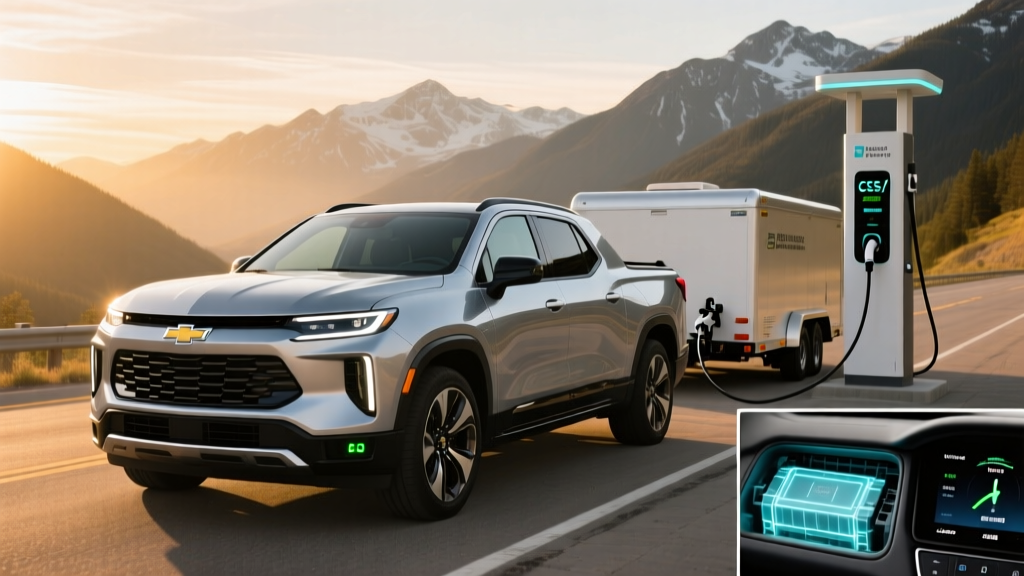
One important note on towing and range: pulling a 7,000-pound trailer at highway speeds will cut range roughly in half. If the RST delivers 400 highway miles unloaded, expect 180–220 miles with a heavy trailer. This isn't unique to the Silverado — it's physics — but it's critical for anyone planning long-distance towing. The Chevrolet Silverado EV page details trailering equipment by trim.
Pricing, Trims, and Federal Tax Credit Eligibility
The 2026 Silverado EV lineup spans a wide price band. Here's where each trim lands at MSRP:
| Trim | Base MSRP | MSRP Cap Met?* | Potential §30D Credit | Effective Price (est.) |
|---|---|---|---|---|
| 4WT | $69,900 | No (exceeds $80K truck cap when equipped) | $0–$7,500 (depends on options) | $62,400–$69,900 |
| LT | $74,900 | Borderline | $0–$7,500 | $67,400–$74,900 |
| Trail Boss | $78,400 | Borderline | $0–$7,500 | $70,900–$78,400 |
| RST | $87,300 | No (exceeds $80K truck cap) | $0 | $87,300 |
*Under IRS §30D rules, trucks and SUVs have an $80,000 MSRP cap. However, the cap applies to base MSRP plus required options — dealer-installed accessories and destination charges may or may not count depending on interpretation. Always verify with a tax professional. Income caps also apply: $300,000 joint / $150,000 single filer for new EVs. Battery critical-mineral and component sourcing requirements may reduce the credit to $3,750 or eliminate it entirely. See IRS §30D guidance for current-year rules.
The point-of-sale transfer option allows eligible buyers to apply the credit as an immediate price reduction at the dealership rather than waiting for a tax refund. This is a meaningful cash-flow benefit if you qualify.
Cargo, Interior Space, and Standout Technology
The Silverado EV is built on a dedicated skateboard platform, which gives it a flat floor and generous interior volume. Key dimensions:
- Bed length: 5 ft 11 in (standard), with the available Multi-Flex Midgate extending load length to over 10 ft with the tailgate down
- Bed payload: up to ~1,800 lbs
- Front trunk (frunk): ~10.2 cu ft of lockable, weather-sealed storage
- Rear legroom: ~43.4 inches
- Front headroom: ~43.1 inches
The Midgate is the Silverado EV's party trick. By folding down the partition between the cab and the bed, you can carry items up to 10 feet long while still seating a front passenger. It's genuinely useful for contractors, outdoor enthusiasts, or anyone hauling lumber, kayaks, or ladders.
On the technology front, the RST features a 17.7-inch diagonal infotainment touchscreen running Google Built-In (Google Maps, Google Assistant, Play Store). All trims include Super Cruise — GM's Level 2 hands-free driver-assistance system — on over 750,000 miles of compatible highways. Note: Super Cruise requires driver attention and is not autonomous driving; it operates at SAE Level 2, meaning you remain responsible for the vehicle at all times.
Additional tech highlights include:
- ProPower Onboard-style vehicle power: up to 10.2 kW of exportable AC power (Pro Energy) for job-site tools or tailgating
- Over-the-air software updates
- Available 4-wheel steering for a tighter turning radius
- Trailer camera integration and advanced trailering app
Notable drawbacks: the sheer length (over 233 inches) makes parking garages and tight urban streets a challenge. Rear visibility is compromised by the tall bed walls, though camera systems help. And at nearly 9,000 pounds curb weight for some trims, tire wear and insurance costs will be higher than a typical half-ton gas truck.
Battery Warranty and Long-Term Ownership
Chevrolet provides an 8-year / 100,000-mile battery and powertrain warranty on the Silverado EV, covering defects and capacity loss below 70% of original capacity. This matches the segment standard set by Ford, Rivian, and most other EV manufacturers.
GM's Ultium NMC cells have shown moderate degradation rates in early Bolt EV and Cadillac Lyriq data — typically 5–8% capacity loss over the first 50,000 miles, with the curve flattening afterward. For a truck with a 200 kWh pack, even 10% degradation still leaves ~180 kWh usable, translating to roughly 440 miles on the RST. Real-world longevity will depend heavily on charging habits: frequent DC fast-charging to 100% and deep discharges accelerate wear. GM recommends keeping daily SoC between 20–80% for optimal battery health.
Insurance costs are a consideration. Early data suggests EV truck premiums run 15–25% higher than equivalent gas trucks due to higher repair costs and vehicle values. Get quotes before purchasing.
Pros and Cons at a Glance
- Class-leading 492-mile EPA range (RST Max Range)
- Native NACS port — direct Supercharger access
- 19.2 kW Level 2 onboard charger (fastest in class)
- Multi-Flex Midgate for 10+ ft cargo
- Up to 754 hp and 12,500-lb towing
- 10.2 kW vehicle power export
- Super Cruise hands-free driving on 750K+ miles of highway
- 200 kW DC peak charge rate — slower than some rivals
- 10–80% DC charge takes ~40 minutes
- RST exceeds $80K MSRP cap — no federal tax credit
- Heavy curb weight impacts tire wear and efficiency
- Highway range drops significantly vs. EPA (20–25%)
- Large footprint is unwieldy in tight urban settings
- Insurance premiums 15–25% higher than gas equivalents
Who Should Buy the 2026 Silverado EV?
Choose the Silverado EV if: You need a full-size truck with serious towing and payload, want the longest possible EV range for road trips, value Super Cruise for long highway commutes, and have reliable Level 2 home charging. The 4WT and LT trims are particularly compelling for fleet and commercial buyers who can leverage the tax credit and lower per-mile energy costs.
Look elsewhere if: You need the fastest possible DC charging for frequent road trips (consider the Rivian R1T), your budget is under $55,000 (look at the Ford F-150 Lightning base trims or wait for lower-priced EV trucks), or you primarily drive in dense urban areas where the Silverado's 233-inch length is a liability.
Frequently Asked Questions
What is the real-world range of the 2026 Chevy Silverado EV?
The EPA rates the RST Max Range at 492 miles, but expect approximately 370–410 miles in real-world highway driving at 70+ mph. Cold weather (below 32°F) reduces range by 20–30%. Standard-range trims like the 4WT deliver closer to 260–300 real-world highway miles. City driving with regenerative braking can slightly exceed the EPA sticker.
How fast does the Silverado EV charge at home and on the road?
At home on a 240V Level 2 charger, the Silverado EV accepts up to 19.2 kW, adding roughly 45–52 miles of range per hour. A full overnight charge from 10–100% takes 10–11 hours. On DC fast chargers, it peaks at 200 kW and charges from 10–80% in approximately 40 minutes. The native NACS port gives direct access to Tesla Superchargers.
How much does the Silverado EV cost after federal tax credits?
It depends heavily on the trim. The 4WT starts at $69,900 and may qualify for up to $7,500 in federal §30D credits, bringing the effective price to around $62,400. The RST starts at $87,300 and exceeds the $80,000 MSRP cap for trucks, making it ineligible for the federal credit. Income limits ($300K joint / $150K single) and battery-sourcing rules further restrict eligibility. Always consult the IRS §30D page and a tax professional.
Does the 2026 Silverado EV qualify for the federal EV tax credit?
Potentially, but with major caveats. Trims with an MSRP under $80,000 (primarily the base 4WT without expensive option packages) may qualify for up to $7,500 under §30D, subject to buyer income limits and battery critical-mineral/component sourcing requirements. Higher trims (LT loaded, Trail Boss, RST) likely exceed the MSRP cap. The credit can be transferred at point of sale as an immediate price reduction if you qualify.
Is the Silverado EV worth buying over the F-150 Lightning or Rivian R1T?
The Silverado EV wins on maximum range (492 vs. the Lightning's ~320 and R1T's ~410 miles) and onboard Level 2 charging speed (19.2 kW). The F-150 Lightning is more affordable at the base level and has a more proven track record. The Rivian R1T offers faster DC charging (220 kW), a more refined interior, and better efficiency, but at a higher starting price and smaller bed. Your decision should hinge on which trims you can afford, whether you need maximum range or maximum charging speed, and how much bed space matters to you.
What is the battery warranty on the Silverado EV?
Chevrolet covers the battery and electric powertrain for 8 years or 100,000 miles, whichever comes first. The warranty covers defects and capacity degradation below 70% of original capacity. This aligns with the industry standard for EV battery warranties.
Can I use the Silverado EV to power tools or my home?
Yes. The Silverado EV offers up to 10.2 kW of exportable AC power through its Pro Energy system, with outlets in the bed and cabin. This is enough to run most job-site power tools, camping equipment, or serve as emergency backup power for essential home circuits (with proper transfer switch installation by a licensed electrician).