Quick Answer: What Happened to the Chevy EV1?
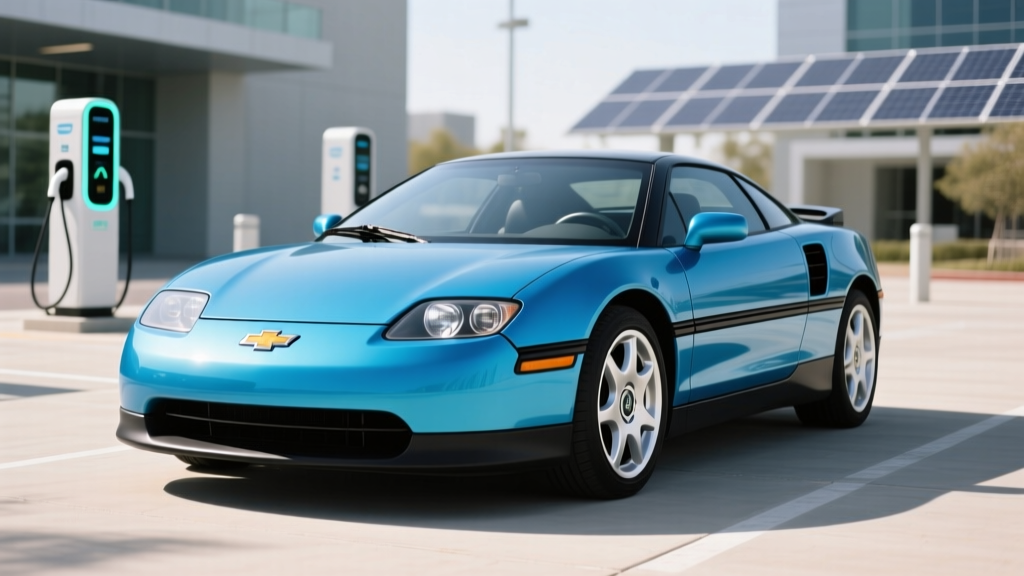
The Chevy EV1 was General Motors' groundbreaking two-seat electric coupe produced from 1996 to 1999, with roughly 1,117 units leased (never sold) before GM recalled and crushed nearly all of them by 2003. You cannot buy a Chevy EV1 today — only a handful survive in museums and private collections. However, the EV1's legacy directly shaped GM's current electric lineup, including the 2026 Chevrolet Equinox EV (319 mi EPA range, starting ~$33,600) and the Blazer EV, both built on the modern Ultium battery platform that traces its engineering DNA back to lessons learned from the EV1 program.
The Chevy EV1: Specifications and History
When GM launched the EV1 in December 1996, it was the first mass-produced electric vehicle from a major automaker in the modern era. Available only through select Saturn dealerships in California and Arizona, the EV1 was a purpose-built electric coupe that pushed the boundaries of what battery technology could deliver at the time.
| Specification | Gen 1 (1996–1997) | Gen 2 (1999) |
|---|---|---|
| Battery Chemistry | Lead-acid (Delco) | NiMH (Ovonic) |
| Battery Capacity | 16.5 kWh | 26.4 kWh |
| EPA Range | ~60 miles | ~80–100 miles |
| Motor Output | 137 hp (102 kW) | 137 hp (102 kW) |
| 0–60 mph | ~9 seconds | ~8 seconds |
| Top Speed | 80 mph (electronically limited) | 80 mph (electronically limited) |
| Charging | GM Magne Charge (inductive paddle) | GM Magne Charge (inductive paddle) |
| Charge Time (0–100%) | ~5.5 hours (Level 2) | ~5.5 hours (Level 2) |
| Curb Weight | ~3,090 lbs | ~3,000 lbs |
| Lease Price | $399–$549/month | $399–$549/month |
The EV1's inductive charging paddle — the large Magne Charge paddle you inserted into a slot on the car's nose — was a precursor to the standardization battles we still see today between NACS and CCS connectors. The inductive system avoided exposed conductive pins but was ultimately abandoned industry-wide in favor of conductive plugs like today's J1772, CCS, and Tesla's NACS standard.
Why GM Killed the Chevy EV1
GM discontinued the EV1 program in 2003 and recalled all leased vehicles, crushing most of them. The decision remains one of the most controversial in automotive history, documented in the 2006 film Who Killed the Electric Car?
EV1 Myths vs. Facts
| Myth | Fact |
|---|---|
| "Nobody wanted the EV1" | GM maintained a waiting list; lessees were deeply loyal. Many attempted to purchase their cars at program end and were refused. |
| "The batteries didn't work" | The Gen 2 NiMH battery delivered a genuine 80–100 mile range — adequate for 90% of daily commutes even by 1999 standards. The technology was functional but expensive. |
| "Oil companies killed it" | Multiple factors converged: low gasoline prices in the late 1990s, CARB's weakened ZEV mandate, high battery costs (NiMH packs cost ~$10,000+), limited service infrastructure, and GM's strategic pivot to hydrogen fuel cells and SUVs. |
| "The EV1 was a failure" | Engineering-wise, it was a success. It proved EVs were viable for daily driving. The failure was corporate and economic, not technical. |
For the few EV1 lessees who wanted to keep their vehicles, GM offered no purchase option. Approximately 40 EV1s were donated to museums and universities with disabled powertrains. Only one is known to have survived in drivable condition in a private collection.
From EV1 to Ultium: How GM's EV Platform Evolved
The engineering lessons from the EV1 — thermal management, battery packaging, electric drivetrain efficiency, and regenerative braking — fed directly into GM's subsequent electrification programs. Today's Ultium platform represents the third generation of GM's EV architecture.
| Attribute | Chevy EV1 (1999 Gen 2) | 2026 Chevy Equinox EV (3LT) | 2026 Chevy Blazer EV (2LT) |
|---|---|---|---|
| Battery Chemistry | NiMH | NMC (Ultium, lithium-ion) | NMC (Ultium, lithium-ion) |
| Battery Capacity | 26.4 kWh | 85 kWh (usable) | 102 kWh (usable) |
| EPA Range | 80–100 mi | 319 mi | 324 mi |
| Motor Output | 137 hp | 288 hp (AWD) | 288 hp (AWD) |
| 0–60 mph | ~8 sec | ~7.9 sec | ~7.9 sec |
| Max DC Fast Charge | N/A (Level 2 only) | 150 kW | 190 kW |
| 10–80% DC Charge | N/A | ~28 min | ~24 min |
| Connector | Inductive paddle | NACS (native) | NACS (native) |
| Starting MSRP | $399/mo lease only | $33,600 | $44,600 |
| Federal Tax Credit (§30D) | None existed | Up to $7,500 (eligibility varies) | Up to $7,500 (eligibility varies) |
| Battery Warranty | N/A (lease program) | 8 yr / 100,000 mi | 8 yr / 100,000 mi |
The contrast is stark. The Equinox EV delivers over three times the range of the EV1 Gen 2, seats five, and costs roughly what a mid-trim gas compact SUV cost in 1999 when adjusted for inflation. The Ultium platform uses NMC (nickel manganese cobalt) pouch cells arranged in a flat skateboard architecture — a concept the EV1 pioneered with its T-shaped battery pack running through the center tunnel.
Real Ownership Costs: 2026 GM EVs vs. Gas Equivalents
If the EV1's story inspires you to consider a modern GM electric vehicle, here's what ownership actually looks like in 2026 compared to a gas-powered equivalent.
| 5-Year Cost Category | 2026 Equinox EV (3LT AWD) | 2026 Chevy Equinox Gas (AWD) |
|---|---|---|
| Purchase Price (MSRP) | $33,600 | $31,400 |
| Federal Tax Credit (§30D) | –$7,500 (if eligible) | $0 |
| Effective Purchase Price | $26,100 | $31,400 |
| Home Level 2 Charger Install | $800–$2,000 | $0 |
| Fuel/Energy (75,000 mi total) | $2,625 (at $0.14/kWh, 3.5 mi/kWh) | $7,500 (at $3.50/gal, 28 mpg combined) |
| Maintenance (5 yr) | ~$1,200 | ~$3,500 |
| Insurance (5 yr avg) | ~$9,500 | ~$7,800 |
| 5-Year Total | ~$42,225–$43,425 | ~$50,200 |
The EV wins on operating costs by a significant margin — roughly $4,875 in fuel savings and $2,300 in maintenance savings over five years. However, EV insurance premiums run 15–25% higher on average due to battery replacement cost exposure and specialized repair requirements. The IRS §30D tax credit can dramatically shift the economics, but eligibility depends on your modified adjusted gross income (≤$150K single / ≤$300K joint), the vehicle's MSRP cap (≤$55K for sedans, ≤$80K for SUVs/trucks), and battery component/critical mineral sourcing requirements that change annually.
Real-World Ownership Considerations for First-Time EV Buyers
Before you buy any modern EV — whether inspired by the EV1's legacy or not — these practical factors determine whether electric ownership works for you.
Home Charging Access
Home charging is the single biggest determinant of EV satisfaction. If you can install a Level 2 (240V) charger — typically a 32–48 amp unit on a dedicated 40–60 amp circuit — you'll wake up every morning with a full battery. Installation costs range from $800 to $2,000 for a straightforward panel-adjacent install, but can reach $3,000–$5,000 if your electrical panel needs an upgrade from 100A to 200A service. Renters and condo dwellers without dedicated parking face a genuine barrier that the industry hasn't fully solved.
Climate and Range Reality
EPA range estimates are tested in moderate conditions. In real-world driving:
- Highway driving at 75 mph: Expect 10–15% less than EPA (a 319-mi Equinox EV delivers ~270–285 mi on the interstate)
- Cold weather (below 32°F): Range drops 20–35% depending on severity and whether you use cabin heat. The Equinox EV's heat pump mitigates this partially, but expect ~220–250 mi in a 20°F winter commute
- City driving with regen braking: Often meets or exceeds EPA thanks to regenerative braking recapturing energy in stop-and-go traffic
Public Charging Infrastructure
GM's adoption of the NACS connector means 2026 Equinox and Blazer EVs can access Tesla Superchargers via native plug — a massive network expansion over CCS-only vehicles. For road trips, plan around 150–190 kW DC fast chargers that add roughly 150–200 miles of range in 20–25 minutes. Rural charging deserts remain a real limitation in parts of the Mountain West, rural South, and upper Midwest.
Should You Buy a Modern GM EV? Decision Framework
Choose a GM EV (Equinox EV, Blazer EV, Silverado EV) if:
- You have home charging access (garage, driveway, or dedicated parking with a 240V outlet)
- Your daily commute is under 200 miles round-trip
- You qualify for the §30D federal tax credit (check income and sourcing rules at IRS.gov)
- You want to eliminate gas station visits and reduce per-mile fuel costs by 60–70%
- You take road trips occasionally and can plan around DC fast-charging stops
Consider a hybrid (PHEV or HEV) instead if:
- You lack reliable home or workplace charging access
- You regularly drive 300+ miles in areas with sparse charging infrastructure
- You live in an extremely cold climate where 30%+ winter range loss would be operationally painful
- Your budget can't absorb the higher upfront cost even after tax credits
- You tow heavy loads frequently (towing can cut EV range by 40–50%)
Where to See a Chevy EV1 Today
If you want to see the EV1 in person, several institutions hold examples in their collections:
- National Museum of American History (Smithsonian) — Washington, D.C.
- Petersen Automotive Museum — Los Angeles, CA
- GM Heritage Center — Sterling Heights, MI (access varies)
- California Automobile Museum — Sacramento, CA (rotating exhibits)
None are drivable. The powertrains were disabled before donation per GM's decommissioning protocol. These surviving EV1s serve as engineering artifacts — proof that the core concept of a practical, purpose-built electric car was sound decades before battery costs and charging infrastructure caught up to the vision.
FAQ: Chevy EV1 and Modern GM EVs
Can I buy a Chevy EV1?
No. GM produced approximately 1,117 EV1s between 1996 and 1999, all through lease-only agreements. When the program ended in 2003, GM recalled and crushed nearly all vehicles. Fewer than 40 survive in museums with disabled drivetrains. The closest modern equivalent is the 2026 Chevrolet Equinox EV, starting at $33,600 with 319 miles of EPA range.
How much would a Chevy EV1 be worth today?
Since none were sold and surviving units have disabled powertrains, there is no legitimate market price. If a drivable EV1 ever surfaced, collector estimates place it in the $250,000–$500,000+ range given its historical significance — comparable to rare prototypes from other automakers.
What battery did the Chevy EV1 use?
The Gen 1 (1996–1997) used a 16.5 kWh lead-acid battery pack delivering about 60 miles of range. The Gen 2 (1999) upgraded to a 26.4 kWh nickel-metal hydride (NiMH) pack, extending range to 80–100 miles. Modern GM Ultium batteries use NMC lithium-ion chemistry with 85–200+ kWh capacities — roughly 3–8 times the energy storage of the EV1.
How does the EV1's range compare to today's cheapest EVs?
The EV1 Gen 2's 80–100 mile range is roughly one-third of what a 2026 Equinox EV delivers (319 mi EPA). Even the most affordable new EVs in 2026 — like the Nissan Leaf at 149 mi or the Chevy Bolt-equivalent platforms — offer 50–100% more range than the best EV1, with dramatically faster DC charging capabilities the EV1 never had.
Did the Chevy EV1 influence Tesla?
Indirectly, yes. The EV1 demonstrated consumer demand for electric vehicles and the viability of purpose-built EV architecture. Several early Tesla engineers and executives, including co-founder Martin Eberhard, cited the EV1's cancellation as motivation to prove that an independent company could succeed where GM retreated. The EV1's inductive charging, regenerative braking, and lightweight construction principles echo throughout modern EV design.