The Chevy EV Volt: Still Relevant in 2026?
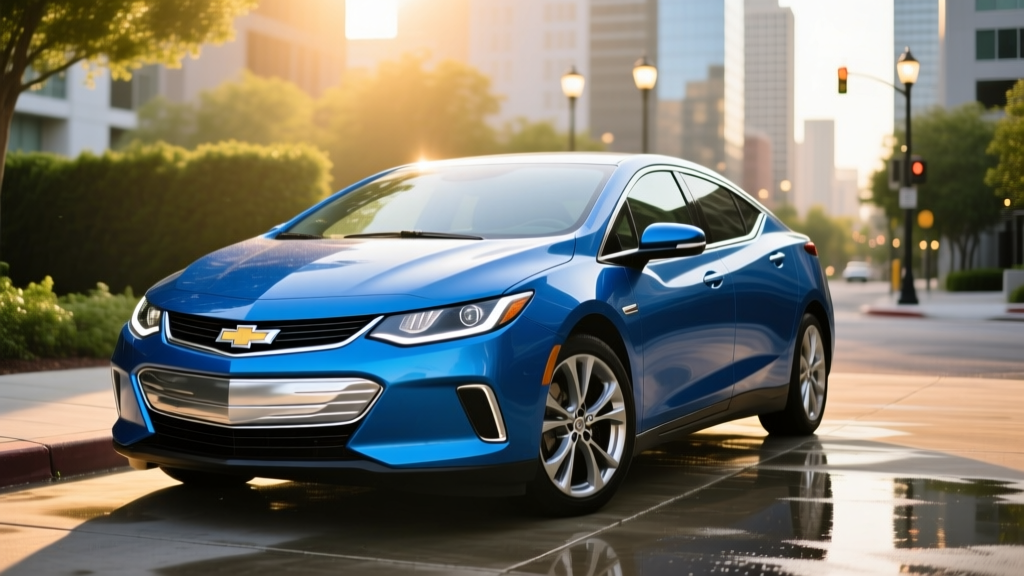
If you're searching for a "Chevy EV Volt," you're likely considering a plug-in hybrid (PHEV) that offers both electric-only driving and a gas engine for longer trips. The Chevrolet Volt was discontinued after the 2019 model year, so you're looking at the used market. Here's what you need to know: expect 53 miles of electric-only range (EPA), a combined 42 MPG on gas, and used prices ranging from $15,000 to $25,000 depending on mileage and condition. The Volt remains one of the most practical PHEVs for drivers who want electric commuting without range anxiety, but it's not a pure EV—and that distinction matters for costs, incentives, and daily use.
Quick Verdict: Is a Used Chevy Volt Worth It?
Yes, if: You have home charging, drive under 50 miles daily, and want to avoid pure-EV range anxiety on road trips.
No, if: You lack home charging access, want the full $7,500 federal tax credit (only available on new EVs/PHEVs), or prefer a pure battery-electric vehicle.
Real-World Range and Efficiency: What to Expect
The second-generation Volt (2016-2019) features an 18.4 kWh battery pack (14.0 kWh usable) paired with a 1.5L range-extender engine. The EPA rates it at 53 miles of electric-only range and 42 MPG combined when the gas engine kicks in. But real-world numbers vary significantly based on driving conditions.
| Metric | EPA Estimate | Real-World Expectation |
|---|---|---|
| Electric-only range | 53 miles | 40-50 miles (highway), 55-60 miles (city with regen) |
| Gas-only fuel economy | 42 MPG combined | 38-44 MPG depending on terrain and driving style |
| MPGe (electric mode) | 106 MPGe | N/A (use kWh/mile for cost calculations) |
| Total range (EV + gas) | 420 miles | 380-440 miles with full tank and full charge |
Cold-weather reality check: In sub-freezing temperatures, expect electric range to drop 20-30% due to cabin heating demands and reduced battery efficiency. A Volt owner in Minnesota might see 35-40 miles of EV range in January versus 55 miles in July. The gas engine eliminates range anxiety, but you'll burn more fuel in winter.
Highway driving: At sustained speeds above 70 mph, the Volt's electric range drops to 40-45 miles. Aerodynamic drag increases exponentially with speed, and the smaller battery pack can't compensate like a 80+ kWh pure-EV pack can.
Charging the Volt: Speeds, Costs, and Home Setup
The Volt uses a J1772 connector for Level 1 and Level 2 AC charging. It does not support DC fast charging—a limitation that frustrates some owners on road trips but rarely matters for daily use.
| Charging Level | Power (kW) | Time to Full Charge | Miles Added Per Hour |
|---|---|---|---|
| Level 1 (120V outlet) | 1.4 kW | 13 hours | 4 miles |
| Level 2 (240V, 12A) | 3.6 kW | 4.5 hours | 12 miles |
| Level 2 (240V, 16A upgrade) | 3.8 kW | 4.3 hours | 12 miles |
Home charging cost breakdown:
- Level 1 (included cord): $0 upfront, but painfully slow for daily use
- Level 2 home charger (240V): $300-$600 for equipment + $500-$1,500 for electrician installation (varies by panel capacity and run length)
- Electricity cost: At $0.14/kWh national average, a full 14 kWh charge costs ~$1.96 and delivers ~50 miles of range. That's $0.039 per mile versus $0.12-$0.15 per mile for a 30 MPG gas car at $3.50/gallon.
Panel upgrade gotcha: If your home has a 100-amp electrical panel that's already near capacity, adding a Level 2 charger may require a $1,500-$3,000 panel upgrade to 200 amps. Get an electrician assessment before committing.
Cost Comparison: Volt vs Gas Car vs Pure EV
Let's compare a used 2019 Volt (average $20,000 purchase) against a new 2026 Toyota Corolla Hybrid ($24,000 MSRP) and a new 2026 Chevrolet Equinox EV ($33,000 MSRP before incentives). We'll assume 15,000 miles/year, 70% electric driving for the Volt, and 5-year ownership.
| Cost Factor | 2019 Chevy Volt (used) | 2026 Corolla Hybrid | 2026 Equinox EV |
|---|---|---|---|
| Purchase price | $20,000 | $24,000 | $26,500 (after $7,500 credit if eligible) |
| Annual fuel/energy cost | $420 (electric) + $630 (gas) = $1,050 | $1,310 (gas at 50 MPG) | $525 (electric) |
| 5-year fuel/energy total | $5,250 | $6,550 | $2,625 |
| Maintenance (5 years) | $2,500 (oil changes, brakes, two powertrains) | $2,200 (oil changes, brakes) | $1,200 (no oil, regen saves brakes) |
| Insurance (5 years, avg) | $6,000 | $5,500 | $7,000 (EV premium) |
| 5-year total cost | $33,750 | $38,250 | $37,325 |
The takeaway: A used Volt offers the lowest 5-year total cost if you can charge at home and drive mostly under 50 miles daily. But it requires more maintenance than a pure EV (two powertrains, oil changes) and lacks the federal tax credit that makes new EVs more competitive.
Federal and State Incentives: What Applies in 2026?
Federal tax credit (§30D): The Volt no longer qualifies for the new-vehicle federal tax credit since it's discontinued. However, if you buy a used Volt from a dealer for under $25,000, you may qualify for the used clean vehicle credit—up to $4,000 or 30% of the sale price (whichever is lower). Income caps apply: $75,000 single / $150,000 married filing jointly.
State incentives: Vary widely. California's CVRP program is exhausted as of 2026, but states like Colorado, Oregon, and New York still offer rebates for used PHEVs. Check your state's energy office or Alternative Fuels Data Center for current programs.
Utility rebates: Many electric utilities offer $250-$500 rebates for Level 2 charger installation. Contact your utility before buying equipment.
Common Misconceptions About the Volt
| Myth | Fact |
|---|---|
| "The Volt is a pure electric car." | It's a plug-in hybrid (PHEV) with a gas engine. You can drive 53 miles on electricity, then the 1.5L engine generates power or drives the wheels. |
| "I'll never need gas if I charge daily." | True for short commutes, but the Volt's maintenance minder will force the engine to run periodically to prevent fuel degradation and lubricate components. |
| "Battery replacement costs $15,000." | A used Volt battery pack replacement runs $3,000-$5,000 in 2026, and most 2016-2019 models still have valid 8-year/100,000-mile battery warranties. |
| "I can fast-charge on road trips." | The Volt has no DC fast charging. You're limited to 3.6 kW Level 2, adding ~12 miles per hour. Plan gas stops for long trips. |
| "It qualifies for the $7,500 federal tax credit." | Only new vehicles qualify for the full §30D credit. A used Volt may qualify for up to $4,000 under the used-vehicle credit if you meet income requirements. |
Decision Framework: Should You Buy a Volt?
If X, Then Y
If you have home charging AND drive under 50 miles daily: The Volt is an excellent choice. You'll run on electricity 90% of the time, pay $0.04/mile for energy, and have the gas engine for weekend trips.
If you lack home charging: Skip the Volt. Level 1 charging takes 13 hours for a full charge, and public Level 2 chargers are impractical for daily use. Consider a conventional hybrid (Corolla, Prius) instead.
If you want zero gas use: Look at pure EVs like the Equinox EV, Hyundai Kona Electric, or used Tesla Model 3. The Volt's engine will run occasionally even if you charge daily.
If you live in extreme cold (below 0°F regularly): The Volt works, but expect 35-40 miles of EV range in winter. A PHEV with more electric range (Toyota RAV4 Prime, 42 miles EPA but better cold performance) or a pure EV with a heat pump may serve you better.
If you want the lowest upfront cost: A used Volt at $15,000-$20,000 is cheaper than any new EV or PHEV. Just budget for potential battery out-of-warranty replacement in years 6-10.
What First-Time Volt Buyers Should Know
- Check the battery warranty: The 8-year/100,000-mile battery warranty transfers to subsequent owners. A 2019 Volt with 60,000 miles still has warranty coverage until 2027 or 100,000 miles.
- Verify charge history: Ask for OnStar/Volt app data showing battery state of health. Degradation should be under 10% for a well-maintained vehicle.
- Test both modes: Drive in EV mode until the battery depletes, then experience the transition to gas. Listen for unusual engine noises—the 1.5L should be smooth.
- Budget for maintenance: Unlike pure EVs, the Volt needs oil changes (every 2 years or when the maintenance minder triggers), coolant flushes for two systems, and transmission fluid service.
- Install Level 2 before buying: Get an electrician quote for 240V outlet or hardwired charger installation. If the cost exceeds $2,000 due to panel upgrades, factor that into your decision.
FAQ: Chevy Volt Ownership Questions
How long does a Volt battery last?
Most 2016-2019 Volt batteries retain 85-95% capacity after 8-10 years. GM's liquid-cooled thermal management system is excellent at preventing degradation. Expect 150,000-200,000 miles before significant capacity loss.
Can I drive a Volt without ever plugging it in?
Yes, but you'll get only 42 MPG and miss the entire point of a PHEV. The Volt functions as a conventional hybrid when unplugged, but you're paying a premium for battery capacity you're not using.
What's the difference between a Volt and a Bolt EV?
The Volt is a plug-in hybrid with 53 miles EV range + gas engine. The Bolt EV is a pure battery-electric vehicle with 259 miles of range (2022+ models) and no gas engine. The Bolt qualifies for the full $7,500 federal credit when new; the Volt does not.
Is the Volt good for road trips?
Yes, thanks to the gas engine. You'll get 42 MPG highway and can refuel at any gas station. Just don't expect to charge quickly at public stations—3.6 kW Level 2 adds only 12 miles per hour.
Should I buy a 2016-2017 or 2018-2019 model?
The 2018-2019 models have slightly more power (149 hp combined vs 149 hp—no change, but software refinements) and better infotainment. The 2019 model year added standard heated seats and a heated steering wheel on LT trim. Any second-gen Volt (2016+) is solid; prioritize condition and mileage over specific year.