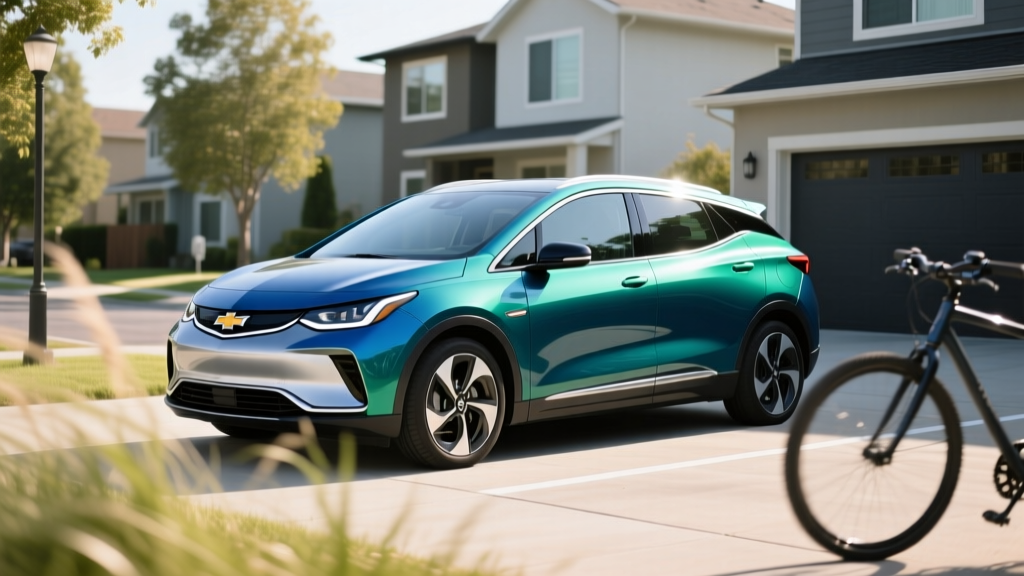
If you're shopping for a Chevrolet electric vehicle, the federal tax credit can knock up to $7,500 off your effective purchase price — but only if you, the vehicle, and its battery all clear a gauntlet of IRS rules. For 2026, Chevrolet's EV lineup includes the Equinox EV, Blazer EV, and Silverado EV, each with different credit eligibility profiles that shift as battery-sourcing requirements tighten.
This guide breaks down exactly which 2026 Chevy EVs qualify, what the income and MSRP caps mean for your wallet, and what the full five-year cost of ownership actually looks like — including the higher insurance premiums and steeper depreciation that most cheerleading articles conveniently omit.
Which 2026 Chevy EVs Qualify for the Federal Tax Credit?
Under IRS §30D, the new clean vehicle credit offers up to $7,500, split into two halves: $3,750 for meeting critical-minerals sourcing requirements and $3,750 for meeting battery-component manufacturing requirements. For 2026, both prongs have become significantly harder to satisfy as the Treasury Department phases out reliance on foreign entities of concern (FEOC).
§30D Eligibility Checklist for 2026 Chevy EVs
- Vehicle MSRP cap: SUVs, pickups, and vans must have an MSRP at or below $80,000. Sedans and other body styles cap at $55,000.
- Buyer income limits (modified AGI): $300,000 joint filers / $225,000 head of household / $150,000 single filers.
- Final assembly: Vehicle must be assembled in North America — all current Chevy EVs qualify.
- Critical minerals: A rising percentage of battery minerals must be sourced from the U.S. or FTA-partner nations (threshold increases annually through 2027).
- Battery components: Must be manufactured or assembled in North America; FEOC-sourced components disqualify the vehicle entirely beginning in 2024, with FEOC critical minerals phasing in through 2027.
- Point-of-sale transfer: You can transfer the credit to the dealer at purchase, reducing your out-of-pocket cost immediately — or claim it on your federal tax return (Form 8936).
- One credit per taxpayer: You may claim the credit only once per year, and the vehicle must be for personal use, primarily in the U.S.
2026 Chevy EV Credit Eligibility at a Glance
| Model | Trim | Base MSRP | Est. Credit (2026) | Notes |
|---|---|---|---|---|
| Equinox EV | LT / RS / Midnight | ~$33,600 | Up to $7,500 | Most trims under $55K sedan cap; confirm sourcing with dealer |
| Blazer EV | 2LT / RS / SS | ~$44,600 | Up to $7,500 | SUV $80K cap applies; SS trim may approach cap |
| Silverado EV | Work Truck / RST / Trail Boss | ~$55,000 (WT) / ~$87,000 (RST) | $0–$7,500 | RST exceeds $80K pickup cap — ineligible; WT and lower trims eligible |
Key caveat: Battery-sourcing requirements tighten each January. A trim that qualifies on January 2, 2026, could lose one or both credit halves later in the year if GM's supply chain shifts. Always verify current eligibility on fueleconomy.gov before signing a purchase agreement.
The Real 5-Year Cost of Owning a Chevy Equinox EV
To ground this in reality, let's model a 2026 Equinox EV 2LT (FWD) — Chevy's highest-volume electric offering — over five years and 75,000 miles. This is where the math gets honest: EVs save on fuel and maintenance but cost more to insure and depreciate faster than comparable gas models.
| Cost Category | Equinox EV 2LT (FWD) | Equinox Gas (1.5T AWD) | Notes |
|---|---|---|---|
| Purchase price (MSRP) | $36,500 | $31,900 | EV premium before incentives |
| Federal tax credit | −$7,500 | $0 | Assumes full §30D eligibility |
| Effective purchase price | $29,000 | $31,900 | EV cheaper after credit |
| Charging / fuel (5 yr) | $3,940 | $8,625 | See cost-per-mile breakdown below |
| Insurance (5 yr) | $10,500 | $8,250 | EV premiums ~25–30% higher |
| Maintenance (5 yr) | $1,800 | $4,200 | No oil changes; regen saves brakes |
| Depreciation (5 yr) | $14,500 | $11,200 | EVs lose ~45–55% vs ~35–40% gas |
| Total 5-yr cost | $30,740 | $32,275 | EV saves ~$1,535 over 5 years |
The takeaway: the Equinox EV edges out its gas sibling over five years, but the margin is slim — and it depends entirely on capturing the full $7,500 credit. Without the credit, the gas Equinox wins on total cost.
Charging vs. Gas: The Per-Mile Math
The single biggest operational savings for any EV is fuel. But the dollar amount depends heavily on where and how you charge.
Cost Per Mile: Equinox EV vs. Gas Equinox
| Scenario | Cost/kWh or $/gal | Efficiency | Cost per Mile |
|---|---|---|---|
| Home Level 2 (national avg electricity) | $0.16/kWh | 3.2 mi/kWh (102 MPGe) | $0.050 |
| Home Level 2 (California, high-rate tier) | $0.32/kWh | 3.2 mi/kWh | $0.100 |
| Public DC fast charging (avg network) | $0.40/kWh | 3.2 mi/kWh | $0.125 |
| Gas Equinox (regular unleaded) | $3.45/gal | 28 MPG combined | $0.123 |
The honest read: If you charge at home on a standard utility rate, the EV costs roughly $0.05/mile — about 60% less than gas. But if you rely primarily on public DC fast chargers at $0.40/kWh, your per-mile cost actually matches or exceeds a fuel-efficient gas SUV. Home charging access is the single biggest determinant of EV fuel savings.
For the 5-year model above, I assumed 80% home charging at $0.16/kWh and 20% public DC at $0.40/kWh, yielding a blended rate of roughly $0.053/mile over 15,000 miles/year.
Maintenance Savings: Where EVs Genuinely Win
| Maintenance Item | Gas Equinox (5 yr / 75K mi) | Equinox EV (5 yr / 75K mi) |
|---|---|---|
| Oil changes (synthetic, ~$60 each) | $420 (7 changes) | $0 |
| Brake pads & rotors | $800 | $200 |
| Transmission fluid | $180 | $0 |
| Engine air filter | $125 | $0 |
| Coolant flush | $200 | $150 |
| Cabin air filter | $150 | $150 |
| Tire rotation / replacement | $1,100 | $1,100 |
| Miscellaneous (wipers, 12V battery) | $225 | $200 |
| Total | ~$3,200 | ~$1,800 |
Regenerative braking is the unsung hero here. By using the electric motor to decelerate, regen dramatically reduces friction-brake wear — many EV owners report original brake pads lasting 80,000–100,000 miles. Combined with no engine oil, no spark plugs, and no multi-speed transmission fluid, the EV saves roughly $1,400–$2,400 over five years on maintenance alone.
One cost that doesn't disappear: tires. EVs are heavier (the Equinox EV weighs ~4,700 lbs vs. ~3,500 lbs for the gas model) and deliver instant torque, which accelerates tire wear. Budget for the same tire replacement schedule you'd have on a gas vehicle.
The Insurance Reality EV Buyers Overlook
Here's where the savings narrative gets uncomfortable. EV insurance premiums run 25–30% higher than equivalent gas vehicles, according to industry data. For the Equinox EV, expect annual premiums around $2,000–$2,200 compared to $1,550–$1,750 for the gas Equinox.
Why the premium?
- Higher repair costs: EV battery packs and power electronics are expensive to replace after collision damage. Even minor rear-end impacts can total an EV if the battery enclosure is compromised.
- Specialized labor: High-voltage system repairs require certified technicians, and fewer body shops have that capability — driving up labor rates.
- Vehicle value: Higher MSRP means higher comprehensive and collision payouts.
- Claims data: Insurers are still calibrating EV loss ratios, and early data has shown higher severity per claim.
Shop quotes from multiple carriers before buying. Some insurers (Geico, Progressive, Liberty Mutual) have started offering EV-specific discounts that partially close the gap, but the structural cost difference remains real.
EV Depreciation: The Silent Cost Killer
Depreciation is the largest single ownership cost for any vehicle, and EVs currently depreciate faster than comparable gas models. According to iSeeCars and Kelley Blue Book data, the average EV loses 45–55% of its value over five years, compared to 35–40% for mainstream gas SUVs.
Several factors drive this:
- Rapid technology obsolescence: Newer EVs arriving each year with more range and faster charging make older models less desirable on the used market.
- Battery health uncertainty: Used-EV buyers discount for unknown battery State of Health (SoH), even though most modern packs degrade far less than feared.
- Price wars: Tesla's aggressive price cuts in 2023–2024 cratered used EV values across the board, and the market hasn't fully stabilized.
- Tax credit effect: The $7,500 credit effectively resets the baseline — a one-owner EV can't offer the credit to its second buyer, so used prices must drop to compensate.
For our Equinox EV model: bought at an effective $29,000 (after credit), expect a residual value around $14,500–$16,000 at the five-year mark — a loss of roughly $13,000–$14,500. The gas Equinox, bought at $31,900, might return $19,000–$20,700, losing $11,200–$12,900. Depreciation is where the gas model quietly claws back much of the EV's fuel and maintenance advantage.
Chevrolet's battery warranty — 8 years / 100,000 miles with a minimum 60% capacity retention threshold — does provide some used-market confidence, but it doesn't fully offset the structural depreciation gap.
State, Local, and Utility Incentives: The Variable Bonus Layer
Beyond the federal credit, incentives vary enormously by location. Always check your state's energy office, your utility's EV program page, and the Alternative Fuels Data Center for current offerings. These change frequently and often have limited funding pools.
Common incentive types include:
- State purchase rebates: California's CVRP has been restructured; Colorado offers up to $5,000 in point-of-sale rebates for income-qualified buyers; New York's Drive Clean Rebate provides up to $2,000.
- Utility charging rebates: Many utilities offer $250–$1,000 toward home Level 2 charger purchase and installation, plus off-peak charging rates as low as $0.06–$0.08/kWh.
- HOV lane access: States including California, Colorado, and Virginia grant single-occupant carpool-lane access to qualifying EVs — a significant time savings in congested metros.
- Property tax exemptions: Several states exempt EVs from ad valorem or personal property taxes that apply to gas vehicles.
These incentives can swing the 5-year math by $1,000–$5,000 in the EV's favor, but they are location-dependent and time-limited. Don't build your purchase decision around incentives you haven't confirmed in writing.
Decision Framework: Does the Chevy EV Tax Credit Make It Worth It?
Buy the Equinox EV if:
- You qualify for the full $7,500 federal credit (income under caps, vehicle MSRP under cap, battery sourcing confirmed).
- You can install a Level 2 home charger — this is non-negotiable for capturing fuel savings.
- You drive 12,000–18,000 miles/year, maximizing the per-mile fuel savings.
- You plan to keep the vehicle 5–7 years, riding out the steeper initial depreciation curve.
- Your state or utility offers additional rebates that widen the cost gap.
Stick with the gas Equinox (or consider a hybrid) if:
- You exceed the §30D income caps or the vehicle's MSRP pushes past the threshold.
- You can't charge at home (apartment, street parking, no electrical panel capacity for a 240V circuit).
- You primarily drive short urban trips where a hybrid's efficiency nearly matches an EV's per-mile cost.
- You trade vehicles every 3 years — depreciation will eat your fuel savings.
- Your insurance quotes come back more than 35% above the gas equivalent.
Frequently Asked Questions
How much does it really cost to own a Chevy Equinox EV over 5 years?
Based on our modeling with the full $7,500 federal credit applied, the 2026 Equinox EV 2LT costs approximately $30,740 over 5 years (purchase, charging, insurance, maintenance, depreciation) — roughly $1,535 less than the gas Equinox over the same period. Without the federal credit, the EV costs about $5,965 more.
Do I qualify for the Chevy EV tax credit?
You likely qualify if your modified adjusted gross income is under $150,000 (single) / $300,000 (joint), the vehicle MSRP is under the applicable cap ($55,000 sedans / $80,000 SUVs and trucks), and the battery meets 2026 critical-mineral and component-sourcing thresholds. Confirm current eligibility at fueleconomy.gov before purchasing, as sourcing requirements change annually.
How much do I save on fuel and maintenance with a Chevy EV?
Assuming 80% home charging at $0.16/kWh, the Equinox EV costs roughly $0.05/mile in electricity versus $0.12/mile in gas for the equivalent ICE model — saving about $4,700 over 75,000 miles. Maintenance savings add another $1,400–$2,400, for combined operational savings of roughly $6,000–$7,000 over five years.
Are Chevy EVs more expensive to insure?
Yes. Expect premiums 25–30% higher than the gas Equinox — roughly $2,000–$2,200/year versus $1,550–$1,750/year. Higher repair costs after collisions, specialized high-voltage labor, and elevated vehicle values all contribute. The 5-year insurance gap is typically $2,000–$2,500.
How well do Chevy EVs hold their value?
Like most EVs, the Equinox EV depreciates faster than its gas counterpart — expect roughly 45–50% value loss over five years versus 35–40% for the gas Equinox. This is driven by rapid tech obsolescence, used-buyer uncertainty about battery health, and the fact that the federal credit doesn't transfer to second owners. Plan to hold the vehicle at least five years to ride out the steeper initial drop.
Can I get the tax credit as a point-of-sale discount?
Yes. Under current §30D rules, you can transfer the credit to the dealership at purchase, reducing your down payment or financed amount by up to $7,500. The dealer must be registered with the IRS Energy Credits portal, and you'll need to attest to your income eligibility at the time of sale. This is often the most practical way to capture the credit, as it reduces your upfront cost rather than waiting for a tax refund the following April.
What about the Chevy Blazer EV and Silverado EV — do they qualify?
The Blazer EV (starting ~$44,600) falls well under the $80,000 SUV MSRP cap and should qualify for up to $7,500, assuming battery-sourcing compliance. The Silverado EV Work Truck (~$55,000) qualifies under the $80,000 pickup cap, but the Silverado EV RST (~$87,000) exceeds it and is ineligible for the federal credit regardless of your income. Always confirm the specific trim's MSRP against the cap.