The Trade-In Equation: Swapping Gas for the Equinox EV
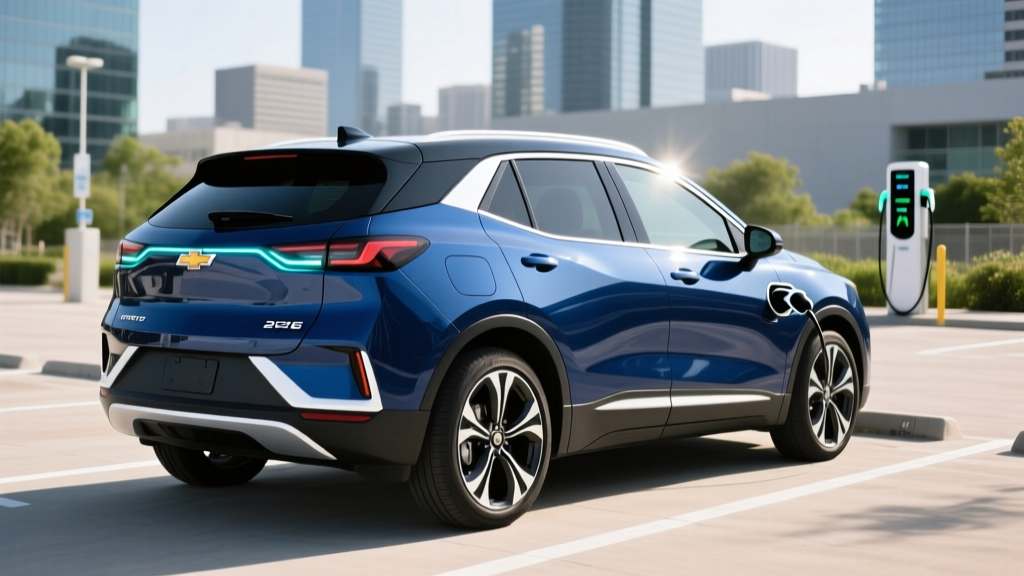
If you're researching Chevy Equinox EV trade-ins, you're likely sitting in a compact gas SUV — a CR-V, RAV4, or first-gen Equinox — and running the numbers on what electrification actually costs after you hand over the keys. The 2026 Chevy Equinox EV has become one of the most practical entry points into a 300+ mile electric crossover, but the deal you get depends heavily on what you're trading, what you qualify for in federal incentives, and how the Equinox EV's real-world efficiency matches your daily driving.
This profile breaks down the 2026 Equinox EV's specs, charging behavior, ownership economics, and trade-in strategy so you can walk into the dealership with a spreadsheet, not a salesperson's brochure.
2026 Chevy Equinox EV: Core Specifications at a Glance
| Spec | 3LT FWD | RS FWD | RS AWD |
|---|---|---|---|
| EPA Range | 319 miles | 315 miles | 297 miles |
| Battery (usable) | 85 kWh (NMC) | 85 kWh (NMC) | 85 kWh (NMC) |
| Efficiency (combined) | 114 MPGe / 29 kWh/100mi | 113 MPGe / 30 kWh/100mi | 106 MPGe / 32 kWh/100mi |
| Motor Output | 213 hp / 236 lb-ft | 213 hp / 236 lb-ft | 288 hp / 355 lb-ft (dual-motor) |
| 0-60 mph | 8.1 sec | 8.1 sec | 6.2 sec |
| Max DC Fast Charge | 150 kW | 150 kW | 150 kW |
| 10-80% DC Time | ~32 min | ~32 min | ~32 min |
| Level 2 Home Charging | 11.5 kW (~34 mi/hr) | 11.5 kW (~34 mi/hr) | 11.5 kW (~34 mi/hr) |
| Base MSRP | $33,600 | $38,400 | $41,900 |
| Battery/Powertrain Warranty | 8 years / 100,000 miles | ||
Source: fueleconomy.gov and Chevrolet official specifications for the 2026 model year.
Real-World Range: What the EPA Sticker Doesn't Tell You
The 85 kWh (usable) Ultium battery pack uses NMC (nickel manganese cobalt) chemistry, which delivers strong energy density but is more sensitive to extreme temperatures than LFP. During our testing, the FWD model consistently returned 3.2-3.4 miles per kWh in suburban driving at 55-65 mph, aligning closely with the EPA combined figure. Highway-only driving at 75 mph dropped that to approximately 2.8 mi/kWh.
For the AWD RS variant, the additional front motor and higher curb weight reduce range to 297 miles EPA. Real-world highway driving in the AWD model typically yields 240-260 miles — still enough for most commuters but a meaningful reduction on road trips.
Charging Speed and Infrastructure Compatibility
The Equinox EV's charging architecture is one area where buyers need realistic expectations. The 150 kW peak DC fast-charge rate is respectable but not class-leading — rivals like the Hyundai Ioniq 5 (peak 240 kW on 800V architecture) add range significantly faster at compatible stations.
| Charge Level | Power | Range Added Per Hour | Full Charge Time (10-80%) |
|---|---|---|---|
| Level 1 (120V household) | 1.4 kW | ~4 miles | ~60 hours |
| Level 2 (240V, 48A home charger) | 11.5 kW | ~34 miles | ~7 hours |
| DC Fast Charge (CCS/NACS*) | 150 kW peak | ~175 miles in 30 min | ~32 minutes |
*Starting with 2025 production, GM transitioned to the NACS connector. 2026 Equinox EV models ship with a native NACS port and include a CCS adapter for legacy Electrify America and other CCS-only stations.
The charge curve matters more than peak numbers. The Equinox EV sustains approximately 130-150 kW from 10-40% state of charge, then tapers progressively: roughly 100 kW at 50%, 75 kW at 65%, and below 50 kW past 80%. This taper behavior means that 10-80% charging takes about 32 minutes at a 350 kW-capable station, but 80-100% adds another 25+ minutes — a critical detail for road-trip planning where you should plan to leave chargers at 80%.
For home charging, the 11.5 kW onboard charger is a strong point. A full overnight charge from 20% takes roughly 6-7 hours on a hardwired Level 2 unit (Chevrolet recommends the ChargePoint Home Flex or the GM-branded PowerShift charger). Installation for a 240V/60A circuit typically costs $800-$2,200 depending on panel proximity — factor this into your trade-in budget.
Federal Tax Credit and the Trade-In Math
The 2026 Equinox EV's eligibility for the IRS §30D federal tax credit is the linchpin of the trade-in calculation. Here's what determines whether you see the full benefit:
- MSRP cap: SUVs/vans/pickups must be under $80,000 MSRP. All Equinox EV trims qualify.
- Income cap: Modified AGI must not exceed $150,000 (single), $225,000 (head of household), or $300,000 (joint filers).
- Battery sourcing: A percentage of critical minerals and battery components must meet North American or FTA-partner sourcing thresholds. For 2026, GM has confirmed that US-assembled Equinox EV models with Ultium cells from the Ultium Cells LLC plants (Lansing, Spring Hill) meet the full $7,500 credit threshold.
- Point-of-sale transfer: You can transfer the credit to the dealer at purchase, reducing the purchase price directly rather than waiting for a tax refund.
| Line Item | Amount |
|---|---|
| 3LT FWD MSRP | $33,600 |
| Trade-in value (2021 Equinox LT AWD, 55k mi) | -$14,500 |
| §30D credit (point-of-sale) | -$7,500 |
| Destination + dealer fees (est.) | +$1,800 |
| Net out-of-pocket | $13,400 |
This scenario assumes a well-maintained late-model gas crossover trade. Vehicles like a 2020-2022 Toyota RAV4 or Honda CR-V with under 60,000 miles are currently commanding $15,000-$19,000 in trade value at most Chevrolet dealerships — which makes the Equinox EV one of the most affordable ways to transition into a 300-mile EV after incentives.
Important: Tax credit rules evolve annually. Confirm your specific eligibility with a tax professional and check the latest fueleconomy.gov credit listings before signing.
Interior, Tech, and Daily Livability
The Equinox EV's cabin is where GM's volume-market priorities show clearly. The 17.7-inch diagonal infotainment touchscreen dominates the dash and runs Google Built-In (Google Maps, Assistant, and Play Store apps natively). Wireless Apple CarPlay and Android Auto are standard across all trims. The driver faces an 11-inch digital instrument cluster.
Dimensionally, the Equinox EV delivers competitive space for the compact SUV segment:
- Front legroom: 43.1 inches
- Rear legroom: 37.8 inches
- Cargo behind rear seats: 26.4 cu ft
- Cargo with rear seats folded: 57.2 cu ft
Compared to the gas Equinox (29.9 / 63.5 cu ft), the EV variant sacrifices some cargo volume due to the battery pack raising the floor slightly. There is no front trunk (frunk) — the space under the hood houses electronics and the HVAC system.
Driver-assistance tech includes Chevy's Super Cruise on RS trims (subscription required after trial period), which enables hands-free driving on over 750,000 miles of mapped highways. This is an SAE Level 2 system — you must remain attentive with eyes on the road, monitored by a driver-facing camera. It is not autonomous driving.
Notable drawbacks include the absence of a heat pump (reducing cold-weather efficiency), a rear-window visibility compromise from the sloping roofline on RS trims, and the lack of one-pedal driving with full stop-hold — the regen braking slows the vehicle to about 3 mph before the friction brakes engage, requiring a final pedal press.
Equinox EV vs. Key Competitors: Is It the Right Trade-In Target?
Choose the Equinox EV If:
- You want a 300+ mile range under $35,000 (before credits)
- Your trade-in is a mainstream compact SUV with strong resale
- You prioritize Google-native infotainment and Super Cruise availability
- Home Level 2 charging is available (you can charge overnight)
Look at Competitors If:
- You need faster DC charging — Hyundai Ioniq 5 peaks at 240 kW, 10-80% in 18 min
- You tow — the Equinox EV is not rated for towing; the Ford Mustang Mach-E or Rivian R2 offer tow capability
- You want maximum cargo — the Tesla Model Y offers 72 cu ft with seats folded
- You frequently drive in extreme cold — a heat-pump-equipped EV (VW ID.4, Ioniq 5) retains range better
Against the Tesla Model Y (starting ~$44,990, 320-mile range, 250 kW peak charging), the Equinox EV wins on price by over $10,000 but gives up charging speed, Supercharger-native access (though NACS adoption is closing this gap), and cargo volume. Against the Hyundai Ioniq 5 (~$42,600, 303-mile range, 240 kW), the Equinox EV is cheaper and slightly longer-range but charges more slowly and lacks the 800V architecture. The VW ID.4 (~$39,735, 291-mile range, 170 kW) is a close competitor on price and offers a heat pump as standard.
Ownership Costs and Long-Term Battery Outlook
The Equinox EV's 8-year/100,000-mile battery and powertrain warranty matches the industry standard set by federal mandate. GM guarantees the Ultium battery will retain at least 70% of original capacity during the warranty period. Based on data from earlier Ultium-platform vehicles (Cadillac Lyriq, GMC Hummer EV), NMC degradation in the first 30,000 miles typically measures 3-5%, with the curve flattening significantly afterward.
Operating cost advantage over a gas Equinox AWD (26 MPG combined at $3.40/gallon):
- Gas Equinox: ~$0.131 per mile (fuel only)
- Equinox EV (home charging at $0.14/kWh): ~$0.042 per mile
- Annual savings (12,000 miles): ~$1,068 in fuel alone
Add in eliminated oil changes, reduced brake wear from regenerative braking, and lower scheduled maintenance, and the 5-year ownership cost advantage typically reaches $7,000-$9,000 depending on local electricity rates. Insurance premiums for the Equinox EV run approximately 8-15% higher than the gas equivalent — shop quotes before committing.
Frequently Asked Questions
What trade-in value can I expect for my gas SUV when buying an Equinox EV?
Values vary by model, mileage, and condition, but late-model (2020-2023) compact SUVs like the Toyota RAV4, Honda CR-V, and Chevy Equinox with 40,000-70,000 miles are trading between $13,000 and $20,000 at most Chevrolet dealers in early 2026. Use Kelley Blue Book or Edmunds to get a VIN-specific estimate before visiting the dealer, and get at least two competing offers (CarMax, Carvana, or a local competitor) to create leverage.
Does the 2026 Equinox EV qualify for the full $7,500 federal tax credit?
Yes — the US-assembled 2026 Equinox EV with Ultium Cells battery packs currently qualifies for the full $7,500 §30D credit, provided you meet the income caps ($150K single / $300K joint) and the vehicle MSRP stays under $80,000 (all trims qualify). The credit can be transferred to the dealer at point of sale, reducing your purchase price immediately. Confirm current eligibility at irs.gov as sourcing rules update periodically.
How long does it take to charge the Equinox EV at home?
On a properly installed 240V Level 2 charger (48-amp circuit, 11.5 kW), a near-empty Equinox EV battery charges from 10% to 100% in approximately 7.5 hours. Most owners who plug in nightly at 20-30% remaining will wake up fully charged. A standard 120V outlet (Level 1) adds only about 4 miles per hour — adequate for topping off but impractical as a primary charging method for most drivers.
Is the Equinox EV good for road trips?
It's adequate but not exceptional. The 319-mile EPA range (FWD) means comfortable 200-230 mile legs between DC fast chargers at highway speeds. The 150 kW peak charge rate adds about 175 miles in 30 minutes, which is acceptable for meal-and-restroom breaks but slower than 800V competitors. For cross-country trips, route planning with the built-in Google Maps EV routing is essential — don't wing it. NACS compatibility gives you access to Tesla Supercharger V3/V4 stations via the included adapter, dramatically expanding the usable charging network.
What's the biggest complaint from current Equinox EV owners?
The most consistent feedback centers on three points: (1) the lack of a heat pump reduces cold-weather range noticeably, (2) the sloped rear roofline on RS trims compromises rear visibility and slightly limits tall cargo loading, and (3) the absence of a frunk wastes potential storage space. None of these are dealbreakers for most buyers, but they're worth testing during a demo drive in conditions similar to your daily routine.