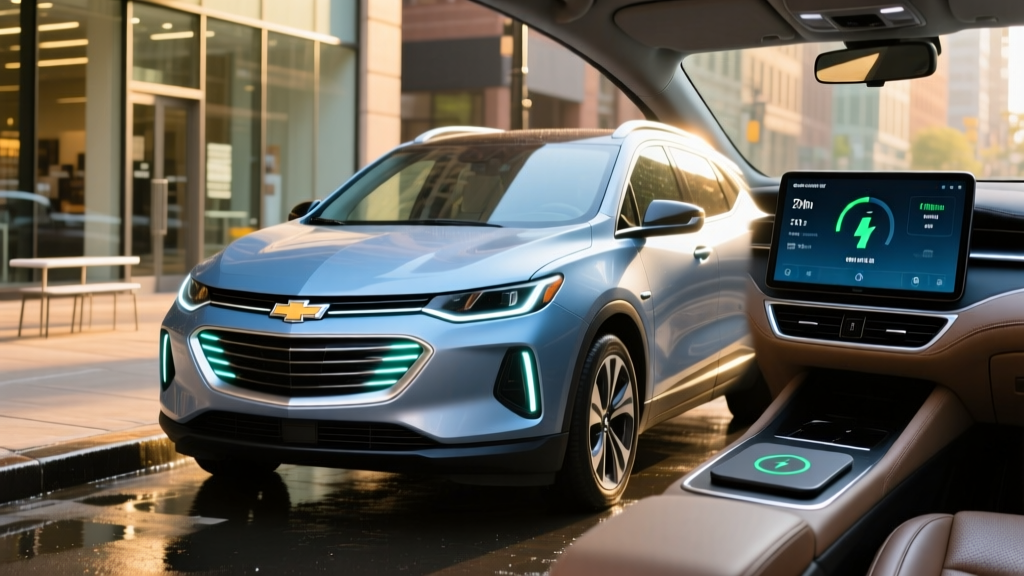
The Chevrolet Equinox EV has become one of the most talked-about entries in the affordable electric crossover segment, and the numbers are starting to reflect that buzz. With Chevy Equinox EV sales in July 2026 showing strong momentum at dealerships nationwide, it's clear this compact electric SUV is resonating with buyers who want real range without a premium price tag. But beyond the sales headlines, what does ownership actually look like? We put the 2026 Equinox EV under the microscope — range, charging, pricing, tax credits, and how it stacks up against rivals like the Hyundai Ioniq 5, Ford Mustang Mach-E, and Tesla Model Y.
Quick Verdict: Why Equinox EV Sales Are Climbing
The Equinox EV's appeal is straightforward: over 300 miles of EPA-estimated range starting under $35,000 (before incentives), a spacious interior, and access to GM's growing Ultium platform maturity. July 2026 sales data from Chevrolet shows the model continuing to gain ground in a segment where affordability and range dominate purchase decisions. The Equinox EV doesn't try to be the fastest or the flashiest — it aims to be the most practical daily-driver EV for mainstream buyers, and largely succeeds.
Range, Efficiency, and Real-World Expectations
The headline number for the 2026 Equinox EV is its EPA-estimated range, which varies by trim and drivetrain:
| Trim / Drivetrain | Battery (usable kWh) | EPA Range (mi) | MPGe (combined) | kWh/100 mi |
|---|---|---|---|---|
| LT FWD | 85 kWh (NMC) | 319 | 109 MPGe | 31 |
| RS FWD | 85 kWh (NMC) | 315 | 107 MPGe | 32 |
| RS AWD (Dual Motor) | 85 kWh (NMC) | 285 | 97 MPGe | 35 |
Efficiency is competitive but not class-leading. The FWD models at roughly 31 kWh/100 mi trail the Hyundai Ioniq 5's ~30 kWh/100 mi and the Tesla Model Y's ~28 kWh/100 mi, but the difference translates to only a few dollars per charge cycle in practical terms.
Charging Speed: DC Fast Charge and Home Level 2
Charging capability is where Equinox EV buyers need to set expectations correctly. The Ultium platform here supports respectable — but not segment-topping — charge rates.
| Charging Level | Power / Rate | Speed (miles of range added) | Notes |
|---|---|---|---|
| Level 1 (120V standard outlet) | ~1.4 kW | ~4 mi/hr | Emergency/trickle only |
| Level 2 (240V home, 48A) | 11.5 kW | ~34 mi/hr | Full charge in ~9 hrs |
| Level 2 (240V home, 32A) | 7.7 kW | ~23 mi/hr | Common portable charger rate |
| DC Fast Charge (peak) | 150 kW | ~170 mi in 20 min | 10-80% in ~30 min |
The 150 kW peak DC fast-charge rate means the Equinox EV can add meaningful range quickly on a road trip, but it's important to understand the charge curve. Peak rate is sustained roughly between 10-40% state of charge, after which the rate tapers progressively. From 80-100%, charging slows dramatically to protect battery health — this is standard across lithium-ion EVs but worth knowing if you're planning highway stops.
For home charging, the 11.5 kW onboard charger (with a 48-amp Level 2 station) is excellent. It means most owners will wake up to a full battery every morning with a standard overnight charge. A fueleconomy.gov comparison shows this home charging rate is on par with the best in class.
Performance and Drivetrain
The Equinox EV isn't positioned as a performance machine, but the instant torque from its electric motors makes it feel quicker than its numbers suggest:
| Specification | FWD Models | AWD (Dual Motor) |
|---|---|---|
| Horsepower | 213 hp | 288 hp |
| Torque (lb-ft) | 236 | 330 |
| 0-60 mph | ~7.8 sec | ~6.2 sec |
| Drivetrain | Single motor, FWD | Dual motor, eAWD |
| Towing capacity | 1,500 lbs | 1,500 lbs |
The AWD dual-motor RS is the enthusiast pick, offering confident acceleration and sure-footed all-weather capability. The FWD models prioritize efficiency, and for most commuters, 213 hp is more than adequate for merging, passing, and daily driving.
Interior Space, Cargo, and Tech
GM gave the Equinox EV a surprisingly roomy cabin that punches above its compact-crossover weight class:
- Front legroom: 41.4 inches
- Rear legroom: 38.2 inches
- Cargo (behind rear seats): 26.4 cu ft
- Cargo (rear seats folded): 57.2 cu ft
- Front trunk (frunk): Not available — the Ultium platform in this configuration does not include a frunk
The centerpiece of the interior is a 17.7-inch diagonal infotainment touchscreen running Google built-in (Google Maps, Google Assistant, Google Play Store). A 11-inch driver display sits behind the steering wheel. Wireless Apple CarPlay and Android Auto are standard.
Driver assistance includes Chevy's Super Cruise on available trims — a SAE Level 2 hands-free system that works on over 750,000 miles of compatible highways. This is not autonomous driving; the driver must remain attentive and an in-cabin camera monitors eye gaze. Super Cruise is one of the most refined Level 2 systems available, but it does not replace an engaged driver.
Pricing, Trims, and Federal Tax Credit
The 2026 Equinox EV lineup is structured to hit multiple price points:
| Trim | Base MSRP | Est. After §30D Credit* | Drivetrain |
|---|---|---|---|
| LT FWD | $33,600 | ~$26,100 | FWD |
| RS FWD | $36,400 | ~$28,900 | FWD |
| RS AWD | $39,900 | ~$32,400 | Dual Motor AWD |
| RS Launch Edition AWD | $43,400 | ~$35,900 | Dual Motor AWD |
*Federal tax credit estimates assume full §30D eligibility. Actual credit depends on individual circumstances.
The IRS §30D federal tax credit offers up to $7,500, but eligibility has specific requirements that buyers must verify:
- MSRP cap: SUVs must have an MSRP at or below $80,000 (all Equinox EV trims qualify)
- Buyer income cap: Modified AGI must not exceed $150,000 (single), $225,000 (head of household), or $300,000 (joint filers)
- Battery sourcing: Critical minerals and battery components must meet phased-in domestic/free-trade-partner sourcing thresholds that tighten annually through 2026
- Point-of-sale transfer: Buyers can transfer the credit to the dealer at purchase for an immediate price reduction rather than waiting for tax filing
- Assembly: Final assembly must occur in North America (the Equinox EV is built in Ramos Arizpe, Mexico — verify current-year eligibility)
Critical note: Battery sourcing and component rules under §30D have tightened significantly. Always verify current eligibility on the fueleconomy.gov tax credit tool before purchasing, as trim-level eligibility can shift with supply-chain changes.
Battery Chemistry, Warranty, and Longevity
The Equinox EV uses GM's Ultium battery platform with NMC (nickel manganese cobalt) chemistry. NMC offers higher energy density than LFP (lithium iron phosphate), which is how GM fits 85 kWh of usable capacity into a compact crossover footprint. The trade-off is that NMC batteries typically prefer daily charging to 80% rather than 100% for optimal longevity — GM's battery management system includes a top-buffer to help protect against degradation.
| Warranty Coverage | Term |
|---|---|
| Battery & propulsion | 8 years / 100,000 miles |
| Battery capacity retention | Minimum 70% over 8 yr/100k mi |
| Limited vehicle warranty | 3 years / 36,000 miles |
| Powertrain (non-battery) | 5 years / 60,000 miles |
The 70% capacity retention guarantee over 8 years is in line with industry standards. Real-world data from GM's earlier Ultium vehicles (Cadillac Lyriq, GMC Hummer EV) suggests degradation is tracking well within these parameters under normal use.
How It Compares: Equinox EV vs. the Competition
| Spec | Chevy Equinox EV (LT FWD) | Hyundai Ioniq 5 (SE Std Range) | Tesla Model Y (RWD) | Ford Mustang Mach-E (Select RWD) |
|---|---|---|---|---|
| EPA Range | 319 mi | 240 mi (Std) / 310 mi (LR) | 310 mi | 250 mi (SR) / 320 mi (ER) |
| Battery | 85 kWh NMC | 58 / 77.4 kWh NMC | ~60 kWh LFP | 70 / 91 kWh NMC |
| Peak DC Charge | 150 kW | 240 kW (w/ preconditioning) | 170 kW | 150 kW |
| 10-80% DCFC | ~30 min | ~18 min | ~27 min | ~32 min |
| Starting MSRP | $33,600 | $42,200 | $44,990 | $39,995 |
| 0-60 mph | 7.8 sec | 7.4 sec | 6.6 sec | 6.3 sec |
- You want the most range per dollar in the compact EV SUV segment
- Home charging is your primary strategy and DCFC speed is secondary
- You value Super Cruise for highway commuting
- Your budget tops out around $35-40k before incentives
- Fastest possible DC charging matters (Ioniq 5 at 240 kW)
- You want access to Tesla's native Supercharger network without an adapter (Model Y)
- Performance and 0-60 times are a priority (Mach-E GT, Model Y Performance)
Pros and Cons
Pros
- 319-mile EPA range at a sub-$34k starting price is exceptional value
- Spacious cabin with excellent rear legroom (38.2 in)
- 11.5 kW Level 2 onboard charger — fast home charging
- Super Cruise availability for hands-free highway driving
- Google built-in infotainment is responsive and feature-rich
- Heat pump standard across all trims
- Eligible for up to $7,500 federal tax credit (verify sourcing rules)
Cons
- 150 kW peak DC charging is slower than Ioniq 5 and Ioniq 6 rivals
- No front trunk (frunk) — missed utility opportunity
- 1,500-lb towing capacity is low for the segment
- NMC battery benefits from 80% daily charge limit (vs. LFP's 100% tolerance)
- AWD range penalty is significant (285 vs 319 mi)
- Rear visibility is compromised by thick C-pillars; camera mirror recommended
Who Should Buy the Equinox EV?
Best for: Daily commuters and small families who charge primarily at home and need a practical, spacious crossover with strong range. The LT FWD at $33,600 is the value sweet spot — 319 miles of range covers virtually any commute with margin to spare, and overnight Level 2 charging means you rarely need public stations.
Less ideal for: Frequent road-trippers who want the shortest possible charging stops (the 150 kW peak and ~30-minute 10-80% time trails the Ioniq 5's 18-minute capability). Also less suited for buyers who need serious towing capability — 1,500 lbs is enough for a small utility trailer but not a boat or camper.
Frequently Asked Questions
What is the real-world range of the Chevy Equinox EV?
The FWD LT achieves 319 miles EPA-estimated. In real-world highway driving at 70-75 mph, expect 265-280 miles. In freezing winter temperatures, range drops to roughly 220-240 miles on the highway. City and suburban driving with regenerative braking recovers closer to the EPA sticker number.
How fast does the Equinox EV charge?
On a DC fast charger, it peaks at 150 kW and charges from 10-80% in approximately 30 minutes. At home on a 240V Level 2 station (48 amps), the 11.5 kW onboard charger adds about 34 miles of range per hour, fully replenishing the battery in roughly 9 hours overnight.
How much does the Equinox EV cost after tax credits?
The base LT FWD starts at $33,600 MSRP. If you qualify for the full $7,500 federal §30D credit (subject to income caps, MSRP limits, and battery sourcing requirements), the effective price drops to approximately $26,100 — making it one of the most affordable 300+ mile EVs on the market.
Does the Equinox EV qualify for the federal EV tax credit?
The Equinox EV is assembled in Ramos Arizpe, Mexico, which qualifies under USMCA North American final assembly rules. However, the §30D credit also depends on critical-mineral and battery-component sourcing thresholds that tighten each year. Always verify current eligibility at fueleconomy.gov or with your tax professional before relying on the credit.
Is the Equinox EV worth buying vs. the competition?
If your priorities are maximum range at minimum cost, the Equinox EV LT FWD is hard to beat at $33,600 with 319 miles. The Hyundai Ioniq 5 charges faster but costs more and offers less range in its base trim. The Tesla Model Y offers Supercharger network convenience but at a ~$11,000 premium. The Mach-E offers sportier driving dynamics at a higher price. For value-focused buyers, the Equinox EV makes a compelling case.
Does the Equinox EV have Super Cruise?
Yes, Super Cruise is available on RS trims with the appropriate option package. It is an SAE Level 2 hands-free driver-assist system for use on compatible divided highways. The driver must remain attentive at all times — an interior camera monitors eye gaze and will issue warnings if attention lapses.