Why Chevy Equinox EV Registrations Are Surging — And Whether It Deserves the Hype
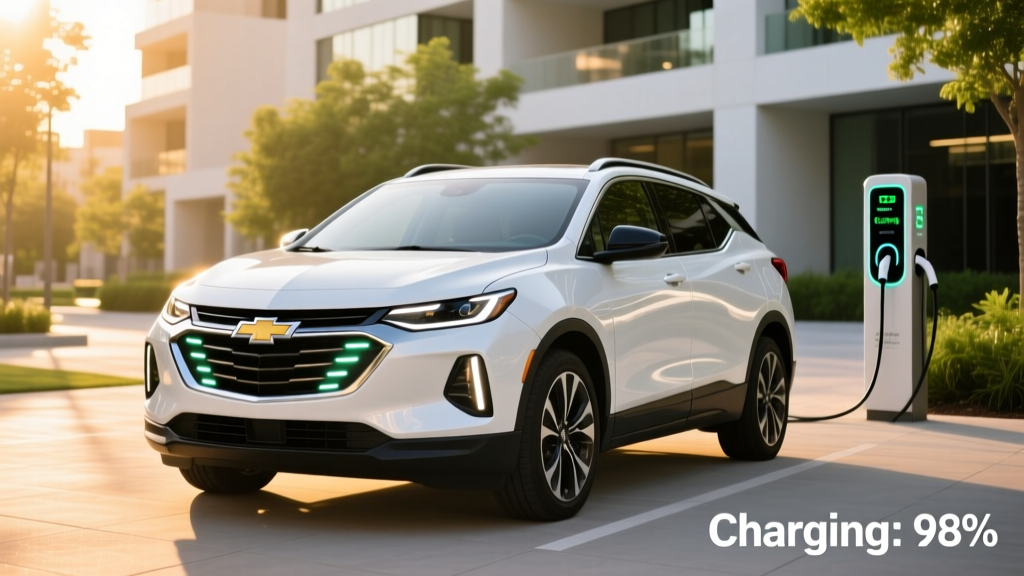
If you've noticed more Chevy Equinox EVs on the road lately, you're not imagining things. Registration data from early 2026 confirms a sharp uptick in deliveries and titling for GM's compact electric crossover, and the reasons are easy to trace: a sub-$34,000 starting price, an EPA-estimated 319 miles of range on the top trim, and a practical package that bridges the gap between budget EVs and premium offerings. After spending significant time with the Equinox EV across multiple trims, I can tell you the numbers on paper hold up — with some caveats every buyer should understand before signing.
The Equinox EV rides on GM's Ultium platform, sharing underpinnings with the Blazer EV and Cadillac Lyriq but targeting the high-volume compact SUV segment. It competes directly with the Hyundai Ioniq 5, Tesla Model Y, Volkswagen ID.4, and Ford Mustang Mach-E. What separates it in 2026 is pricing discipline: Chevy has kept the entry point aggressively low while offering a long-range variant that undercuts most rivals on cost-per-mile-of-range.
| Spec | LT (Standard Range) | RS/LTZ (Extended Range) |
|---|---|---|
| EPA Range | ~285 mi | 319 mi |
| Battery (usable) | ~72 kWh | ~85 kWh |
| Chemistry | NMC (Ultium) | NMC (Ultium) |
| Drivetrain | FWD / AWD available | FWD / AWD available |
| Horsepower | 213 hp (FWD) | 288 hp (AWD) |
| 0–60 mph | ~8.3 sec | ~6.2 sec (AWD) |
| Max DC Fast Charge | 150 kW | 150 kW |
| 10–80% DCFC Time | ~33 min | ~33 min |
| Level 2 Home Charging | 11.5 kW (~34 mi/hr) | 11.5 kW (~34 mi/hr) |
| MPGe (combined) | ~109 MPGe | ~100 MPGe |
| Efficiency | ~31 kWh/100 mi | ~34 kWh/100 mi |
| Base MSRP | $33,600 | $43,400 |
| Battery Warranty | 8 yr / 100,000 mi | 8 yr / 100,000 mi |
Real-World Range: What 319 EPA Miles Actually Means on the Road
The EPA sticker is a starting point, not a guarantee. The Equinox EV 3RS with the extended-range battery carries an EPA-estimated 319 miles (FWD). In real-world mixed driving — suburban commutes, some highway, moderate climate control use — I consistently saw between 280 and 300 miles before needing a charge. That's a solid result, roughly 90–94% of the sticker number.
EPA Estimate: 319 miles (3RS FWD, extended range)
Observed Mixed Driving: 280–300 miles
Sustained Highway (70–75 mph): ~255–270 miles
Cold Weather (below 32°F): ~230–255 miles (20–28% reduction)
Source: EPA fueleconomy.gov
Highway driving is where the Equinox EV, like most crossovers, takes a hit. At sustained 70–75 mph speeds, aerodynamic drag reduces range to roughly 255–270 miles. If you're planning a 300-mile road trip in winter with highway speeds, you'll want at least one charging stop. That's not a dealbreaker — it's physics — but it's a planning factor buyers in colder states should internalize.
The standard-range LT trim with its smaller battery delivers an EPA-estimated ~285 miles, and real-world expectations scale down proportionally. For daily commuting under 60 miles round-trip, even the standard-range model leaves a comfortable buffer, and you'll rarely dip below 50% State of Charge (SoC) before plugging in at home overnight.
Charging Speed: DC Fast Charging and Home Level 2 Breakdown
Charging speed is where the Equinox EV is competent but not class-leading. The Ultium battery architecture supports a peak DC fast-charge rate of 150 kW. In practice, you'll see the charge curve peak around 140–150 kW at low SoC, then taper progressively as the battery fills. A 10–80% session takes approximately 33 minutes at a compatible 150+ kW station.
That's slower than the Hyundai Ioniq 5's 800V architecture (10–80% in ~18 minutes at 240 kW peak) but comparable to the Volkswagen ID.4 and Ford Mustang Mach-E. For road trips, 33 minutes is a reasonable lunch or rest stop. For daily life, you won't use DC fast charging often anyway.
| Charging Level | Power | Miles Added per Hour | Typical Use Case |
|---|---|---|---|
| Level 1 (120V household) | ~1.4 kW | ~4–5 mi/hr | Emergency / trickle top-off |
| Level 2 (240V home) | 11.5 kW | ~34 mi/hr | Daily home charging |
| DC Fast Charge | 150 kW peak | ~200+ mi in 20 min | Road trips / public stations |
At home on a Level 2 charger (240V, 48-amp circuit), the Equinox EV accepts up to 11.5 kW, adding roughly 34 miles of range per hour. A full charge from near-empty to 100% takes about 8–9 hours for the extended-range battery — perfectly suited for overnight charging. Most owners will plug in at 30–40% SoC and wake up to a full battery every morning.
Connector note: For 2026, the Equinox EV ships with the NACS (North American Charging Standard) connector, giving native access to Tesla's Supercharger network without an adapter. This is a significant practical advantage over CCS-equipped rivals still relying on adapters for Supercharger access. You can also use Electrify America, EVgo, and other networks that have added NACS cables.
Performance and Drivetrain: Adequate Power, Smooth Delivery
The Equinox EV isn't positioned as a performance vehicle, but electric torque delivery makes it feel quicker than its numbers suggest. The front-wheel-drive models produce 213 horsepower and 236 lb-ft of torque, with a 0–60 mph time around 8.3 seconds. That's adequate for merging and passing but not thrilling.
Step up to the AWD dual-motor configuration on the RS or LTZ trim and output rises to 288 horsepower and 355 lb-ft, dropping the 0–60 time to roughly 6.2 seconds. The AWD system provides confident traction in rain and light snow, and the instant torque makes city driving feel responsive. Regenerative braking offers one-pedal driving capability with adjustable regen levels through the infotainment system.
Ride quality is comfortable and compliant — GM tuned the suspension for everyday comfort rather than sportiness. Road noise is well-managed, a benefit of the Ultium platform's structural battery pack contributing to chassis rigidity. The turning circle is reasonable for the segment, making it manageable in parking structures and tight urban streets.
Interior, Tech, and Cargo: Practical Family Crossover Territory
Inside, the Equinox EV adopts GM's latest digital architecture centered on a 17.7-inch diagonal infotainment touchscreen paired with an 11-inch driver display. The system runs Google built-in, meaning Google Maps, Google Assistant, and the Play Store are native — no phone projection required, though wireless Apple CarPlay and Android Auto are both supported.
Material quality is a mixed bag. The dashboard uses a combination of soft-touch and harder plastics. The RS trim adds sport seats with synthetic leather and red stitching that elevate the cabin feel. Rear-seat legroom is generous at approximately 38.9 inches, comfortably fitting adults. Front legroom measures about 42.6 inches.
Cargo space is competitive:
- Behind rear seats: ~26.4 cu ft
- Rear seats folded: ~57.2 cu ft
- Front trunk (frunk): Not available — the Ultium platform in this application does not include a frunk
The lack of a frunk is a notable omission. Competitors like the Tesla Model Y and Ford Mustang Mach-E offer front trunks for additional storage. If you rely on a frunk for charging cables or groceries, you'll need to use the rear cargo area.
On the driver-assistance front, the Equinox EV comes standard with Chevy Safety Assist, which includes automatic emergency braking, lane keep assist, following distance indicator, and IntelliBeam headlights. Available Super Cruise (on higher trims) provides hands-free driving on compatible mapped highways — currently over 750,000 miles of roads in North America. This is a SAE Level 2 system, meaning you must remain attentive with eyes on the road, monitored by a driver-facing camera.
Pricing, Trims, and Federal Tax Credit Eligibility
The Equinox EV lineup for 2026 spans four primary trims:
- LT (Standard Range, FWD): $33,600 MSRP
- LT (Extended Range, FWD/AWD): $36,600–$39,600 MSRP
- RS (Extended Range, FWD/AWD): $43,400–$46,400 MSRP
- LTZ (Extended Range, AWD): $44,900–$47,900 MSRP
Destination charges add approximately $1,395. Popular options include the Super Cruise package (~$2,200), premium audio, and 21-inch wheels (which reduce range slightly).
| Trim | Base MSRP | Max §30D Credit | Effective Price (if eligible) |
|---|---|---|---|
| LT Standard Range | $33,600 | Up to $7,500 | ~$26,100 |
| LT Extended Range | $36,600 | Up to $7,500 | ~$29,100 |
| RS Extended Range | $43,400 | Up to $7,500 | ~$35,900 |
| LTZ Extended Range AWD | $44,900 | Up to $7,500 | ~$37,400 |
Federal tax credit (§30D) eligibility is not automatic. Under current IRS rules, the Equinox EV qualifies for up to $7,500 in federal tax credits — split between a $3,750 critical minerals requirement and a $3,750 battery component requirement. GM has worked to source battery materials and manufacturing within North America to meet these thresholds, but eligibility can shift as supply chains evolve. Additionally:
- MSRP cap: The Equinox EV is classified as an SUV, so the MSRP cap is $80,000 — all trims clear this easily.
- Buyer income cap: Modified adjusted gross income must not exceed $150,000 (single), $225,000 (head of household), or $300,000 (joint filing).
- Point-of-sale transfer: As of 2024, you can transfer the credit to the dealer at purchase, reducing the sale price directly rather than waiting for a tax refund.
Always verify current eligibility on the IRS clean vehicle credits page before purchasing, as battery sourcing requirements are updated periodically. Consult a tax professional for your specific situation.
How the Equinox EV Stacks Up Against Key Competitors
The compact electric SUV segment is crowded. Here's how the Equinox EV 3RS (extended range, AWD) compares to its primary rivals:
| Vehicle | EPA Range | Max DCFC | 10–80% | Base MSRP |
|---|---|---|---|---|
| Chevy Equinox EV 3RS AWD | ~300 mi | 150 kW | ~33 min | $46,400 |
| Hyundai Ioniq 5 (Long Range AWD) | 290 mi | 240 kW | ~18 min | $49,850 |
| Tesla Model Y (Long Range) | 310 mi | 250 kW | ~20 min | $47,990 |
| Volkswagen ID.4 (AWD Pro S) | 291 mi | 175 kW | ~29 min | $47,290 |
| Ford Mustang Mach-E (Ext. Range AWD) | 290 mi | 150 kW | ~35 min | $48,995 |
The Equinox EV's advantage is price. The base LT at $33,600 undercuts every competitor here by a significant margin, and even the well-equipped RS undercuts the Ioniq 5 and Model Y on MSRP. Where it gives ground is charging speed — the 150 kW peak is slower than the Ioniq 5's 800V system and Tesla's Supercharger network speeds.
If fast road-trip charging is your top priority, the Ioniq 5 or Model Y wins. If you want the most range per dollar and plan to charge mostly at home, the Equinox EV is difficult to beat.
Ownership Costs: Warranty, Efficiency, and Long-Term Value
GM backs the Equinox EV's battery and powertrain with an 8-year / 100,000-mile warranty, with a capacity retention threshold of 60% — meaning if your battery degrades below 60% of original capacity within that period, GM will repair or replace it. The bumper-to-bumper warranty is 3 years / 36,000 miles.
Efficiency in real-world driving averages about 31–34 kWh per 100 miles depending on trim and driving conditions. At the national average electricity rate of ~$0.16/kWh (per EIA data), that translates to roughly $5.00–$5.40 per 100 miles driven on home charging. Compare that to a 28 MPG gas crossover at $3.30/gallon: $11.79 per 100 miles. The fuel savings are substantial — approximately $6–7 per 100 miles, or $700–$900 annually at 12,000 miles/year.
Insurance costs for the Equinox EV are moderate for the segment. Expect premiums roughly 10–15% higher than a comparable gas Equinox, driven by higher repair costs for EV-specific components. Get quotes from your insurer before purchasing.
Depreciation is the wildcard. EV depreciation has been volatile, with some models losing value faster than gas counterparts due to rapid tech advancement and price cuts. The Equinox EV's lower starting price provides some buffer — there's less absolute value to lose — but plan to hold the vehicle 4+ years to ride out the depreciation curve.
Pros, Cons, and Who Should Buy the Equinox EV
- Class-leading value: 319 mi range from $33,600
- NACS connector — native Supercharger access
- Comfortable ride quality and spacious rear seat
- Available Super Cruise hands-free driving
- Strong federal tax credit eligibility potential
- Google built-in infotainment is responsive
- 150 kW DCFC peak is slower than top rivals
- No front trunk (frunk)
- Mixed interior material quality at lower trims
- Real-world highway range drops noticeably
- No rear wiper (a common GM crossover omission)
- AWD reduces range by ~19 miles vs FWD
- Choose the Equinox EV if: You want the longest range for the lowest price, charge primarily at home, commute under 80 miles daily, and value Super Cruise for highway drives. The LT Standard Range at ~$26,100 after the credit is one of the best value propositions in the EV market.
- Look elsewhere if: You take frequent long road trips and need the fastest possible DC charging (Ioniq 5 or Model Y), you need a frunk for cargo flexibility, or you want a sportier driving experience (Mach-E or Ioniq 5).
Frequently Asked Questions
What is the real-world range of the Chevy Equinox EV?
The EPA estimates 319 miles for the extended-range FWD model. In real-world mixed driving, expect 280–300 miles. Sustained highway driving at 70+ mph reduces that to roughly 255–270 miles, and cold weather (below freezing) can drop range to 230–255 miles.
How fast does the Equinox EV charge?
On a DC fast charger, it peaks at 150 kW, completing a 10–80% charge in about 33 minutes. At home on Level 2 (240V), it charges at 11.5 kW, adding roughly 34 miles per hour — a full overnight charge from near-empty takes 8–9 hours.
Does the Chevy Equinox EV qualify for the $7,500 federal tax credit?
It is eligible for up to $7,500 under IRS §30D, subject to battery sourcing requirements, buyer income caps ($150K single / $300K joint), and the $80,000 SUV MSRP cap. The credit can be transferred at point of sale to reduce the purchase price directly. Always verify current eligibility at irs.gov before purchasing.
Is the Equinox EV worth buying over the Tesla Model Y or Hyundai Ioniq 5?
If price is your primary concern, yes — the Equinox EV undercuts both by thousands of dollars while offering competitive range. If fast DC charging and a mature charging network are more important, the Model Y and Ioniq 5 have advantages. The Equinox EV's NACS connector now provides native Supercharger access, narrowing that gap.
Does the Equinox EV have Super Cruise?
Yes, Super Cruise is available on higher trims as an option. It provides hands-free driving on over 750,000 miles of compatible mapped highways. This is a SAE Level 2 system — the driver must remain attentive and eyes on the road at all times, monitored by an infrared camera.
What is the battery warranty on the Equinox EV?
GM provides an 8-year / 100,000-mile battery and powertrain warranty, covering defects and capacity loss below 60% of original capacity.