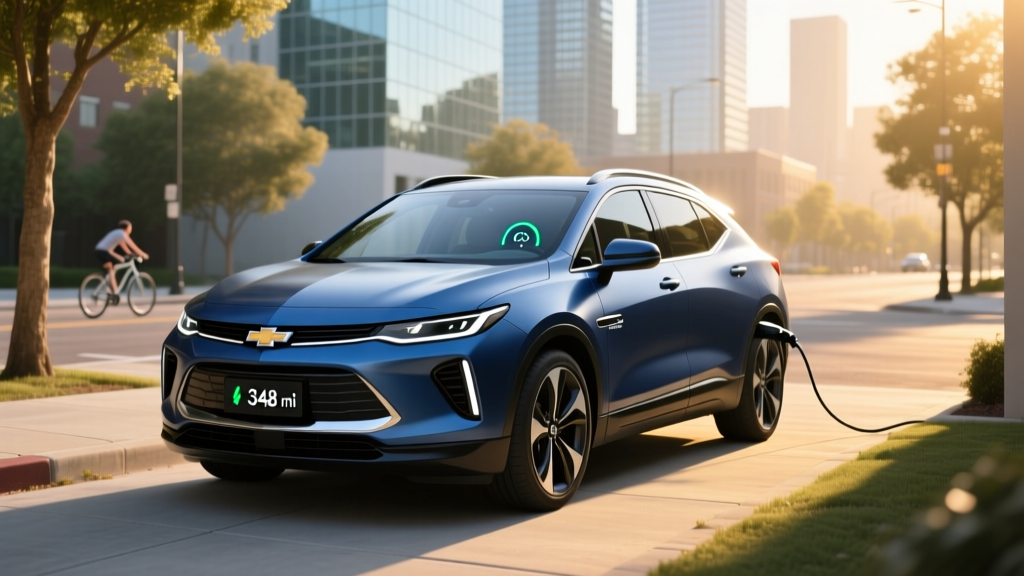
Quick Verdict: Is the Chevy Equinox EV Worth It?
The 2026 Chevy Equinox EV delivers up to 319 miles of EPA-estimated range starting at $33,600 MSRP — making it one of the most affordable long-range electric SUVs on the market. For buyers with home Level 2 charging, it can cut fuel costs by roughly $1,000–$1,400 per year versus a comparable gas Equinox. The catch: DC fast charging peaks at 150 kW (10–80% in ~30 minutes), which trails rivals like the Hyundai Ioniq 5. If your daily driving stays under 200 miles and you can charge at home, the Equinox EV is a strong value play. If you road-trip frequently or lack home charging, read the ownership realities below before committing.
Range, Battery & Efficiency: What the Numbers Actually Mean
The 2026 Equinox EV is built on GM's Ultium platform with an 85 kWh usable battery pack (NMC chemistry). Front-wheel-drive LT and RS trims with the larger battery achieve an EPA-estimated 319 miles, while all-wheel-drive variants drop to approximately 285 miles. Efficiency lands around 3.0–3.3 miles per kWh depending on configuration.
Real-World Range Expectations
EPA Sticker: 319 miles (FWD, larger battery)
Real-World Highway (70 mph): Expect ~260–280 miles. EVs lose efficiency at sustained highway speeds due to aerodynamic drag — there's no multi-gear transmission to keep revs low.
Cold Weather (below 30°F): Budget for 20–30% range loss, bringing usable range to ~220–250 miles. The Equinox EV uses a resistive heater on some trims rather than a heat pump, which draws more from the battery in winter. Preconditioning while plugged in mitigates some of this loss.
Combined Real-World Estimate: 250–290 miles for most drivers in mixed conditions.
For context, the gas-powered 2026 Chevy Equinox AWD gets an EPA-estimated 26 MPG combined with a 15.6-gallon tank, yielding roughly 405 miles per fill-up. The EV's real-world range is lower per "tank," but the per-mile fuel cost is dramatically cheaper — which we break down below.
Charging Speeds: Home vs. Public Infrastructure
Understanding the difference between kW (power, or how fast energy flows) and kWh (energy, or how much the battery holds) is essential. The Equinox EV's 85 kWh battery is the tank; the kW rating is how fast you fill it.
| Charging Level | Power | Speed (Miles/Hour) | Full Charge Time |
|---|---|---|---|
| Level 1 (120V household) | ~1.4 kW | ~4 mi/hr | ~60+ hours |
| Level 2 (240V home/public) | 11.5 kW (max onboard) | ~34 mi/hr | ~8–9 hours |
| DC Fast Charging | 150 kW peak | ~175 mi in 30 min | 10–80% in ~30 min |
Home charging reality: Level 1 (a standard 120V outlet) adds only about 4 miles of range per hour — fine if you drive under 30 miles daily and can leave it plugged in overnight. Most buyers will want a Level 2 home charger (240V, like a dryer outlet), which fully replenishes the battery overnight. Installation costs typically run $500–$2,000 depending on whether your electrical panel needs an upgrade.
DC fast charging caveat: The Equinox EV peaks at 150 kW, which is adequate but not class-leading. The Hyundai Ioniq 5 and Kia EV6 hit 240+ kW on 800V architectures, achieving 10–80% in roughly 18 minutes. The Equinox EV's 10–80% charge takes approximately 30 minutes. Additionally, charging slows significantly above 80% State of Charge (SoC) — this is normal battery-management behavior to protect cell health, but plan your road-trip stops accordingly.
The Equinox EV comes with the NACS (Tesla-style) charge port, granting access to Tesla Supercharger stations via GM's adapter and native compatibility with newer Superchargers. This significantly expands the public fast-charging network compared to CCS-only vehicles.
Cost Breakdown: Purchase Price, Tax Credits & Running Costs
Purchase Price by Trim (2026 Model Year)
Based on current Chevrolet pricing:
- LT 2 (FWD, smaller battery, ~250 mi range): ~$33,600 MSRP
- LT 3 (FWD, larger battery, 319 mi range): ~$36,600 MSRP
- RS (FWD, larger battery): ~$38,600 MSRP
- AWD upgrade: adds ~$3,000 to any trim
Federal Tax Credit (§30D) Eligibility
The Equinox EV is assembled in Spring Hill, Tennessee, which historically qualifies it for the federal tax credit — but eligibility depends on multiple factors that change frequently:
- Buyer income cap: AGI must not exceed $150,000 (single), $225,000 (head of household), or $300,000 (joint) — per IRS §30D rules
- MSRP cap: SUVs must be priced at or below $80,000 (all Equinox EV trims qualify)
- Battery sourcing: Critical minerals and battery components must meet phased-in domestic/free-trade sourcing thresholds — these tighten annually through 2032
- Point-of-sale transfer: As of 2024+, eligible buyers can transfer the credit to the dealer for an immediate price reduction at purchase
Important: Battery-sourcing requirements have disqualified several previously eligible models. Always verify current eligibility on fueleconomy.gov before purchasing. Consult a tax professional for your specific situation.
| Cost Category | Equinox EV (LT3 FWD) | Gas Equinox (AWD) |
|---|---|---|
| Base MSRP | $36,600 | $33,000 |
| Est. Federal Tax Credit | -$3,750 to $7,500* | $0 |
| Effective Purchase Price | $29,100–$32,850 | $33,000 |
| Fuel/Energy (5 yrs, 15k mi/yr) | $3,000–$4,500** | $7,500–$9,000** |
| Maintenance (5 yrs) | $1,200–$1,800 | $3,500–$4,500 |
| Insurance (5 yrs, est.) | $7,500–$9,500 | $6,000–$8,000 |
| 5-Year Total (approx.) | $41,000–$48,000 | $50,000–$54,500 |
*Credit amount depends on battery-sourcing compliance; may be $3,750 (partial) or $7,500 (full). Verify at purchase.
**Fuel costs assume $3.40/gal gas, $0.14/kWh home electricity. Public DC fast charging at $0.35–$0.50/kWh raises EV costs.
The EV wins on running costs — saving roughly $4,000–$6,000 over five years on fuel and maintenance alone. No oil changes, no transmission fluid, and regenerative braking extends pad life significantly. However, EV insurance premiums tend to run 15–25% higher due to repair-cost data for battery packs and specialized components.
Performance & Driving Experience
The FWD Equinox EV produces 213 horsepower and 236 lb-ft of torque, achieving 0–60 mph in approximately 8.0 seconds. The AWD variant bumps output to 288 hp and 348 lb-ft, dropping 0–60 to roughly 6.5 seconds. Instant electric torque makes the AWD model feel quicker than its numbers suggest in around-town driving.
Ride quality is composed, with a low center of gravity from the floor-mounted battery pack reducing body roll. Cabin noise is notably lower than the gas Equinox — no engine drone means road and wind noise dominate, but overall it's a quiet cruiser.
The Equinox EV features GM's Super Cruise on higher trims — a SAE Level 2 hands-free driver-assistance system for pre-mapped highways. This is not autonomous driving: you must remain attentive, and the system monitors your eyes via an infrared camera. Super Cruise covers over 750,000 miles of compatible roads in the US and Canada. It's a genuine convenience feature for highway commuters, but it will not navigate city streets or construction zones independently.
EV vs. Gas vs. Hybrid: Which Equinox Is Right for You?
| Factor | Equinox EV | Gas Equinox | Equinox Hybrid (if available) |
|---|---|---|---|
| EPA Range / Tank | 319 mi (EPA) | ~405 mi | ~450+ mi |
| Cost per mile (fuel) | $0.04–$0.06 (home) | $0.13–$0.15 | $0.10–$0.12 |
| Refuel/recharge time | 8 hrs (L2) / 30 min (DC) | 5 min | 5 min |
| Maintenance burden | Low | Moderate | Moderate |
| Cold-weather impact | 20–30% range loss | Minimal | Minimal |
| Tax incentives | Up to $7,500 federal | None | Up to $7,500 (if PHEV) |
| Best for | Home chargers, daily commuters | Road trippers, rural drivers | Range-flexible buyers |
Real-World Ownership Considerations
Home Charging Access
The Equinox EV ownership experience is fundamentally different depending on whether you can charge at home. If you have a garage or driveway where a Level 2 charger can be installed, you'll start each morning with a "full tank" and rarely visit a public charger. If you live in an apartment or rely on street parking, you'll depend on public infrastructure — which means planning around charger availability, dealing with broken stations, and paying higher per-kWh rates ($0.35–$0.50 at DC fast chargers vs. ~$0.14 at home).
Climate Considerations
Buyers in northern states (Minnesota, Maine, Colorado) should plan for significant winter range reduction. A 319-mile EPA rating becomes roughly 220–250 miles in sub-freezing temperatures. This is physics, not a defect — cold slows battery chemistry and demands cabin heating. Preconditioning the battery while plugged in helps, and using seat/steering wheel heaters instead of blasting cabin heat can recover 10–15 miles of range.
Battery Longevity & Warranty
GM covers the Equinox EV's Ultium battery with an 8-year/100,000-mile warranty guaranteeing at least 70% capacity retention. Based on data from earlier Ultium vehicles and industry-wide NMC degradation curves, expect roughly 8–12% capacity loss over 8 years under normal use. Full battery replacement outside warranty currently runs $12,000–$18,000, though prices continue to decline. To maximize longevity, avoid routinely charging to 100% or draining below 10% — the 20–80% daily window is the sweet spot for NMC chemistry.
Common Misconceptions — Myth vs. Fact
| Myth | Fact |
|---|---|
| "The battery will need replacing in 5 years" | NMC batteries lose ~1–2% capacity per year under normal use. At 8 years, expect ~85–90% of original capacity — well above GM's 70% warranty floor. |
| "EVs are worse in the cold" | EVs start reliably in any temperature (no engine cranking). Range drops 20–30% in extreme cold, but preconditioning and seat heaters mitigate this. |
| "Charging takes too long for road trips" | At 150 kW peak, the Equinox EV adds ~175 miles in 30 minutes — roughly a normal rest stop. Plan around Superchargers and Electrify America stations along your route. |
| "The Equinox EV qualifies for the full $7,500 credit" | It may qualify for $3,750 or $7,500 depending on current battery-sourcing compliance. Always verify on fueleconomy.gov before purchase. |
| "I can charge from any regular outlet quickly" | Level 1 (120V) adds ~4 miles per hour — an overnight charge gives roughly 40–50 miles. For full overnight replenishment, Level 2 (240V) is strongly recommended. |
Decision Framework: Should You Buy the Equinox EV?
Choose the Equinox EV if:
- You can install a Level 2 charger at home (garage, driveway, or workplace)
- Your daily driving is under 200 miles round-trip
- You want to reduce fuel and maintenance costs over 5+ years of ownership
- You value a quiet, smooth, torque-rich daily commute
- You qualify for the federal tax credit (check income and sourcing rules)
- You want access to the Tesla Supercharger network via NACS
Reconsider or look at a gas/hybrid alternative if:
- You lack reliable home or workplace charging access
- You regularly drive 300+ miles in a single day without time for a 30-minute charge stop
- You live in an extreme-cold climate and need consistent 350+ mile range year-round
- Your budget cannot absorb a potential electrical panel upgrade ($1,000–$3,000) for Level 2 installation
- You plan to own the vehicle less than 3 years (the fuel savings need time to offset the higher purchase price)
Frequently Asked Questions
What is the real-world range of the Chevy Equinox EV?
The EPA rates the FWD Equinox EV at 319 miles with the larger battery. In real-world mixed driving, expect 260–290 miles. Highway-only driving at 70+ mph reduces this to ~250–270 miles, and sub-freezing temperatures can drop it to 220–250 miles. These are normal EV characteristics, not defects.
How long does it take to charge the Equinox EV at home?
On a Level 2 (240V) home charger, a full charge from empty takes approximately 8–9 hours — easily done overnight. On a standard 120V outlet (Level 1), a full charge takes 60+ hours, making it practical only for topping off low daily mileage.
Does the Chevy Equinox EV qualify for the $7,500 federal tax credit?
The Equinox EV is assembled in Tennessee and has historically qualified for some or all of the §30D credit. However, battery-sourcing requirements change and can reduce the credit to $3,750 or disqualify specific build dates. Check the latest eligibility at fueleconomy.gov and confirm with your dealer before purchasing.
How does the Equinox EV compare to the Tesla Model Y?
The Model Y Long Range offers ~330 miles EPA range, faster DC charging (~250 kW peak), and access to the full Supercharger network natively — but starts around $44,000+ and has a steeper learning curve with its minimalist interior. The Equinox EV undercuts it by roughly $10,000 while offering competitive range, though with slower charging and a more conventional cabin layout.
What maintenance does the Equinox EV require?
Minimal compared to a gas vehicle: tire rotations every 5,000–7,500 miles, cabin air filter replacement annually, brake fluid checks, and windshield washer fluid. There are no oil changes, spark plugs, timing belts, or transmission service. Regenerative braking significantly extends brake pad life — many EV owners report 80,000+ miles on original pads.
Is Super Cruise actually self-driving?
No. Super Cruise is an SAE Level 2 driver-assistance system. It handles steering, acceleration, and braking on pre-mapped divided highways, but you must remain attentive and keep your eyes on the road. The system uses an infrared camera to monitor driver engagement and will disengage if you look away for too long. It does not handle city streets, construction zones, or unmapped roads.
Sources: Chevrolet Equinox EV specifications, fueleconomy.gov (EPA), IRS §30D Clean Vehicle Credit.