March 2026 Pricing Snapshot: Where the Equinox EV Lands
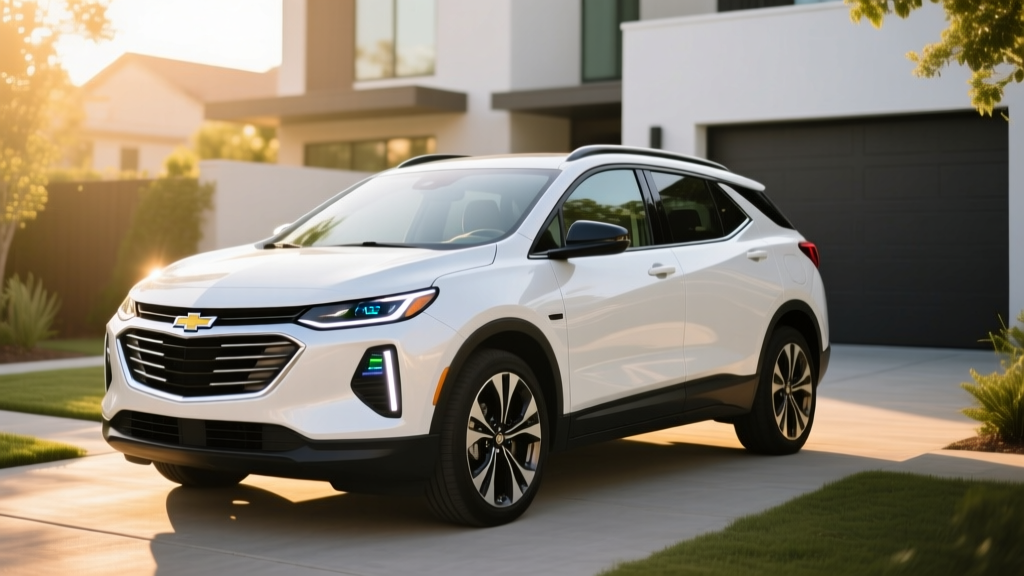
Chevrolet's entry-level electric crossover enters the spring 2026 selling season in a competitive position. The 2026 Equinox EV starts at an MSRP of $33,400 for the LT 2 (FWD, standard-range 85 kWh usable battery), climbing to $43,400 for the fully loaded RS AWD with the larger battery option. For buyers hunting for Chevy Equinox EV March 2026 deals, the key question isn't just sticker price — it's what this SUV actually costs to own over five years once charging, insurance, maintenance, tax credits, and depreciation are factored in.
Before we run the numbers, here are the core 2026 model-year specifications you need as a baseline:
| Spec | LT 2 FWD (Std Range) | RS AWD (Ext Range) |
|---|---|---|
| Base MSRP | $33,400 | $43,400 |
| EPA Range | 315 miles | 307 miles |
| Battery (usable) | 85 kWh (NMC) | 102 kWh (NMC) |
| Peak DC Fast Charge | 150 kW | 150 kW |
| 10–80% DC Charge | ~34 minutes | ~38 minutes |
| Level 2 (240V) Rate | 11.5 kW (~37 mi/hr) | 11.5 kW (~37 mi/hr) |
| Horsepower | 213 hp | 288 hp |
| 0–60 mph | 8.4 sec | 6.2 sec |
| Efficiency (combined) | 95 MPGe (35 kWh/100mi) | 90 MPGe (37 kWh/100mi) |
| Battery/Powertrain Warranty | 8 years / 100,000 miles | |
Federal Tax Credit: Does the 2026 Equinox EV Qualify?
The IRS §30D Clean Vehicle Credit can reduce your effective purchase price by up to $7,500, and as of 2024, this credit can be transferred to the dealer at the point of sale — meaning you get the discount on day one rather than waiting to claim it on your tax return. But eligibility is not automatic. Here is the full checklist for the 2026 tax year:
- MSRP Cap: SUVs, vans, and pickup trucks must have an MSRP at or below $80,000. All Equinox EV trims clear this easily.
- Buyer Income Limits (Modified AGI): $300,000 joint / $225,000 head of household / $150,000 single. If your income exceeds these thresholds, you are ineligible regardless of the vehicle.
- Battery Sourcing — Critical Minerals: A percentage of critical minerals must be sourced from the US or a free-trade-agreement country. This threshold increases annually; for vehicles placed in service in 2026, 80% of critical minerals must qualify ($3,750 portion).
- Battery Sourcing — Components: A percentage of battery components must be manufactured or assembled in North America. For 2026, 100% of components must qualify ($3,750 portion). This is the stricter prong and the one most likely to disqualify vehicles.
- Foreign Entity of Concern (FEOC): Vehicles with battery components from a FEOC (primarily Chinese entities) are excluded entirely. This rule tightened significantly in 2025–2026.
- Point-of-Sale Transfer: You can elect to transfer the credit to the dealer, reducing your down payment or monthly payment. The dealer must be IRS-registered.
What this means for the Equinox EV in March 2026: GM has worked aggressively to localize Ultium battery supply chains at its Lansing, Michigan and Spring Hill, Tennessee plants. However, the 100% North American component requirement for 2026 is a high bar. Chevrolet dealers should be able to confirm the exact credit amount on a per-VIN basis at the time of purchase. Do not assume the full $7,500 applies without verifying sourcing compliance on your specific vehicle. Always consult a tax professional and check the latest fueleconomy.gov credit listings for the specific trim and build date.
Five-Year Total Cost of Ownership: The Full Math
Below is a five-year TCO model for a 2026 Equinox EV LT 2 FWD ($33,400 MSRP) compared against a comparably equipped 2026 gasoline compact SUV (we'll use 28 MPG combined, $3.40/gallon as a baseline). Assumptions: 15,000 miles/year, 75,000 miles total; home charging at $0.14/kWh national average; gas vehicle maintenance per AAA averages.
| Cost Category | Equinox EV | Gas SUV (28 MPG) |
|---|---|---|
| Purchase Price (MSRP) | $33,400 | $31,000 |
| Federal Tax Credit (§30D) | –$7,500 (if eligible) | $0 |
| Effective Purchase Price | $25,900 | $31,000 |
| Fuel / Energy (5 yrs) | $5,513 | $13,607 |
| Maintenance (5 yrs) | $1,800 | $4,200 |
| Insurance (5 yrs) | $10,500 | $7,800 |
| Depreciation (est. 5-yr) | $11,200 | $10,500 |
| Total 5-Year Cost | $54,913 | $67,107 |
| Cost Per Mile | $0.37 | $0.45 |
Charging vs. Gas: Dollars Per Mile in the Real World
The Equinox EV LT 2 FWD consumes approximately 35 kWh per 100 miles (EPA combined). Your actual cost depends on where and how you charge:
| Charging Scenario | Rate | Cost Per Mile |
|---|---|---|
| Home Level 2 (national avg) | $0.14/kWh | $0.049 |
| Home Level 2 (high-cost state, e.g. CA) | $0.28/kWh | $0.098 |
| Home Level 2 (off-peak utility rate) | $0.08/kWh | $0.028 |
| Public DC Fast Charging (avg) | $0.40/kWh | $0.140 |
| Gas SUV (28 MPG, $3.40/gal) | — | $0.121 |
At the national average home electricity rate, the Equinox EV costs roughly $0.05/mile to fuel — about 60% less than the gas alternative. Even on expensive California residential rates, it's still marginally cheaper. The scenario where EV fueling costs exceed gas is exclusive DC fast charging at $0.40+/kWh. If you cannot install a Level 2 home charger and rely entirely on public fast charging, your fuel cost advantage largely evaporates.
DC fast charging reality check: The Equinox EV peaks at 150 kW but does not sustain that rate. The charge curve tapers significantly above 60% state of charge. A 10–80% session takes approximately 34 minutes, but pushing from 80–100% can add another 25–30 minutes. Plan road-trip stops to charge to 80% and move on.
Maintenance Savings: What You Won't Pay For
EVs eliminate several recurring maintenance items that gas vehicles require throughout their lives:
| Maintenance Item | Gas SUV (5-yr cost) | Equinox EV |
|---|---|---|
| Oil Changes (5+ over 75k mi) | $450–$750 | $0 |
| Transmission Fluid | $200–$350 | $0 (single-speed reduction gear) |
| Spark Plugs | $200–$400 | $0 |
| Brake Pads/Rotors | $600–$1,200 | $100–$300 (regen extends pad life 2–3×) |
| Engine Air Filter | $100–$150 | $0 |
| Coolant Flushes | $200–$300 | $100–$150 (battery thermal system) |
| Tire Rotation / Replacement | $1,500–$2,500 | $1,800–$2,800 (EVs are heavier, wear tires faster) |
| Estimated Total | $3,250–$5,650 | $2,000–$3,250 |
The primary maintenance cost offset for EVs is tire wear. The Equinox EV weighs approximately 4,700 lbs (LT 2), roughly 500–700 lbs more than a gas equivalent. Heavier vehicles with instant torque wear through tires faster. Budget for a tire replacement around 35,000–45,000 miles rather than the 50,000–60,000 miles typical for lighter gas crossovers.
Insurance: The Cost Category Where EVs Lose
EV insurance premiums run 15–30% higher than comparable gas vehicles. For the Equinox EV, expect annual premiums in the $1,800–$2,400 range depending on your state, driving record, and coverage levels — versus $1,300–$1,800 for a gas compact SUV.
Why the gap?
- Higher repair costs: Battery pack damage, even minor, can total a vehicle or require expensive high-voltage system inspection.
- Specialized labor: Fewer body shops are certified for high-voltage EV repairs, driving up labor rates.
- Parts pricing: EV-specific components (battery modules, power electronics, thermal management) carry higher replacement costs.
- Vehicle value: Higher MSRP means higher comprehensive/collision payouts.
Before purchasing, get a quote from your current insurer and at least two competitors. Some insurers (notably GEICO, Progressive, and several regional carriers) have introduced specific EV discounts or have narrowed the premium gap as their claims data matures. Bundling home and auto or maintaining a clean record can bring EV insurance within striking distance of gas-vehicle rates.
Depreciation and Resale: The Evolving Picture
EV depreciation was a significant concern in 2023–2024, when aggressive Tesla price cuts and rapid battery technology improvements cratered used EV values. The market has stabilized since then, but EVs still depreciate slightly faster than gas vehicles on average.
For the 2026 Equinox EV, projected five-year depreciation sits at approximately 45–55% of original transaction price, compared to 38–45% for mainstream gas crossovers. Several factors influence where you'll land in that range:
- Tax credit effect: If you received the $7,500 credit, your effective cost basis is lower, meaning your dollar-amount loss is smaller even if the percentage depreciation is higher.
- Battery health: GM's 8-year/100,000-mile battery warranty (covering defects and capacity below 60% of original) provides a floor for used buyers' confidence.
- Market saturation: As more affordable EVs enter the market, early-adopter vehicles face downward pricing pressure.
- NACS adoption: The Equinox EV ships with the NACS connector natively, giving it full access to Tesla Supercharger stations — a meaningful resale advantage over CCS-only used EVs.
The Equinox EV's sub-$35,000 starting price helps insulate it from the worst depreciation hits that affected $60,000+ EVs. Budget-conscious used buyers will still want affordable electric crossovers in 2031.
State, Local, and Utility Incentives Beyond the Federal Credit
Examples of the types of incentives that may stack on top of the federal credit (as of early 2026):
- State EV rebates: States like Colorado ($5,000), Massachusetts ($3,500 for income-qualified buyers), and New York ($2,000 point-of-sale) offer direct purchase rebates. These often have income caps and MSRP limits of their own.
- Utility rebates: Many electric utilities offer $250–$1,500 rebates for purchasing an EV, installing a Level 2 home charger, or enrolling in a managed-charging program. Check with your local provider.
- HOV lane access: Several states grant single-occupant carpool lane access to EVs — a non-monetary benefit worth thousands in commute-time savings in congested metros.
- Home charging installation: The federal §25C Residential Clean Energy Credit covers 30% of home EV charger equipment and installation costs, up to $1,000, through 2032.
- Registration fee offsets: Some states charge higher annual EV registration fees ($50–$225) to compensate for lost gas tax revenue. Factor this into your state-specific math.
Frequently Asked Questions
How much does it really cost to own a Chevy Equinox EV over 5 years?
With the full $7,500 federal tax credit, our model shows a 5-year total cost of approximately $54,900 for the LT 2 FWD trim, or about $0.37/mile all-in. Without the credit, that rises to roughly $62,400 ($0.42/mile). Your actual number depends on local electricity rates, insurance premiums, and whether you charge at home or rely on public infrastructure.
Do I qualify for the $7,500 federal EV tax credit on the Equinox EV?
You may, but it depends on three factors: your modified adjusted gross income (must be under $150K single / $300K joint), the vehicle's battery component and critical-mineral sourcing compliance (which varies by build date and VIN), and the MSRP cap ($80K for SUVs — all trims qualify). The credit can be transferred to the dealer at point of sale. Verify your specific vehicle's eligibility with your dealer and a tax professional before finalizing a purchase.
How much do I save on fuel and maintenance vs. a gas SUV?
At national average electricity and gas prices, expect roughly $8,100 in fuel savings and $2,400 in maintenance savings over five years / 75,000 miles. Combined, that's about $10,500 in operating-cost savings. These savings are largest if you charge at home on off-peak rates and smallest if you rely exclusively on expensive DC public charging.
Are EVs more expensive to insure than gas cars?
Yes, typically 15–30% more. For the Equinox EV, budget $1,800–$2,400/year versus $1,300–$1,800/year for a gas compact SUV. Higher repair costs, specialized labor, and elevated vehicle values drive the premium gap. Shop multiple insurers — some have narrowed the gap as EV claims data has matured.
How well does the Equinox EV hold its value?
Projected 5-year depreciation is approximately 45–55%, slightly worse than the 38–45% typical for gas crossovers. However, because the effective purchase price is lower after the tax credit, your actual dollar loss is competitive. The native NACS connector, GM's 8-year battery warranty, and the vehicle's affordable price point all support used-market demand.
What is the real-world range vs. the EPA sticker?
The FWD model's 315-mile EPA estimate holds up well in mixed city driving at moderate temperatures. On sustained highway trips at 70+ mph, expect 255–275 miles. In sub-freezing weather without consistent battery preconditioning, plan for 220–250 miles. The AWD extended-range model (307 EPA) sees similar proportional reductions.