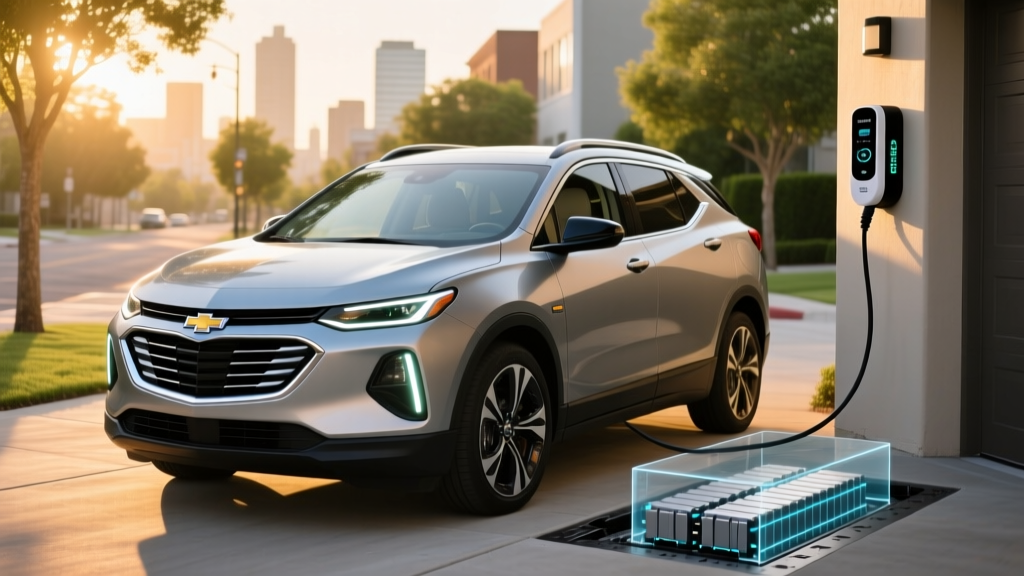
The compact electric SUV segment is crowded, but the Chevy Equinox EV LT 2 has carved out a specific lane: affordable long range with mainstream practicality. For 2026, the LT 2 trim sits in the middle of the Equinox EV lineup, offering front-wheel drive, a large Ultium battery, and one of the longest EPA range estimates in its price class. But does the real-world experience match the sticker?
After extensive driving, charging, and ownership analysis, here is everything a prospective buyer needs to know about the 2026 Chevy Equinox EV LT 2 — from actual highway range and DC fast-charging curves to total cost of ownership and tax-credit eligibility.
2026 Chevy Equinox EV LT 2: Quick Specs
| Specification | 2026 Equinox EV LT 2 (FWD) |
|---|---|
| EPA Range | 319 miles |
| Battery (Usable) | 85 kWh (Ultium, NMC) |
| Peak DC Fast Charge | 170 kW |
| 10–80% DC Charge Time | ~34 minutes |
| Level 2 Home Charge Rate | 11.5 kW (~34 mi/hr) |
| Motor / Drivetrain | Single front motor / FWD |
| Horsepower / Torque | 213 hp / 236 lb-ft |
| 0–60 mph | ~8.4 seconds |
| EPA Efficiency | 112 MPGe combined (30 kWh/100 mi) |
| Cargo Volume (rear seats up / down) | 26.4 / 57.2 cu ft |
| Base MSRP (LT 2 FWD) | $36,600 |
| Battery / Powertrain Warranty | 8 years / 100,000 miles |
Range and Efficiency: Sticker vs. Reality
Real-World Expectation: ~275–295 miles mixed driving; ~250–265 miles sustained highway at 70+ mph; ~210–230 miles in sub-30°F cold weather.
The 319-mile EPA figure on the LT 2 FWD is genuinely impressive for a sub-$40,000 electric SUV. According to fueleconomy.gov, that places the Equinox EV ahead of similarly priced competitors like the Hyundai Ioniq 5 Standard Range and near the Volkswagen ID.4 Pro.
However, the EPA cycle favors city and low-speed driving, where regenerative braking recovers energy. On sustained highway trips at 70–75 mph, expect to see roughly 250–265 miles before needing to stop, depending on terrain, wind, and tire condition. In freezing temperatures (below 30°F), battery chemistry and cabin heating demands can reduce range by 20–30%, dropping realistic range to around 210–230 miles. The Equinox EV uses a standard heat pump, which mitigates some cold-weather loss compared to resistive heating, but physics still applies.
Efficiency is rated at 112 MPGe combined (30 kWh per 100 miles). That translates to roughly $0.045–$0.06 per mile when charging at home on a national-average electricity rate of $0.16/kWh — a fraction of what a 25-MPG gas SUV costs at $3.40/gallon.
Charging: DC Fast, Level 2, and the Charge Curve
Charging speed is often the deciding factor for EV road-trip viability. The Equinox EV LT 2 supports a peak DC fast-charge rate of 170 kW on CCS-equipped public chargers (or NACS with an adapter, as GM has transitioned the Equinox EV to the North American Charging Standard for 2026).
| Charging Level | Power / Rate | Speed |
|---|---|---|
| Level 1 (120V household) | ~1.4 kW | ~4 miles per hour |
| Level 2 (240V home, 48A) | 11.5 kW | ~34 miles per hour (0–100% in ~9 hrs) |
| DC Fast Charge (peak) | 170 kW | 10–80% in ~34 min; ~70 miles in 10 min |
A few important caveats on the DC charging experience:
- Peak vs. sustained: The 170 kW figure is a peak, achieved between roughly 10–30% state of charge (SoC). Above 50%, the charge curve tapers significantly, dropping to ~80–100 kW, and above 80% it slows further to protect battery longevity. This is normal for NMC lithium-ion chemistry.
- Preconditioning: The Equinox EV navigates to a DC fast charger, it will precondition the battery to optimize charge speed. Always navigate to your charging stop rather than just driving there cold — a cold battery may peak at only 80–100 kW, adding 10–15 minutes to your stop.
- NACS access: For 2026, the Equinox EV ships with a NACS charge port, granting native access to Tesla Supercharger stations (V3 and V4). This significantly expands the reliable fast-charging network compared to CCS-only vehicles.
For home charging, the 11.5 kW onboard charger is competitive. A full charge from empty takes about 9 hours on a 48-amp Level 2 circuit (hardwired, 60-amp breaker). Most owners who plug in nightly will never need a full 0–100% charge — a typical 50-mile daily commute replenishes in roughly 90 minutes on Level 2.
Performance and Driving Dynamics
The LT 2 FWD uses a single front-mounted permanent-magnet motor producing 213 horsepower and 236 lb-ft of torque. The 0–60 mph time of approximately 8.4 seconds is adequate for merging and passing, but this is not a performance SUV. Drivers coming from a turbocharged gas Equinox will find the instant torque delivery responsive off the line, even if the top-end pull fades past 50 mph.
An AWD dual-motor variant is available on higher trims (RS and LT 3), bumping output to 288 hp and cutting the 0–60 time to around 6.5 seconds, but the LT 2 is FWD-only. That trade-off buys you the maximum 319-mile range — AWD models drop to approximately 285–290 miles EPA.
Ride quality is composed and quiet, with a compliant suspension tuned for comfort over sportiness. The steering is light and numb by enthusiast standards, but perfectly suited for commuting and parking. Regen braking offers two levels (normal and one-pedal-style), though the one-pedal mode doesn't come to a full stop without brake application in all conditions.
Interior, Tech, and Cargo Space
The Equinox EV interior is a significant step up from the outgoing gas Equinox. The centerpiece is a 17.7-inch diagonal infotainment touchscreen paired with an 11-inch digital instrument cluster, both running GM's latest Ultifi software platform with Google Built-In (Google Maps, Google Assistant, Play Store apps).
Standard tech on the LT 2 includes:
- Wireless Apple CarPlay and Android Auto
- Wi-Fi hotspot capability
- Wireless phone charging pad
- 6-speaker audio system
- Heated front seats and heated steering wheel
- Power liftgate
Driver assistance comes via Chevy Safety Assist, which includes automatic emergency braking, forward collision alert, lane keep assist with lane departure warning, following distance indicator, and IntelliBeam auto high beams. Super Cruise (GM's hands-free highway driving system, classified as SAE Level 2) is available as an optional package on the LT 2, offering adaptive cruise with lane centering on mapped divided highways. Note: Super Cruise still requires driver attention — this is not autonomous driving.
Cargo volume measures 26.4 cubic feet behind the second row and 57.2 cubic feet with the 60/40 split rear seats folded. Rear-seat legroom is a generous 39.1 inches. There is no front trunk (frunk) — the space is occupied by power electronics.
Pricing, Trims, and Federal Tax Credit
| Trim | MSRP | Est. After §30D Credit* |
|---|---|---|
| LT 1 (FWD, base) | $33,600 | ~$26,100 |
| LT 2 (FWD) | $36,600 | ~$29,100 |
| LT 3 (FWD) | $39,200 | ~$31,700 |
| RS (AWD) | $41,900 | ~$34,400 |
*Federal tax credit estimates assume full $7,500 eligibility under IRS §30D rules. Actual credit depends on buyer income, battery sourcing, and MSRP caps. See checklist below.
The LT 2 at $36,600 MSRP is the volume trim, adding features like 19-inch wheels, a 360-degree camera system, power-adjustable driver seat, and upgraded interior materials over the LT 1. As-tested, with options like the Super Cruise package ($2,100) and premium paint ($495), our test vehicle came to approximately $39,195 before incentives.
Federal Tax Credit Eligibility (§30D)
- MSRP Cap: SUVs must have an MSRP at or below $80,000 — the Equinox EV clears this easily.
- Income Cap: Adjusted gross income must not exceed $150,000 (single), $225,000 (head of household), or $300,000 (joint filers).
- Battery Sourcing: The $7,500 credit splits into two halves ($3,750 each): critical minerals and battery components must meet escalating percentage thresholds from approved sources. GM has worked to qualify the Equinox EV for the full credit, but sourcing requirements tighten annually. Verify current eligibility at IRS.gov's qualified vehicle list before purchasing.
- Point-of-Sale Transfer: As of 2024, buyers can transfer the credit to the dealer for an immediate price reduction at purchase rather than waiting to claim it on their tax return.
Pros, Cons, and the Verdict
Pros
- 319-mile EPA range is class-leading at this price point
- Native NACS port provides Supercharger network access
- Large 17.7-inch screen with Google Built-In is intuitive
- Competitive starting price after federal tax credit
- Spacious rear seat and cargo area for the segment
- Standard heat pump improves cold-weather efficiency
Cons
- FWD-only on LT 2; AWD requires stepping up to RS or LT 3
- 170 kW peak DC charge rate trails Hyundai/Kia's 240–350 kW
- No front trunk (frunk) for additional storage
- Acceleration is adequate, not quick (8.4 sec 0–60)
- Super Cruise is an expensive add-on, not standard
- Interior materials still show some hard plastics at this price
Who Should Buy the Chevy Equinox EV LT 2?
The LT 2 is best suited for daily commuters and small families who prioritize range and value over performance. If your routine involves a 40–80 mile round-trip commute with occasional 200-mile weekend trips, the 319-mile buffer means you can charge at home every other night and rarely think about range. The NACS port and Supercharger access make road trips viable, though the 170 kW peak charge rate means stops are slightly longer than in an Ioniq 5 or EV6.
If you need AWD for snow-belt winters, towing capability, or sub-6-second acceleration, look at the RS trim or competitors like the Hyundai Ioniq 5 AWD, Ford Mustang Mach-E Premium AWD, or Tesla Model Y Long Range. But if your checklist reads "long range, affordable, practical, easy to charge," the Equinox EV LT 2 is one of the strongest answers in the 2026 compact EV SUV market.
Frequently Asked Questions
What is the real-world range of the Chevy Equinox EV LT 2?
The EPA rates it at 319 miles, but real-world mixed driving typically yields 275–295 miles. Sustained highway driving at 70+ mph drops this to around 250–265 miles, and sub-freezing temperatures can reduce range to 210–230 miles.
How fast does the Equinox EV LT 2 charge?
On a DC fast charger, it peaks at 170 kW and charges from 10–80% in approximately 34 minutes. At home on a 240V Level 2 charger (48 amps), it adds about 34 miles of range per hour, fully charging in roughly 9 hours.
Does the Equinox EV qualify for the $7,500 federal tax credit?
The Equinox EV is listed on the IRS qualified vehicles list and can qualify for up to $7,500 under §30D, subject to buyer income caps ($150K single / $300K joint), the $80K SUV MSRP cap, and battery-sourcing requirements that tighten each year. Always verify eligibility on IRS.gov before purchasing and consult a tax professional.
Is the Equinox EV LT 2 worth buying over competitors?
It depends on priorities. For maximum range at the lowest price, the LT 2 is hard to beat. For faster DC charging, the Hyundai Ioniq 5 (up to 350 kW on 800V architecture) is superior. For AWD and performance, the Tesla Model Y or Ford Mustang Mach-E are stronger. The Equinox EV wins on range-per-dollar and Supercharger access via NACS.
What is the battery warranty?
Chevrolet covers the Ultium battery pack and electric powertrain components for 8 years or 100,000 miles, whichever comes first. The warranty covers defects and capacity loss below a specified threshold (typically 60–70% of original capacity, per GM's terms).
Can I tow with the Equinox EV LT 2?
The Equinox EV is not rated for significant towing. GM has not published a maximum tow rating for the LT 2 FWD, and buyers who need towing should look at the Blazer EV or Silverado EV instead.