Quick Verdict: The Practical Compact EV With Outsized Interior Space
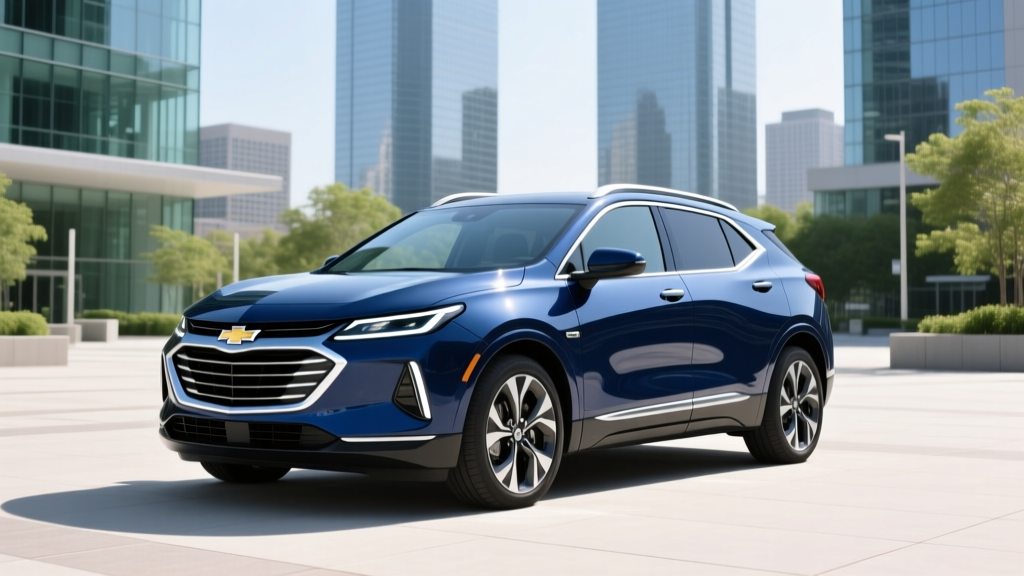
The 2026 Chevrolet Equinox EV occupies a rare position in the electric-vehicle market: it delivers mid-size cabin volume at a compact-SUV price point. For buyers searching for Chevy Equinox EV dimensions and real-world practicality, the numbers tell a compelling story. With up to 319 miles of EPA-estimated range, a usable 85 kWh Ultium battery, and cargo space that rivals vehicles a segment above, the Equinox EV is engineered for families who need room without the full-size SUV penalty.
But dimensions and sticker specs only matter if they translate to daily usability. This review breaks down every measurement that matters — exterior footprint, passenger volume, cargo capacity, charging speed, efficiency, and total cost — so you can decide whether the Equinox EV fits your driveway and your budget.
Exterior Dimensions and Curb Weight
The Equinox EV rides on GM's dedicated Ultium BEV3 platform, which pushes the wheels outward and lowers the center of gravity compared to the gas-powered Equinox. The result is a vehicle that looks compact from the curb but feels spacious from the driver's seat.
| Measurement | Specification |
|---|---|
| Wheelbase | 116.3 in (2,954 mm) |
| Overall Length | 189.8 in (4,821 mm) |
| Overall Width (without mirrors) | 74.4 in (1,890 mm) |
| Overall Height | 64.4 in (1,636 mm) |
| Ground Clearance | 6.7 in (170 mm) |
| Curb Weight (FWD LT) | ~4,680 lbs |
| Curb Weight (AWD RS) | ~4,900 lbs |
| Turning Circle | 39.4 ft |
The 116.3-inch wheelbase is the critical dimension here. It's nearly five inches longer than the gas Equinox, which directly translates to rear-seat legroom and a flat floor enabled by the under-body battery pack. At 189.8 inches bumper-to-bumper, the Equinox EV still fits comfortably in standard US parking spaces (typically 192 inches) and most residential garages (minimum 20 feet depth recommended).
Interior Dimensions: Passenger Volume and Comfort
GM lists the Equinox EV's total passenger volume at approximately 105.4 cubic feet, placing it at the upper end of the compact electric SUV segment. The flat floor — a direct benefit of the skateboard-style Ultium platform — eliminates the transmission tunnel hump, making the middle rear seat genuinely usable for adults on shorter trips.
| Measurement | Front | Rear |
|---|---|---|
| Headroom | 40.9 in | 38.6 in |
| Legroom | 42.5 in | 37.8 in |
| Shoulder Room | 57.2 in | 55.8 in |
| Hip Room | 53.6 in | 51.2 in |
For context, 37.8 inches of rear legroom accommodates a six-foot adult behind a similarly sized driver with adequate knee clearance. The 38.6 inches of rear headroom is slightly tighter than some boxier competitors — a trade-off of the sloping roofline on RS trims — but adequate for most passengers.
Cargo Space and Storage Dimensions
Cargo capacity is where the Equinox EV's Ultium platform advantage becomes most tangible. With the rear seats upright, you get 26.4 cubic feet of space behind the second row — enough for a week's groceries, two large suitcases, or a full-size stroller. Fold the 60/40 split rear seats, and cargo volume expands to 57.2 cubic feet, competitive with mid-size crossovers.
The cargo floor is flat and low, aided by the absence of a rear differential or exhaust system. The load-in height is approximately 28 inches, which is manageable for lifting heavy items. However, the Equinox EV does not offer a front trunk (frunk). GM allocated that space to HVAC and power-electronics components, a decision that prioritizes cabin heating efficiency over bonus storage.
| Spec | FWD (LT/RS) | AWD (RS Launch) |
|---|---|---|
| EPA Range | 319 mi | 285 mi |
| Battery (Usable) | 85 kWh (NMC) | 85 kWh (NMC) |
| Horsepower | 213 hp | 288 hp |
| Torque | 236 lb-ft | 343 lb-ft |
| 0-60 mph | ~8.0 sec | ~5.9 sec |
| Max DC Charge Rate | 150 kW | 150 kW |
| 10-80% DC Time | ~32 min | ~32 min |
| Level 2 Charge Rate | 11.5 kW (AC) | 11.5 kW (AC) |
| Efficiency (Combined) | 114 MPGe / 29 kWh/100mi | 100 MPGe / 34 kWh/100mi |
| Towing Capacity | 1,500 lbs | 1,500 lbs |
Range, Battery Chemistry, and Real-World Efficiency
The Equinox EV uses GM's Ultium battery architecture with NMC (nickel manganese cobalt) chemistry across all trims. The usable capacity is 85 kWh from a gross pack size of approximately 89 kWh, with a top-and-bottom buffer managed by the battery management system to protect long-term cell health.
Real-World Range Expectations
EPA Combined Estimate: 319 miles (FWD LT) / 285 miles (AWD RS)
Highway-Dominant Driving (70-75 mph): Expect approximately 260-280 miles for FWD and 235-255 miles for AWD. Aerodynamic drag at highway speeds reduces efficiency by roughly 15-18% compared to the combined cycle.
Cold Weather (below 32°F): NMC batteries experience increased internal resistance in freezing temperatures. Without preconditioning, expect a 20-30% range reduction — potentially dropping FWD range to 220-255 miles on a full charge. The Equinox EV's standard heat pump mitigates cabin energy draw but cannot fully offset battery chemistry limitations.
City/Stop-and-Go Driving: Regenerative braking recovers energy efficiently in urban conditions. Many owners report achieving 95-100% of EPA range or slightly above in warm-weather city driving.
Efficiency on the FWD model is rated at 29 kWh per 100 miles (combined), which is competitive for the segment. The AWD variant consumes approximately 34 kWh/100mi. According to fueleconomy.gov, these figures place the Equinox EV near the Hyundai Ioniq 5 and slightly behind the Tesla Model Y in efficiency-per-mile.
Charging Speed: DC Fast Charge and Home Level 2
Charging speed is a top concern for EV buyers, and the Equinox EV's numbers are functional rather than class-leading. The peak DC fast-charge rate is 150 kW, achieved at a NACS connector (Chevy transitioned to the Tesla-standard NACS port for the 2025 model year, giving access to the Supercharger network).
| Charging Level | Power | Speed | Notes |
|---|---|---|---|
| Level 1 (120V household) | ~1.4 kW | ~4 mi/hr | Emergency/trickle only |
| Level 2 (240V, 48A) | 11.5 kW | ~35 mi/hr | Full charge in ~8.5 hours |
| DC Fast Charge (peak) | 150 kW | 10-80% in ~32 min | Tapers significantly above 80% |
Understanding the charge curve: The 150 kW peak is only sustained between approximately 10-50% state of charge. Above 60%, the rate tapers to protect cell health, dropping to roughly 80 kW by 70% SoC and further to 40-50 kW near 80%. This is standard behavior for NMC chemistry, but it means the advertised 10-80% time of approximately 32 minutes is realistic only when the battery is preconditioned (via navigation-routed preconditioning or manual activation).
For home charging, the 11.5 kW onboard charger is a strong point. On a dedicated 240V/48A Level 2 circuit, you'll add roughly 35 miles of range per hour of charging, meaning a full overnight session easily replenishes a day's worth of driving. Installation of a hardwired Level 2 charger typically costs $800-$2,000 depending on panel capacity and conduit run — consult a licensed electrician for your specific setup.
Performance and Drivetrain
The Equinox EV is tuned for comfort and efficiency rather than performance thrills. The front-wheel-drive LT and RS trims produce 213 horsepower and 236 lb-ft of torque from a single front-mounted motor, yielding a 0-60 mph time of approximately 8.0 seconds. That's adequate for highway merging and daily commuting, though it won't win any stoplight races.
The dual-motor AWD RS Launch Edition bumps output to 288 hp and 343 lb-ft, dropping the 0-60 time to roughly 5.9 seconds. The added traction and torque make the AWD variant noticeably more confident in wet and snowy conditions, though the 34-mile range penalty (285 vs. 319 EPA) is the trade-off.
Ride quality benefits from the low center of gravity inherent to the skateboard platform. Body roll is well-controlled, and the suspension tuning favors comfort — absorbing road imperfections without feeling floaty. Steering is light and predictable, appropriate for the family-crossover mission.
Pricing, Trims, and Federal Tax Credit Eligibility
For the 2026 model year, the Equinox EV is offered in three primary trims. Pricing below reflects base MSRP before destination charges:
| Trim | Base MSRP | Drivetrain | §30D Credit Eligibility |
|---|---|---|---|
| LT 2 (FWD) | $33,600 | FWD | Eligible (up to $7,500) |
| RS (FWD) | $39,600 | FWD | Eligible (up to $7,500) |
| RS Launch (AWD) | $43,400 | AWD | Eligible (up to $7,500) |
Federal tax credit details (IRS §30D): As of 2026, the Equinox EV qualifies for the full $7,500 federal tax credit for eligible buyers, thanks to GM's domestic battery sourcing meeting critical-mineral and battery-component thresholds. The credit can be transferred to the dealer at the point of sale, effectively reducing the purchase price by $7,500 at the time of transaction.
However, eligibility is not automatic. Per IRS guidelines, the following caps apply:
- MSRP Cap: SUVs must have an MSRP at or below $80,000 (all Equinox EV trims qualify)
- Buyer Income Caps: Modified AGI must not exceed $150,000 (single), $225,000 (head of household), or $300,000 (married filing jointly)
- Battery Sourcing: Critical minerals and battery components must meet escalating annual thresholds — GM's Ultium platform currently satisfies these requirements, but rules tighten each year
- Assembly: Final assembly must occur in North America (the Equinox EV is built in Ramos Arizpe, Mexico — confirm current-year eligibility at purchase)
Given the complexity of §30D rules, consult a tax professional and verify eligibility on irs.gov before relying on the credit in your purchase decision.
Technology, Safety, and Driver Assistance
The Equinox EV's cabin is dominated by a 17.7-inch diagonal infotainment touchscreen running GM's Google Built-In platform, paired with an 11-inch digital instrument cluster. Google Maps navigation, Google Assistant voice control, and access to the Play Store for apps come standard. Wireless Apple CarPlay and Android Auto are supported.
On the driver-assistance front, Chevy Safety Assist is standard across all trims and includes:
- Automatic Emergency Braking with pedestrian detection
- Forward Collision Alert
- Lane Keep Assist with Lane Departure Warning
- Following Distance Indicator
- IntelliBeam automatic high beams
- Adaptive Cruise Control (available on RS trims)
Important: Chevy's Super Cruise hands-free driving system is available on higher trims as an option. Super Cruise is a SAE Level 2 driver-assistance system — it requires the driver to remain attentive, with eyes on the road monitored by a driver-facing camera. It is not autonomous or self-driving. Super Cruise operates on pre-mapped divided highways only.
Notable drawbacks include the absence of a frunk (front trunk), which limits bonus storage compared to competitors like the Hyundai Ioniq 5. The 150 kW peak DC charge rate, while adequate, trails the 240+ kW capabilities of the Ioniq 5 and Kia EV6. Some reviewers have noted that the brake pedal feel is somewhat artificial — a common byproduct of blending regenerative and friction braking.
Warranty Coverage
GM backs the Equinox EV with a competitive warranty package:
- Battery & Propulsion Components: 8 years / 100,000 miles (whichever comes first), covering capacity loss below 60% of original capacity
- Bumper-to-Bumper Limited Warranty: 3 years / 36,000 miles
- Powertrain Warranty: 5 years / 60,000 miles
- Corrosion Protection: 6 years / 100,000 miles
- Roadside Assistance: 5 years / 60,000 miles
The 8-year/100,000-mile battery warranty is standard for the segment. The 60% capacity-retention threshold means GM will repair or replace the battery if it degrades below that level within the warranty period. Real-world NMC degradation data from earlier Ultium vehicles suggests most packs retain 90%+ capacity at 50,000 miles under normal use patterns.
Pros, Cons, and Who Should Buy
Pros
- 319-mile EPA range on FWD — among the best in the segment
- Spacious cabin with 37.8" rear legroom and 57.2 cu ft max cargo
- Competitive starting price ($33,600 MSRP) with $7,500 credit potential
- NACS connector provides native Supercharger access
- Standard heat pump for cold-weather efficiency
- 11.5 kW Level 2 onboard charger for fast home replenishment
Cons
- 150 kW peak DC charge rate trails Hyundai/Kia competitors
- No front trunk (frunk) — missed storage opportunity
- AWD variant loses 34 miles of range vs. FWD
- FWD performance (8.0 sec 0-60) is merely adequate
- Brake pedal feel can be inconsistent during regen blending
- Super Cruise limited to pre-mapped highways
Who Is the Equinox EV For?
Choose the Equinox EV if: You need a practical family EV with strong range, generous interior dimensions, and a sub-$35,000 starting price (before credits). It excels as a daily commuter and weekend road-tripper for families of four who value cargo space and cabin comfort over blistering acceleration or ultra-fast charging.
Look elsewhere if: You prioritize DC fast-charging speed above 200 kW for frequent long-distance travel (consider the Ioniq 5 or EV6), need a frunk for gear storage, or want a performance-oriented AWD EV with sub-5-second 0-60 times.
Frequently Asked Questions
What is the real-world range of the Chevy Equinox EV?
The EPA rates the FWD Equinox EV at 319 miles combined. In real-world highway driving at 70-75 mph, expect 260-280 miles. In freezing temperatures without preconditioning, range can drop to 220-255 miles. City driving in mild weather often achieves close to or slightly above the EPA figure thanks to regenerative braking.
How fast does the Equinox EV charge at home and on the road?
At home on a 240V Level 2 charger, the Equinox EV charges at 11.5 kW, adding about 35 miles of range per hour — a full charge takes roughly 8.5 hours. On DC fast chargers, it peaks at 150 kW and reaches 10-80% in approximately 32 minutes when the battery is preconditioned.
Does the Chevy Equinox EV qualify for the federal EV tax credit?
As of 2026, the Equinox EV is eligible for up to $7,500 under IRS §30D, and the credit can be applied at the point of sale. However, buyer income caps ($150K single / $300K joint), the $80K MSRP cap for SUVs, and battery-sourcing requirements all apply. Verify current eligibility on irs.gov before purchase.
Is the Equinox EV worth buying vs. the Hyundai Ioniq 5 or Tesla Model Y?
The Equinox EV wins on price (starting ~$33,600 vs. ~$42,000+ for the Ioniq 5 and Model Y) and offers comparable range. However, the Ioniq 5 charges significantly faster (up to 240 kW on 800V architecture), and the Model Y offers access to the largest Supercharger network natively plus a frunk. If budget is your primary driver, the Equinox EV is the value pick; if fast charging or performance matters more, its competitors have an edge.
What are the Equinox EV's biggest pros and cons?
The biggest strengths are its 319-mile EPA range, spacious cabin dimensions, competitive pricing, and NACS Supercharger access. The main weaknesses are its 150 kW peak charging speed (below class leaders), lack of a frunk, and modest FWD acceleration.
What battery chemistry does the Equinox EV use?
The Equinox EV uses NMC (nickel manganese cobalt) chemistry in its 85 kWh usable Ultium battery pack. NMC offers higher energy density than LFP (lithium iron phosphate), enabling the 319-mile range, but is more sensitive to sustained 100% state-of-charge storage. For daily use, charging to 80-90% is recommended to maximize long-term battery health.