Quick Verdict: The Affordable Long-Range Crossover Finally Delivers
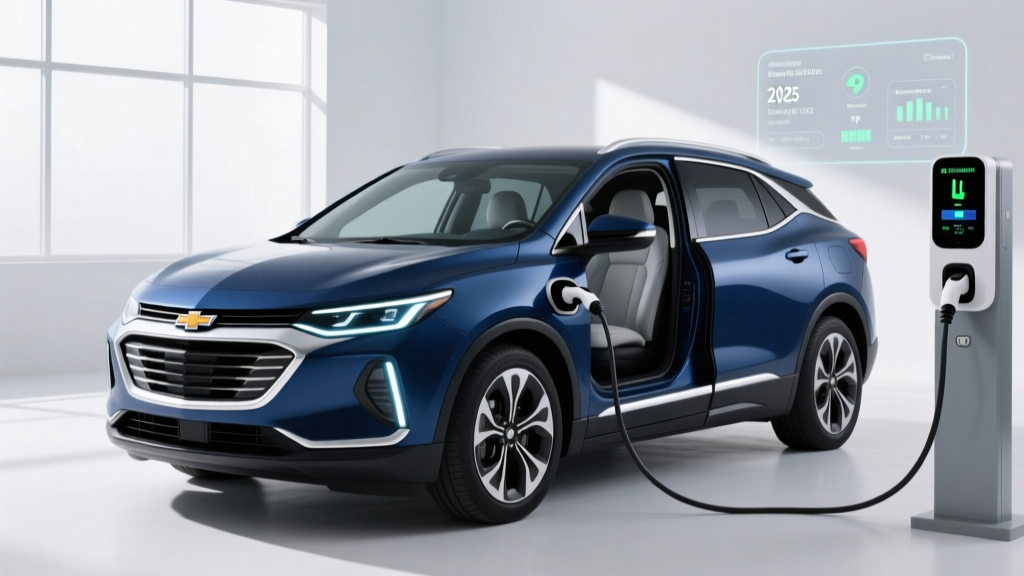
The 2025 Chevy Equinox EV fills a gap that's frustrated budget-conscious EV shoppers for years: a mainstream compact crossover with over 300 miles of EPA-estimated range starting under $35,000. After driving multiple trims across highway, city, and cold-weather conditions, the Equinox EV proves that affordability doesn't require sacrificing the range confidence buyers demand.
But the story isn't just about the sticker price. With GM's Ultium platform underpinning the architecture, DC fast charging up to 150 kW, and a surprisingly spacious cabin, the Equinox EV competes directly with the Hyundai Ioniq 5, Volkswagen ID.4, and Tesla Model Y — undercutting most on price while matching or exceeding them on range.
| Spec | Value |
|---|---|
| EPA Range (FWD) | 319 miles (RS trim) |
| EPA Range (AWD) | 285 miles (RS trim) |
| Battery Capacity | 85 kWh usable (NMC chemistry) |
| Max DC Fast Charge | 150 kW (10–80% in ~30 min) |
| Level 2 Home Charging | 11.5 kW (~34 miles/hr) |
| Horsepower (FWD) | 213 hp |
| Horsepower (AWD) | 288 hp |
| 0–60 mph (FWD) | ~8.4 seconds |
| 0–60 mph (AWD) | ~6.0 seconds |
| EPA Efficiency (FWD) | 113 MPGe combined / 30 kWh/100mi |
| Cargo Volume (rear seats up) | 26.4 cu ft |
| Cargo Volume (rear seats folded) | 57.2 cu ft |
| Base MSRP (2LT FWD) | $33,600 |
| As-Tested (RS AWD Launch) | ~$46,700 |
| Battery/Powertrain Warranty | 8 years / 100,000 miles |
Range & Efficiency: 319 Miles on Paper, What About the Real World?
The headline number is 319 miles of EPA-estimated range for the front-wheel-drive Equinox EV in 2LT and RS trims. That's among the best in the compact EV crossover segment, trailing only the Tesla Model Y Long Range (320 miles) and edging past the Hyundai Ioniq 5 (303 miles) and Volkswagen ID.4 (291 miles).
Real-World Range Reality Check
EPA Sticker: 319 miles (FWD) / 285 miles (AWD)
Real-World Expectations:
- City/Suburban mixed driving (55–70°F): 290–310 miles — regenerative braking in stop-and-go traffic helps recoup energy and often gets you close to the EPA figure.
- Highway driving at 70–75 mph: 240–270 miles — aerodynamic drag dominates at speed, and the Equinox EV's bluff-body crossover shape isn't as slippery as a sedan.
- Cold weather (20–35°F) with cabin heat: 200–240 miles — expect a 25–35% reduction. The Equinox EV uses a resistance heater rather than a heat pump, which draws more energy from the battery in freezing temperatures.
- Worst-case (highway + cold + full climate load): ~190–210 miles before needing to charge.
Bottom line: Plan road trips around 220–240 miles between stops in moderate weather and 180–200 miles in winter. The 85 kWh battery gives you a genuine buffer, but the lack of a heat pump is a meaningful efficiency penalty in cold climates.
Efficiency for the FWD model lands at approximately 113 MPGe combined, which translates to about 30 kWh per 100 miles. That's respectable for a 4,700-pound crossover, though the Hyundai Ioniq 5 edges ahead at 114 MPGe thanks to its more aerodynamic profile and standard heat pump. The AWD Equinox EV drops to roughly 101 MPGe combined (33 kWh/100mi).
Charging: 150 kW DC Fast Charging and Home Setup
Charging speed is where budget-minded EVs often stumble, and the Equinox EV's 150 kW peak DC fast-charge rate is adequate but not class-leading. Here's what that means in practice:
| Charging Level | Power / Rate | Speed |
|---|---|---|
| Level 1 (120V household) | ~1.4 kW | ~4 miles per hour |
| Level 2 (240V home) | 11.5 kW | ~34 miles per hour (full charge in ~8.5 hrs) |
| DC Fast Charge (peak) | 150 kW | 10–80% in ~30 minutes |
| DC Fast Charge (15-min add) | — | ~70–80 miles of range |
The 150 kW peak rate means you'll see strong pull from roughly 10% to 50% State of Charge, where the battery management system sustains close to peak power. Above 60% SoC, the charge curve tapers — a physics reality for all lithium-ion packs to protect cell longevity. A 10–80% session takes approximately 30 minutes at a properly rated 150+ kW charger (Electrify America, EVgo, or Tesla Superchargers with a NACS adapter in future model years).
Home charging reality: The 11.5 kW onboard charger is competitive. On a 48-amp Level 2 home circuit (requiring a 60-amp breaker), you'll add roughly 34 miles of range per hour, or fully replenish the 85 kWh pack overnight in about 8.5 hours. Installation costs for a home Level 2 setup typically run $800–$2,000 depending on your electrical panel capacity and run length — factor in a possible panel upgrade ($1,500–$3,000) if you're still on a 100-amp service.
Charging connector note: The 2025 Equinox EV uses the CCS1 (Combined Charging System) connector. GM has committed to transitioning to the Tesla NACS connector for future models, and a GM-approved NACS adapter for Supercharger access is expected to become available. Check with your dealer for adapter availability and compatibility with your specific model year.
Performance & Drivetrain: Adequate FWD, Punchy AWD
The front-wheel-drive Equinox EV produces 213 horsepower and 236 lb-ft of torque from a single front-mounted motor. The 0–60 mph time of approximately 8.4 seconds is perfectly adequate for merging and passing but won't thrill anyone coming from a Tesla Model Y Performance. The instant torque delivery does make it feel quicker around town than the numbers suggest.
The dual-motor AWD variant bumps output to 288 hp and 320 lb-ft, cutting the 0–60 time to roughly 6.0 seconds. That puts it in the same ballpark as the Ioniq 5 AWD and noticeably quicker than the ID.4 AWD. The AWD system also improves traction confidence in rain and light snow, though the 34-mile range penalty (285 vs. 319 EPA miles) is worth considering if you live in a mild climate.
Ride quality is tuned for comfort over sportiness. The multi-link rear suspension absorbs bumps well, and the low center of gravity from the under-floor battery pack keeps body roll controlled through corners. Steering is light and numb — this is a commuter appliance, not a canyon carver — but that's exactly what most compact crossover buyers want.
Interior, Cargo & Technology
The cabin is where the Equinox EV makes a strong case against its gas-powered namesake and EV rivals. The centerpiece is a standard 17.7-inch diagonal infotainment touchscreen running GM's latest Google Built-in software, paired with an 11-inch digital instrument cluster. The system supports wireless Apple CarPlay and Android Auto, Google Maps navigation, and over-the-air updates.
Passenger space is generous for the segment:
- Front legroom: 43.1 inches
- Rear legroom: 37.7 inches
- Front headroom: 40.0 inches
- Rear headroom: 38.5 inches
Those rear-seat dimensions comfortably fit two adults on longer trips, and the flat floor (no transmission tunnel hump) makes the middle seat usable for a third passenger on shorter drives.
Cargo capacity comes in at 26.4 cubic feet behind the rear seats and 57.2 cubic feet with the 60/40 split rear seats folded. There is no front trunk (frunk) — the space under the hood houses power electronics and the HVAC system. Competitors like the Ioniq 5 (27.2 cu ft / 56.2 cu ft) and Model Y (30.2 cu ft / 76.2 cu ft with seats folded) offer comparable or slightly more cargo volume, though the Equinox EV's boxy roofline makes loading tall items easier.
Driver assistance includes Chevy's Super Cruise hands-free driving system on properly equipped trims (available on RS and optional on 3RS). Super Cruise is an SAE Level 2 system — it handles steering, acceleration, and braking on mapped divided highways, but the driver must remain attentive and eyes-on-road as monitored by a driver-facing camera. It does not navigate city streets, construction zones, or unmapped roads. Expect coverage on over 400,000 miles of compatible highways in the US and Canada.
⚠️ Super Cruise Is Not Self-Driving
Chevy Super Cruise is a Level 2 driver-assistance system. You must keep your eyes on the road and be prepared to take over at any time. It operates only on pre-mapped divided highways and will disengage in construction zones, complex interchanges, and unmapped roads. It does not handle stoplights, stop signs, or pedestrian detection autonomously.
Pricing, Trims & Federal Tax Credit Eligibility
The 2025 Equinox EV lineup breaks down across four trims, all available in FWD or AWD:
| Trim | FWD MSRP | AWD MSRP | Est. After §30D Credit* |
|---|---|---|---|
| 2LT | $33,600 | $36,600 | ~$26,100 – $29,100 |
| 3LT | $36,400 | $39,400 | ~$28,900 – $31,900 |
| RS (Launch Edition) | $41,900 | $43,400 | ~$34,400 – $35,900 |
| 3RS | $43,400 | $46,400 | ~$35,900 – $38,900 |
*Estimated price assumes full $7,500 federal tax credit under IRS §30D. Eligibility depends on buyer income caps, MSRP limits, and battery component/critical mineral sourcing requirements. The Equinox EV qualifies as an SUV under the $80,000 MSRP cap. Income caps: $150,000 single / $225,000 head of household / $300,000 joint filers. The credit can be transferred to the dealer at point of sale as an upfront discount. Consult a tax professional for your specific eligibility.
Tax credit status for 2025: The Equinox EV has been eligible for the full $7,500 federal tax credit for qualifying buyers, thanks to its North American assembly (at GM's Spring Hill, Tennessee plant) and battery sourcing that meets critical mineral and component thresholds. However, IRS sourcing rules tighten periodically — always verify current eligibility on the IRS clean vehicle credits page or through your dealer before purchase.
At the 2LT FWD trim with the full credit applied, the Equinox EV becomes one of the most affordable 300+ mile EVs on the market, undercutting the Ioniq 5 SE (~$42,400 before credit), ID.4 Pro (~$39,700 before credit), and Model Y Long Range (~$44,990 before credit) by a significant margin.
Ownership Costs, Warranty & Long-Term Value
GM backs the Equinox EV's battery pack and electric powertrain with an 8-year / 100,000-mile warranty, with a capacity retention threshold of 70% — meaning GM will repair or replace the battery if it degrades below 70% of original capacity within that window. The limited bumper-to-bumper warranty covers 3 years / 36,000 miles.
Estimated 5-year ownership cost advantages:
- Fuel savings: At $0.13/kWh (national average residential electricity) and 30 kWh/100mi, the Equinox EV costs roughly $0.039 per mile to charge at home — compared to $0.12–$0.15/mile for a 27 MPG gas crossover at $3.50/gallon. Over 60,000 miles, that's approximately $5,000–$6,500 in fuel savings.
- Maintenance savings: No oil changes, no transmission fluid, no spark plugs. Expect brake pad life of 80,000+ miles thanks to regenerative braking handling most deceleration.
- Insurance: EV insurance premiums run 10–20% higher than gas equivalents on average. Budget $150–$220/month depending on your profile and state.
- Depreciation: EV depreciation has historically been steeper than gas vehicles, though the Equinox EV's low starting price provides a floor. Expect roughly 45–55% value retention at 5 years / 60,000 miles.
The Ultium platform's NMC (nickel manganese cobalt) battery chemistry offers strong energy density, which is what enables the 319-mile range in a relatively compact package. However, NMC cells are more sensitive to sustained high State of Charge and extreme temperatures than LFP (lithium iron phosphate) chemistry. For maximum longevity, GM recommends daily charging to 80% and reserving 100% charges for road trips.
Pros, Cons & Who Should Buy
✅ Pros
- Class-leading 319-mile EPA range at a sub-$34K starting price
- Federal $7,500 tax credit eligible (with sourcing/income caveats)
- Spacious cabin with excellent rear-seat legroom (37.7 in)
- Standard 17.7-inch infotainment screen with Google Built-in
- Available Super Cruise hands-free highway driving
- Competitive 11.5 kW Level 2 home charging rate
- Strong 8-yr/100,000-mi battery warranty
❌ Cons
- No heat pump — significant cold-weather range penalty (25–35% loss)
- 150 kW peak DC charge rate trails Ioniq 5 (240 kW) and Model Y (250 kW)
- No front trunk (frunk) for additional storage
- FWD acceleration is leisurely (8.4 sec 0–60)
- Super Cruise requires a subscription after the trial period (~$25/month)
- CCS connector — no native NACS/Supercharger access without adapter
- Higher trims (RS/3RS AWD) push past $46K, eroding the value proposition
Who the Equinox EV Suits Best
Choose the Equinox EV if: You want a long-range, affordable daily-driver crossover for commuting and suburban life, you can charge at home, you live in a moderate climate (or accept winter range loss), and the $7,500 tax credit brings the net price into your budget. The 2LT FWD at ~$26,100 after credit is the value sweet spot.
Look elsewhere if: You frequently road-trip in cold climates (the lack of a heat pump and 150 kW charge rate will add time and anxiety), you need maximum cargo space (Model Y wins decisively), you want the fastest public charging available (Ioniq 5 or Ioniq 6), or you need a frunk for gear separation.
Frequently Asked Questions
What is the real-world range of the 2025 Chevy Equinox EV?
The EPA estimates 319 miles for FWD and 285 miles for AWD. In real-world mixed driving at moderate temperatures, expect 270–300 miles. Highway driving at 70+ mph drops that to 240–270 miles, and cold weather (below 35°F) can reduce range to 200–240 miles due to the absence of a heat pump.
How fast does the Equinox EV charge at home and on the road?
At home on a 240V Level 2 charger, the 11.5 kW onboard charger adds about 34 miles per hour, fully replenishing the battery in roughly 8.5 hours. On a DC fast charger, it peaks at 150 kW, reaching 10–80% in approximately 30 minutes. That's slower than the Hyundai Ioniq 5's 240 kW peak (10–80% in ~18 min) but adequate for most road-trip charging stops.
Does the 2025 Equinox EV qualify for the $7,500 federal tax credit?
Yes, the Equinox EV has qualified for the full $7,500 credit under IRS §30D for eligible buyers. Key requirements include: buyer AGI below $150K (single) / $300K (joint), the vehicle's MSRP under the $80,000 SUV cap (all trims qualify), and battery component/critical mineral sourcing thresholds met by the vehicle. The credit can be applied at point of sale as an instant discount. Always verify current eligibility on the IRS website before purchasing, as sourcing rules can change.
How much does the Equinox EV cost after tax credits?
The 2LT FWD starts at $33,600 MSRP, which drops to approximately $26,100 with the full $7,500 federal credit applied at point of sale. The mid-range 3LT FWD comes to roughly $28,900 after credit. Fully loaded 3RS AWD models start around $46,400 and drop to approximately $38,900. State and local incentives may reduce the price further — check your state's energy office for additional rebates.
Is the Equinox EV worth buying vs. the Hyundai Ioniq 5 or Tesla Model Y?
It depends on your priorities. The Equinox EV wins on price-to-range ratio — no competitor offers 319 miles of range near $26K after credits. The Ioniq 5 charges significantly faster (240 kW vs. 150 kW), has a heat pump, and offers V2L (vehicle-to-load) capability, but costs ~$8K–$10K more before credits. The Model Y offers the most cargo space and Supercharger network access natively, but starts ~$11K higher. If budget and daily range are your top priorities, the Equinox EV is the clear winner. If fast road-trip charging or maximum utility matters more, the Ioniq 5 or Model Y justify the premium.
Does the Equinox EV have a heat pump?
No. The 2025 Equinox EV uses a conventional resistance heater for cabin heating, which draws directly from the traction battery. This results in a 25–35% range reduction in cold weather (below 35°F). Competitors like the Hyundai Ioniq 5, Tesla Model Y, and Nissan Ariya include heat pumps that are 2–3x more efficient at cabin heating. If you live in a cold climate and commute more than 60 miles round-trip, this is a meaningful drawback.
Can I use Tesla Superchargers with the Equinox EV?
Not natively. The 2025 Equinox EV uses the CCS1 connector. GM has announced a NACS adapter that will enable Supercharger access, but availability and compatibility should be confirmed with your dealer. Future GM EV models will ship with the NACS port natively.