The Quick Answer: Is the Chevy Equinox Electric SUV Worth It?
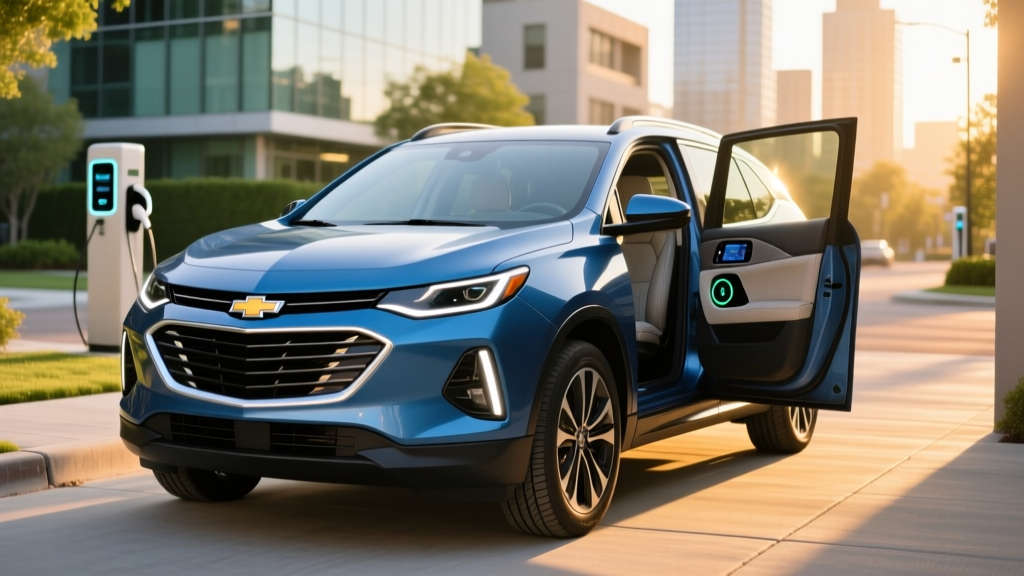
The 2026 Chevrolet Equinox EV is one of the most affordable long-range electric crossovers on the market, starting around $33,600 (before incentives) with up to 319 miles of EPA-estimated range. If you can charge at home, have a household income under the §30D caps, and your driving is mostly under 250 miles round-trip, the Equinox EV delivers strong value — especially when paired with the $7,500 federal tax credit (now available as a point-of-sale rebate). If you lack home charging access, frequently drive in sub-freezing climates, or regularly tow, a hybrid like the Equinox Hybrid or Toyota RAV4 Hybrid may fit better.
2026 Chevy Equinox EV Specs at a Glance
The Equinox EV rides on GM's Ultium platform with a front-mounted permanent-magnet motor (and optional dual-motor AWD). Here are the numbers that matter for your buying decision:
| Spec | FWD (LT/RS) | AWD (RS/Launch) |
|---|---|---|
| EPA Range | 319 mi (LT 2LT) | 285–307 mi |
| Battery (usable) | ~85 kWh, NMC (Ultium) | |
| Horsepower | 213 hp | 288 hp |
| 0–60 mph | ~8.3 sec | ~7.5 sec |
| Peak DC Fast Charge | ~150 kW | |
| 10–80% DCFC Time | ~30 min (est.) | |
| Level 2 (240V) Rate | 11.5 kW (~19.2 kW on higher trims) | |
| MPGe (combined) | ~95 MPGe | ~90 MPGe |
| Cargo (rear seats up) | 26.4 cu ft | |
| Base MSRP (2026) | $33,600 | $41,900 |
| Battery/Powertrain Warranty | 8 yr / 100,000 mi | |
Real-World Range Reality Check
The 319-mile EPA figure applies to the FWD LT 2LT with smaller wheels. Expect ~260–280 miles in mixed real-world driving at highway speeds (70+ mph), and ~200–230 miles in sustained sub-30°F weather without preconditioning. AWD and 21-inch wheels drop the EPA sticker to ~285 miles. Plan road trips around the lower number, not the sticker.
Equinox EV vs. Gas Equinox vs. RAV4 Hybrid: Cost Comparison
The most common question from buyers: does the electric version actually save money? We compared the 2026 Equinox EV 2LT FWD against the 2026 gas Equinox LT (25 MPG combined) and the Toyota RAV4 Hybrid (39 MPG combined) over 5 years and 75,000 miles. Electricity priced at the US average of $0.16/kWh; gas at $3.40/gal.
| Cost Category | Equinox EV 2LT FWD | Gas Equinox LT AWD | RAV4 Hybrid XLE |
|---|---|---|---|
| Base MSRP | $33,600 | $31,900 | $35,400 |
| Fed. Tax Credit (§30D) | –$7,500* | $0 | $0 |
| Effective Purchase Price | $26,100 | $31,900 | $35,400 |
| 5-Yr Fuel/Energy Cost | $3,780 | $10,200 | $6,540 |
| 5-Yr Maintenance (est.) | $1,200 | $3,800 | $3,200 |
| 5-Yr Total (purchase + fuel + maint.) | $31,080 | $45,900 | $45,140 |
*§30D eligibility requires buyer income under $150K single / $300K MFJ, vehicle MSRP under $80K (SUVs), and battery critical-mineral/sourcing compliance per IRS rules. Confirm with a tax professional. Credit is transferable to the dealer as a point-of-sale discount for 2026.
Even without the full federal credit, the Equinox EV undercuts the gas Equinox on operating costs by roughly $5,200 over five years thanks to lower energy and near-zero maintenance (no oil changes, no transmission fluid, regen extends brake life). The RAV4 Hybrid sits in between on fuel cost but can't match the EV's post-credit purchase price.
Charging the Equinox EV: Home, Public, and What You'll Spend
GM equips the Equinox EV with a standard NACS (Tesla-style) charge port, giving native access to Tesla Superchargers via the NACS standard — no adapter needed. It also supports CCS1 through adapters for Electrify America and other networks.
| Level | Power (kW) | Miles Added/Hour | Typical Use |
|---|---|---|---|
| Level 1 (120V) | 1.4 kW | ~4 mi/hr | Overnight top-up only |
| Level 2 (240V, 48A) | 11.5 kW | ~34 mi/hr | Home daily charging |
| Level 2 (240V, 80A capable) | 19.2 kW | ~56 mi/hr | Higher trims / PowerUp 2 |
| DC Fast Charge | ~150 kW peak | ~170 mi in 20 min | Road trips |
Charging-curve reality: The Equinox EV peaks near 150 kW up to roughly 30–40% State of Charge, then tapers. A 10–80% session takes about 30 minutes at a capable 150+ kW charger. Above 80%, speed drops sharply — don't plan road-trip stops around the peak number alone.
Home Charging Installation Cost Breakdown
| Item | Typical Cost |
|---|---|
| Level 2 EVSE (Emporia, ChargePoint, Wallbox) | $400–$750 |
| Electrician labor (40–60 ft run, 60A circuit) | $800–$2,000 |
| Permit & inspection | $100–$300 |
| Panel upgrade (if 100A service needs 200A) | $1,500–$3,500 |
| Total (no panel upgrade) | $1,300–$3,050 |
Most Equinox EV owners with a 200-amp panel and a garage outlet within 40 feet spend $1,500–$2,200 installed. Renters and condo dwellers without dedicated parking should budget for public charging or consider a PHEV instead.
Battery Longevity, Degradation, and Warranty
The Ultium NMC pack carries GM's standard EV warranty: 8 years or 100,000 miles, covering defects and capacity loss below 70% of original. Industry data from Recurrent and other battery-health trackers shows modern NMC packs with active liquid thermal management typically retain 90–94% capacity at 100,000 miles. For an owner keeping the Equinox EV 10 years and 120,000 miles, expect roughly 88–92% retention — far above the warranty floor.
Care tips to maximize State of Health:
- Daily charging to 80% SoC; reserve 100% for road trips
- Use preconditioning before DC fast charging (built into nav-routed charging)
- Avoid leaving the vehicle at 100% SoC for multi-day periods in heat
- In winter, plug in when parked to let the thermal system maintain battery temp
A full out-of-warranty battery replacement is estimated at $12,000–$18,000 based on current Ultium module pricing, though most owners will never need this within the vehicle's useful life.
Common Misconceptions About the Equinox EV
| Myth | Fact |
|---|---|
| "319 miles means I'll always get 319 miles" | Real-world highway driving yields ~260–280 mi; cold weather drops it to ~200–230 mi without preconditioning. |
| "It can't use Tesla Superchargers" | The 2026 Equinox EV ships with a native NACS port — it plugs directly into Supercharger V3/V4 stalls. |
| "EV insurance is always double" | Equinox EV premiums run 10–25% higher than gas Equinox on average, not double. Shop carriers like Progressive, State Farm, and EV-focused insurers. |
| "The battery will need replacing at 100K miles" | Liquid-cooled NMC packs routinely exceed 150K miles with >85% SoH. GM warranties 70% capacity at 8 yr/100K mi. |
| "I need a 200-amp panel upgrade" | Most homes with existing 200A service can add a 48A/60A EV circuit without a panel upgrade. An electrician confirms this. |
Decision Framework: Should You Buy the Equinox EV?
Choose the Chevy Equinox EV If:
- You have Level 2 home charging (or can install it for under $3,000)
- Your daily commute is under 80 miles round-trip
- You qualify for the §30D credit (income under caps, sourcing requirements met)
- You want a 300+ mile EPA range for under $35K before incentives
- You value native NACS Supercharger access without adapters
Consider a Hybrid or Gas Alternative If:
- You rent without charging access or live in an apartment without EV infrastructure
- You regularly tow more than 1,500 lbs (Equinox EV towing is limited to ~1,500 lbs)
- You live in sustained sub-10°F climates and lack a garage for preconditioning
- Your road trips exceed 400 miles one-way through DCFC-sparse corridors
First-Time EV Buyer Checklist
If the Equinox EV is your first electric vehicle, work through these items before signing:
- Confirm home charging feasibility — get a licensed electrician quote for a 240V/48A circuit near your parking spot.
- Verify §30D eligibility — check your AGI, the vehicle's MSRP cap compliance, and battery sourcing on the IRS clean vehicle credit page and the dealer's point-of-sale paperwork.
- Test your real commute — drive the route and check kWh/mi consumption via the driver display to project actual range.
- Download charging apps — PlugShare, A Better Routeplanner, and the myChevrolet app for trip planning and battery preconditioning.
- Insurance-shop before purchase — get three quotes to avoid post-purchase sticker shock.
- Plan your first road trip — identify DCFC stops along your most common long route (Superchargers and Electrify America both work).
Equinox EV FAQ
What is the real-world range of the Chevy Equinox EV?
The FWD LT 2LT is EPA-rated at 319 miles. In real-world mixed highway driving at 70 mph, expect 260–280 miles. In cold weather (under 30°F), plan for 200–230 miles unless you precondition while plugged in.
Does the 2026 Equinox EV qualify for the $7,500 federal tax credit?
It is on the IRS eligible list, but your personal eligibility depends on income caps ($150K single / $300K MFJ), MSRP limits (under $80K for SUVs), and battery sourcing compliance. The credit can be transferred to the dealer as a point-of-sale discount. Confirm on IRS.gov and with your tax professional.
Can the Equinox EV use Tesla Superchargers?
Yes. The 2026 Equinox EV has a native NACS charge port, so it connects directly to Tesla Supercharger V3 and V4 stalls without an adapter.
How long does it take to charge the Equinox EV at home?
On a 48A Level 2 charger (11.5 kW), a full 0–100% charge takes roughly 8.5 hours — ideal for overnight charging. On the available 19.2 kW charger, that drops to about 5 hours.
What is the Equinox EV's towing capacity?
The Equinox EV is rated for approximately 1,500 lbs when properly equipped — adequate for a small utility trailer or bike rack, but not for boat or camper towing. If you need 3,500+ lb towing, look at the Blazer EV or Silverado EV.
Is the Equinox EV cheaper to own than the gas Equinox?
Over 5 years and 75,000 miles, the EV saves roughly $8,800–$14,800 in combined purchase (after credit), fuel, and maintenance costs versus the gas Equinox, per the comparison table above. Without the tax credit, the savings narrow to $1,300–$7,300 but the EV still wins on operating cost.
Sources: EPA Fuel Economy, Chevrolet Equinox EV Configurator, IRS §30D Clean Vehicle Credit.