Quick Answer: Is the Chevy Electric Delivery Van Right for Your Fleet?
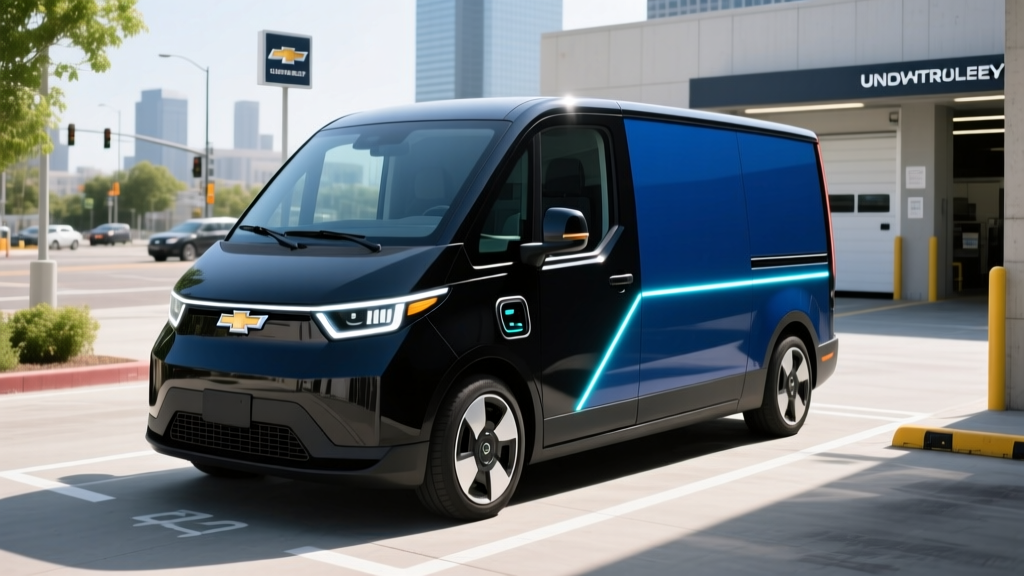
The Chevy electric delivery van — sold under GM's BrightDrop brand as the Zevo 400 and Zevo 600 — is a purpose-built, battery-electric commercial vehicle targeting last-mile delivery fleets. For the 2026 model year, the Zevo 600 delivers an EPA-estimated 272 miles of range from a 165 kWh NMC battery, supports DC fast charging at up to 120 kW (10–80% in approximately 75 minutes), and offers up to 2,200 lbs of payload with 519 cubic feet of cargo volume. Pricing starts around $74,000 for the Zevo 400 and approximately $84,000 for the Zevo 600, before the federal commercial EV tax credit (§45W, up to $40,000 for vehicles over 14,000 lbs GVWR). The van makes strongest financial sense for fleets with predictable routes under 200 miles per day, depot-based overnight Level 2 charging, and high annual mileage where fuel and maintenance savings offset the higher upfront cost.
What Is the Chevy Electric Delivery Van? BrightDrop Zevo Explained
General Motors launched BrightDrop (originally "BrightDrop Zevo") to compete directly in the electric last-mile delivery space against the Rivian EDV (built for Amazon), Ford's E-Transit, and the now-defunct Canoo lifestyle delivery van. The Zevo lineup is built on GM's Ultium battery platform and comes in two main variants:
- Zevo 400: The shorter wheelbase model with ~412 cu ft of cargo space, targeting urban courier and parcel routes.
- Zevo 600: The full-size variant with ~519 cu ft, aimed at FedEx Ground, FedEx Express, and large parcel carriers running suburban and rural routes.
Both models share the same Ultium battery architecture, dual-motor all-wheel-drive powertrain, and electrical systems. BrightDrop also offers the Trace electric cart (a non-vehicle last-yard dolly) as a complementary product, but the Zevo vans are the core Chevy electric delivery van product that fleet managers evaluate.
For 2026, GM has ramped production at its CAMI Assembly plant in Ontario, Canada, and the Zevo is now available to a broader range of commercial buyers beyond early partners like FedEx and Verizon.
Specs That Matter: Range, Battery, Charging, and Payload
Fleet buyers need hard numbers, not marketing. Here's the spec breakdown for the 2026 BrightDrop Zevo lineup based on GM's published figures and EPA data at fueleconomy.gov:
| Specification | Zevo 400 | Zevo 600 |
|---|---|---|
| EPA Range | ~250 miles | ~272 miles |
| Battery Capacity (Usable) | ~140 kWh (NMC) | ~165 kWh (NMC) |
| Battery Chemistry | NMC (Nickel Manganese Cobalt) | NMC (Nickel Manganese Cobalt) |
| Peak DC Fast Charge Rate | 120 kW | 120 kW |
| 10–80% DC Fast Charge Time | ~65 minutes | ~75 minutes |
| Level 2 AC Charge Rate | 11.5 kW | 11.5 kW |
| Level 2 Full Charge Time (0–100%) | ~13 hours | ~15 hours |
| Powertrain | Dual-motor AWD | Dual-motor AWD |
| Horsepower | ~300 hp combined | ~300 hp combined |
| Cargo Volume | ~412 cu ft | ~519 cu ft |
| Max Payload | ~2,200 lbs | ~2,200 lbs |
| GVWR | >14,000 lbs (Class 2b/3) | >14,000 lbs (Class 2b/3) |
| Base MSRP (Est. 2026) | ~$74,000 | ~$84,000 |
| Battery/Powertrain Warranty | 8 yr / 100,000 mi | 8 yr / 100,000 mi |
Real-World Range vs. EPA Sticker
The EPA estimates 272 miles for the Zevo 600, but fleet operators should plan around 200–230 miles of usable daily range. Why? Fully loaded vans (near max payload) running stop-and-go urban delivery routes with frequent door openings, HVAC use, and regenerative braking limitations at low speeds will see higher consumption. In cold climates (below 30°F), expect a 15–25% range reduction due to battery chemistry and cabin/cargo heating demands. Route planning should always buffer at least 20% below EPA range.
Total Cost of Ownership: Chevy Electric Delivery Van vs. Gas Van
The core fleet question is whether the higher upfront purchase price of an electric delivery van pays back through operational savings. Let's model a realistic comparison: the BrightDrop Zevo 600 versus a comparable gasoline Ford Transit 350 HD (the dominant gas cargo van in last-mile fleets).
| Cost Factor (5-Year / 100,000 mi) | BrightDrop Zevo 600 (EV) | Ford Transit 350 HD (Gas) |
|---|---|---|
| Purchase Price (Base MSRP) | $84,000 | $52,000 |
| Federal Tax Credit (§45W Commercial) | −$40,000 | $0 |
| Effective Net Purchase | $44,000 | $52,000 |
| Fuel/Energy Cost (100k mi) | ~$5,200 (electricity @ $0.12/kWh) | ~$18,750 (gas @ $3.50/gal, 14 MPG) |
| Maintenance (5 yr / 100k mi) | ~$3,500 | ~$9,000 |
| Depreciation (Est.) | ~$22,000 | ~$18,000 |
| Insurance (5 yr Est.) | ~$16,000 | ~$14,000 |
| Estimated 5-Year TCO | ~$90,700 | ~$93,750 |
Key takeaways from this model:
- The §45W commercial clean vehicle credit (up to $40,000 for GVWR >14,000 lbs) is the single largest factor flipping the TCO equation. Without it, the EV is significantly more expensive.
- Fuel savings alone — roughly $13,550 over 100,000 miles — are substantial. At fleet scale (50+ vans), this becomes a multi-million-dollar operational advantage.
- Maintenance savings come from eliminating oil changes, transmission fluid, spark plugs, and exhaust system repairs. Brake wear is also reduced due to regenerative braking.
- Insurance tends to run 10–15% higher on EVs due to specialized repair requirements and higher parts costs, though this gap is narrowing as the commercial EV market matures.
- Depreciation remains a wildcard. Residual values for commercial EVs are still being established; gas Transits have a deep, predictable used market.
Always consult a tax professional regarding §45W eligibility. The credit has specific requirements around battery component sourcing, vehicle use in a trade or business, and cannot be combined with §30D (the consumer credit). See IRS guidance on the commercial clean vehicle credit for current-year rules.
Charging Infrastructure: What Fleets Need to Know
Buying the van is only half the equation. Depot charging infrastructure is the make-or-break factor for commercial EV adoption.
Level 2 Depot Charging (Primary Strategy)
Most last-mile delivery fleets charge overnight at a central depot using Level 2 (240V AC) chargers. At 11.5 kW, a Zevo 600 takes roughly 15 hours for a full 0–100% charge. In practice, vans returning with 30–40% state of charge will need 8–10 hours to reach full — perfectly suited for overnight shifts.
- Charger hardware cost: Commercial-grade Level 2 units (e.g., ChargePoint CT4000, Blink HQ 200) run $2,500–$6,000 per port.
- Electrical installation: Expect $3,000–$8,000 per port for trenching, conduit, wiring, and panel upgrades at a commercial depot. A 480V three-phase service drop from the utility may be required for 10+ charger installations, adding $15,000–$50,000+ depending on site conditions.
- Utility demand charges: Commercial electricity billing includes demand charges (based on peak kW draw), which can significantly increase costs. Smart charging software that staggers van charge times can reduce demand charges by 30–50%.
DC Fast Charging (Opportunity / Supplemental)
At 120 kW peak, the Zevo's DC fast charging is adequate for mid-day top-ups but not rapid — it's slower than passenger EVs like the Hyundai Ioniq 5 (240 kW peak). A 10–80% session takes about 75 minutes. The Zevo uses the CCS1 connector standard. Note that GM has been transitioning its passenger vehicles to the NACS (Tesla) connector, but as of 2026, the BrightDrop commercial lineup retains CCS1 for compatibility with existing commercial charging networks like Electrify America and EVgo.
| Charging Level | Power (kW) | Connector | Miles Added per Hour | Use Case |
|---|---|---|---|---|
| Level 1 (120V) | ~1.4 kW | J1772 | ~3–4 mi/hr | Emergency / not practical for fleet |
| Level 2 (240V) | 11.5 kW | J1772 | ~28–32 mi/hr | Primary overnight depot charging |
| DC Fast Charge | Up to 120 kW | CCS1 | ~140–160 mi/hr (peak) | Mid-day supplemental top-up |
Who Should Buy the Chevy Electric Delivery Van? A Decision Framework
Choose the BrightDrop Zevo If:
- Your daily routes are under 200 miles and return to a central depot every night.
- You have (or can install) depot Level 2 charging — either owned or via a fleet charging partner.
- Your vans run 20,000+ miles per year, maximizing fuel and maintenance savings to accelerate payback.
- You qualify for the §45W commercial tax credit (up to $40,000), which dramatically reduces effective purchase cost.
- Your fleet operates in urban or suburban areas where stop-and-go driving maximizes regenerative braking benefits and where zero tailpipe emissions align with local clean-air mandates or corporate ESG goals.
- You value telematics integration — BrightDrop's fleet management software provides real-time SoC, route optimization, and predictive maintenance data.
Stick With a Gas or Diesel Van If:
- Your routes regularly exceed 250 miles per day or are highly unpredictable, making mid-day charging impractical.
- You lack depot charging access and cannot feasibly install it (leased depot, inadequate electrical service, utility interconnect delays).
- You operate in extreme cold climates (sustained sub-zero temperatures) where 25%+ range loss could strand vehicles mid-route.
- Your annual mileage is below 12,000 miles per van — the fuel savings won't offset the higher purchase price within a reasonable payback period.
- You need maximum payload flexibility — gas vans like the Transit 350 HD can offer higher payload ratings in certain configurations, and you may need that headroom for heavy freight.
Common Misconceptions About Electric Delivery Vans
| Myth | Fact |
|---|---|
| "The battery will need replacement in 5 years." | GM warranties the Ultium battery for 8 years / 100,000 miles against capacity loss below 60%. Real-world degradation data from early fleet deployments shows approximately 8–12% capacity loss at 100,000 miles with proper charge management (avoiding sustained 100% SoC). Battery replacement, if needed out of warranty, is estimated at $18,000–$25,000 — significant but comparable to a gas van engine/transmission rebuild. |
| "Electric vans can't handle cold weather." | Range drops 15–25% in freezing temps — real and measurable. But the Zevo's battery thermal management system (active liquid heating and cooling) mitigates this. Fleets in Chicago and Minneapolis are running Zevos year-round by planning routes within the reduced winter range envelope and preconditioning batteries while still plugged in. |
| "Charging takes too long for delivery schedules." | Overnight Level 2 charging (8–10 hours from 30% SoC) covers most fleet use cases. The van charges while parked and unused. Mid-day DC fast charging is a safety net, not the primary strategy. |
| "The tax credit is guaranteed." | The §45W commercial credit has specific eligibility rules including battery sourcing requirements, vehicle GVWR thresholds, and must be claimed by the business entity that purchases and places the vehicle in service. Rules can change with legislation. Always verify current-year eligibility with a tax professional and the IRS. |
| "There's no payload difference between EV and gas vans." | The battery pack adds significant weight. The Zevo 600's GVWR exceeds 14,000 lbs (which is how it qualifies for the larger $40,000 tax credit), but the actual payload capacity of ~2,200 lbs may be less than a comparably configured gas Transit. Always spec your van against your actual freight weight requirements. |
First-Time Fleet EV Buyer Checklist
If this is your fleet's first electric vehicle purchase, here's what to nail down before signing:
- Audit your routes. Pull GPS telematics data for the past 6 months. What's the 95th-percentile daily mileage? If it's under 200 miles, the Zevo works. If 10% of your routes exceed 250 miles, identify those specific vehicles and keep them on gas.
- Get an electrical site assessment. Hire a licensed commercial electrician to evaluate your depot's panel capacity, available amperage, and whether a utility service upgrade is needed. Lead times for utility upgrades can be 6–18 months.
- Model your TCO with actual local electricity rates. Commercial electricity varies enormously — from $0.06/kWh in some Midwest markets to $0.22/kWh in California. Your fuel savings depend entirely on this spread versus local gas/diesel prices.
- Talk to your insurance broker early. Commercial EV insurance is still developing. Get actual quotes before budgeting, not estimates.
- Plan driver training. Regenerative braking, one-pedal driving capability, and charge management are new concepts for many delivery drivers. Budget 2–4 hours of training per driver to maximize efficiency and reduce brake wear.
- Verify §45W eligibility with your CPA. Battery component sourcing requirements, business-use certification, and credit transferability rules are complex. The IRS commercial credit page is your starting reference.
BrightDrop Zevo vs. the Competition
The Chevy electric delivery van doesn't exist in a vacuum. Here's how it stacks up against the two main competitors in the Class 2b/3 electric van space:
| Attribute | BrightDrop Zevo 600 | Ford E-Transit (2026) | Rivian EDV 700 |
|---|---|---|---|
| EPA Range | ~272 mi | ~150 mi (std) / ~200 mi (ext) | ~161 mi |
| Battery (Usable) | ~165 kWh NMC | ~68 kWh (std) / ~98 kWh (ext) NMC | ~135 kWh NMC |
| Peak DC Charge Rate | 120 kW | 115 kW | ~150 kW |
| Cargo Volume | ~519 cu ft | ~487 cu ft | ~660 cu ft |
| Max Payload | ~2,200 lbs | ~3,300 lbs | ~2,500 lbs |
| Base MSRP (Est.) | ~$84,000 | ~$55,000 | Fleet contract only (Amazon) |
| Availability | Order via BrightDrop | Widely available via Ford Pro | Limited; Amazon priority |
What this tells you: The Zevo 600 leads on range — significantly. That's its primary competitive advantage. Ford's E-Transit wins on upfront price and payload but sacrifices range, making it better suited for shorter urban routes. The Rivian EDV offers the most cargo volume but remains effectively captive to Amazon, limiting availability for independent fleets.
Frequently Asked Questions
Is the Chevy electric delivery van still called BrightDrop in 2026?
Yes. GM rebranded the BrightDrop division in 2024 but retained the BrightDrop name for its commercial electric vehicle and logistics software business. The vans are still marketed as BrightDrop Zevo models, though they are built on GM's Ultium platform and are effectively Chevrolet commercial products. Some fleet managers colloquially refer to them as "Chevy electric delivery vans" given the GM/Chevy corporate umbrella.
Can I get the federal §30D $7,500 consumer tax credit on a BrightDrop Zevo?
No. The §30D credit is for personal-use passenger vehicles with MSRP caps ($80,000 for vans/SUVs) and buyer income limits. The Zevo exceeds the MSRP cap and is purchased for commercial use. Instead, fleet buyers claim the §45W Commercial Clean Vehicle Credit, which offers up to $40,000 for vehicles with a GVWR above 14,000 lbs. This credit has its own sourcing and eligibility requirements. Consult your tax advisor.
How long does the Ultium battery last in commercial delivery use?
GM warranties the battery for 8 years or 100,000 miles against capacity falling below 60% of original. In practice, NMC batteries in commercial fleet use with managed charging (avoiding daily 100% charges, leveraging depot smart-charging software) typically retain 85–90% capacity at 100,000 miles. The larger concern is calendar degradation over 10–15 years, which may reduce range even with low mileage. Fleet lifecycle planning should model a 10-year vehicle service life with the original battery.
Does the BrightDrop Zevo support over-the-air (OTA) updates?
Yes. Like GM's passenger Ultium vehicles, the Zevo receives OTA software updates covering powertrain calibration, battery management, infotainment, and fleet telematics features. This allows GM to improve efficiency, add features, and address software issues without a dealer visit — a meaningful advantage for fleet uptime.
What happens if a van runs out of charge mid-route?
The same thing that happens with an empty gas tank: the vehicle stops. However, the Zevo's telematics system provides real-time range projections and can flag at-risk routes before dispatch. Most fleets address this through route planning buffers (20% below EPA range) and access to public DC fast charging networks as a contingency. CCS1 compatibility means the Zevo can use Electrify America, EVgo, and other commercial-grade public chargers.
Is the BrightDrop Zevo a good fit for food delivery or refrigerated routes?
The Zevo can be upfitted with aftermarket shelving and cargo management systems, but as of 2026, GM does not offer a factory refrigerated variant. Third-party upfitters can install insulated cargo areas and electric refrigeration units, but these draw additional power from the battery (or a separate auxiliary system), reducing effective range. For cold-chain delivery, consult an upfitter experienced with electric commercial vehicles to model the range impact of refrigeration loads.