Quick Answer: Is the Chevy Electric Cargo Van Worth It for Your Fleet?
The Chevy electric cargo van — officially the BrightDrop Zevo 600, built by GM — starts at approximately $74,900 before incentives. It offers an EPA-estimated 272 miles of range, a 412-horsepower electric drivetrain, and up to 2,200 lbs of payload capacity. For fleets covering under 200 miles daily with depot-based Level 2 charging, the Zevo 600 typically recoups its higher upfront cost within 3-4 years through fuel and maintenance savings. However, operators without overnight charging access or those running routes exceeding 250 miles in cold climates should consider the operational limitations carefully before committing.
What Exactly Is the Chevy Electric Cargo Van?
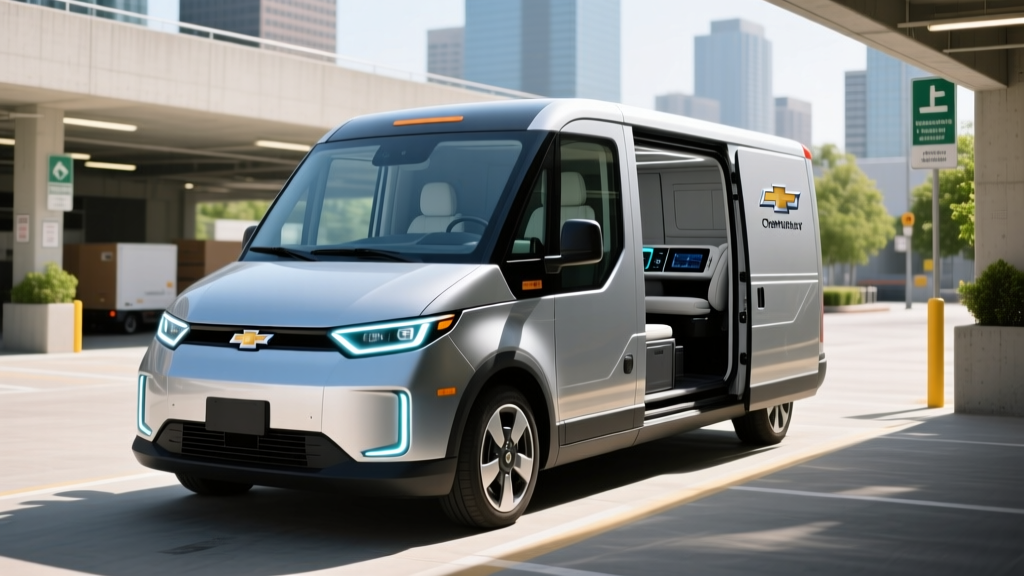
When buyers search for a "Chevy electric cargo van," they're looking for the BrightDrop Zevo 600. BrightDrop is a GM-owned commercial-delivery brand, and the Zevo 600 is its flagship full-size electric delivery van. It's not badged as a Chevrolet, but it's built on GM's Ultium battery platform — the same architecture underpinning the Silverado EV and Blazer EV — and serviced through GM's commercial dealer network.
The Zevo 600 targets last-mile delivery fleets, courier services, and small businesses that need a zero-tailpipe-emission work vehicle with serious cargo volume. A smaller sibling, the Zevo 400 (roughly 410 cubic feet of cargo space vs. the 600's 615), is also available for tighter urban routes.
2026 BrightDrop Zevo 600 Key Specifications
| Spec | Value |
|---|---|
| EPA Range | 272 miles (real-world: ~210-240 mi loaded, ~175-200 mi in cold weather) |
| Battery Capacity | ~165 kWh usable, NMC chemistry (Ultium platform) |
| Powertrain | Dual-motor eAWD, 412 HP, 385 lb-ft torque |
| 0-60 mph | ~6.5 seconds (unloaded) |
| Payload Capacity | 2,200 lbs |
| Cargo Volume | 615 cu ft |
| Max DC Fast Charge | 150 kW peak (10-80% in ~55 minutes) |
| Level 2 AC Charge | 11.5 kW (~16 hours for full charge) |
| GVWR | 9,900 lbs (Class 2b — no CDL required) |
| Base MSRP | ~$74,900 (fleet pricing varies by volume) |
| Battery Warranty | 8 years / 100,000 miles (60% capacity retention threshold) |
Range Reality: EPA Sticker vs. What You'll Actually Get
The 272-mile EPA estimate assumes moderate temperatures, partial loads, and mixed driving. In commercial operation, expect the following adjustments:
Real-World Range Expectations
- Urban stop-and-go, half load (70°F): ~245-260 miles — regenerative braking recovers significant energy in delivery patterns
- Highway-heavy routes, full load (70°F): ~210-230 miles — aerodynamic drag at 65+ mph and gross weight reduce efficiency
- Winter conditions, full load (20°F): ~175-200 miles — battery chemistry loses efficiency, cabin heating draws power, and cold reduces regen effectiveness
- Hot summer, full A/C, full load (95°F): ~220-245 miles — thermal management system consumes energy to cool the battery pack
For a typical last-mile delivery route of 80-120 miles per day, even the worst-case winter scenario leaves a comfortable buffer. But operators running 200+ mile rural routes need to plan mid-day charging or accept seasonal range limitations.
Charging the Zevo 600: Depot, Public, and Cost Breakdown
The Zevo 600 charges via CCS1 connector (GM's commercial vehicles have not yet transitioned to NACS). Here's what charging looks like in practice:
| Charging Level | Power (kW) | Time (Empty to Full) | Miles Added/Hour | Best Use Case |
|---|---|---|---|---|
| Level 1 (120V) | ~1.4 kW | ~115+ hours | ~3-4 mi/hr | Emergency/trickle only — not viable for fleet ops |
| Level 2 (240V, 48A) | 11.5 kW | ~16 hours | ~30 mi/hr | Overnight depot charging — primary fleet strategy |
| DC Fast Charge | 150 kW peak | 10-80% in ~55 min | ~140 mi/hr (peak) | Mid-day top-ups, route extensions |
Charging Curve Reality
The Zevo 600's 150 kW peak rate only holds from roughly 10-40% State of Charge. Above 50%, the rate tapers to ~100 kW, and above 80% it drops to ~50 kW or less to protect battery longevity. A 10-80% session takes about 55 minutes; pushing to 100% adds another 45+ minutes. Fleet operators should target 80% daily charges and reserve 100% sessions for days when maximum range is needed.
Depot Charging Installation Costs
Installing commercial Level 2 infrastructure is a significant capital expense. Here's a realistic breakdown per charging station:
| Component | Low Estimate | High Estimate |
|---|---|---|
| Commercial EVSE (Level 2, dual-port) | $3,500 | $7,000 |
| Electrical panel upgrade (if needed) | $2,000 | $15,000 |
| Wiring, conduit, trenching (per stall) | $2,000 | $8,000 |
| Permits and utility interconnection | $1,000 | $5,000 |
| Electrician labor (per stall) | $2,500 | $6,000 |
| Total per charging stall | $11,000 | $41,000 |
Utility demand charges can add $50-$300/month per charger depending on your rate structure. Many utilities offer commercial EV rate plans with off-peak discounts — contact your provider early in the planning process. Federal §30C alternative fuel refueling property credit covers up to 30% of charging infrastructure costs (capped at $100,000 per item for commercial property) through 2032, subject to prevailing wage and apprenticeship requirements.
Total Cost of Ownership: Zevo 600 vs. Gas Cargo Van
The Zevo 600's $74,900 sticker is roughly 2x the cost of a comparable Ford Transit 250 or Ram ProMaster 2500 gas van ($38,000-$45,000). But fleet economics require a full-lifecycle view.
| Cost Category (5 Years / 75,000 Miles) | BrightDrop Zevo 600 | Ford Transit 250 (Gas) |
|---|---|---|
| Purchase Price | $74,900 | $42,000 |
| Federal Tax Credit (§30D commercial / §45W clean vehicle) | -$7,500 (if eligible — see below) | $0 |
| Fuel / Electricity | $7,500 (at $0.14/kWh avg, 2.0 kWh/mi) | $16,875 (at $3.75/gal, 16 MPG combined) |
| Maintenance | $2,500 (no oil, fewer brake replacements due to regen) | $7,500 (oil changes, transmission, brakes, exhaust) |
| Insurance | $12,000 (higher premiums for EV commercial vehicles) | $9,000 |
| Depreciation (estimated 5-yr residual) | ~$28,000 (55% loss — EV commercial depreciation still uncertain) | ~$14,700 (65% loss) |
| Total 5-Year Cost | ~$91,400 | ~$60,675 |
| Cost Per Mile | ~$1.22 | ~$0.81 |
The honest math: Over 5 years at 75,000 miles, the gas van still wins on pure TCO by roughly $30,000. The Zevo 600's breakeven point typically arrives around year 7-8 or 120,000-150,000 miles, where cumulative fuel and maintenance savings finally offset the higher purchase price and depreciation. Fleets that keep vans 8-10 years and drive 20,000+ miles annually see the strongest EV economics.
Federal Tax Credit Eligibility (2026 Rules)
The Zevo 600 may qualify for up to $7,500 under the IRS §30D clean vehicle credit (for purchases) or §45W commercial clean vehicle credit (for business use). Key requirements include:
- Vehicle must be assembled in North America (Zevo 600 is built in CAMI Assembly, Ontario, Canada — qualifies)
- Battery components and critical minerals must meet phased-in domestic sourcing thresholds (increasing annually through 2032)
- For §30D: buyer income caps apply ($150K single / $300K joint); for §45W: business-use rules apply without income caps but with different calculations
- MSRP cap: $80,000 for vans — the Zevo 600 base MSRP qualifies, but loaded configurations may exceed the cap
Important: Tax credit eligibility depends on your specific tax situation and the vehicle's battery sourcing at time of purchase. Consult a tax professional and verify current rules on fueleconomy.gov before relying on credit assumptions.
EV vs. Gas Van: Performance and Operational Differences
| Attribute | BrightDrop Zevo 600 (EV) | Ford Transit 250 (Gas) |
|---|---|---|
| Power | 412 HP, instant torque | 275 HP (3.5L V6), torque builds with RPM |
| Acceleration (loaded) | Strong — electric torque is immediate at any speed | Adequate — requires downshifts for highway merging |
| Refueling/Recharge Time | ~16 hrs (Level 2 overnight) or ~55 min (DC 10-80%) | ~8 minutes (gas station) |
| Range | 272 mi EPA (~200 mi real-world loaded) | ~360 mi (25-gal tank, 16 MPG) |
| Cold-Weather Impact | 25-35% range loss in sub-freezing temps | 5-10% fuel economy loss |
| Regenerative Braking | Significant — extends brake life 2-3x, reduces pad replacement | None — standard friction brakes |
| Idling Cost | Near-zero (no energy used when stationary) | ~0.5 gal/hour idling — adds up in delivery stops |
| Noise/Vibration | Very quiet — reduces driver fatigue on multi-stop routes | Engine noise and vibration throughout shift |
Common Misconceptions About Electric Cargo Vans
| Myth | Fact |
|---|---|
| "EVs can't handle heavy loads" | The Zevo 600 carries 2,200 lbs payload — comparable to gas Transit 250 (2,400 lbs). Range drops under full load, but it's within design spec. |
| "Batteries need replacing every few years" | GM warrants the Ultium pack for 8 years/100,000 miles at 60% capacity retention. Fleet data from early BrightDrop adopters (FedEx, Walmart) shows ~5-8% degradation at 3 years. |
| "There's no charging infrastructure for commercial vans" | Depot-based Level 2 charging is the primary strategy — vans charge overnight at base. Public DC fast charging (Electrify America, EVgo) provides backup for route extensions. |
| "EVs don't save money because electricity is expensive" | At $0.14/kWh national average, the Zevo 600 costs ~$0.28/mile in energy vs. ~$0.23/mile for gas at $3.75/gal and 16 MPG. The gap narrows further with off-peak commercial rates ($0.08-$0.10/kWh) and widens when gas prices spike. |
| "You can't charge in cold weather" | You can — but charging speeds slow and range decreases. The Zevo 600's battery thermal management system preconditioning mitigates this when you schedule charging via the fleet management app. |
Who Should Buy the Chevy Electric Cargo Van (and Who Shouldn't)
Decision Framework
Choose the BrightDrop Zevo 600 if:
- Your daily routes are under 180 miles with predictable patterns
- You have (or can install) depot-based overnight Level 2 charging
- You plan to keep the van 7+ years or 120,000+ miles
- Your fleet operates in a city or state with EV incentives, ZEV mandates, or low-emission zone requirements
- Reducing operating noise matters (residential deliveries, early-morning routes)
- Your business benefits from sustainability reporting or ESG commitments
Stick with a gas cargo van if:
- Daily routes regularly exceed 220 miles or are highly variable
- You lack overnight charging access and can't install depot infrastructure
- You operate primarily in extreme cold climates (sustained sub-zero temperatures)
- You replace vehicles every 3-5 years (EV depreciation risk hasn't stabilized)
- Your routes include remote areas with no DC fast charging options
- Upfront capital is constrained and fleet financing options for EVs are limited in your market
First-Time EV Fleet Buyer: What You Need to Know
If this is your fleet's first electric vehicle, plan for these operational shifts:
- Start with depot charging, not public charging. Relying on public DC fast chargers for daily fleet operations is expensive ($0.35-$0.55/kWh at commercial stations), unreliable (10-20% downtime on some networks), and time-consuming. Install Level 2 chargers at your base before your first Zevo 600 arrives.
- Budget for electrical upgrades early. A 6-charger depot may need a 400A+ service upgrade, which can cost $15,000-$50,000 and take 3-6 months for utility coordination. Get an electrical assessment before ordering vehicles.
- Train drivers on regen braking and efficiency. One-pedal driving mode recovers energy on every stop — critical for delivery routes. Drivers who brake aggressively waste range.
- Use fleet management software. BrightDrop's connected platform tracks State of Charge, route efficiency, and charging schedules. Integrate this with your dispatch system to avoid sending a van with 30% SoC on a 150-mile route.
- Plan for seasonal range variation. Build your route assignments around worst-case (winter) range, not the EPA sticker. A route that's easy in July may require a mid-day top-up in January.
Frequently Asked Questions
Is the BrightDrop Zevo 600 actually a Chevrolet?
Not by badge. BrightDrop is a GM subsidiary, and the Zevo 600 uses GM's Ultium battery platform. It's serviced through GM's commercial dealer network, and many Chevy dealerships handle BrightDrop sales and service. Think of it as GM's commercial EV brand, not a Chevrolet-badged product.
What is the real-world range with a full cargo load?
Expect roughly 210-240 miles at full payload (2,200 lbs) in moderate temperatures. In winter (below 30°F), that drops to approximately 175-200 miles. Urban delivery routes with frequent stops actually extend range compared to highway-heavy routes, because regenerative braking recovers kinetic energy.
How long does it take to charge the Zevo 600 overnight?
A full charge from near-empty on Level 2 (11.5 kW) takes approximately 16 hours. In practice, most fleet vans return with 30-50% battery remaining, so an overnight session of 8-10 hours is usually sufficient to reach 90-100% by morning.
Does the Zevo 600 qualify for the $7,500 federal tax credit?
It may qualify under §30D (individual purchase) or §45W (commercial/business use), depending on your structure. The van is assembled in North America and meets the MSRP cap at base trim. However, battery sourcing requirements tighten annually, and your specific tax situation determines eligibility. Verify current status on fueleconomy.gov and consult a tax professional.
What happens if the battery degrades significantly?
GM warrants the battery at 60% capacity retention for 8 years or 100,000 miles. If degradation exceeds that threshold, GM replaces or refurbishes the pack at no cost. Early fleet data suggests actual degradation is tracking at 5-8% over 3 years of commercial use — well within warranty limits.
Can I tow with the Zevo 600?
The Zevo 600 is rated for approximately 6,000 lbs of towing capacity. However, towing significantly reduces range — expect a 30-40% range reduction when towing near max capacity. For fleets that tow regularly, a gas or diesel van may still be the better tool.