Is a Chevy Electric Box Truck Right for Your Fleet?
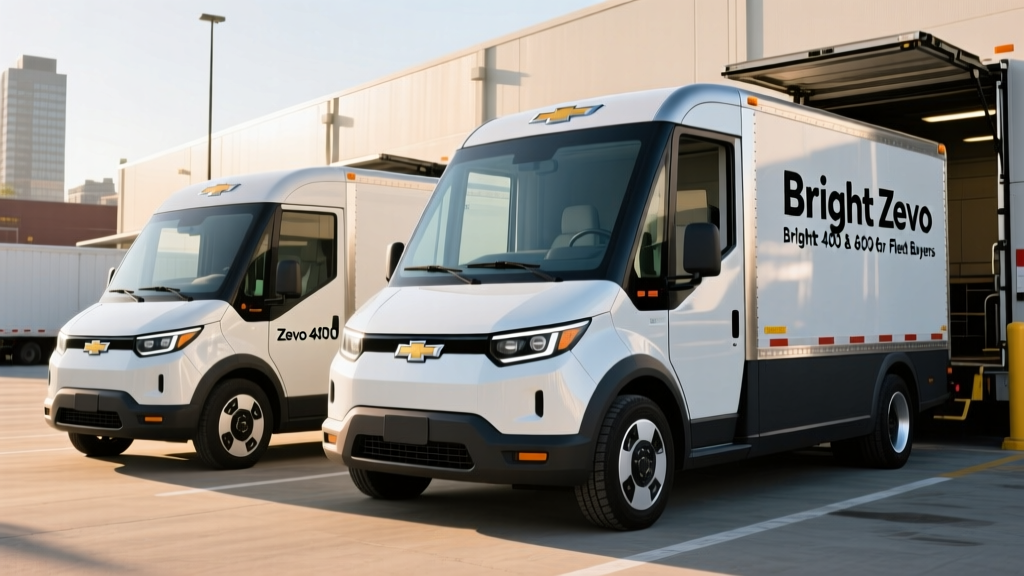
Quick Answer: The Chevy electric box truck lineup — sold under GM's BrightDrop brand as the Zevo 400 (compact) and Zevo 600 (full-size) — targets last-mile delivery fleets with 160–272 miles of EPA-estimated range, up to 150 kW DC fast charging, and payloads up to 2,200 lbs. For fleets running predictable daily routes under 200 miles with depot charging, total cost of ownership (TCO) undercuts comparable gas box trucks by $0.15–$0.25/mile. However, if your routes exceed 250 miles daily, you lack depot charging infrastructure, or you operate in extreme cold climates, a conventional gas or diesel step van remains the more practical choice for now.
GM launched BrightDrop as a commercial EV division to compete directly with Ford's E-Transit and Rivian's EDV (built for Amazon). The Zevo 400 and Zevo 600 are the core products — purpose-built electric delivery vans with box-truck cargo volumes. FedEx was an early fleet customer, and by 2026, thousands of units are in active service across North America. If you're a fleet manager or small business owner researching a Chevy electric box truck, here's the data-driven breakdown you need.
BrightDrop Zevo 400 vs. Zevo 600: Spec Comparison
| Specification | Zevo 400 | Zevo 600 |
|---|---|---|
| EPA-Estimated Range | ~160 miles | ~272 miles |
| Battery Capacity (usable) | ~65 kWh (NMC) | ~120 kWh (NMC) |
| Cargo Volume | ~412 cu ft | ~615 cu ft |
| Max Payload | ~2,200 lbs | ~2,000 lbs |
| Peak DC Fast Charge Rate | 120 kW | 150 kW |
| 10–80% DC Charge Time | ~45 minutes | ~50 minutes |
| Level 2 AC Charging | 11.5 kW | 11.5 kW |
| Motor Output | ~200 hp / 320 lb-ft | ~300 hp / 390 lb-ft |
| Drive Type | Rear-Wheel Drive | Rear-Wheel Drive |
| Starting MSRP (est.) | ~$55,000 | ~$75,000 |
| Powertrain Warranty | 5 yr / 60,000 mi | 5 yr / 60,000 mi |
| Battery Warranty | 8 yr / 100,000 mi | 8 yr / 100,000 mi |
Source: BrightDrop official vehicle specs. Specs reflect 2025–2026 model-year data. MSRP figures are estimates based on fleet pricing disclosures and may vary by configuration and volume order.
Real-World Range Reality: The Zevo 600's EPA estimate of 272 miles assumes mixed driving with moderate payload and mild temperatures. In real-world fleet testing, expect 200–240 miles with a full load in 70°F weather. In cold climates (below 30°F), range drops to approximately 160–190 miles due to battery chemistry limitations and cabin/cargo heating demands. The Zevo 400's 160-mile EPA figure translates to roughly 120–140 miles in cold weather with payload. Plan your routes around the worst-case scenario, not the sticker.
TCO: Chevy Electric Box Truck vs. Gas Step Van
The purchase price of a BrightDrop Zevo is significantly higher than a comparable gas-powered Ford E-Series cutaway or Ram ProMaster. But fleet economics are about cost-per-mile over 5–7 years, not sticker price. Here's how the numbers stack up for a typical delivery fleet running 15,000 miles/year:
| Cost Factor (5-Year / 75,000 mi) | BrightDrop Zevo 600 (EV) | Gas Step Van (V8) |
|---|---|---|
| Purchase Price (base) | $75,000 | $48,000 |
| Federal Tax Credit (§30D / 45W) | Up to $7,500* | $0 |
| Fuel / Electricity (75k mi) | ~$6,750 ($0.09/mi) | ~$18,750 ($0.25/mi) |
| Maintenance (5 yr) | ~$2,500 | ~$7,500 |
| Estimated Insurance (5 yr) | ~$12,500 | ~$10,000 |
| Total 5-Year Cost | ~$94,250 | ~$84,250 |
| Cost Per Mile | ~$1.26/mi | ~$1.12/mi |
*Federal §30D clean vehicle credit eligibility depends on MSRP caps, buyer income limits, and battery critical-mineral sourcing requirements. Commercial fleets may qualify under §45W instead. Consult a tax professional for your specific situation.
The EV's higher purchase price and insurance premiums keep the 5-year TCO close to gas. But at year 6–7, the fuel and maintenance savings compound, and the Zevo typically pulls ahead by $8,000–$12,000 over the vehicle's lifetime. Fleet operators who keep vans 7+ years see the strongest ROI.
Charging Infrastructure: What Your Depot Needs
Unlike passenger EVs, commercial box trucks live and die by depot charging. You can't rely on public charging networks for a fleet of 10 delivery vans. Here's the infrastructure reality:
| Charging Level | Power (kW) | Miles Added/Hour | Use Case |
|---|---|---|---|
| Level 1 (120V) | 1.4 kW | ~3–4 mi/hr | Not viable for fleet ops |
| Level 2 (240V, 48A) | 11.5 kW | ~30–35 mi/hr | Overnight depot charging (8–10 hr full charge) |
| DC Fast Charge | Up to 150 kW | ~180+ mi/hr (peak) | Mid-day top-ups, 10–80% in ~50 min |
Depot charging install costs for a fleet of 5–10 Level 2 chargers typically run $30,000–$80,000 including electrical panel upgrades, trenching, chargers, and permitting. DC fast chargers add $40,000–$100,000+ per unit. Many utilities offer commercial EV charging rebates that offset 30–50% of infrastructure costs — check with your local utility before budgeting.
Charge curve reality: The Zevo 600's 150 kW peak rate only holds between roughly 15–55% State of Charge (SoC). Above 60%, the rate tapers to 80–100 kW, and above 80% it drops further to 30–50 kW to protect battery health. Plan mid-day charging sessions around 10–80%, not 0–100%.
Federal Tax Credits and Fleet Incentives
For 2026, two main federal pathways exist for electric commercial vehicles:
- §30D Clean Vehicle Credit: Up to $7,500 for individual/small-business buyers. Subject to MSRP caps ($80,000 for vans/trucks), buyer income limits ($300k joint / $150k single), and battery critical-mineral and component sourcing rules. Point-of-sale transfer available.
- §45W Commercial Clean Vehicle Credit: Up to $7,500 for vehicles under 14,000 lbs GVWR (both Zevo models qualify). Available to tax-exempt entities and businesses. No income cap, but the vehicle must be used for business and meet the same sourcing requirements. Cannot be combined with §30D.
- State/Local Incentives: California's HVIP, New York's Truck Voucher Incentive Program, and similar state programs can stack $10,000–$40,000 on top of federal credits for commercial EVs. Check AFDC's incentive database for your state.
- Utility Rebates: Many utilities offer $2,000–$10,000 per commercial charger installed, plus reduced commercial EV electricity rates for off-peak charging.
Important: Battery sourcing requirements under the Inflation Reduction Act have tightened annually. Verify current-year eligibility on IRS.gov before relying on credit amounts in your budget.
Common Misconceptions About Electric Box Trucks
| Myth | Fact |
|---|---|
| "Electric box trucks can't handle full payload." | The Zevo 600 carries up to 2,000 lbs. Heavy payloads reduce range by ~15–20%, but the vehicle is rated and warrantied for full-load operation. |
| "Charging takes too long for delivery routes." | Most delivery fleets charge overnight at the depot (8–10 hours on Level 2). Mid-day DC fast charging adds ~150 miles in 30 minutes — enough for a second route leg. |
| "EV batteries won't last the life of the van." | GM warranties the Zevo battery for 8 years / 100,000 miles at 70%+ capacity retention. NMC batteries in commercial service typically retain 80–85% capacity at 150,000 miles based on early fleet data. |
| "Cold weather makes electric vans unusable." | Cold weather reduces range by 25–35%. For fleets in Minnesota or Maine, this means planning for 160–190 mile winter range on the Zevo 600. Route planning and depot preconditioning mitigate this, but it's a real limitation. |
| "The Chevy electric box truck is just a rebranded van." | The BrightDrop Zevo is a ground-up EV platform with a low-floor design, integrated telematics, and eCubic cargo management. It shares no platform with GM's ICE vans. |
Decision Framework: Should You Buy a Chevy Electric Box Truck?
Choose the BrightDrop Zevo (Chevy electric box truck) if:
- Your daily routes are under 200 miles (Zevo 600) or 120 miles (Zevo 400)
- You have — or can install — depot Level 2 charging
- Your fleet operates in moderate climates, or you can accept 25–35% winter range loss
- You plan to keep vehicles 6+ years to capture TCO savings
- You qualify for federal §45W or §30D credits plus state incentives
- Regenerative braking and zero idling align with your urban delivery patterns
Stick with a gas/diesel step van if:
- Your routes regularly exceed 250 miles/day
- You lack depot space or electrical capacity for charger installation
- You operate in extreme cold (-10°F or below) where range loss exceeds 40%
- You need to tow heavy trailers (the Zevo is not rated for heavy towing)
- Your fleet turnover is under 4 years (TCO advantage doesn't materialize)
First-Time EV Fleet Buyer Checklist
If this is your fleet's first electric vehicle, here's what you need to address before signing a purchase order:
- Electrical assessment: Have a licensed electrician evaluate your depot's panel capacity. A 5-charger Level 2 installation may require a 400A service upgrade ($10,000–$25,000).
- Utility engagement: Contact your utility 6+ months before vehicle delivery. Demand charges, time-of-use rates, and make-ready programs vary dramatically and affect your per-mile electricity cost.
- Route analysis: Map your longest daily route, add a 20% buffer, and compare to worst-case winter range. If the number exceeds the Zevo's capacity, the vehicle isn't right for that route.
- Driver training: Regenerative braking, one-pedal driving, and preconditioning workflows require driver onboarding. Budget 2–4 hours of training per driver.
- Telematics integration: BrightDrop includes connected fleet management software. Verify API compatibility with your existing dispatch and routing systems.
- Maintenance plan: EVs eliminate oil changes, transmission service, and exhaust repairs — but tire wear is higher due to instant torque and vehicle weight. Budget for 20–30% faster tire replacement cycles.
Frequently Asked Questions
Is the BrightDrop Zevo actually a Chevy?
BrightDrop is a General Motors brand, and the Zevo vans are built on GM's Ultium battery platform — the same architecture underpinning the Chevy Silverado EV and Blazer EV. While badged as BrightDrop rather than Chevrolet, they're sold through GM's commercial dealer network and serviced at Chevy/GM commercial service centers. When people search for a "Chevy electric box truck," the BrightDrop Zevo is what they'll find.
How much does it cost to charge a BrightDrop Zevo 600 overnight?
The Zevo 600's ~120 kWh battery, charged from 10% to 100% at a commercial electricity rate of $0.12/kWh, costs approximately $13–$14. At 0.35 kWh/mile efficiency and 272 miles of range, that's roughly $0.04–$0.05 per mile for electricity — compared to $0.22–$0.28/mile for a gas step van at 10 MPG and $3.50/gallon.
Can I fast-charge a BrightDrop on public networks?
Yes. The Zevo 600 uses the CCS1 connector (with NACS adapter availability expanding in 2026). You can use Electrify America, EVgo, and other public DC fast-charging networks. However, commercial depot charging is far more practical and cost-effective for daily fleet operations. Public charging should be reserved for emergencies or supplemental mid-route top-ups.
What is the BrightDrop Zevo's safety rating?
As a commercial vehicle, the Zevo falls under different NHTSA testing protocols than passenger cars. It includes standard automatic emergency braking, lane-keeping assist, and a comprehensive camera system. GM reports the Ultium battery pack exceeds federal crash safety standards for commercial EVs. Check NHTSA.gov for the latest commercial vehicle safety data.
How does the BrightDrop compare to the Ford E-Transit?
The Ford E-Transit offers ~126 miles of EPA range and a lower starting price (~$45,000), making it suited for shorter urban routes. The Zevo 600's 272-mile range and larger cargo volume justify its higher price for longer or heavier routes. The E-Transit wins on upfront cost; the Zevo 600 wins on range and payload flexibility.