The Chevy Electric Work Van: What Fleet Buyers Need to Know in 2026
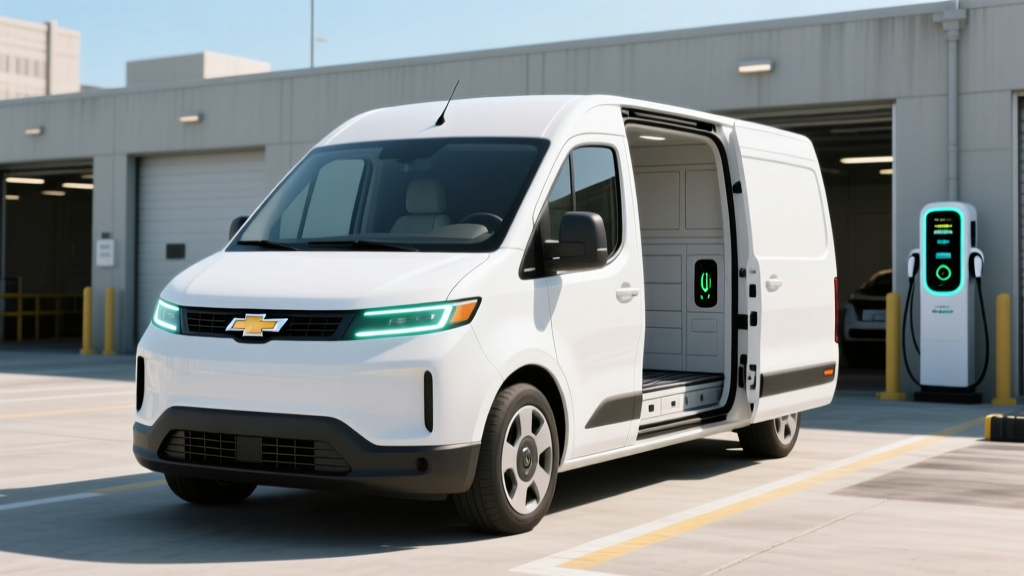
Bottom line: The 2026 Chevy BrightDrop Zevo 600 is GM's flagship electric work van, offering an EPA-estimated 250 miles of range from a 160 kWh Ultium battery, up to 2,000 lbs of payload, and 205 kW DC fast charging (10–80% in ~45 minutes). Starting around $74,000 before incentives, it targets last-mile delivery fleets and tradespeople who can depot-charge overnight. For routes under 200 miles/day with Level 2 access, the Zevo 600 cuts per-mile operating costs by 40–60% versus a comparable gas van. But if your routes regularly exceed 220 highway miles or you lack depot charging, a gas Ford Transit or E-Transit (shorter range, lower price) may fit better.
GM restructured the BrightDrop brand in late 2024, folding it into the Chevrolet commercial lineup. The Zevo 600 (formerly the EV600) now wears a Chevy bowtie and shares the Ultium platform with the Silverado EV and Blazer EV. For 2026, the van gets a mild software update improving regenerative braking efficiency and adding enhanced route-optimization via the BrightDrop fleet management suite. The Zevo 400 (shorter wheelbase, ~150-mi range) was discontinued after 2025, leaving the Zevo 600 as the sole configuration.
This guide covers the Zevo 600's real-world range, charging logistics, total cost of ownership versus gas work vans, federal incentive eligibility, and a practical decision framework for fleet managers and independent contractors.
Specs at a Glance: 2026 Chevy BrightDrop Zevo 600
| Specification | 2026 Zevo 600 |
|---|---|
| EPA Range | 250 miles (est.) |
| Real-World Range (mixed route/highway) | ~190–220 miles |
| Battery Capacity | 160 kWh usable (NMC Ultium) |
| Battery Chemistry | NMC (Nickel Manganese Cobalt) |
| Peak DC Fast Charge Rate | 205 kW |
| 10–80% DC Charge Time | ~45 minutes |
| Level 2 AC Charge Rate | 19.2 kW (requires 100A circuit) |
| Level 2 Full Charge Time (0–100%) | ~9 hours |
| Motor / Drivetrain | Dual-motor AWD, 300 hp, 390 lb-ft |
| 0–60 mph | ~7.5 seconds |
| Payload Capacity | Up to 2,000 lbs |
| Cargo Volume | 615 cu ft |
| GVWR | 9,990 lbs (under CDL threshold) |
| Towing | Not rated |
| Starting MSRP (1LT Commercial) | ~$74,000 |
| Battery Warranty | 8 years / 100,000 miles |
| Vehicle Warranty | 3 years / 36,000 mi bumper-to-bumper; 5 yr / 60,000 mi powertrain |
Real-World Range Reality: The EPA 250-mile figure assumes mixed urban/suburban driving at moderate speeds. Delivery routes with frequent stops and regen-heavy driving often achieve 230–250 miles. Highway-heavy routes at 70+ mph drop to ~180–200 miles. In cold weather (below 30°F), expect a 15–25% reduction — plan for ~160–190 miles of usable range in winter. The Zevo 600 includes a heat pump, which mitigates cabin-heating losses compared to resistive heaters, but battery chemistry still slows in deep cold.
Charging Logistics: Depot, Public, and the 19.2 kW Advantage
The Zevo 600's 160 kWh battery is massive — larger than most passenger EVs — and that changes the charging calculus. You cannot rely on a standard 120V outlet (Level 1) for any meaningful fleet operation; it would take over 100 hours for a full charge.
| Charging Level | Power (kW) | Miles Added per Hour | Full Charge Time |
|---|---|---|---|
| Level 1 (120V / 12A) | ~1.4 kW | ~3 mi/hr | ~115 hours |
| Level 2 (240V / 48A) | 11.5 kW | ~26 mi/hr | ~15 hours |
| Level 2 (240V / 80A, recommended) | 19.2 kW | ~43 mi/hr | ~9 hours |
| DC Fast Charge (peak 205 kW) | 205 kW | ~460 mi/hr (peak) | 10–80% in ~45 min |
Depot charging is non-negotiable for fleet viability. Most Zevo 600 buyers install one or more 19.2 kW Level 2 chargers at their facility. At that rate, a van plugged in at 6 PM after a route is fully charged by 3 AM — ready for the next morning. Commercial-grade Level 2 stations (such as ChargePoint CT4000-series or Blink HQ 200) cost $2,500–$5,000 per unit, plus installation.
DC fast charging at 205 kW is useful for mid-shift top-ups or en-route emergencies, but the Zevo 600's large battery means even at peak rate, a 10–80% session takes about 45 minutes. The charge curve tapers significantly above 80% — expect 80–100% to add another 25–30 minutes. Fleet operators should plan routes around depot charging, not public DC infrastructure.
The Zevo 600 uses the CCS1 connector for DC charging and J1772 for Level 2. GM has been transitioning its passenger fleet to NACS (Tesla-style), but as of 2026 the commercial vans retain CCS for compatibility with existing fleet depot chargers. A NACS adapter is available for Supercharger access if needed.
Zevo 600 vs. Gas Work Vans: Cost & Capability Showdown
The natural comparison is the Ford Transit T-250 (gas) and the Ford E-Transit (electric). Here's how the Zevo 600 stacks up on the metrics that matter to fleet managers.
| Metric | Chevy Zevo 600 (EV) | Ford Transit T-250 (Gas) | Ford E-Transit (EV) |
|---|---|---|---|
| Base MSRP | ~$74,000 | ~$47,000 | ~$55,000 |
| EPA Range | 250 mi | ~430 mi (31-gal tank) | 126 mi |
| Fuel/Energy Cost per Mile | ~$0.07 (at $0.13/kWh) | ~$0.20 (at $3.40/gal, 17 mpg) | ~$0.07 |
| Annual Fuel/Energy (15k mi) | ~$1,050 | ~$3,000 | ~$1,050 |
| Estimated Annual Maintenance | ~$400 | ~$1,200 | ~$400 |
| Payload | 2,000 lbs | 3,300 lbs | 3,800 lbs |
| Cargo Volume | 615 cu ft | 487 cu ft (medium roof) | 487 cu ft |
| Tax Credit Eligibility | Up to $7,500 (§30D) or commercial credit | None | Up to $7,500 |
Key takeaway: The Zevo 600 costs roughly $27,000 more upfront than a gas Transit, but saves approximately $2,750 per year in fuel and maintenance. That payback period is roughly 7–10 years without incentives — or 4–6 years with the full $7,500 federal credit and any applicable state/utility rebates. The E-Transit is cheaper upfront but offers only 126 miles of range, making it viable only for tight urban routes under 100 miles/day.
The Zevo 600's payload (2,000 lbs) trails the gas Transit (3,300 lbs) significantly. If your business regularly hauls 2,500+ lbs of equipment or materials, the electric van's weight savings from the battery don't fully offset the GVWR limitation. For parcel delivery, catering, or trade work with lighter loads, 2,000 lbs is ample.
Total Cost of Ownership: 5-Year Fleet Breakdown
| Cost Category (5 Years / 75,000 mi) | Chevy Zevo 600 | Ford Transit Gas |
|---|---|---|
| Purchase Price (base) | $74,000 | $47,000 |
| Federal Tax Credit (§30D or §45W) | −$7,500 | $0 |
| Net Purchase | $66,500 | $47,000 |
| Depot Charger Install (1x Level 2) | $5,500 | $0 |
| Fuel / Energy (75k mi) | $5,250 | $15,000 |
| Maintenance (5 yr) | $2,000 | $6,000 |
| Insurance (5 yr est.) | $9,500 | $7,500 |
| Estimated Resale Value (5 yr) | −$28,000 | −$18,000 |
| Total 5-Year Net Cost | $60,750 | $57,500 |
The 5-year TCO gap narrows to about $3,250 — and that's before factoring in state incentives (which can add $2,500–$7,500 in states like California, New York, or Colorado), utility demand-response rebates, or reduced downtime from fewer maintenance visits. For fleets running vans 6 days/week, the maintenance savings compound: no oil changes, no transmission fluid, no spark plugs, and regenerative braking extends pad life to 80,000+ miles.
Insurance caveat: Commercial EV insurance premiums run 15–25% higher than equivalent gas vans due to higher repair costs for battery-adjacent damage and specialized technician requirements. Get quotes from commercial carriers (Progressive Commercial, Liberty Mutual, Hartford) before committing.
Federal Tax Credits: §30D vs. §45W Commercial Credit
The Zevo 600 qualifies for federal incentives, but the specific credit depends on how the van is titled and who buys it. Per IRS guidelines, there are two paths:
§30D Clean Vehicle Credit (personal/sole-proprietor use):
- Up to $7,500 credit ($3,750 for critical minerals + $3,750 for battery components)
- Buyer income caps: $150K single / $300K joint (modified AGI)
- MSRP cap for vans: $80,000 (Zevo 600 qualifies at ~$74K base)
- Battery sourcing requirements must be met — verify current-year compliance with your dealer
- Point-of-sale transfer available (dealer reduces price by credit amount at purchase)
§45W Commercial Clean Vehicle Credit (fleet/corporate use):
- Up to $7,500 for vehicles under 14,000 lbs GVWR (Zevo 600 at 9,990 lbs qualifies)
- No income caps or MSRP caps — available to businesses of any size
- No battery-sourcing restrictions (as of current IRS guidance)
- Cannot be combined with §30D — it's one or the other
- Claimed on business tax return (Form 8936 equivalent); no point-of-sale transfer
Fleet buyers purchasing 5+ units should consult a tax professional about stacking §45W with state and utility incentives, which can bring effective per-unit cost well below a gas van.
Real-World Ownership: What Fleet Managers Actually Experience
Route predictability is everything. The Zevo 600 excels on fixed delivery loops — think parcel last-mile, food distribution, or service calls within a metro area. Fleets report that GPS-integrated route planning (via BrightDrop's software or third-party tools like Route4Me) helps drivers stay within the 200-mile comfort zone. If your routes vary wildly day-to-day or include long intercity stretches, the range limitation becomes a real operational constraint.
Cold-weather planning. In northern climates (Chicago, Minneapolis, Boston), winter range drops to 160–190 miles. The heat pump helps, but battery chemistry inherently loses efficiency below freezing. Fleets in cold regions should plan for 20% more vehicles to cover the same routes, or install DC fast chargers at depots for mid-shift top-ups.
Depot electrical upgrades. Installing a single 19.2 kW Level 2 charger requires a dedicated 100-amp 240V circuit. Many commercial buildings need a panel upgrade ($3,000–$8,000) or even a utility transformer upgrade for multiple chargers. Engage a licensed commercial electrician and your utility early — lead times for panel work can stretch 2–4 months.
Driver acceptance. Operators consistently report that drivers prefer the Zevo 600 over gas vans once acclimated: instant torque from a stop, one-pedal regenerative driving in stop-and-go traffic, a quieter cabin, and no exhaust fumes in enclosed loading areas. The main complaint is the firm ride when unloaded — the heavy battery and stiff rear suspension (designed for payload) make an empty Zevo feel jarring over potholes.
Common Misconceptions About the Chevy Electric Work Van
| Myth | Fact |
|---|---|
| "It can't handle a full day's work" | Average last-mile delivery routes are 80–140 miles/day. The Zevo 600's 250-mile EPA range covers this with margin, even in cold weather. |
| "Charging takes too long for commercial use" | Overnight depot charging at 19.2 kW fully replenishes the battery in ~9 hours — perfect for next-morning dispatch. Mid-day DC top-ups add ~100 miles in 20 minutes. |
| "The battery will need expensive replacement in a few years" | GM's Ultium NMC batteries are warrantied for 8 years/100,000 miles at 70%+ capacity retention. Fleet data from early BrightDrop adopters shows ~5% degradation at 60,000 miles — well within warranty. |
| "It qualifies for the full $7,500 tax credit for everyone" | §30D has income caps, MSRP caps, and battery-sourcing requirements. §45W (commercial) has fewer restrictions. Eligibility varies — verify with your tax advisor and dealer before purchasing. |
| "Any electrician can install the charger" | A 19.2 kW charger requires a 100A dedicated circuit. Many commercial buildings need panel upgrades. Always use a licensed electrician experienced with commercial EVSE. |
Decision Framework: Is the Zevo 600 Right for Your Operation?
Choose the Chevy BrightDrop Zevo 600 if:
- Your daily routes are under 200 miles (or under 160 miles in cold climates)
- You have depot/facility parking with access to 240V electrical infrastructure
- You run 5–6 days/week and can charge overnight between shifts
- Your typical payload is under 2,000 lbs
- You want to reduce per-mile operating costs and maintenance downtime
- You qualify for §30D or §45W tax credits plus state/utility incentives
Stick with a gas Ford Transit (or consider the E-Transit) if:
- Your routes regularly exceed 220 miles or vary unpredictably
- You lack depot charging access and can't install it
- You regularly haul 2,500+ lbs of payload
- Your budget is under $50,000 per vehicle and you can't absorb the upfront premium
- You operate in extreme cold climates without mid-shift charging infrastructure
- Your routes include remote/rural areas with no DC fast-charging access
Frequently Asked Questions
What is the real-world range of the Chevy BrightDrop Zevo 600?
The EPA estimates 250 miles. In real-world delivery use with frequent stops and regen braking, expect 220–250 miles. Highway-heavy driving at 70+ mph drops that to ~180–200 miles. In freezing temperatures, plan for 160–190 miles.
How long does it take to charge the Zevo 600?
At a 19.2 kW Level 2 depot charger, a full 0–100% charge takes about 9 hours. On a DC fast charger at peak 205 kW, 10–80% takes approximately 45 minutes. Level 1 (120V) is impractical for commercial use at over 100 hours for a full charge.
Does the Zevo 600 qualify for the $7,500 federal tax credit?
It can, but eligibility depends on your situation. Under §30D (personal/sole-proprietor), you must meet income caps ($150K single/$300K joint), the van must be under the $80K MSRP cap (it qualifies), and battery-sourcing rules must be satisfied. Under §45W (commercial/fleet), there are no income or MSRP caps. Consult a tax professional and verify current-year rules at IRS.gov.
How does the Zevo 600 compare to the Ford E-Transit?
The Zevo 600 offers nearly double the range (250 vs. 126 miles EPA) and more cargo volume (615 vs. 487 cu ft), but costs ~$19,000 more upfront. The E-Transit works for ultra-short urban routes; the Zevo 600 covers longer suburban and mixed routes. Both save similarly on fuel and maintenance vs. gas.
What does it cost to install a depot charger for the Zevo 600?
A commercial 19.2 kW Level 2 charger unit costs $2,500–$5,000. Installation (dedicated 100A circuit, conduit, permitting) typically runs $3,000–$8,000 depending on your building's electrical panel. Total per-station cost: $5,500–$13,000. If your panel needs an upgrade, add $3,000–$8,000 more.
How long will the Ultium battery last before needing replacement?
GM warrants the battery for 8 years or 100,000 miles with at least 70% capacity retention. Early fleet data suggests ~5% degradation at 60,000 miles. Full battery replacement (if ever needed out of warranty) is estimated at $15,000–$22,000, but most fleet vehicles are retired or sold before reaching that point.
Can the Zevo 600 tow a trailer?
No. The Zevo 600 is not rated for towing. If your operation requires pulling a trailer, a gas Transit or heavy-duty van remains the better choice.
For current EPA efficiency data, see the Zevo 600 listing on fueleconomy.gov. For safety ratings and crash-test results when available, check NHTSA.gov.