The Chevy Bolt's Footprint: Width, Length, and Garage Fit
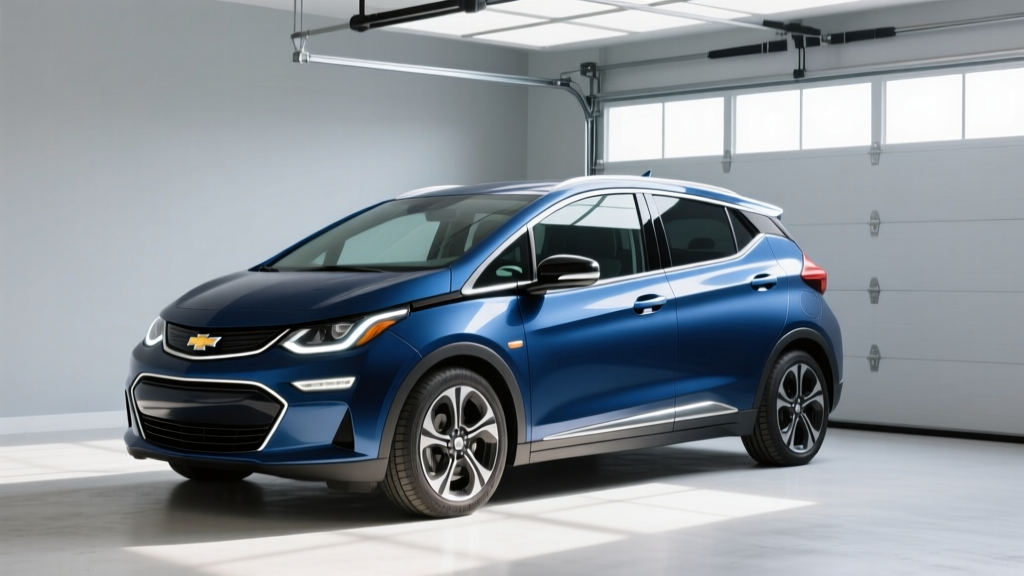
Shoppers searching for Chevy Bolt width usually have a practical concern: will it fit in a tight garage, narrow driveway, or compact parking space? The short answer is yes — the Bolt remains one of the most space-efficient EVs on the market. Here are the exact exterior dimensions for the current-generation Chevrolet Bolt EV:
| Measurement | Specification |
|---|---|
| Overall Width (without mirrors) | 69.5 inches (1,765 mm) |
| Overall Width (with mirrors) | 79.4 inches (2,017 mm) |
| Overall Length | 163.2 inches (4,145 mm) |
| Overall Height | 62.9 inches (1,598 mm) |
| Wheelbase | 102.4 inches (2,601 mm) |
| Ground Clearance | 5.9 inches (150 mm) |
| Curb Weight | ~3,563 lbs |
At 69.5 inches wide (body only), the Bolt is roughly 5 inches narrower than a Tesla Model Y and nearly 8 inches narrower than a Ford Mustang Mach-E. That compact track width translates directly to easier parallel parking and more breathing room in older single-car garages. The Bolt EUV (the longer-wheelbase sibling) shares the same width but stretches to 169.5 inches in length — something to note if your garage depth is tight.
Range, Battery, and Real-World Efficiency
The current Bolt EV is powered by a 65 kWh (usable) lithium-ion battery pack using NMC (nickel manganese cobalt) pouch-cell chemistry supplied by LG Energy Solution and assembled at GM's Brownstown, Michigan plant. Unlike some competitors that have shifted to LFP chemistry, GM has stuck with NMC for its higher energy density, which is how the Bolt achieves over 250 miles of range from a physically small pack.
EPA Range vs. Real-World Expectations
EPA Estimated Range: 259 miles (Bolt EV) / 247 miles (Bolt EUV)
Real-World Range: Expect 230–250 miles in mixed city/highway driving at moderate temperatures. Sustained highway speeds above 70 mph drop range to approximately 200–220 miles. In sub-freezing winter conditions (20°F and below), range can fall to 170–195 miles due to cabin heating demands and reduced battery efficiency — a roughly 25–35% loss typical of NMC packs without a dedicated heat pump.
Efficiency: 120 MPGe combined (28 kWh/100 mi) per fueleconomy.gov
For context, the Bolt's 28 kWh per 100 miles is competitive with the Hyundai Kona Electric and slightly less efficient than the Tesla Model 3 RWD (~25 kWh/100 mi). City drivers who lean on regenerative braking will see their best numbers — the Bolt's one-pedal driving mode is among the most aggressive in the segment, allowing near-complete stops without touching the brake pedal.
Charging Speed: DC Fast, Level 2, and Level 1
Charging remains the Bolt's most-discussed limitation. The current-generation Bolt is capped at 55 kW peak DC fast-charging — a figure that trails nearly every modern competitor. GM has stated that the next-generation Bolt (built on the Ultium platform) will feature significantly faster DC charging, but that model has not yet begun customer deliveries. If you are purchasing the current Bolt today, here is what to expect:
| Charging Level | Power / Rate | Speed (Miles of Range Added) |
|---|---|---|
| Level 1 (120V household) | ~1.2 kW | ~4 miles per hour |
| Level 2 (240V, 32A) | 7.7 kW | ~25 miles per hour |
| Level 2 (240V, 48A) | 11.5 kW | ~37 miles per hour |
| DC Fast Charge (CCS) | 55 kW peak | 10–80% in ~60 minutes |
The 10–80% DC fast-charge time of roughly 60 minutes means the Bolt is best suited for drivers who charge primarily at home or at work and only occasionally rely on public DC fast chargers. On a road trip, plan for longer stops — the charge curve holds near 55 kW up to roughly 55% State of Charge, then tapers to ~38 kW through 80%, and drops further above 80%. At a 350 kW Electrify America station, the Bolt will pull only what its onboard system allows — you won't benefit from higher-power chargers.
Level 2 home charging at 11.5 kW (48 amps, hardwired) will replenish a depleted battery in about 6.5 hours, which is adequate for overnight top-ups. Most owners will find a 32-amp Level 2 charger (7.7 kW) sufficient, delivering a full charge in roughly 9.5 hours.
Performance and Drivetrain
The Bolt is a front-wheel-drive, single-motor EV — no AWD option exists. The permanent-magnet electric motor produces 200 horsepower and 266 lb-ft of torque, delivered instantly from a standstill.
| Metric | Specification |
|---|---|
| Drivetrain | Front-Wheel Drive (FWD) |
| Motor Type | Single permanent-magnet synchronous |
| Horsepower | 200 hp |
| Torque | 266 lb-ft |
| 0–60 mph | ~6.5 seconds |
| Top Speed | 93 mph (electronically limited) |
The 6.5-second 0–60 time is respectable for daily driving and highway merging. Where the Bolt falls short is spirited driving — the FWD layout and eco-oriented tires (typically Michelin Energy Saver) prioritize efficiency over grip. Torque steer is noticeable under hard acceleration from a stop. That said, the low center of gravity from the under-floor battery pack gives the Bolt surprisingly composed handling for a tall hatchback.
Interior Space, Cargo, and Passenger Comfort
Despite its narrow 69.5-inch width, the Bolt's interior packaging is efficient. The upright hatchback design maximizes headroom, and the flat floor (no transmission tunnel) improves legroom for the middle rear passenger.
| Measurement | Bolt EV | Bolt EUV |
|---|---|---|
| Front Headroom | 40.2 in | 40.0 in |
| Front Legroom | 42.1 in | 42.1 in |
| Rear Headroom | 37.8 in | 38.1 in |
| Rear Legroom | 35.7 in | 39.1 in |
| Cargo (behind rear seats) | 16.6 cu ft | 16.3 cu ft |
| Cargo (rear seats folded) | 57.0 cu ft | 56.9 cu ft |
Rear legroom in the standard Bolt EV is snug — adults over 6 feet will find knees close to the front seatbacks. The EUV's 3.4-inch wheelbase stretch directly benefits rear passengers with 39.1 inches of legroom, making it the better choice for families. Cargo volume is competitive with a Honda HR-V or Toyota Corolla Cross — adequate for weekly groceries, two carry-on suitcases, or a folded stroller.
Pricing, Trims, and Federal Tax Credit Eligibility
GM's aggressive 2024 price cut on the Bolt established it as one of the most affordable new EVs in the U.S., and the current model continues that value positioning. Here is the trim and pricing breakdown:
| Trim | Base MSRP | Est. After §30D Credit* |
|---|---|---|
| Bolt EV 1LT | ~$26,500 | ~$19,000 |
| Bolt EV 2LT | ~$29,200 | ~$21,700 |
| Bolt EUV LT | ~$28,800 | ~$21,300 |
| Bolt EUV Premier | ~$32,400 | ~$24,900 |
*Federal tax credit estimates assume buyer eligibility. See rules below.
IRS §30D Federal EV Tax Credit — Eligibility Checklist
- Maximum credit: Up to $7,500 (split: $3,750 for critical minerals + $3,750 for battery component sourcing)
- MSRP cap: Vehicle must be under $55,000 (sedans) or $80,000 (SUVs/trucks/vans) — the Bolt qualifies easily
- Buyer income cap: AGI must not exceed $150,000 (single), $225,000 (head of household), or $300,000 (joint filers)
- Battery sourcing: Critical minerals and battery components must meet phased-in domestic/free-trade sourcing thresholds per IRS guidelines — verify current Bolt eligibility at the point of sale, as sourcing rules tighten annually
- Point-of-sale transfer: Eligible buyers can transfer the credit to the dealer for an immediate price reduction at purchase
Consult a tax professional to confirm your personal eligibility. Rules change annually and partial credits ($3,750) are possible if only one sourcing requirement is met.
Tech, Driver Assists, and Standout Features
The Bolt comes standard with an 8-inch digital instrument cluster and a 10.2-inch diagonal infotainment touchscreen running Chevrolet's latest infotainment software with wireless Apple CarPlay and Android Auto. The available Super Cruise hands-free driving system (on EUV Premier) operates on over 400,000 miles of compatible highways — but this is a SAE Level 2 system requiring full driver attention, not autonomous driving.
Standard driver-assistance features include:
- Automatic Emergency Braking with pedestrian detection
- Lane Keep Assist with Lane Departure Warning
- Following Distance Indicator
- IntelliBeam automatic high beams
- Rear Vision Camera (surround-view available on 2LT/Premier)
Notable drawbacks include the absence of a heat pump (reducing cold-weather efficiency), relatively hard plastics on lower door panels, and the lack of a spare tire (a tire inflator kit is standard). There is also no front trunk (frunk) — the space under the hood is occupied by the power electronics and charge hardware.
Battery and Vehicle Warranty
GM backs the Bolt's battery and electric drive components with an 8-year/100,000-mile limited warranty (whichever comes first), covering defects and capacity loss below a specified threshold (typically 60% retained capacity). The vehicle limited warranty is 3 years/36,000 miles bumper-to-bumper and 5 years/60,000 miles powertrain.
Long-term degradation data on the current Bolt's 65 kWh NMC pack suggests roughly 8–12% capacity loss over the first 100,000 miles based on fleet-owner reports and Recurrent Auto battery data. This is in line with liquid-cooled NMC packs industry-wide. To maximize battery longevity, GM recommends keeping State of Charge between 20% and 80% for daily use and using the "Target Charge Level" setting in the infotainment system.
Pros, Cons, and Who Should Buy the Bolt
Pros
- One of the lowest MSRP EVs available — under $20K after federal credit
- Compact 69.5-inch width ideal for tight garages and urban parking
- 259-mile EPA range is ample for most commutes
- Strong regenerative braking with one-pedal driving
- Wireless CarPlay/Android Auto standard
- Super Cruise availability on EUV trims
Cons
- 55 kW DC fast-charge cap means 60+ minute road-trip stops
- No heat pump — significant cold-weather range loss
- Rear legroom tight in standard Bolt EV (35.7 in)
- No AWD option; FWD only
- No frunk for additional cargo
- CCS connector (no native NACS; adapter required for Tesla Superchargers)
Is the Chevy Bolt Right for You?
Choose the Bolt if: You need an affordable daily commuter with home charging, you have a narrow garage or tight parking situation, your typical drive is under 100 miles round-trip, and you rarely take road trips over 200 miles.
Look elsewhere if: You rely on public DC fast charging, you regularly drive in extreme cold, you need AWD for snow-belt winters, you tow anything, or you frequently carry rear-seat adults on long trips.
Frequently Asked Questions
What is the exact width of the Chevy Bolt?
The Chevrolet Bolt EV is 69.5 inches wide without mirrors and 79.4 inches wide with mirrors extended. The Bolt EUV shares the same width. For garage planning, allow at least 80 inches of clear width for comfortable door opening.
What is the real-world range of the Chevy Bolt?
The EPA rates the Bolt EV at 259 miles. In real-world mixed driving at moderate temperatures, expect 230–250 miles. Highway-heavy driving at 75+ mph reduces this to about 200–220 miles. In freezing weather, range drops to approximately 170–195 miles due to the lack of a heat pump.
How fast does the Chevy Bolt charge?
DC fast charging peaks at 55 kW, with a 10–80% charge taking approximately 60 minutes. At home on a 240V Level 2 charger at 48 amps (11.5 kW), a full charge takes about 6.5 hours. On a standard 120V outlet, expect roughly 4 miles of range per hour of charging.
Does the Chevy Bolt qualify for the federal EV tax credit?
The Bolt's MSRP falls well under the $55,000 cap. Eligibility for the full $7,500 credit depends on your income (AGI limits apply), and the battery's critical-mineral and component sourcing meeting current IRS thresholds. The credit can be transferred to the dealer at point of sale for an immediate price reduction. Always verify current eligibility per IRS §30D rules before purchasing.
Is the Chevy Bolt worth buying over competitors like the Hyundai Kona Electric or Nissan Leaf?
The Bolt offers the best value proposition in its price range — more EPA range per dollar than the Kona Electric (261 mi, ~$33K base) and a significantly larger battery than the Leaf S (149 mi, ~$28K base). Its main weakness is DC charging speed. If you charge primarily at home and want the most affordable long-range EV, the Bolt is difficult to beat. If road-trip charging speed is a priority, the Kona Electric (100+ kW DC) or a used Tesla Model 3 may serve you better.
Will the next-generation Bolt charge faster?
GM has confirmed that the upcoming Ultium-platform Bolt will feature substantially improved DC fast-charging capability, but as of this writing, that model is not yet available for purchase. If fast charging is a dealbreaker, you may want to wait for the next-gen Bolt or consider an alternative.