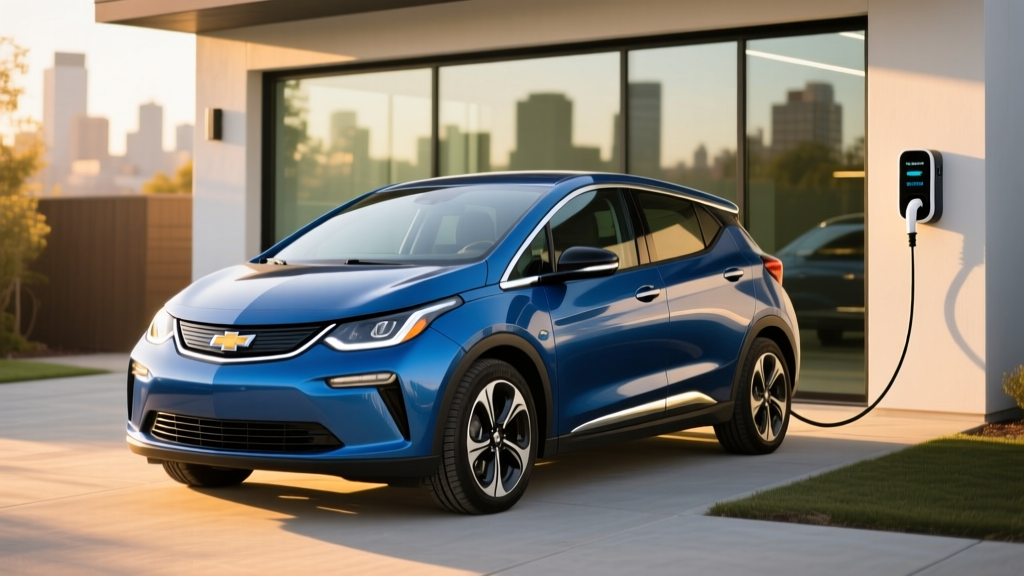
If you've landed here searching for the Chevy Bolt towing capacity, you're not alone — it's one of the most common questions buyers ask before purchasing this compact EV. The short answer: General Motors rates the Bolt EV and Bolt EUV at zero pounds for towing. There is no factory tow hitch, no towing package, and no recommended trailer weight. This is a city-focused, efficiency-first electric hatchback, not a hauler.
That doesn't make the Bolt a bad buy — far from it. It remains one of the most affordable new EVs in America and an outstanding commuter car. But if towing a small utility trailer, bike rack, or camper is on your must-have list, you'll need to look at EVs like the Hyundai Ioniq 5, Ford Mustang Mach-E, or Tesla Model Y. Below, we break down everything else you need to know about the 2026 Bolt: real-world range, charging speeds, pricing after tax credits, and whether it's the right EV for your garage.
Why the Chevy Bolt Has No Towing Rating
GM engineers designed the Bolt platform (BEV2) as a front-wheel-drive compact optimized for interior volume and low curb weight — not for pulling loads. Several factors explain the 0-lb rating:
- No structural tow points: The Bolt's unibody lacks reinforced hitch-mounting points in the rear subframe.
- FWD drivetrain limits: The single front motor (200 hp) already manages traction with ~3,500 lbs of vehicle weight. Adding trailer tongue weight to the rear axle would unload the drive wheels, degrading acceleration and hill-climbing ability.
- Thermal constraints: Sustained high-load towing generates battery and motor heat that the Bolt's thermal management system isn't engineered to dissipate over long grades.
- Regen braking calibration: The one-pedal driving system is tuned for the vehicle's mass; a trailer would alter deceleration dynamics unpredictably.
Some owners install aftermarket hitches for light-duty bike racks or cargo carriers (typically rated under 150 lbs of tongue weight). While this is physically possible, it voids relevant warranty coverage and is not endorsed by GM. If you need even modest towing — say, a 1,000-lb utility trailer — consider stepping up to a crossover EV with a genuine tow rating.
2026 Chevy Bolt EV & EUV: Core Specifications
| Spec | Bolt EV (Hatchback) | Bolt EUV (Crossover) |
|---|---|---|
| EPA Range | 259 miles | 247 miles |
| Battery (usable) | 65 kWh (NMC lithium-ion) | 65 kWh (NMC lithium-ion) |
| Motor / Drivetrain | 200 hp / 266 lb-ft, FWD | 200 hp / 266 lb-ft, FWD |
| 0-60 mph | ~6.5 sec | ~7.0 sec |
| DC Fast Charge (peak) | 55 kW (CCS) | 55 kW (CCS) |
| 10-80% DCFC Time | ~52 minutes | ~52 minutes |
| Level 2 Home Charge | 11.5 kW (~39 mi/hr) | 11.5 kW (~39 mi/hr) |
| EPA Efficiency | 120 MPGe (28 kWh/100 mi) | 115 MPGe (29 kWh/100 mi) |
| Cargo Volume (rear seats up) | 16.6 cu ft | 16.3 cu ft |
| Cargo Volume (rear seats folded) | 57.0 cu ft | 56.9 cu ft |
| Rear Legroom | 36.0 in | 39.1 in |
| Towing Capacity | Not rated (0 lbs) | Not rated (0 lbs) |
| Base MSRP | $26,990 (1LT) | $28,790 (LT) |
Source: EPA fueleconomy.gov, Chevrolet specifications.
Real-World Range: What to Actually Expect
The Bolt EV's EPA-estimated 259 miles is achievable in mild conditions at city speeds. On a 70-mph highway run, expect approximately 215-230 miles. In freezing temperatures (below 32°F), range can drop to 175-200 miles due to cabin heating demands and reduced battery chemistry efficiency. The Bolt does not have a heat pump — it relies on resistive heating, which draws more energy in cold weather.
The Bolt's 65 kWh NMC (nickel-manganese-cobalt) battery pack delivers excellent efficiency at low and moderate speeds. Its relatively low frontal area and modest curb weight (~3,560 lbs for the EV) help it punch above its range class in urban driving. However, the lack of a heat pump is a genuine disadvantage in northern climates compared to competitors like the Hyundai Kona Electric or Nissan Leaf, which offer heat-pump options.
For context, a 200-mile round-trip commute is comfortable in the Bolt EV year-round in most of the U.S. A 250-mile highway trip in January from Chicago to Indianapolis, however, will require a charging stop.
Charging Speeds: Home and DC Fast Charging
| Charging Level | Power (kW) | Miles Added per Hour | Notes |
|---|---|---|---|
| Level 1 (120V outlet) | ~1.2 kW | ~4 mi/hr | Emergency/trickle only |
| Level 2 (240V, 48A) | 11.5 kW | ~39 mi/hr | Full charge in ~6.5 hours |
| DC Fast Charge (CCS) | 55 kW peak | ~170 mi/hr (at peak) | 10-80% in ~52 minutes |
The Bolt's 55 kW peak DC fast-charge rate is its most significant limitation for road-trippers. While competitors in the $35,000-$45,000 range now charge at 150-250 kW, the Bolt's older BEV2 platform caps charging at a rate more typical of 2018-era EVs. On a long trip, you'll spend roughly 50-55 minutes at a DC fast charger to go from 10% to 80% State of Charge (SoC).
The charge curve is relatively flat — the Bolt sustains close to 55 kW from roughly 10-60% SoC before tapering to ~40 kW above 70%. This predictability is actually helpful for trip planning, even if the absolute speed is slow.
At home, the story is much better. The Bolt's 11.5 kW onboard charger is excellent for its class. On a Level 2 home charger (240V, 48-amp circuit), you'll add about 39 miles of range per hour, and a full overnight charge takes roughly 6.5 hours. Most Bolt owners charge exclusively at home and rarely notice the DCFC limitation.
Connector note: The 2026 Bolt uses the CCS1 connector for DC fast charging. GM has committed to transitioning to the NACS (Tesla-style) connector on future models, but the current Bolt retains CCS. Adapters for Tesla Supercharger access are available.
Pricing, Trims & Federal Tax Credit Eligibility
| Trim | MSRP | Est. After §30D Credit | Notes |
|---|---|---|---|
| Bolt EV 1LT | $26,990 | ~$19,490 | Base trim, well-equipped |
| Bolt EV 2LT | $29,390 | ~$21,890 | Adds heated seats, 360 camera |
| Bolt EUV LT | $28,790 | ~$21,290 | More rear legroom, SUV styling |
| Bolt EUV Premier | $32,490 | ~$24,990 | Leather, panoramic sunroof |
The Bolt's pricing is its headline feature: it remains the least expensive new EV with over 250 miles of range in the U.S. market. But the federal tax credit picture requires careful attention.
- Credit amount: Up to $7,500 if battery sourcing and critical minerals requirements are met.
- MSRP cap: Vehicle must be under $55,000 (sedans/hatchbacks) — all Bolt trims qualify.
- Buyer income cap: Modified AGI must not exceed $150,000 (single), $225,000 (head of household), or $300,000 (joint filers).
- Battery sourcing: A percentage of critical minerals and battery components must be sourced from the U.S. or free-trade-agreement countries. These thresholds increase annually — verify current-year requirements at IRS.gov §30D.
- Point-of-sale transfer: Eligible buyers can transfer the credit to the dealer at purchase, reducing the out-of-pocket price immediately.
- Assembly: Final assembly must occur in North America — the Bolt is built in Lake Orion, Michigan. ✓
Credit rules change frequently. Consult a tax professional and verify eligibility on IRS.gov before purchasing.
Driving, Tech & Daily Ownership
The Bolt's 200-hp front motor delivers brisk, linear acceleration that feels quicker than its 0-60 time suggests — common for single-motor EVs with instant torque. Highway merging and passing are effortless. The suspension tuning is comfortable rather than sporty, with noticeable body lean in corners but excellent ride quality over rough pavement.
Standout tech features:
- 10.2-inch touchscreen with wireless Apple CarPlay and Android Auto
- Super Cruise availability on EUV Premier (hands-free highway driving, SAE Level 2 — driver must remain attentive)
- Regen-on-demand paddle behind the steering wheel for adjustable regenerative braking
- One-pedal driving mode for stop-and-go traffic
- Standard Chevy Safety Assist suite (automatic emergency braking, lane-keeping, following distance indicator)
Notable drawbacks:
- Slow DC fast charging (55 kW peak) makes road trips tedious
- No heat pump — cold-weather range suffers more than competitors
- Rear-seat headroom is tight in the EV hatchback (EUV is better)
- CCS connector only — no native NACS/Supercharger access without adapter
- No towing capability whatsoever
Warranty & Battery Longevity
Chevrolet covers the Bolt's battery and powertrain with an 8-year/100,000-mile warranty (whichever comes first), which is standard for the industry. The battery degradation warranty guarantees that the pack will retain at least 60% of its original capacity during the warranty period — though real-world data from Bolt owners suggests degradation is typically well under 10% over the first 100,000 miles.
The NMC chemistry in the Bolt is well-proven. GM's battery thermal management system (liquid-cooled) has shown strong longevity in fleet data. The vehicle limited warranty covers 3 years/36,000 miles bumper-to-bumper.
Is the Bolt Worth It vs. Competitors?
- Lowest MSRP of any 250+ mile EV
- Excellent home charging speed (11.5 kW)
- Spacious cargo area for its footprint
- Eligible for full $7,500 federal credit (verify sourcing)
- Proven battery reliability
- Super Cruise available (EUV)
- Zero towing capacity
- Slow DC fast charging (55 kW)
- No heat pump — cold-weather range loss
- CCS connector (no native NACS)
- Platform dating — BEV2 is a prior generation
- FWD only, no AWD option
Choose the Bolt if: You need an affordable commuter EV, charge primarily at home, rarely drive more than 200 miles in a day, and don't need towing or frequent road trips.
Choose a competitor (Ioniq 5, Mach-E, Model Y) if: You need towing capacity (1,500-3,500 lbs), take regular road trips (faster DC charging matters), live in a cold climate (heat pump advantage), or want AWD.
Frequently Asked Questions
Can I install an aftermarket hitch on the Chevy Bolt for a bike rack?
Some aftermarket companies sell hitches compatible with the Bolt, typically rated for 1.25-inch receivers and under 150 lbs of tongue weight. While physically installable, GM does not endorse this and it may affect warranty coverage on related components. For a two-bike rack (~60 lbs total), the risk is low, but understand you're operating outside manufacturer specifications.
What is the real-world range of the Chevy Bolt in winter?
In sustained temperatures below freezing, expect 175-200 miles from the Bolt EV (versus 259 EPA). The resistive cabin heater draws significant energy. Preconditioning while plugged in helps preserve range. If you live in Minnesota, Maine, or similar climates, budget for ~30% winter range loss.
Does the Chevy Bolt qualify for the $7,500 federal EV tax credit?
The Bolt is assembled in Michigan and priced well under the MSRP cap, so it clears two major hurdles. However, the full $7,500 credit depends on meeting battery critical-minerals and component sourcing thresholds that change annually. As of the 2026 tax year, verify current sourcing compliance on IRS.gov or with your dealer. Income caps also apply.
How does the Bolt's charging speed compare to competitors?
The Bolt's 55 kW peak is slow by 2026 standards. The Hyundai Kona Electric charges at up to 100 kW, the Ioniq 5 at 240 kW, and the Tesla Model 3 at 250 kW. On a road trip, the Bolt will add roughly 100 miles in 30 minutes at a fast charger, while the Ioniq 5 adds nearly 200 miles in 18 minutes. For home-only charging, the Bolt's 11.5 kW Level 2 rate is competitive.
Is the Chevy Bolt EUV better than the EV for families?
The EUV adds 3.1 inches of rear legroom (39.1 vs. 36.0 inches) and slightly easier ingress/egress due to its taller ride height. If you regularly carry rear-seat passengers — especially teens or adults — the EUV is noticeably more comfortable. Cargo space is nearly identical. The trade-off is 12 fewer miles of EPA range and a slightly higher price.
What EV should I buy if I need towing capacity?
For light towing (1,000-2,000 lbs), the Hyundai Ioniq 5 (1,650 lbs) or Volkswagen ID.4 (2,700 lbs) are solid choices. For heavier loads (3,000-5,000 lbs), look at the Ford F-150 Lightning, Rivian R1T, or Tesla Model Y (3,500 lbs). None of these match the Bolt's price, but they solve the towing problem the Bolt cannot.