Quick Verdict: The 2017 Tesla Model S P100D in 2026
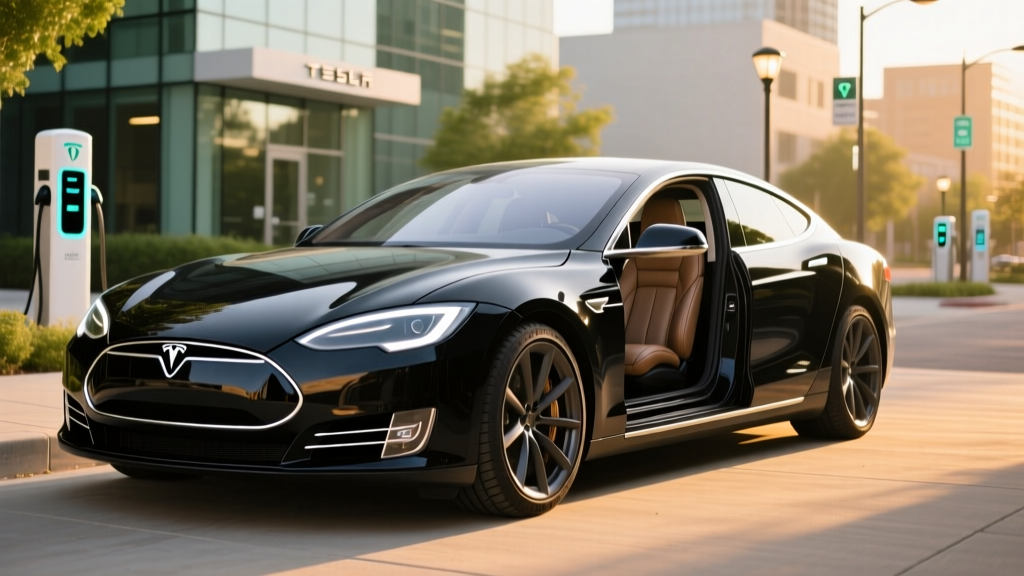
The 2017 Tesla Model S P100D was the flagship performance sedan of its era — a 100 kWh, dual-motor, all-wheel-drive rocket that could embarrass supercars at stoplights while carrying five adults in silence. Nearly a decade later, it remains one of the quickest production sedans ever built. But in 2026's used-EV market, the P100D occupies a complicated space: blistering performance and Supercharger access versus aging battery chemistry, no CCS/NACS adapter without modification, and a platform that predates Tesla's structural battery pack and heat-pump architecture.
This review breaks down what you're actually getting if you're shopping for a 2017 Model S P100D today — real-world range expectations, charging realities on modern networks, battery degradation risk, and whether the used-EV tax credit makes it a bargain or a money pit.
| Spec | Value |
|---|---|
| EPA Range | 315 miles |
| Battery (usable) | ~100 kWh (NMC chemistry) |
| Drivetrain | Dual-motor AWD |
| Horsepower | ~680 hp (Ludicrous mode) |
| 0–60 mph | 2.5 seconds |
| MPGe (combined) | 98 MPGe |
| Efficiency | 35 kWh / 100 mi |
| Max DC Fast Charge | ~140 kW peak (Tesla Supercharger) |
| 10–80% DC Time | ~40 minutes |
| Level 2 Home Charge | 11.5 kW (48A) — ~34 mi/hr |
| Cargo Volume | 26.3 cu ft (rear) + 5.3 cu ft (frunk) |
| Original Base MSRP | $134,500 (before destination) |
| Battery Warranty (original) | 8 years / unlimited miles (retention-based) |
Range and Efficiency: EPA Sticker vs. Real-World Reality
The EPA rated the 2017 Model S P100D at 315 miles of combined range on its 100 kWh NMC (nickel-manganese-cobalt) battery pack. That was class-leading in 2017 and still respectable today. But the sticker number requires context — especially for a battery that has now endured up to nine years of charge cycles, thermal stress, and calendar aging.
Real-World Range Expectations (2026)
EPA Sticker: 315 miles
Expected highway range (70–80 mph, moderate temps): 240–270 miles
Cold-weather range (below 32°F, cabin heat): 190–230 miles
Degraded pack (10–15% loss typical at 8–9 years): subtract 30–50 miles from above figures
The P100D's resistive cabin heater (no heat pump) is a major winter efficiency penalty. Expect 25–35% range reduction in sustained sub-freezing driving. Combine that with typical battery degradation on a 2017 pack, and a realistic road-trip range between Supercharger stops is 200–230 miles in fair weather and 160–190 miles in winter.
The car's efficiency of 35 kWh per 100 miles (98 MPGe combined) was competitive in 2017 but trails modern platforms. For comparison, the 2025 Tesla Model S Long Range achieves roughly 28 kWh/100 mi thanks to the heat pump, more efficient motors, and improved aerodynamics. On a 100 kWh pack, that 7 kWh/100 mi difference translates to roughly 70 fewer usable miles at highway speeds.
Charging Speed: Supercharger Access with a Catch
The 2017 P100D charges via Tesla's proprietary connector (which in 2025 became the NACS standard). On Tesla Superchargers, the car peaks at approximately 140 kW — far below the 250 kW that V3 Superchargers can deliver to newer Teslas. The older charge architecture and battery management system simply cannot accept the higher C-rates.
| Charging Level | Power / Rate | Speed |
|---|---|---|
| Level 1 (120V, 12A) | ~1.4 kW | ~4 miles per hour |
| Level 2 (240V, 48A) | 11.5 kW | ~34 miles per hour |
| DC Fast (Tesla Supercharger) | ~140 kW peak | 10–80% in ~40 min |
| DC Fast (CCS adapter) | ~100–120 kW (adapter-limited) | 10–80% in ~50 min |
The charge curve matters as much as peak power. The P100D holds close to its peak rate between 10–40% SoC, then tapers progressively. From 60–80%, you're looking at roughly 60–80 kW. Above 80%, the rate drops sharply — charging from 80–100% can add another 30–40 minutes. This is why road-trip strategy focuses on 10–80% sprints.
CCS compatibility note: Tesla began selling a CCS adapter for older Model S/X vehicles, but the P100D's charge port hardware and firmware may require a service-center retrofit to enable CCS charging. Confirm adapter compatibility with Tesla service before purchasing. Third-party networks like Electrify America and EVgo use CCS1 connectors, so without the adapter, you're Supercharger-dependent.
For home charging, the onboard charger accepts up to 11.5 kW on a 60-amp Level 2 circuit (48A continuous). That yields roughly 34 miles of range per hour of charging — meaning a full 0–100% charge takes about 10–11 hours. A Tesla Wall Connector or equivalent J1772 unit with a Tesla adapter will handle this. Installation for a 60A circuit typically runs $800–$2,000 depending on panel proximity and local permitting.
Performance: Still a Supercar Killer in 2026
This is where the P100D justifies its existence. The dual-motor all-wheel-drive powertrain produces approximately 680 horsepower in Ludicrous mode, launching the 4,941-lb sedan from 0–60 mph in 2.5 seconds. That figure was verified by multiple independent testers in 2017 and remains staggering — it matches or beats a Lamborghini Huracán, a Porsche 911 Turbo S, and virtually anything wearing a Ferrari badge from the same era.
The instant torque delivery is the differentiator. There's no turbo lag, no transmission downshift, no power-band hunting. You press the accelerator, and the car simply goes — with a violence that still surprises passengers who've never experienced EV torque. The low center of gravity from the floor-mounted battery pack keeps body roll controlled, though the car's weight is noticeable in tight cornering and under heavy braking.
Regenerative braking in the P100D is strong but not true one-pedal driving — you'll still use the friction brakes for final stops. The brake-by-wire system has a reputation for feeling somewhat numb compared to conventional hydraulic setups.
Interior, Tech, and Cargo
The 2017 Model S interior is a study in minimalist ambition versus mid-2010s execution. The 17-inch center touchscreen dominated the dash and controlled virtually every vehicle function — climate, media, navigation, suspension settings, and regenerative braking strength. The instrument cluster is a small digital display behind the wheel, supplemented by the main screen.
Infotainment and software: Tesla's OTA (over-the-air) update system means a 2017 P100D in 2026 may have received interface and feature updates since delivery. However, the car's MCU1 (Media Control Unit) hardware is a known bottleneck. Tesla offered an MCU2 upgrade (improved processor, faster maps, Netflix/YouTube streaming) for roughly $1,500–$2,500. Verify whether the car you're considering has had this upgrade — MCU1 is painfully slow by 2026 standards.
Autopilot / Driver Assist: The 2017 P100D shipped with Hardware 2.0 (or 2.5 for later build dates) for Autopilot. This is an SAE Level 2 driver-assistance system — adaptive cruise control and lane-centering that requires continuous driver supervision. It is not self-driving. Full Self-Driving (FSD) capability was sold as an option or subscription, but even FSD Supervised in 2026 remains Level 2 and requires active monitoring. Hardware 2.0/2.5 is significantly less capable than Tesla's current Hardware 4.0 in sensor resolution and processing power.
⚠️ Autopilot / FSD Limitation
All Tesla driver-assist features on the 2017 Model S P100D are SAE Level 2. The driver must keep hands on the wheel, eyes on the road, and remain prepared to take over at any moment. These systems do not make the vehicle autonomous. Older Hardware 2.0/2.5 units have more limited perception capabilities than current-generation systems.
Passenger and cargo space: The Model S seats five (with an optional rear-facing third-row jump seat for two small children, bringing capacity to seven — though this option was rare and is not recommended for modern safety expectations). Front legroom is generous at 42.7 inches; rear legroom measures 35.4 inches, adequate but not limousine-like. The rear trunk offers 26.3 cubic feet, and the front trunk (frunk) adds 5.3 cubic feet — a combined 31.6 cubic feet of cargo space, which is excellent for a sedan.
Used Pricing and Federal Tax Credit Eligibility
The 2017 Model S P100D originally stickered at $134,500 before destination and options. Well-equipped examples with FSD, premium interior, and the Signature or Founders packages could push past $145,000. Depreciation on the P100D has been steep — as of early 2026, used-market prices typically range from $32,000 to $52,000 depending on mileage, condition, battery state of health (SoH), and MCU upgrade status.
| Item | Amount |
|---|---|
| Original MSRP (base) | $134,500 |
| Typical used price (2026) | $32,000 – $52,000 |
| Federal Used EV Credit (§25E) | Up to $4,000 (30% of sale price, max $4,000) |
| Estimated price after credit | $28,000 – $48,000 |
Federal tax credit details: The 2017 P100D is not eligible for the new-vehicle §30D credit (up to $7,500), which applies only to new EV purchases. However, it may qualify for the §25E Used Clean Vehicle Credit, which provides 30% of the sale price up to a maximum of $4,000. Key eligibility rules per the IRS §25E guidelines:
- Vehicle price cap: Sale price must be $25,000 or less to qualify for the full $4,000 (30% of $25,000 = $7,500, capped at $4,000). Vehicles priced above $25,000 receive 30% up to $4,000 — so a $40,000 car would yield $4,000.
- Buyer income cap: Modified adjusted gross income (MAGI) must not exceed $75,000 (single), $112,500 (head of household), or $150,000 (married filing jointly).
- Vehicle age: Must be at least 2 model years old (2017 qualifies easily in 2026).
- Dealer requirement: Must be purchased from a licensed dealer (private-party sales do not qualify).
- First transfer: The credit applies only on the first qualified resale after August 16, 2022. If this specific VIN has already been claimed under §25E, it cannot be claimed again.
- Point-of-sale transfer: As of 2024, the credit can be transferred to the dealer at point of sale as an immediate price reduction.
Critical caveat: The §25E credit has a per-VIN limitation. Many 2017 Model S vehicles have already changed hands since 2022 and may have exhausted their one-time credit eligibility. Always verify the VIN's credit history with the selling dealer and cross-check with IRS guidance or a tax professional before counting on the credit.
Battery Health, Degradation, and Warranty
The P100D uses a ~100 kWh NMC (nickel-manganese-cobalt) lithium-ion battery pack. NMC chemistry offers high energy density — which is how Tesla packed 315 miles of range into a 2017 sedan — but it is more susceptible to calendar and cycle degradation than the LFP (lithium iron phosphate) packs used in modern base-model Teslas.
Expected degradation at 8–9 years: Industry data from fleet operators and owner surveys suggests NMC packs of this era typically retain 80–88% of original capacity after 8 years, depending on charging habits, climate exposure, and Supercharger frequency. A pack that has degraded 12–15% will show roughly 265–280 miles at 100% SoC when new-equivalent, compounding with the real-world reductions noted above.
Original battery warranty: Tesla warranted the Model S P100D battery for 8 years with unlimited miles, guaranteeing retention above 70% capacity. For a 2017 model, this warranty expired in 2025. Any battery failure or excessive degradation in 2026 is an out-of-pocket expense.
Replacement cost: A refurbished or new 100 kWh replacement pack from Tesla Service currently costs between $18,000 and $25,000 installed. Third-party EV repair shops may offer refurbished packs for $12,000–$18,000. This is a significant financial risk on a $35,000–$50,000 used car — essentially a potential 40–70% adder to the purchase price.
Pre-purchase recommendation: Request a battery health report from Tesla Service (available through the car's diagnostic menu or service appointment). Look for State of Health (SoH) above 82%. Avoid any P100D with SoH below 78% unless the price reflects an imminent $20,000+ battery replacement.
Who Should Buy the 2017 P100D — And Who Shouldn't
Choose the 2017 P100D if:
- You want supercar-level acceleration (2.5s 0–60) at a used-sedan price point
- You have reliable home Level 2 charging and primarily drive within 200 miles of home
- You value Supercharger network access for road trips without CCS adapter hassle
- You accept the risk of an out-of-warranty 100 kWh NMC battery
- You appreciate the sedan form factor with a usable frunk and 26+ cu ft trunk
Look elsewhere if:
- You need reliable 300+ mile range in winter or highway driving
- You want modern driver-assist hardware (Tesla HW 4.0, or competitors with LiDAR)
- You cannot absorb a potential $20,000 battery replacement within 1–3 years
- You want the latest infotainment speed, wireless CarPlay, or modern interior materials
- You frequently charge on non-Tesla DC networks (CCS adapter situation is imperfect)
2017 P100D vs. Key Used-EV Competitors
2017 Tesla Model S P100D — Pros
- 2.5s 0–60 mph remains elite performance
- 315-mile EPA range still competitive for a used EV
- Supercharger network access (NACS connector native)
- Generous cargo: 31.6 cu ft total (trunk + frunk)
- OTA software updates may still deliver improvements
- Potential $4,000 §25E used-EV tax credit
2017 Tesla Model S P100D — Cons
- Battery warranty expired in 2025 — replacement risk is $18K–$25K
- No heat pump — severe winter range loss (25–35%)
- MCU1 hardware is slow without the paid MCU2 upgrade
- Peak DC charge rate only ~140 kW — 40 min 10–80%
- CCS adapter compatibility requires potential service-center retrofit
- Hardware 2.0/2.5 Autopilot is outdated vs. current systems
- High insurance premiums typical of high-performance used EVs
Against a used 2018–2019 Porsche Taycan Turbo, the P100D wins on straight-line acceleration and range but loses on build quality, charging speed (Taycan supports 270 kW on 800V architecture), and interior refinement. A used 2020–2021 Tesla Model S Long Range (Raven refresh) offers a heat pump, updated suspension, and newer Hardware 3.0 Autopilot — generally a safer used buy if you don't need the P100D's Ludicrous acceleration.
Frequently Asked Questions
What is the real-world range of the 2017 Tesla Model S P100D?
The EPA rated it at 315 miles. In real-world highway driving at 70–80 mph in moderate temperatures, expect 240–270 miles. In cold weather below freezing, that drops to 190–230 miles. With typical battery degradation at 8–9 years old, subtract another 30–50 miles from those figures. A realistic road-trip planning range is 200–230 miles between charges in fair weather.
How fast does the 2017 P100D charge at home and on DC fast chargers?
At home on a 240V Level 2 circuit (48A), the onboard charger accepts up to 11.5 kW, adding about 34 miles of range per hour — a full charge takes roughly 10–11 hours. On Tesla Superchargers, it peaks at about 140 kW and charges from 10–80% in approximately 40 minutes. Non-Tesla DC fast chargers require a CCS adapter (potentially with a service-center retrofit) and may charge at 100–120 kW.
How much does a used 2017 P100D cost after tax credits in 2026?
Used prices range from $32,000 to $52,000 depending on condition and mileage. If the vehicle qualifies for the §25E used-EV credit (and many have already exhausted their one-time eligibility), you could receive up to $4,000, bringing the effective price to $28,000–$48,000. Eligibility depends on income caps, dealer sale, and VIN history — verify with a tax professional.
Does the 2017 Tesla Model S P100D qualify for the federal EV tax credit?
Not for the new-vehicle §30D credit (up to $7,500), which only applies to new purchases. It may qualify for the §25E Used Clean Vehicle Credit of up to $4,000, subject to a $25,000+ sale price, buyer income caps ($75K single / $150K married), purchase from a licensed dealer, and the VIN not having been previously claimed under §25E after August 2022. Consult IRS §25E guidance for current rules.
Is the 2017 P100D worth buying vs. a newer used Tesla or competitor?
If your priority is maximum acceleration at a used-EV price and you can accept the battery replacement risk, the P100D is hard to beat for pure performance value. However, a 2020+ Model S Long Range (Raven) offers a heat pump, better Autopilot hardware, and fresher battery — generally a lower-risk ownership experience. If charging speed matters, a used Porsche Taycan or Hyundai Ioniq 5 on 800V architecture will charge significantly faster.
What's the biggest risk of buying a 2017 P100D in 2026?
Battery replacement cost. The original 8-year/unlimited-mile battery warranty expired in 2025. A degraded or failed 100 kWh NMC pack costs $18,000–$25,000 to replace through Tesla Service. On a $35,000–$50,000 car, that's a potentially catastrophic expense. Always obtain a battery health report before purchase and budget for the possibility.