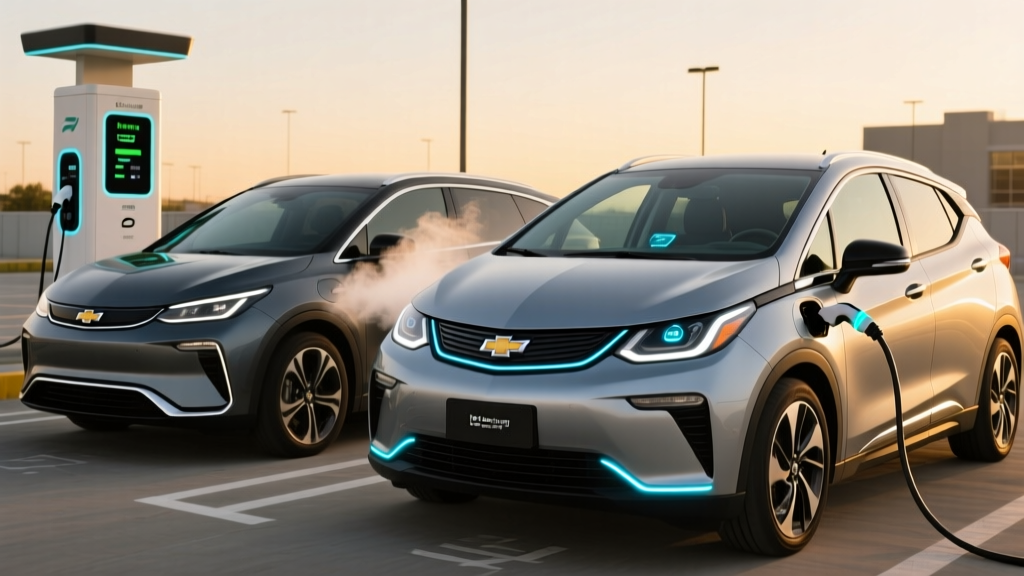
The Chevrolet Bolt is back for 2026 with a ground-up redesign, and the headline addition is Super Cruise — GM's hands-off-wheel Level 2 driver-assistance system — finally joining the affordable EV segment. But beyond the marquee tech, the real story is whether this next-generation Bolt delivers on the daily-driver essentials: real-world range, usable DC fast charging, and a price that undercuts the competition before and after federal tax credits.
We've spent time with the specs, cross-referenced EPA data on fueleconomy.gov, and reviewed GM's official powertrain details to give you a complete buyer's guide. Here's everything you need to know before heading to the dealership.
2026 Chevy Bolt at a Glance: Core Specifications
| Specification | Bolt EV (Hatchback) | Bolt EUV (Crossover) |
|---|---|---|
| EPA Range | 259 miles | 247 miles |
| Battery (usable) | 65 kWh, LFP chemistry | 65 kWh, LFP chemistry |
| Drivetrain | FWD, single motor | FWD, single motor |
| Horsepower / Torque | 200 hp / 236 lb-ft | 200 hp / 236 lb-ft |
| 0–60 mph | ~7.0 seconds | ~7.2 seconds |
| Max DC Fast Charge | 115 kW (peak) | 115 kW (peak) |
| 10–80% DC Charge Time | ~30 minutes | ~30 minutes |
| Level 2 Home Charge Rate | 11.5 kW (~37 mi/hr) | 11.5 kW (~37 mi/hr) |
| Combined MPGe | 120 MPGe | 115 MPGe |
| Efficiency | 28 kWh/100 mi | 29 kWh/100 mi |
| NACS Charge Port | Standard | Standard |
| Base MSRP | $28,900 (1LT) | $31,400 (1LT) |
| Battery Warranty | 8 years / 100,000 miles | 8 years / 100,000 miles |
Range and Efficiency: What the EPA Number Doesn't Tell You
The Bolt EV's 259-mile EPA rating is a solid figure for daily commuting and suburban driving. However, expect ~210–230 miles on sustained highway trips at 70–75 mph, where aerodynamic drag and lack of regenerative-braking opportunities reduce efficiency. In cold weather (below 30°F), plan for a 20–30% range reduction — bringing usable range down to roughly 180–205 miles — unless you precondition the battery while plugged in. The Bolt EUV's slightly heavier body and taller profile drop its real-world highway range to approximately 200–215 miles.
The switch to LFP (lithium iron phosphate) chemistry is a deliberate trade-off. LFP cells are less energy-dense than the NMC (nickel manganese cobalt) packs used in the previous Bolt, which is why the 2026 model's range is modestly lower than the outgoing generation's 259-mile peak on a larger pack. But LFP brings major longevity benefits: it tolerates regular 100% charging without accelerated degradation, has a longer cycle life, and eliminates cobalt from the supply chain. For an owner who charges nightly at home, LFP is arguably the better chemistry for long-term ownership.
Efficiency is rated at 28 kWh per 100 miles for the hatchback, which translates to roughly $0.04–$0.05 per mile at the national average residential electricity rate of ~$0.16/kWh. That's a fraction of what a comparable 30-MPG gas car costs at $3.20/gallon.
Charging Speed: The Bolt's Persistent Weakness
| Charging Level | Power / Rate | Miles Added per Hour | Notes |
|---|---|---|---|
| Level 1 (120V household) | ~1.4 kW | ~4 miles/hr | Emergency/top-up only; full charge in ~46 hours |
| Level 2 (240V home) | 11.5 kW | ~37 miles/hr | Full charge in ~6 hours; requires 48-amp circuit |
| DC Fast Charge | 115 kW peak | ~190 miles/hr (peak) | 10–80% in ~30 min; tapers significantly above 80% |
Let's be direct: DC fast charging remains the Bolt's weakest link. At 115 kW peak, the 2026 Bolt charges noticeably slower than rivals like the Hyundai Kona Electric (which peaks around 100+ kW with a faster sustained curve) or the Tesla Model 3 (up to 250 kW on V3 Superchargers). The 10–80% time of approximately 30 minutes is acceptable for road-trip rest stops, but you'll feel it on longer drives when competitors are back on the road 10–15 minutes sooner.
The charge curve also tapers aggressively past 80% State of Charge. If you need to charge from 80–100% on a DC fast charger, expect that last 20% to take nearly as long as the first 70%. For road trips, the practical strategy is to charge to 80%, unplug, and drive.
The big charging upgrade for 2026 is the native NACS (North American Charging Standard) port. This gives Bolt owners direct access to Tesla's Supercharger network — over 25,000 stalls in North America — without an adapter. That dramatically improves the public charging experience, since Tesla's network consistently outperforms Electrify America and other CCS networks in uptime and reliability, according to J.D. Power's EV charging satisfaction studies.
At home on a Level 2 charger, the 11.5 kW onboard charger replenishes the 65 kWh battery in about 6 hours, which is competitive. A standard overnight session easily restores a full day's worth of driving. Installation of a 240V/48-amp Level 2 circuit typically costs $500–$2,000 depending on your electrical panel's capacity and the distance from panel to garage — factor this into your purchase budget.
Super Cruise: Level 2 Done Right, but Not Self-Driving
Super Cruise is a hands-free, eyes-on driver-assistance system. The vehicle controls steering, acceleration, and braking on compatible highways, but the driver must remain attentive at all times. An infrared camera monitors your eye gaze, and the system will issue escalating alerts — then disengage — if you look away from the road for too long. This is not autonomous driving. Only Level 4 services like Waymo operate without a human driver.
Super Cruise is available on the 2LT and Premier trims of the Bolt EV and EUV, either as standard or bundled in a technology package (exact packaging varies by model year and trim). It operates on over 750,000 miles of LiDAR-mapped compatible roads across the U.S. and Canada, including most divided highways and limited-access freeways.
In practice, Super Cruise is one of the best Level 2 systems on the market. It handles lane centering, adaptive cruise, and even automatic lane changes (on equipped trims) with a smoothness that outperforms many competitors. The hands-free capability reduces fatigue on long highway commutes significantly. However, it only activates on pre-mapped roads — surface streets, construction zones, and unmapped routes require you to take the wheel. Urban navigation is entirely your responsibility.
The limitations are real and worth understanding:
- Navigate city streets, intersections, or stoplights autonomously
- Operate in construction zones or on unmapped roads
- Function in heavy snow, fog, or when lane markings are obscured
- Replace the driver — you are legally and operationally responsible
- Handle emergency vehicles or unexpected obstacles without driver input
Compared to Tesla's Autopilot (which works on more road types but requires hands on the wheel), Super Cruise trades breadth of coverage for a genuinely hands-free experience on its mapped network. For commuters who spend most of their miles on major highways, it's a compelling advantage. For those who drive primarily on local roads, the benefit is limited.
Interior, Cargo, and Daily Livability
The 2026 Bolt's interior is a meaningful step up from the previous generation's hard-plastic cabin. Soft-touch materials on the dashboard and door panels, a standard 11-inch diagonal infotainment touchscreen running Google built-in (Google Maps, Google Assistant, Play Store), and wireless Apple CarPlay and Android Auto are now standard across trims.
Passenger space is generous for the class. The Bolt EV hatchback offers 41.5 inches of front legroom and 35.7 inches of rear legroom, which comfortably fits adults in both rows. The EUV adds about 3 inches of rear legroom thanks to its stretched wheelbase, making it more family-friendly for rear-facing child seats.
Cargo volume behind the rear seats is 16.3 cubic feet in the EV and 16.3 cubic feet in the EUV, expanding to approximately 57 cubic feet with the 60/40 rear seats folded. There's no front trunk (frunk) — the space is occupied by power electronics — but the cargo area is flat and usable. For weekly grocery runs, a stroller, or luggage for two on a weekend trip, it's adequate. For large family road trips, you'll want a roof box or a larger vehicle.
Pricing, Trims, and Federal Tax Credit Eligibility
| Trim | Body Style | MSRP | Est. After §30D Credit* |
|---|---|---|---|
| 1LT | Bolt EV | $28,900 | ~$21,400 |
| 2LT (with Super Cruise) | Bolt EV | $32,500 | ~$25,000 |
| Premier | Bolt EV | $36,200 | ~$28,700 |
| 1LT | Bolt EUV | $31,400 | ~$23,900 |
| 2LT (with Super Cruise) | Bolt EUV | $34,900 | ~$27,400 |
| Premier | Bolt EUV | $38,500 | ~$31,000 |
*Estimated prices assume full $7,500 federal tax credit eligibility. Actual credit depends on individual tax liability, income caps, battery sourcing compliance, and MSRP limits. Consult IRS.gov §30D guidelines and a tax professional before purchasing.
The 2026 Bolt qualifies as one of the most affordable new EVs on the market, and the federal §30D Clean Vehicle Credit can make it even more compelling. However, eligibility is not automatic. Here's what you need to verify:
- MSRP cap: The Bolt EV and EUV (classified as passenger cars/hatchbacks) must be under the $55,000 MSRP cap — all trims clear this easily.
- Buyer income limits: Adjusted gross income must not exceed $150,000 (single), $225,000 (head of household), or $300,000 (joint filers).
- Battery sourcing requirements: A percentage of critical minerals and battery components must be sourced from the U.S. or free-trade-agreement partners. GM has been working to localize its LFP supply chain, but verify current-year compliance on the fueleconomy.gov credit lookup tool at time of purchase.
- Point-of-sale transfer: As of 2024, buyers can transfer the credit to the dealer at purchase, reducing the sale price directly rather than waiting for a tax refund. This makes the Bolt's effective price even lower at the dealership.
Destination charges, dealer add-ons, and state/local fees will add $1,000–$2,000 to the out-the-door price. State incentives (like California's CVRP or Colorado's innovative EV tax credit) can stack on top of the federal credit — check your state's energy office for current programs.
How Does the Bolt Stack Up Against Competitors?
| Attribute | 2026 Chevy Bolt EV | 2026 Hyundai Kona Electric | 2026 Tesla Model 3 RWD |
|---|---|---|---|
| EPA Range | 259 mi | 261 mi | 272 mi (est.) |
| Battery | 65 kWh LFP | 64.8 kWh NMC | ~60 kWh LFP |
| DC Fast Charge Peak | 115 kW | ~100+ kW | 170 kW |
| 0–60 mph | 7.0 sec | ~7.4 sec | 5.8 sec |
| Base MSRP | $28,900 | ~$33,000 | ~$38,990 |
| Hands-Free ADAS | Super Cruise (2LT+) | None (HDA2 requires hands-on) | None (Autopilot requires hands-on) |
| Charge Port | NACS | CCS1 | NACS |
The Bolt's clear advantage is price. At nearly $4,000 less than the Kona Electric and $10,000 less than the Model 3, it's the value leader. The Super Cruise availability at this price point is also unique — no competitor offers hands-free highway driving below $40,000.
Where the Bolt loses ground is DC fast charging. The 115 kW peak and ~30-minute 10–80% time lag behind the Tesla Model 3's Supercharger speeds. If you road-trip frequently, the Model 3's faster charging and access to the densest fast-charging network (though now shared with the Bolt via NACS) is a tangible benefit.
The Kona Electric is the closest direct rival, offering similar range and a slightly more refined interior, but it lacks Super Cruise and still uses the CCS1 connector (requiring an adapter for Tesla Superchargers).
Pros, Cons, and Final Verdict
- Lowest starting MSRP of any new EV with 250+ miles of range
- Super Cruise hands-free driving available under $35,000
- LFP battery tolerates daily 100% charging; long cycle life
- Native NACS port for direct Tesla Supercharger access
- Strong federal tax credit eligibility across all trims
- Google built-in infotainment with wireless CarPlay/Android Auto
- 8-year/100,000-mile battery warranty
- DC fast charging capped at 115 kW — slower than key rivals
- No all-wheel-drive option; FWD only
- No frunk (front trunk) for additional storage
- Super Cruise only on higher trims (2LT and above)
- Rear cargo space is adequate but not class-leading
- Cold-weather range loss is significant without preconditioning
Who should buy the 2026 Chevy Bolt? This EV is ideal for budget-conscious commuters who drive mostly on highways where Super Cruise shines, have reliable home charging, and prioritize low cost of ownership over road-trip charging speed. It's also a strong choice as a second household vehicle or a first EV for someone transitioning from a gas car without wanting to stretch their budget. Families who need AWD, tow capacity, or frequent 400-mile road trips should look at the Tesla Model Y, Hyundai Ioniq 5, or a PHEV instead.
Frequently Asked Questions
What is the real-world range of the 2026 Chevy Bolt?
The EPA estimates 259 miles for the Bolt EV and 247 miles for the EUV. In real-world highway driving at 70+ mph, expect approximately 210–230 miles. In cold weather below freezing, range can drop to 180–205 miles unless you precondition the battery while plugged in.
How fast does the Chevy Bolt charge?
On a DC fast charger, the Bolt peaks at 115 kW and charges from 10–80% in about 30 minutes. At home on a Level 2 (240V) charger, it charges at 11.5 kW, adding roughly 37 miles of range per hour and reaching a full charge in about 6 hours. Level 1 (120V) charging adds only about 4 miles per hour.
Does the 2026 Chevy Bolt qualify for the $7,500 federal EV tax credit?
All Bolt trims fall under the $55,000 MSRP cap, so they meet the vehicle price requirement. However, you must also meet IRS income limits ($150K single / $300K joint), and the vehicle's battery must meet critical-mineral and component sourcing requirements for the current tax year. Verify eligibility on IRS.gov and fueleconomy.gov at the time of purchase. The credit can be transferred to the dealer at point of sale to reduce your purchase price directly.
Is Super Cruise available on every 2026 Bolt trim?
No. Super Cruise is available starting on the 2LT trim and above (including Premier). The base 1LT trim includes Chevy's standard driver-assistance suite (automatic emergency braking, lane-keep assist, adaptive cruise) but not the hands-free Super Cruise system.
Is the Chevy Bolt worth buying over the Tesla Model 3 or Hyundai Kona Electric?
If your priority is the lowest purchase price and hands-free highway driving, the Bolt is the clear winner — it's $5,000–$10,000 less than those competitors. If you road-trip frequently and need faster DC charging, the Model 3 is a better fit. If you want a slightly more refined interior and don't need Super Cruise, the Kona Electric is a close rival at a higher price.
What is the Bolt's battery warranty?
GM covers the Bolt's battery and electric powertrain for 8 years or 100,000 miles, whichever comes first. The warranty covers defects and capacity loss below a specified threshold (typically 60–70% of original capacity). The LFP chemistry should degrade more slowly than NMC under normal use, especially if you take advantage of LFP's tolerance for regular full charges.
Does the 2026 Bolt have all-wheel drive?
No. The 2026 Bolt is front-wheel drive only across all trims. If AWD is a priority for snow or performance, consider the Tesla Model 3 Long Range AWD, Hyundai Ioniq 5 AWD, or a plug-in hybrid with AWD capability.