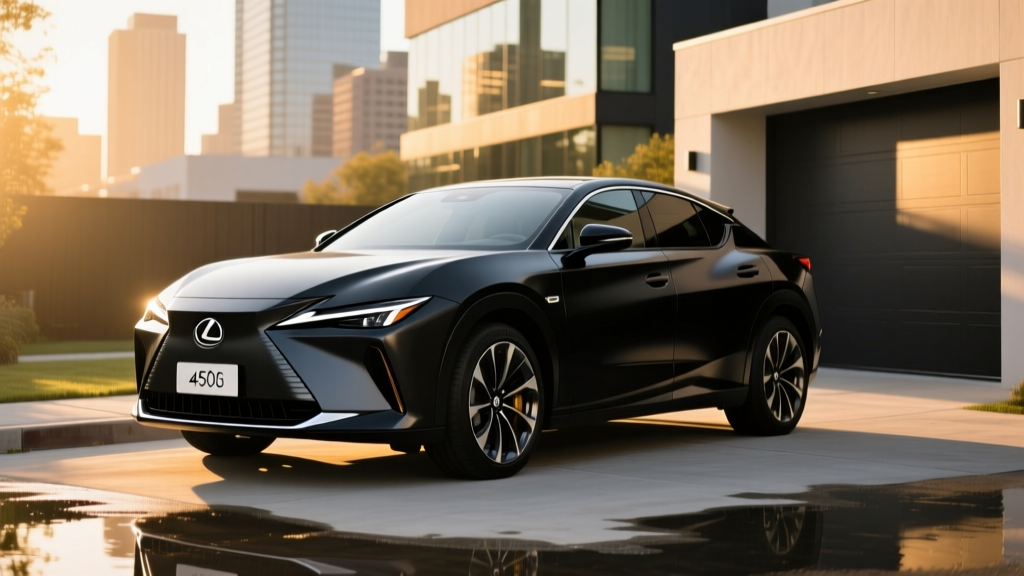
Quick Answer: As of 2026, the Lexus all electric vehicle lineup centers on the RZ 450e, a luxury electric SUV built on Toyota's e-TNGA platform. It offers an EPA-estimated 220 miles of range (FWD) or 196 miles (AWD), DC fast charging up to 150 kW, and a starting MSRP around $54,000. Lexus has also announced the upcoming RZ 300e (a lower-priced, FWD variant) and the Electrified Sedan concept expected by 2027. If you want Lexus luxury with zero tailpipe emissions, the RZ 450e is the current buy — but its range trails rivals like the BMW iX and Genesis Electrified GV70, so your driving pattern matters.
What Lexus All Electric Vehicles Are Available Now?
Lexus entered the EV market deliberately rather than early. The brand built decades of hybrid dominance — the RX Hybrid and UX 250h remain top sellers — and has transitioned to full electrification more cautiously than some European competitors. Here's where the lineup stands:
| Model | Status | EPA Range | Battery | Base MSRP |
|---|---|---|---|---|
| RZ 450e (FWD) | Available now | 220 mi | 71.4 kWh (NMC) | ~$54,000 |
| RZ 450e (AWD) | Available now | 196 mi | 71.4 kWh (NMC) | ~$57,500 |
| RZ 300e | Announced / Upcoming | Est. 250+ mi | ~71.4 kWh (est.) | Est. $48,000–$50,000 |
| Electrified Sedan | Concept (est. 2027) | TBD | TBD | TBD |
The RZ 450e is the only Lexus all electric vehicle you can purchase today. The RZ 300e is expected to undercut the 450e on price while potentially extending range through a single-motor FWD configuration — a move aimed directly at buyers who don't need all-wheel drive and want more miles per charge.
RZ 450e: Range, Charging, and Real-World Performance
The EPA sticker is only half the story. Let's break down what the RZ 450e actually delivers on the road.
Real-World Range Expectations
EPA Estimate (FWD): 220 miles | EPA Estimate (AWD): 196 miles
Highway driving (70+ mph): Expect ~175–195 miles (FWD), ~155–175 miles (AWD)
Cold weather (below 32°F): Expect ~150–175 miles (FWD), ~130–155 miles (AWD)
Combined daily driving: Most owners report 190–210 miles in moderate conditions (FWD)
The RZ 450e uses a 71.4 kWh usable lithium-ion battery with NMC (nickel manganese cobalt) chemistry. This is smaller than competing SUVs like the BMW iX xDrive50 (105.2 kWh usable) or the Hyundai Ioniq 5 (77.4 kWh usable), which is the primary reason the Lexus trails on range.
Efficiency, measured by fueleconomy.gov, comes in at approximately 102 MPGe combined for the FWD variant. That translates to roughly 33 kWh per 100 miles — respectable for a luxury crossover but not class-leading. The Hyundai Ioniq 5 achieves 114 MPGe combined, for comparison.
Charging Speeds and Times
| Level | Power | Speed | Notes |
|---|---|---|---|
| Level 1 (120V) | ~1.4 kW | ~4 mi/hr | Emergency only; full charge in ~50 hours |
| Level 2 (240V, 32A) | ~7.7 kW | ~25 mi/hr | Full charge in ~9.5 hours; ideal for overnight |
| Level 2 (240V, 48A) | ~11.5 kW | ~37 mi/hr | Requires 60A circuit; full charge in ~6.5 hours |
| DC Fast Charge | Peak 150 kW | 10–80% in ~30 min | CCS1 connector; tapers significantly above 80% |
The 150 kW peak DC fast charging rate is the RZ 450e's most notable limitation for road-trippers. Competitors like the Hyundai Ioniq 5 and Kia EV6 accept up to 240 kW on 800V architectures, enabling 10–80% charges in roughly 18 minutes. The RZ 450e uses a conventional 400V system, which caps its charge speed and extends stops on longer drives.
A critical charging-curve reality: the RZ 450e will hold close to its 150 kW peak from approximately 10–40% state of charge, then taper to ~80 kW by 60%, and drop below 40 kW once you pass 80%. This is normal for NMC batteries without an 800V architecture, but it means a 10–90% charge will take closer to 50 minutes, not 30.
RZ 450e vs. Gas Lexus RX: Cost and Ownership Comparison
Most Lexus RZ shoppers are cross-shopping against the brand's own RX 350, the best-selling luxury SUV in America. Here's how the economics compare over five years.
| Cost Factor | RZ 450e (FWD) | RX 350 (AWD) |
|---|---|---|
| Base MSRP | $54,000 | $51,000 |
| Federal Tax Credit (§30D) | Up to $7,500* | $0 |
| Effective Purchase Price | ~$46,500 | $51,000 |
| Fuel/Energy (5 yr, 60,000 mi) | ~$3,600 (home L2) | ~$8,400 (premium gas) |
| Maintenance (5 yr) | ~$1,200 | ~$3,800 |
| Insurance (5 yr est.) | ~$11,500 | ~$9,800 |
| Estimated Depreciation | ~$18,000 | ~$16,000 |
| Total 5-Year Cost | ~$80,800 | ~$89,000 |
*Federal tax credit eligibility depends on buyer income limits, MSRP caps, and battery critical-mineral sourcing requirements under current IRS §30D rules. Check irs.gov for your specific eligibility. The credit may be applied at point of sale.
The RZ 450e wins on fuel and maintenance savings — roughly $7,400 less over five years — but insurance premiums run 15–20% higher on average for EVs due to repair costs and battery replacement risk. Depreciation remains a wildcard; Lexus EVs haven't yet established long-term resale patterns comparable to the RX's legendary retention.
Maintenance Reality: What You Actually Service
A Lexus all electric vehicle eliminates oil changes, spark plugs, transmission fluid, and exhaust system maintenance. What remains:
- Tire rotation: Every 5,000–7,500 miles (EVs wear tires faster due to instant torque and heavier curb weight)
- Cabin air filter: Every 15,000–20,000 miles
- Brake fluid: Every 3 years (regenerative braking extends pad life dramatically)
- Coolant: Inspect at 50,000 miles; replace per schedule
- Brake pads: Often last 100,000+ miles thanks to regen
Lexus includes 2 years / 25,000 miles of complimentary scheduled maintenance, plus a 10-year / 150,000-mile battery warranty (whichever comes first) that guarantees at least 70% capacity retention. This warranty is competitive with the industry standard.
Who Should (and Shouldn't) Buy the Lexus RZ 450e
The RZ 450e occupies a specific niche. It is not the longest-range electric SUV, not the fastest-charging, and not the most tech-forward. What it offers is Lexus execution: exceptional ride comfort, a whisper-quiet cabin, high-quality materials, and the brand's reliability reputation.
Decision Framework: Is the Lexus RZ 450e Right for You?
Choose the RZ 450e if:
- Your daily commute is under 80 miles round-trip
- You have access to Level 2 home charging (garage or driveway with 240V outlet)
- You prioritize ride comfort and cabin quietness over sporty handling
- You road-trip fewer than 4–5 times per year (or can plan around DC fast chargers)
- You value Lexus dealer service and brand reliability
- You qualify for the federal tax credit, bringing the effective price below $50,000
Look elsewhere if:
- You regularly drive 200+ miles between charging stops (consider the BMW iX, Mercedes EQE SUV, or Hyundai Ioniq 5 Long Range)
- You rely solely on public charging (the 150 kW peak means longer stops than rivals)
- You live in extreme cold (below 10°F regularly) and need every mile of range
- You want cutting-edge driver assistance or one-pedal driving (the RZ offers limited regen modes)
- Third-row seating is a priority (the RZ is strictly a two-row, five-seat SUV)
Common Misconceptions About the Lexus RZ 450e
| Myth | Fact |
|---|---|
| "The RZ is just a Toyota bZ4X with a Lexus badge." | They share the e-TNGA platform and battery, but the RZ has distinct suspension tuning, interior materials, sound insulation, and Lexus Safety System+ 3.0. The driving experience is meaningfully different. |
| "220 miles of range isn't enough for an EV in 2026." | The average American drives 37 miles per day (FHWA data). 220 miles covers 95%+ of daily driving for most households. Range matters for road trips, not Tuesday commutes. |
| "EV batteries need replacing after 100,000 miles." | NMC batteries in modern EVs with active thermal management typically retain 85–90% capacity at 100,000 miles. Lexus warranties the RZ battery for 10 years / 150,000 miles at 70% minimum capacity. |
| "You can't charge in the rain or cold." | EV charging connectors are weather-sealed (IP55 rated minimum). You can charge in rain, snow, and cold. Cold does slow charging speeds and reduce range, but the RZ's battery preconditioning mitigates this when navigating to a charger. |
| "The RZ qualifies for the full $7,500 federal tax credit for everyone." | Credit eligibility depends on your taxable income (≤$150K single / ≤$300K joint), the vehicle's MSRP (must be ≤$80,000 for SUVs), and battery critical-mineral and component sourcing requirements that change annually. Always verify on irs.gov or with a tax professional. |
Home Charging Setup: What You Need Before Delivery Day
The RZ 450e arrives with a dual-voltage mobile charging cord (120V/240V) that provides roughly 4 miles of range per hour on a standard household outlet. For practical daily ownership, a dedicated Level 2 home charger is essential.
| Component | Cost Range |
|---|---|
| Level 2 charger (32A–48A, hardwired or NEMA 14-50) | $400–$750 |
| Electrician labor (run 240V circuit, 50–60A) | $600–$2,000 |
| Electrical panel upgrade (if needed, 200A service) | $1,500–$3,500 |
| Permit and inspection | $50–$200 |
| Total (no panel upgrade) | $1,050–$2,950 |
| Total (with panel upgrade) | $2,550–$6,450 |
A critical note: the RZ 450e's onboard charger accepts up to 11.5 kW on Level 2 (48 amps). Installing a 48A charger like the ChargePoint Home Flex or Wallbox Pulsar Plus maximizes your home charging speed. A 32A unit is cheaper but adds roughly 3 hours to a full charge compared to 48A.
If you live in an apartment or condo without dedicated parking, home charging is a significant barrier. Public charging infrastructure continues to expand — Tesla has opened its Supercharger network to non-Tesla vehicles via built-in adapters, and networks like Electrify America and EVgo offer DC fast charging — but relying on public charging adds time and cost compared to home Level 2.
Performance and Driving Impressions
The RZ 450e AWD produces 308 horsepower and 323 lb-ft of torque from dual electric motors, achieving a 0–60 mph time of approximately 5.0 seconds. The FWD variant uses a single front motor producing 201 horsepower with a 0–60 time around 7.4 seconds.
These numbers are adequate but not thrilling for the luxury EV segment. The BMW iX xDrive50 delivers 516 hp and a 4.4-second 0–60. The Genesis Electrified GV70 produces 429 hp in boost mode. If acceleration is a priority, the RZ is the comfort choice, not the performance choice.
Where the RZ excels is ride quality. Lexus tuned the suspension for compliance over sportiness, and the cabin isolation is among the best in its class. At 70 mph, road and wind noise are minimal — a hallmark of the brand. The DIRECT4 all-wheel-drive system (on AWD trims) continuously adjusts torque distribution front-to-rear for stability, though it's tuned for safety and comfort rather than aggressive cornering.
Driver Assistance: Lexus Safety System+ 3.0
SAE Automation Level: Level 2. The RZ 450e's Lexus Safety System+ 3.0 includes adaptive cruise control, lane-centering assist, and traffic jam assist. This is a driver-assistance system, not autonomous driving. You must keep your hands on the wheel and eyes on the road at all times. The system does not handle construction zones, unmapped roads, or severe weather autonomously.
The system is competent for highway cruising but less aggressive than Tesla's Autopilot or GM's Super Cruise in lane-change confidence. It does not offer hands-free driving on mapped highways the way Ford's BlueCruise or GM's Super Cruise do. For a brand that prioritizes safety over tech spectacle, this is consistent — but buyers expecting cutting-edge ADAS should test-drive the competition.
Frequently Asked Questions
Is the Lexus RZ 450e a good first EV?
Yes, if you have home charging access and your daily driving stays under 150 miles. The RZ is comfortable, quiet, and backed by Lexus's dealer network and warranty. Its shorter range means you'll need to plan road trips around DC fast chargers, but for daily commuting it's effortless. First-time EV buyers should prioritize installing a Level 2 charger before delivery.
Does the Lexus RZ 450e qualify for the $7,500 federal tax credit?
It may, but eligibility is not automatic. Under current IRS §30D rules, you must meet income caps ($150,000 single / $300,000 joint modified AGI), the vehicle MSRP must be at or below $80,000 (the RZ qualifies as an SUV), and the battery must meet critical-mineral and component sourcing thresholds that tighten each year. The credit can be transferred to the dealer at point of sale, reducing your purchase price directly. Verify your eligibility at fueleconomy.gov or consult a tax professional.
How does the RZ 450e compare to the Toyota bZ4X?
They share the e-TNGA platform, 71.4 kWh battery, and core powertrain. The RZ 450e adds Lexus-specific suspension tuning, higher-quality interior materials, more sound deadening, and Lexus Safety System+ 3.0. The bZ4X starts roughly $10,000 lower. If luxury and refinement matter, the RZ justifies the premium. If you want the same fundamentals at a lower price, the bZ4X is the value pick.
What is the Lexus RZ 450e's towing capacity?
The RZ 450e is not rated for towing. Lexus does not provide a towing capacity, and the vehicle lacks a tow hitch option. If you need to tow, look at the BMW iX (3,500 lbs), Rivian R1S (7,700 lbs), or a plug-in hybrid like the Lexus RX 500h.
Will Lexus release a longer-range electric vehicle?
Lexus has announced plans for a next-generation EV platform with a projected range of 497 miles (WLTP, which typically runs 10–15% higher than EPA estimates) using advanced battery technology, targeted for 2027–2028. The upcoming RZ 300e may also offer improved range through a lighter, single-motor FWD configuration. However, these are announced targets — not available vehicles. If range is your top priority today, the RZ 450e at 220 miles EPA trails competitors.
How much does it cost to charge the RZ 450e at home?
At the U.S. average residential electricity rate of ~$0.16 per kWh, a full charge (71.4 kWh) costs approximately $11.42 and adds 220 miles of range. That's roughly $0.052 per mile — compared to about $0.14 per mile in a Lexus RX 350 running premium fuel at $4.00 per gallon. Over 12,000 miles annually, home charging saves roughly $1,000 compared to gas.
The Bottom Line on the Lexus All Electric Vehicle
The Lexus RZ 450e is a refined, comfortable electric SUV that trades range and charging speed for the ride quality, cabin isolation, and brand trust that Lexus buyers expect. At an effective price near $46,500 after the federal tax credit (for eligible buyers), it's a compelling luxury EV for daily drivers with home charging and moderate road-trip needs.
It is not the best EV for cross-country road warriors, performance enthusiasts, or tech-maximalists. For those buyers, the BMW iX, Hyundai Ioniq 5, or Tesla Model Y offer more range, faster charging, or sharper technology. But if you're a Lexus loyalist ready to go electric — and your driving pattern fits the RZ's capabilities — it delivers the quiet, composed, well-built experience the brand is known for, without a drop of gasoline.