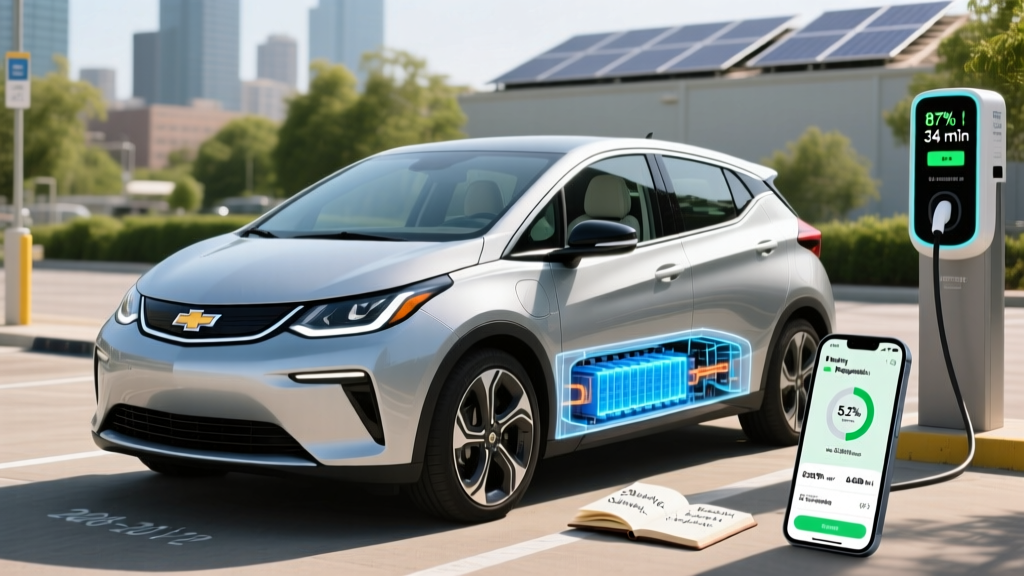
Quick Verdict: Can You Trust the 2026 Chevy Bolt?
The 2026 Chevrolet Bolt EV and Bolt EUV arrive at a pivotal moment. After the well-documented battery fire recalls that sidelined the original Bolt from 2021 to 2023, General Motors rebuilt the pack with new modules and a more conservative battery-management system. The result: a sub-$30,000 electric hatchback that now carries one of the most scrutinized reliability records in the EV segment. For buyers weighing the Bolt against rivals like the Nissan Leaf, Hyundai Kona Electric, or even used Tesla Model 3s, the question isn't just range or price — it's whether this car will hold up over 100,000 miles without a $15,000 battery surprise.
Here's what the data, recall history, and real-world ownership patterns tell us about Chevy Bolt reliability in 2026.
Full Spec Sheet: 2026 Chevy Bolt EV & EUV at a Glance
| Spec | Bolt EV (Hatchback) | Bolt EUV (Crossover) |
|---|---|---|
| EPA Range | 259 miles | 247 miles |
| Battery (usable) | 65 kWh (NMC) | 65 kWh (NMC) |
| Motor / Drivetrain | 200 hp, FWD | 200 hp, FWD |
| 0-60 mph | ~6.5 sec | ~7.0 sec |
| DC Fast Charge (peak) | 55 kW (CCS) | 55 kW (CCS) |
| 10-80% DC Time | ~60 min | ~60 min |
| Level 2 Home Charge | 11.5 kW (~39 mi/hr) | 11.5 kW (~37 mi/hr) |
| MPGe (combined) | 120 MPGe | 115 MPGe |
| Efficiency | 28 kWh/100 mi | 29 kWh/100 mi |
| Cargo (behind rear seats) | 16.3 cu ft | 16.3 cu ft |
| Rear Legroom | 36.0 in | 39.1 in |
| Base MSRP | $26,500 (1LT) | $28,200 (LT) |
| Battery Warranty | 8 yr / 100,000 mi | 8 yr / 100,000 mi |
The Battery Recall That Defined Bolt Reliability
Any honest discussion of Chevy Bolt reliability must address the 2021-2023 battery recall. Defective LG Energy Solution NMC cells — specifically folded separator defects and anode tab tears — caused a small number of packs to short-circuit and, in rare cases, catch fire when charged above 90% state of charge. GM ultimately replaced battery modules in over 140,000 vehicles at a cost exceeding $2 billion.
The 2026 Bolt uses a redesigned pack with revised cell manufacturing protocols and updated BMS (battery management system) software that more aggressively monitors cell voltage variance. GM extended the battery warranty to 8 years/100,000 miles with a 70% capacity retention guarantee — meaning if your pack drops below 70% of its original 65 kWh within that window, GM replaces it at no cost. According to NHTSA, post-recall Bolt models have not been subject to new battery-related investigations as of early 2026.
What this means for buyers: The recall was a manufacturing defect, not a fundamental chemistry flaw. The replacement modules use the same NMC chemistry but with tighter quality control. Long-term degradation data from post-recall Bolts (2024+) is still maturing, but early fleet data suggests 5-7% capacity loss over the first 60,000 miles — within the normal NMC range.
Real-World Range: What the EPA Sticker Doesn't Tell You
EPA Combined Range: 259 miles (Bolt EV) / 247 miles (Bolt EUV)
Real-World Expectations:
- City/suburban driving (moderate temps): 265-280 miles — the Bolt's strong regen braking and low-speed efficiency actually let it beat its EPA rating in stop-and-go traffic.
- Highway (70-75 mph, flat terrain): 215-235 miles — the Bolt's boxy shape and lack of a heat pump hurt efficiency at sustained speed.
- Cold weather (below 32°F, mixed driving): 175-200 miles — NMC chemistry loses 20-30% capacity in freezing temps, and the Bolt's resistance-based cabin heater draws significant energy. This is the Bolt's weakest real-world scenario.
Bottom line: If your commute is under 60 miles round-trip and you charge at home, the Bolt's range is more than adequate year-round. If you regularly drive 200+ miles in winter or take frequent highway road trips, the range taper will frustrate you.
Charging Speed: The Bolt's Biggest Weakness in 2026
Here's where Chevy Bolt reliability meets practical frustration. The Bolt's DC fast-charging peak of 55 kW is the slowest in its class. While competitors like the Hyundai Kona Electric (peak 100+ kW) and Tesla Model 3 (peak 170 kW) can add 150+ miles in 20 minutes, the Bolt needs roughly 60 minutes to go from 10% to 80% at a DC fast charger.
| Charging Level | Power (kW) | Miles Added per Hour | Typical Use Case |
|---|---|---|---|
| Level 1 (120V outlet) | 1.2 kW | ~4 mi/hr | Emergency/overnight trickle |
| Level 2 (240V, home) | 11.5 kW | ~37-39 mi/hr | Daily home charging — full charge in ~6 hours |
| DC Fast Charge (CCS) | 55 kW peak | ~170 mi/hr (peak) | Road trips — but tapers heavily above 80% |
Charging curve reality: The Bolt holds close to 55 kW from roughly 10-50% SoC, then tapers to ~38 kW through 70%, and drops further to ~20 kW above 85%. If you're road-tripping, plan for 45-60 minute stops every 180-200 miles. For home Level 2 charging, the 11.5 kW onboard charger is excellent — you'll wake up to a full battery every morning if you install a 48-amp Level 2 unit.
The Bolt uses the CCS1 connector. GM has committed to NACS (Tesla-style) for future models, but the 2026 Bolt retains CCS. A GM-approved NACS adapter is available for Supercharger access, though Supercharger charging speed remains limited by the Bolt's 55 kW ceiling.
Tax Credits, Pricing, and What You'll Actually Pay
| Trim | MSRP | Federal §30D Credit | Effective Price |
|---|---|---|---|
| Bolt EV 1LT | $26,500 | Up to $7,500* | ~$19,000 |
| Bolt EV 2LT | $29,100 | Up to $7,500* | ~$21,600 |
| Bolt EUV LT | $28,200 | Up to $7,500* | ~$20,700 |
| Bolt EUV Premier | $32,400 | Up to $7,500* | ~$24,900 |
*Critical §30D eligibility caveats (2026 tax year):
- Income caps: Modified AGI must not exceed $150,000 (single), $225,000 (head of household), or $300,000 (joint). Per IRS §30D guidelines, these limits apply to the tax year of delivery or the prior year, whichever is lower.
- MSRP cap: The Bolt's MSRP falls well under the $55,000 cap for passenger vehicles, so all trims qualify on price.
- Battery sourcing: The Bolt's battery modules are manufactured by LG Energy Solution. Critical-mineral and battery-component sourcing requirements under §30D are strict — verify current-year compliance at fueleconomy.gov before purchase, as sourcing rules tighten annually.
- Point-of-sale transfer: As of 2024, qualifying buyers can transfer the credit to the dealer at purchase, reducing the purchase price directly rather than waiting for a tax refund.
At an effective price of ~$19,000 for the base Bolt EV, this is the cheapest new EV in America — undercutting the Nissan Leaf and rivaling used gas-powered compacts.
Pros and Cons: The Honest Scorecard
Pros
- Unbeatable price after tax credit — ~$19K effective for the base EV is a segment record.
- Strong city range — real-world city driving can exceed the 259-mile EPA rating thanks to aggressive regen.
- Spacious for its footprint — 16.3 cu ft cargo and 36+ inches of rear legroom (39.1 in the EUV) outclass the Nissan Leaf and Kona Electric.
- Proven powertrain — the 200-hp permanent-magnet motor has been in production since 2017 with minimal failure reports.
- Fast Level 2 home charging — 11.5 kW onboard charger is best-in-class for overnight replenishment.
- Super Cruise availability — the EUV offers GM's hands-free Level 2 highway driving system on mapped roads (subscription required).
Cons
- Slowest DC fast charging in class — 55 kW peak means 60-minute road-trip stops while rivals charge in 20.
- No heat pump — cold-weather range loss is severe (25-30%) compared to heat-pump-equipped rivals.
- CCS connector only — NACS adapter required for Supercharger access, and charging speed is still capped at 55 kW.
- Recall history — even with redesigned modules, the Bolt's brand reputation carries the weight of the 2021-2023 battery fire saga.
- FWD only — no AWD option limits appeal in snow-belt states.
- Dated interior — the platform dates to 2017; infotainment and materials feel a generation behind the Ioniq 5 or Model 3.
Who Should Buy the 2026 Chevy Bolt?
Choose the Bolt EV if:
- You need the cheapest new EV available and qualify for the §30D credit.
- Your daily commute is under 60 miles and you charge at home nightly.
- You primarily drive in moderate climates where cold-weather range loss is manageable.
- You rarely take road trips over 200 miles — or don't mind 60-minute charge stops.
Choose the Bolt EUV if:
- You want the Bolt's value but need more rear-seat legroom (39.1 in) for car seats or taller passengers.
- You want Super Cruise availability for hands-free highway commuting.
Look elsewhere if:
- You road-trip frequently and need fast DC charging (consider the Hyundai Ioniq 5 or Tesla Model 3).
- You live in a cold climate and need consistent 200+ mile winter range (consider AWD options with a heat pump).
- You need towing capacity — the Bolt is not rated for towing.
Warranty and Long-Term Reliability Indicators
GM backs the 2026 Bolt's battery and electric drive components with an 8-year/100,000-mile warranty (whichever comes first), guaranteeing at least 70% capacity retention. This is the industry-standard EV powertrain warranty, matching Ford, Hyundai, and Kia.
Beyond the battery, the Bolt carries a standard 3-year/36,000-mile bumper-to-bumper warranty and 5-year/60,000-mile powertrain coverage for non-EV components. According to IIHS, the 2026 Bolt carries forward its predecessor's strong crash-test performance, though updated ratings for the refreshed model are pending.
Reliability signals worth noting:
- The electric motor and single-speed reduction gear have proven extremely durable across the Bolt's production run — failures are rare.
- The 12V auxiliary battery (which powers electronics and wakes the traction battery) remains a common failure point, as it is in nearly every EV. Budget for a 12V replacement every 3-5 years.
- The thermal management system (liquid-cooled battery pack) has not been a source of widespread complaints post-recall.
- Infotainment glitches and EV-specific software bugs have been reported on owner forums but are typically addressed via OTA updates or dealer reflashes.
Ownership Economics: 5-Year Cost Snapshot
| Cost Category | Bolt EV (5 yr / 75,000 mi) | Comparable Gas Compact (5 yr) |
|---|---|---|
| Purchase (after credit) | ~$19,000 | ~$24,000 |
| Fuel / Electricity | ~$3,200 (at $0.14/kWh) | ~$7,500 (at $3.50/gal, 30 MPG) |
| Maintenance | ~$1,200 | ~$3,500 |
| Insurance (avg) | ~$6,500 | ~$5,800 |
| Estimated Depreciation | ~$8,000 | ~$9,500 |
| 5-Year Total | ~$37,900 | ~$50,300 |
The Bolt's total cost of ownership advantage is substantial — roughly $12,400 less over five years compared to a similarly priced gas compact, driven primarily by the federal tax credit, lower fuel costs, and reduced maintenance (no oil changes, fewer brake replacements thanks to regen).
Frequently Asked Questions
What is the real-world range of the 2026 Chevy Bolt?
The EPA rates the Bolt EV at 259 miles combined. In real-world city driving, expect 265-280 miles. On the highway at 70+ mph, expect 215-235 miles. In freezing temperatures, plan for 175-200 miles. The Bolt rewards conservative, city-heavy driving with range that exceeds its sticker.
How fast does the Chevy Bolt charge?
At home on a Level 2 (240V) charger, the Bolt accepts 11.5 kW, adding roughly 37-39 miles of range per hour — a full charge takes about 6 hours. On a DC fast charger, it peaks at 55 kW, requiring approximately 60 minutes for a 10-80% charge. This is the Bolt's most significant competitive disadvantage.
Does the 2026 Chevy Bolt qualify for the $7,500 federal tax credit?
The Bolt's MSRP qualifies under the §30D passenger vehicle cap of $55,000. However, buyer eligibility depends on income limits ($150K single / $300K joint), and the battery must meet critical-mineral and component-sourcing requirements that tighten each year. Check fueleconomy.gov for the current eligibility status before purchasing. The credit can be transferred to the dealer at point of sale.
Is the Chevy Bolt reliable after the battery recall?
Post-recall Bolts (2024+) use redesigned battery modules with improved manufacturing quality control and updated BMS software. As of early 2026, NHTSA has not opened new battery-related investigations into these models. The 8-year/100,000-mile battery warranty provides a strong backstop. The electric motor and drivetrain have been reliable throughout the Bolt's production history.
Should I buy a Bolt EV or Bolt EUV?
Choose the Bolt EV if you want the lowest price and don't need extra rear-seat room. Choose the EUV if you need 39.1 inches of rear legroom (vs. 36.0 in the EV), prefer the crossover ride height, or want Super Cruise availability. Both share the same 65 kWh battery, 200-hp motor, and 55 kW charging limitation.
How does the Bolt compare to the Tesla Model 3 and Hyundai Kona Electric?
The Bolt wins on price — at ~$19,000 after the credit, it's thousands less than either rival. The Model 3 crushes the Bolt on DC charging speed (170 kW vs. 55 kW), range (341 mi vs. 259 mi), and tech, but starts above $38,000. The Kona Electric offers faster DC charging and a heat pump but costs more and has less cargo space. For budget-focused commuters who charge at home, the Bolt is the value champion.