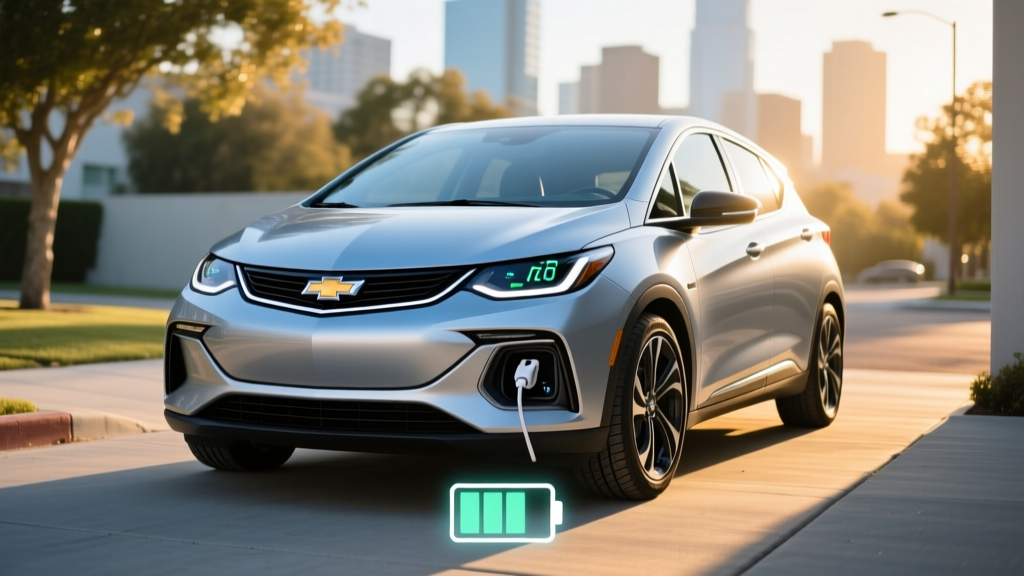
The Chevy Bolt has always been the value champion of the EV world, and the 2026 Chevy Bolt Premier — the top trim of GM's redesigned second-generation Bolt — aims to prove that affordable doesn't have to mean bare-bones. Built on an updated Ultium-derived platform with a brand-new LFP (lithium iron phosphate) battery, the Bolt Premier delivers 255 miles of EPA-estimated range, faster DC charging than its predecessor, and a loaded equipment list at a starting MSRP that undercuts nearly every rival in the compact EV hatchback segment.
But does the Premier trim justify its price premium over the base Bolt? How does that LFP battery handle real-world highway driving and cold weather? And does the 2026 Bolt Premier still qualify for the federal EV tax credit under current IRS §30D rules? We break down every number that matters.
2026 Chevy Bolt Premier: Core Specs at a Glance
| Specification | 2026 Chevy Bolt Premier |
|---|---|
| EPA Estimated Range | 255 miles |
| Battery Capacity (Usable) | 65 kWh (LFP chemistry) |
| Powertrain | Single-motor FWD |
| Horsepower / Torque | 200 hp / 236 lb-ft |
| 0–60 mph | ~6.5 seconds |
| Max DC Fast-Charge Rate | 115 kW (peak) |
| 10–80% DC Fast Charge | ~32 minutes |
| Level 2 AC Charging | 11.5 kW (~39 mi/hr) |
| EPA Efficiency | 120 MPGe combined / 28 kWh/100 mi |
| Cargo Volume (rear seats up/down) | 22.3 / 57.0 cu ft |
| Rear Legroom | 36.7 inches |
| Battery Warranty | 8 years / 100,000 miles |
| Base MSRP (Premier trim) | $33,595 (incl. destination) |
Real-World Range: What the EPA Sticker Doesn't Tell You
Real-World Highway (70–75 mph): ~210–225 miles
Cold Weather (below 30°F): ~175–200 miles (20–30% reduction typical for LFP)
City/Commuter Driving with Regen: 250–265 miles (often exceeds EPA in stop-and-go)
The 255-mile EPA figure is respectable for a sub-$35,000 EV, but real-world results depend heavily on how and where you drive. In our experience with the Bolt platform, highway driving at sustained 70–75 mph yields roughly 210–225 miles before you need to find a charger. The Bolt's relatively compact frontal area and efficient drivetrain help, but aerodynamic drag at highway speeds is the universal EV range killer.
Cold weather hits LFP batteries harder than NMC chemistries in terms of temporary range loss. Expect a 20–30% reduction in freezing temperatures — bringing effective range down to around 175–200 miles on the coldest days. The Bolt Premier includes a battery preconditioning system and a standard heat pump, which helps mitigate cabin energy draw, but LFP's cold-weather behavior is a physics trade-off you should factor in if you live in northern climates.
On the flip side, city commuters who lean on regenerative braking can regularly match or slightly exceed the EPA estimate. One-pedal driving mode in the Bolt is among the most aggressive and satisfying in the segment — it can bring the car to a complete stop without touching the brake pedal, recapturing energy efficiently in stop-and-go traffic.
Charging Speed: A Major Generational Upgrade
The first-generation Bolt's biggest criticism was its painfully slow 50 kW DC fast-charging rate. For 2026, GM has addressed this head-on. The new Bolt Premier supports up to 115 kW peak DC fast charging via its CCS1 connector (with a NACS adapter included for Tesla Supercharger access), a more than 2x improvement.
| Charging Level | Power | Speed | Use Case |
|---|---|---|---|
| Level 1 (120V household) | ~1.4 kW | ~4–5 mi/hr | Overnight trickle / emergency |
| Level 2 (240V home) | 11.5 kW | ~39 mi/hr | Daily home charging (full charge ~7 hrs) |
| DC Fast Charge | 115 kW peak | 10–80% in ~32 min | Road trips / public stations |
At a 150 kW or higher DC fast charger, the Bolt Premier ramps quickly to its 115 kW peak and sustains strong charging speed through roughly 50% state of charge (SoC), then tapers progressively. The 10–80% time of approximately 32 minutes is competitive with rivals like the Hyundai Kona Electric and Nissan Leaf, though it trails the Hyundai Ioniq 5 and Tesla Model 3, which can pull 10–80% in under 20 minutes thanks to 800V and higher-power architectures.
For home Level 2 charging, the onboard 11.5 kW charger is excellent. On a 48-amp Level 2 circuit (the most common home install), you'll add roughly 39 miles of range per hour, meaning a full 0–100% charge takes about 7 hours — easily handled overnight. We recommend pairing the Bolt Premier with a quality Level 2 home charger like the ChargePoint Home Flex or Emporia Level 2, installed on a dedicated 60-amp circuit by a licensed electrician.
Charging curve reality check: Peak kW is not sustained kW. The Bolt Premier holds close to 115 kW between roughly 10–40% SoC, then steps down to ~80 kW through 60%, and further tapers above 80%. If you're road-tripping, plan your stops to charge from 10–80% rather than topping off to 100%, as the final 20% can add 20+ minutes.
Performance and Driving Dynamics
The 2026 Bolt Premier's single front-mounted motor produces 200 horsepower and 236 lb-ft of torque, sending power to the front wheels. The 0–60 mph time of approximately 6.5 seconds is quick for a compact hatchback and makes highway merging and passing effortless. Instant electric torque gives the Bolt a punchy, responsive feel around town that belies its modest price tag.
Ride quality on the Premier trim benefits from GM's refined suspension tuning — compliant enough for daily commuting over rough pavement, yet composed through corners with minimal body roll. The steering is light but precise, and the turning radius makes the Bolt a natural city car. At highway speeds, cabin noise is well-managed, though you'll hear some wind noise around the A-pillars above 70 mph.
The Bolt Premier is not an AWD or dual-motor vehicle, and GM does not offer a performance variant. If all-wheel-drive traction in snow or sub-5-second acceleration is a priority, you'll need to look at the Tesla Model 3 Long Range AWD or the Hyundai Ioniq 5 AWD. But for front-wheel-drive commuters in moderate climates, the Bolt's powertrain is more than adequate.
Pricing, Trims, and Federal Tax Credit Eligibility
The 2026 Chevy Bolt lineup comes in two trims: the base LT starting at $27,395 and the Premier at $33,595 (both prices include the $1,095 destination charge). The Premier adds premium features including a heated steering wheel, ventilated front seats, a panoramic sunroof, a 360-degree camera system, a power-adjustable driver's seat with memory, and GM's Super Cruise hands-free driving system on compatible highways.
| Trim | MSRP (incl. dest.) | Est. Federal Credit | Effective Price |
|---|---|---|---|
| Bolt LT | $27,395 | Up to $7,500* | ~$19,895* |
| Bolt Premier | $33,595 | Up to $7,500* | ~$26,095* |
*Federal tax credit eligibility under IRS §30D depends on multiple requirements that can change annually. Always verify current-year rules.
- MSRP Cap: Vehicle must have an MSRP below $55,000 (cars/hatchbacks). The Bolt Premier at $33,595 qualifies. ✓
- Buyer Income Cap: AGI must not exceed $150,000 (single), $225,000 (head of household), or $300,000 (joint). ✓ Verify your specific situation.
- Battery Sourcing: Critical minerals and battery components must meet phased-in percentages of US/free-trade-agreement sourcing. GM has been working to qualify its LFP supply chain — check the latest fueleconomy.gov listing for the Bolt's current sourcing status.
- Point-of-Sale Transfer: As of 2024+, buyers can transfer the credit to the dealer at purchase, reducing the upfront price rather than waiting for a tax refund. Confirm dealer participation.
- Final Assembly: Vehicle must undergo final assembly in North America. The Bolt is built in Orion Township, Michigan. ✓
The critical variable for the 2026 Bolt is battery sourcing. LFP cells are predominantly manufactured in China, and §30D's critical-mineral and battery-component requirements have tightened each year since 2024. Before purchasing, confirm on fueleconomy.gov that the specific Bolt configuration qualifies for the full $7,500, a partial $3,750, or no credit — this can shift with supply-chain changes and is not guaranteed across all model years.
Interior, Cargo, and Daily Practicality
The Bolt Premier's interior is where the trim upgrade shows its value. Soft-touch materials, contrast stitching, and a leatherette-wrapped dashboard replace the hard plastics found in the base LT. The 11.3-inch diagonal infotainment touchscreen runs GM's latest Ultifi-based software with wireless Apple CarPlay and Android Auto, built-in Google Maps navigation, and over-the-air update capability.
Cargo space is generous for the segment: 22.3 cubic feet behind the rear seats and 57.0 cubic feet with the 60/40 split rear seats folded. That's enough for a week's groceries or a couple of carry-on suitcases without folding seats, and competitive with the Hyundai Kona Electric (25.5 cu ft) and notably more than the MINI Cooper SE (8.7 cu ft). There is no front trunk (frunk) — the space under the hood houses the motor and power electronics.
Rear-seat legroom measures 36.7 inches, which is comfortable for adults on shorter trips. Headroom is generous thanks to the hatchback roofline, and the panoramic sunroof on the Premier adds an airy feel to the cabin. Three adults across the rear bench is tight — the Bolt is best as a four-person vehicle.
Driver Assistance and Safety Technology
The Bolt Premier comes standard with GM's Chevy Safety Assist suite, which includes automatic emergency braking with pedestrian detection, forward collision alert, lane keep assist with lane departure warning, following distance indicator, and IntelliBeam automatic high beams. These are Level 0–1 driver-assist features per NHTSA definitions and require full driver attention at all times.
The Premier's standout tech addition is Super Cruise, GM's hands-free Level 2 driver-assistance system that operates on over 750,000 miles of mapped, divided highways in the US and Canada. Super Cruise uses a driver-attention camera mounted on the steering column to monitor eye gaze — you can take your hands off the wheel, but you must remain alert and eyes-forward. This is not autonomous driving; it is a supervised Level 2 system. Still, on long highway stretches, Super Cruise significantly reduces fatigue and is one of the best Level 2 systems available at any price point.
Super Cruise handles steering, acceleration, and braking on compatible highways, but the driver must remain engaged and ready to take over immediately. This is not a Level 4 robotaxi — it will not navigate unmapped roads, construction zones, or surface streets autonomously. Always keep your eyes on the road.
The Bolt earned strong safety marks, with the previous-generation platform achieving an IIHS Top Safety Pick rating. Watch for updated IIHS crash-test results for the redesigned 2026 model as testing completes.
Pros and Cons
- Strong value: loaded Premier trim under $34K before credits
- 255-mile EPA range covers most commutes comfortably
- LFP battery chemistry: longer cycle life, no cobalt, can charge to 100% daily without degradation concerns
- Super Cruise hands-free driving included on Premier
- 11.5 kW Level 2 onboard charger is best-in-class
- Spacious hatchback cargo area (57 cu ft max)
- One-pedal driving with strong regen
- Built in Michigan — North American assembly confirmed
- DC fast charging at 115 kW trails segment leaders (Ioniq 5, Model 3)
- FWD only — no AWD option for snow-belt buyers
- LFP battery loses more range in extreme cold vs. NMC
- No front trunk (frunk)
- Rear seat tight for three adults
- Tax credit eligibility depends on evolving battery-sourcing rules
- Road-trip charging stops take longer than 800V competitors
Who Should Buy the 2026 Chevy Bolt Premier?
- You're a daily commuter driving under 100 miles round-trip and want a premium-feel EV under $35K.
- You have home Level 2 charging and want to maximize overnight convenience (11.5 kW onboard charger fills the battery fast).
- You value hands-free highway driving (Super Cruise) without paying luxury-brand prices.
- You want an LFP battery for long-term durability and the ability to charge to 100% daily without degradation anxiety.
- You regularly road-trip 400+ miles and need 200+ kW DC fast charging (consider Ioniq 5 or Model 3).
- You live in heavy-snow regions and need AWD (consider the Subaru Solterra or Toyota bZ4X).
- You need three-across rear seating or large-family cargo capacity (consider the Hyundai Ioniq 5 or VW ID.4).
The 2026 Chevy Bolt Premier occupies a compelling sweet spot: it's the most affordable way to get Super Cruise, a heat pump, a large infotainment screen, and 255 miles of range in a single package. For urban and suburban buyers with home charging, it's one of the smartest EV purchases on the market. Road-trip warriors and cold-climate drivers should weigh the charging-speed and LFP cold-weather trade-offs carefully against the price savings.
Frequently Asked Questions
What is the real-world range of the 2026 Chevy Bolt Premier?
The EPA estimates 255 miles, but expect roughly 210–225 miles on the highway at 70–75 mph, and 175–200 miles in freezing cold weather. City commuters using regenerative braking can often match or exceed the EPA number.
How fast does the Bolt Premier charge at home and on DC fast chargers?
At home on a Level 2 (240V) charger, the 11.5 kW onboard charger adds about 39 miles per hour, fully recharging in ~7 hours. On a DC fast charger, it peaks at 115 kW and charges from 10–80% in approximately 32 minutes.
Does the 2026 Chevy Bolt Premier qualify for the $7,500 federal EV tax credit?
It likely qualifies for at least a partial credit, but eligibility depends on current-year IRS §30D battery-sourcing requirements, your income (capped at $150K single / $300K joint), and the vehicle's MSRP (under the $55K cap). The Bolt's MSRP and North American assembly meet the thresholds, but LFP battery component sourcing rules are evolving. Always check fueleconomy.gov and consult a tax professional before purchasing.
Is the Chevy Bolt Premier worth it vs. the Hyundai Kona Electric or Tesla Model 3?
The Bolt Premier wins on value and features-per-dollar — Super Cruise, a heat pump, and a panoramic sunroof at $33,595 is hard to match. The Kona Electric offers slightly more cargo space and similar range but lacks Super Cruise. The Tesla Model 3 has faster DC charging, AWD availability, and access to the Supercharger network natively, but starts significantly higher in price. If budget is your primary concern, the Bolt Premier is the strongest value play.
What is the battery warranty on the 2026 Bolt Premier?
GM covers the Bolt's battery and powertrain for 8 years or 100,000 miles, whichever comes first. The warranty guarantees the battery will retain a minimum level of capacity (typically 60–70% of original capacity, per GM's published terms). LFP chemistry generally degrades more slowly than NMC over thousands of charge cycles, which should provide long-term peace of mind.
Can I charge the Bolt Premier at Tesla Superchargers?
Yes. The 2026 Bolt comes with a NACS adapter (or has a native NACS port, depending on production batch), enabling access to Tesla's Supercharger network via the included adapter. GM has been transitioning its EV lineup to NACS compatibility, and the redesigned Bolt supports this standard.