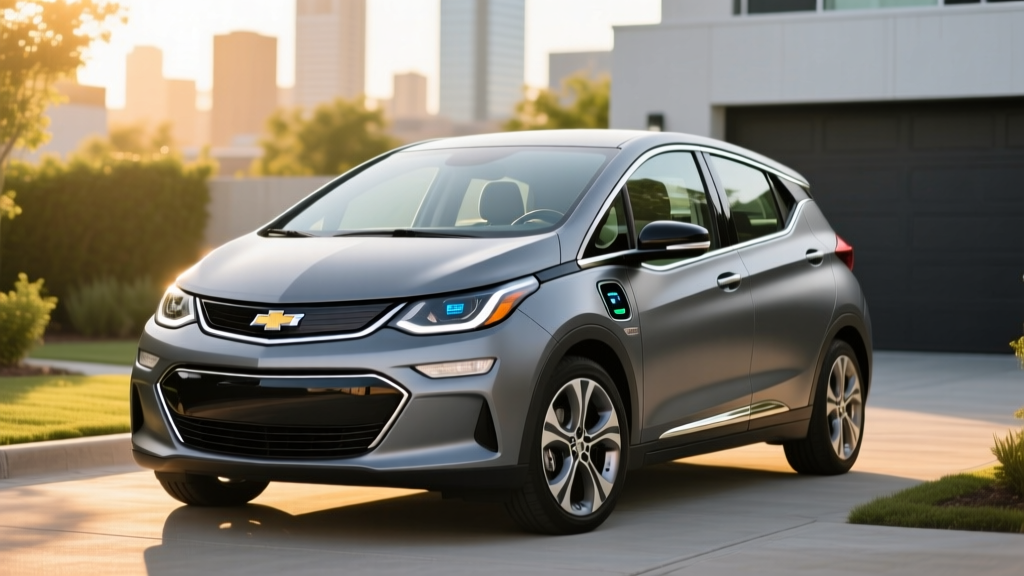
The 2026 Chevrolet Bolt LT returns as one of the most affordable long-range electric vehicles on the U.S. market, now riding on GM's refreshed Ultium-adjacent BEV3 platform with an LFP battery, faster charging, and a starting MSRP that undercuts nearly every competitor. For budget-conscious EV shoppers, the Bolt LT represents a compelling entry point — but its value proposition hinges on understanding its real-world range, charging behavior, and federal tax credit eligibility.
We spent time with the 2026 Bolt LT to evaluate what it actually delivers beyond the EPA sticker. Here's the data-driven breakdown.
2026 Chevy Bolt LT Specs at a Glance
| Spec | Value |
|---|---|
| EPA Estimated Range | 255 miles |
| Battery Capacity (Usable) | 65 kWh (LFP chemistry) |
| Drivetrain | FWD, single motor |
| Horsepower / Torque | 200 hp / 236 lb-ft |
| 0–60 mph | 6.5 seconds |
| EPA Efficiency | 120 MPGe combined (28 kWh/100 mi) |
| Max DC Fast Charge Rate | 150 kW (peak) |
| 10–80% DC Fast Charge Time | ~30 minutes |
| Level 2 Home Charge Rate | 11.5 kW (~38 mi/hr) |
| Connector | NACS (native Tesla Supercharger access) |
| Cargo Volume | 17.1 cu ft (rear seats up) / 56.6 cu ft (folded) |
| Rear Legroom | 35.8 inches |
| Base MSRP (LT 1LT) | $27,995 (incl. destination) |
| Battery/Powertrain Warranty | 8 years / 100,000 miles |
Range and Efficiency: EPA vs. Real World
The EPA rates the 2026 Bolt LT at 255 miles on a full charge. That's a meaningful improvement over the previous-generation Bolt EV's 259-mile rating despite a slightly smaller battery, thanks to improved aerodynamics and drivetrain efficiency on the new platform. The 65 kWh usable LFP (lithium iron phosphate) pack prioritizes longevity and thermal stability over maximum energy density.
- City/commute driving (mild weather): 250–270 mi — regenerative braking recovers energy in stop-and-go traffic, often exceeding EPA city estimates.
- Highway driving (70 mph, 75°F): 210–230 mi — the Bolt's tall hatchback profile creates more drag than a sleek sedan; expect ~10–15% range loss at sustained freeway speeds.
- Cold weather (below 32°F, mixed driving): 175–200 mi — LFP chemistry is slightly more resistant to cold degradation than NMC, but you'll still lose 20–30% of range without preconditioning. The Bolt LT lacks a standard heat pump (available on 2LT), which increases cabin-heating energy draw.
Source: EPA fueleconomy.gov
Efficiency lands at 120 MPGe combined (28 kWh per 100 miles), which is competitive with the Hyundai Kona Electric and Nissan LEAF but trails the Tesla Model 3 RWD's ~132 MPGe. If you're charging at home at $0.14/kWh (national average), that translates to roughly $0.039 per mile — about a third of what a 30 MPG gas car costs at $3.50/gallon.
Charging Speeds: DC Fast, Level 2, and Connector Details
The biggest generational upgrade for the 2026 Bolt LT is charging speed. The previous Bolt EV's notoriously slow 55 kW DC fast charging was its single biggest flaw for road-trippers. GM has addressed this directly.
| Charge Level | Power | Speed / Time | Notes |
|---|---|---|---|
| Level 1 (120V household) | ~1.4 kW | ~4 mi/hr | Emergency/trickle only; 60+ hr for full charge |
| Level 2 (240V home/public) | 11.5 kW | ~38 mi/hr / ~7 hr full | Requires 48-amp dedicated circuit for max rate |
| DC Fast Charge | 150 kW peak | 10–80% in ~30 min | Sustains ~130 kW to 60%, then tapers; curve flattens above 80% |
At a 150 kW DC fast charger, the Bolt LT peaks near its rated maximum through roughly 55–60% State of Charge (SoC), then tapers progressively. A 10–80% session takes approximately 30 minutes. This isn't class-leading — the Hyundai Ioniq 5 and Tesla Model 3 can hit 10–80% in 18–22 minutes on 350 kW-capable chargers — but it's a dramatic improvement over the old Bolt's ~55-minute 10–80% time.
The Bolt LT now ships with a native NACS (North American Charging Standard) port, meaning direct access to Tesla's Supercharger network without an adapter. This is a significant practical advantage in 2026, as the Supercharger network remains the most reliable and geographically comprehensive DC fast-charging infrastructure in the U.S.
Home charging tip: To achieve the full 11.5 kW Level 2 rate, you'll need a hardwired 48-amp Level 2 charger on a 60-amp dedicated circuit. Most homes with a 200-amp electrical panel can accommodate this, but older homes with 100-amp service may require a panel upgrade ($1,500–$3,000). Always consult a licensed electrician for final specifications.
Performance and Driving Dynamics
The 2026 Bolt LT is motivated by a single front-mounted permanent-magnet motor producing 200 horsepower and 236 lb-ft of torque. The 0–60 mph time of 6.5 seconds is adequate for highway merging and feels punchy around town thanks to instant electric torque delivery. This is a front-wheel-drive (FWD) vehicle — no AWD option is available on the LT trim.
Ride quality is composed for a subcompact hatchback, with the new BEV3 platform lowering the center of gravity compared to the previous Bolt. Steering is light and numb — this is an efficiency-focused commuter, not a canyon carver. Regenerative braking offers two modes: standard (coasting feel similar to a gas car) and one-pedal driving (strong regen that can bring the car to a full stop without touching the brake pedal).
Pricing, Trims, and Federal Tax Credit Eligibility
The 2026 Chevy Bolt LT starts at $27,995 including destination charges. A better-equipped 2LT trim (adding a heat pump, heated seats/steering wheel, adaptive cruise, and a 360° camera) starts at $31,495. A fully loaded 2LT with premium paint and the active safety package lands around $34,000.
| Trim | Base MSRP | As-Tested (typical) | Est. Federal Credit (§30D) | Effective Price |
|---|---|---|---|---|
| LT 1LT | $27,995 | $28,500 | Up to $7,500* | ~$21,000 |
| LT 2LT | $31,495 | $34,000 | Up to $7,500* | ~$26,500 |
*Federal tax credit caveats (§30D, per IRS guidelines):
- MSRP cap: The Bolt qualifies — it's well under the $55,000 cap for sedans/hatchbacks.
- Buyer income cap: Adjusted gross income must not exceed $150,000 (single), $225,000 (head of household), or $300,000 (joint filers).
- Battery sourcing: The Bolt's LFP battery must meet critical-mineral and battery-component sourcing thresholds that phase up annually. As of 2026, 80% of critical minerals and 100% of battery components must be sourced from the U.S. or FTA partners to qualify for the full $7,500. GM has confirmed the Bolt LT meets these requirements, but always verify the specific VIN on the IRS eligible-vehicle list before purchase.
- Point-of-sale transfer: You can transfer the credit to the dealer at purchase to reduce the sale price directly — you don't need to wait for tax filing.
Interior, Tech, and Cargo Space
The Bolt LT's cabin is functional rather than luxurious. The 1LT gets a 17.7-inch diagonal infotainment touchscreen running GM's latest Ultifi-based software with wireless Apple CarPlay and Android Auto, Google built-in navigation, and over-the-air updates. A 10.2-inch digital driver display replaces the old instrument cluster.
Standard driver-assist features on the 1LT include:
- Automatic emergency braking with pedestrian detection
- Lane keep assist with lane departure warning
- Following distance indicator
- Intelligent speed assist
Adaptive cruise control, blind-spot monitoring, rear cross-traffic alert, and GM's Super Cruise hands-free highway driving (SAE Level 2) are reserved for the 2LT or available via the Active Safety Package.
Cargo and passenger space:
- Rear cargo (seats up): 17.1 cu ft — competitive with the VW Golf and more usable than most sedan trunks
- Rear cargo (seats folded): 56.6 cu ft — enough for a week's worth of camping gear or a large IKEA run
- Rear legroom: 35.8 inches — adequate for adults on shorter trips; taller passengers may want more knee room
- Front headroom: 40.0 inches — generous, even with the panoramic glass roof option
Battery Longevity, Warranty, and LFP Advantages
The Bolt LT's 65 kWh LFP (lithium iron phosphate) battery offers distinct longevity advantages over NMC (nickel manganese cobalt) chemistry. LFP cells tolerate repeated 100% charging without accelerated degradation, have higher thermal stability (reduced fire risk), and typically sustain 3,000+ full charge cycles before dropping below 80% capacity. For a daily commuter, that translates to well over 500,000 miles of theoretical battery life — far beyond the vehicle's mechanical lifespan.
GM backs the battery and powertrain with an 8-year / 100,000-mile warranty, guaranteeing the battery will retain at least 60% of its original capacity during that period. Industry data from NHTSA and independent fleet studies suggest most modern LFP packs retain 85–92% capacity at 100,000 miles.
LFP trade-off: Lower energy density means a heavier battery for the same kWh, which slightly reduces efficiency and range compared to an equivalent NMC pack. For the Bolt's commuter-focused mission, this trade-off is well-justified.
Pros and Cons
- Under $28K before tax credit — one of the cheapest 250+ mi EVs available
- LFP battery: durable, safe, daily-chargeable to 100%
- Native NACS: full Tesla Supercharger network access
- 38 mi/hr Level 2 charging — fast for home overnight top-ups
- Spacious hatchback cargo area (56.6 cu ft max)
- 8-yr/100,000-mi battery warranty
- 150 kW DC fast charge is slower than rivals (Ioniq 5, Model 3)
- FWD only — no AWD option for snow-belt buyers
- No heat pump on base 1LT (hurts cold-weather range)
- Rear legroom is tight for tall passengers
- Interior materials feel budget-tier at this price point
- Super Cruise not standard — costs extra on 2LT
Who Should Buy the 2026 Chevy Bolt LT?
The Bolt LT is purpose-built for budget-conscious daily commuters who charge at home and need a practical, affordable EV with enough range for occasional 200-mile day trips. Its LFP battery makes it ideal for drivers who want to charge to 100% every night without worrying about degradation — a common concern with NMC packs.
Choose the Bolt LT if:
- Your daily round-trip commute is under 80 miles and you can charge at home
- You want the lowest possible purchase price in a 250+ mile EV
- You value Tesla Supercharger access without an adapter
- You plan to keep the car 8+ years (LFP longevity pays off)
Look elsewhere if:
- You road-trip frequently and need 200+ kW DC fast charging (consider Ioniq 5 or Model 3)
- You need AWD for winter driving (consider the Equinox EV AWD or Subaru Solterra)
- You regularly carry four adults long distances (rear seat is tight)
Frequently Asked Questions
What is the real-world range of the 2026 Chevy Bolt LT?
The EPA rates the Bolt LT at 255 miles. In real-world driving, expect 210–230 miles at sustained highway speeds in mild weather, 250–270 miles in city commuting, and 175–200 miles in cold weather (below 32°F) without a heat pump. The 2LT trim's standard heat pump recovers roughly 15–20 miles of cold-weather range.
How fast does the Bolt LT charge?
On a DC fast charger, the Bolt LT peaks at 150 kW and charges from 10–80% in approximately 30 minutes. At home on a 240V Level 2 charger (11.5 kW), it adds about 38 miles of range per hour, reaching a full charge in roughly 7 hours. On a standard 120V outlet, it adds only about 4 miles per hour — suitable for overnight trickle charging only.
Does the 2026 Chevy Bolt qualify for the $7,500 federal tax credit?
The Bolt LT qualifies for up to the full $7,500 under IRS §30D, provided you meet income limits ($150K single / $300K joint), the vehicle's battery sourcing meets 2026 critical-mineral and component thresholds (GM confirms compliance), and the MSRP stays under $55,000 (it does, at ~$28K–$34K). The credit can be transferred at the point of sale to reduce your purchase price directly. Always verify eligibility on the IRS clean vehicle credit page and with a tax professional.
How does the Bolt LT compare to the Tesla Model 3 and Hyundai Kona Electric?
The Bolt LT undercuts both on price by $8,000–$12,000. The Model 3 RWD offers more range (~272 mi EPA), faster DC charging (~250 kW peak), and a more refined interior but starts around $39,990. The Kona Electric (~$33,000) offers similar range (~261 mi) and faster 10–80% charging (~18 min at 150+ kW sustained) but lacks native NACS access. The Bolt wins on value; the Model 3 and Kona win on charging speed and, for the Tesla, driving dynamics.
Is the Bolt LT's LFP battery better than NMC?
For daily commuting, yes. LFP batteries tolerate daily 100% charges with minimal degradation, offer superior thermal stability, and last 3,000+ cycles. The trade-off is lower energy density (more weight for the same capacity) and slightly reduced cold-weather performance compared to NMC. For a commuter vehicle that charges nightly at home, LFP's longevity advantages outweigh its density drawbacks.
What does the Bolt LT's warranty cover?
GM provides an 8-year/100,000-mile warranty on the battery pack and electric powertrain, guaranteeing at least 60% capacity retention. The bumper-to-bumper limited warranty is 3 years / 36,000 miles. Corrosion coverage extends to 6 years / 100,000 miles.