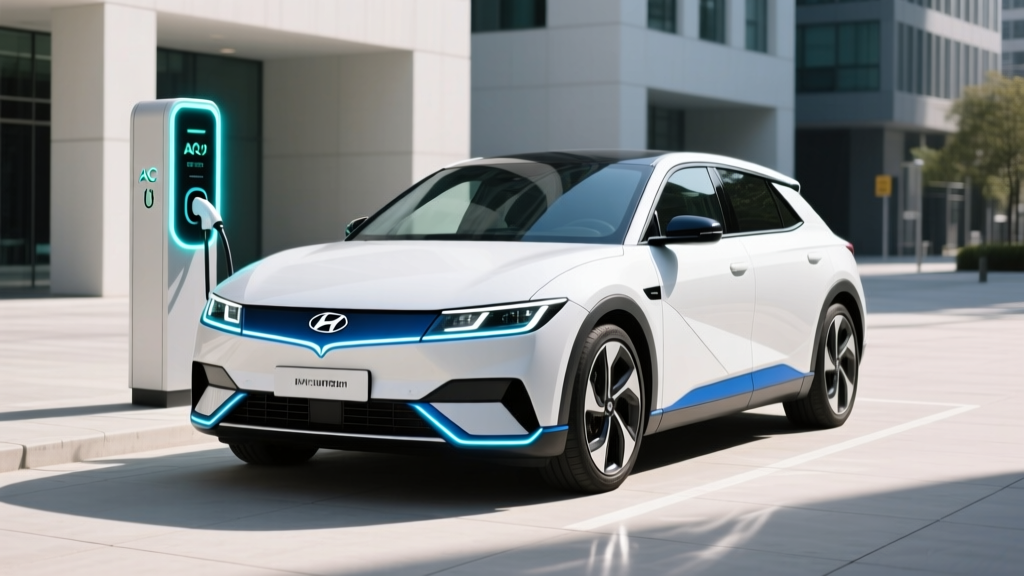
The Hyundai Ioniq 5 remains one of the most compelling electric crossovers on the market in 2026, and for many buyers, the financial equation hinges on a single question: does it qualify for the federal EV tax credit, and what will you actually pay after incentives? This review covers everything you need to know about the 2026 Ioniq 5 — from EPA range and real-world highway testing to 800V DC fast-charging performance, §30D tax credit eligibility, and how it stacks up against the Tesla Model Y and Ford Mustang Mach-E.
2026 Hyundai Ioniq 5: Quick Verdict
The Ioniq 5 earns its reputation as a well-rounded EV crossover. Its 800V electrical architecture delivers class-leading DC fast-charging speeds, the interior is genuinely spacious, and the ride quality is composed. The biggest caveats remain the same as prior model years: EPA range lags some competitors, and cold-weather efficiency drops are noticeable. For buyers who can charge at home and prioritize charging speed over maximum range, the Ioniq 5 is a strong pick — especially if you qualify for the full federal credit.
| Spec | SE/SEL Standard Range (RWD) | SE/SEL/Limited Long Range (RWD) | SEL/Limited (AWD) |
|---|---|---|---|
| EPA Range | 245 mi | 318 mi | 290 mi |
| Battery (Usable) | 58 kWh (LFP) | 77.4 kWh (NMC) | 77.4 kWh (NMC) |
| Horsepower | 168 hp | 225 hp | 320 hp |
| 0-60 mph | ~8.0 sec | ~7.0 sec | ~4.5 sec |
| MPGe (Combined) | 110 MPGe | 117 MPGe | 101 MPGe |
| Max DC Fast Charge | ~150 kW | ~240 kW | ~240 kW |
| 10-80% DCFC Time | ~25 min | ~18 min | ~18 min |
| Level 2 Charge Rate | 10.9 kW (~37 mi/hr) | 10.9 kW (~37 mi/hr) | 10.9 kW (~37 mi/hr) |
| Drivetrain | RWD | RWD | Dual-Motor AWD |
| Base MSRP (2026) | $42,600 | $47,650 | $51,150 |
Real-World Range vs. EPA Estimates
EPA Sticker: Up to 318 miles (Long Range RWD) / 290 miles (AWD)
Real-World Expectation: ~260–280 miles highway (70 mph, moderate temps); ~210–240 miles in sub-freezing conditions with cabin heat.
The 318-mile EPA figure on the Long Range RWD is competitive but not class-leading. In mixed driving, owners consistently report achieving 90–95% of the EPA sticker. Highway driving at sustained speeds of 70–75 mph pushes consumption higher, typically yielding 260–280 miles before needing a charge. Cold weather is the Ioniq 5's Achilles heel — the heat pump (standard on Long Range trims) mitigates some loss, but expect a 15–25% range reduction in temperatures below 32°F, bringing effective range down to roughly 220–250 miles on the Long Range AWD.
The Standard Range model's 245-mile EPA rating translates to approximately 200–215 miles in real-world highway use. This is adequate for daily commuting but limits road-trip flexibility. If your commute exceeds 80 miles round-trip or you take regular highway trips, the Long Range battery is strongly recommended.
Efficiency, per fueleconomy.gov, ranges from 101 to 117 MPGe depending on drivetrain, equating to roughly 29–33 kWh per 100 miles — mid-pack for the segment.
Charging Performance: 800V Architecture Advantage
The Ioniq 5's 800V electrical architecture is its most significant technical differentiator. While most competitors in this price range use 400V systems, the higher voltage allows the Ioniq 5 to accept DC fast-charging power at rates that rival much more expensive EVs.
| Charging Level | Power / Voltage | Speed (Long Range) | Notes |
|---|---|---|---|
| Level 1 (120V) | ~1.4 kW | ~4 mi/hr | Emergency/trickle only |
| Level 2 (240V, 48A) | 10.9 kW | ~37 mi/hr | Full charge in ~8 hrs (77.4 kWh) |
| DC Fast (350 kW station) | Peak ~240 kW | 10-80% in ~18 min | Sustains 180+ kW to ~60% SoC |
| DC Fast (150 kW station) | ~130 kW avg | 10-80% in ~30 min | Common public charger speed |
Charge curve reality: The Long Range models peak near 240 kW when preconditioned and connected to a 350 kW charger, but that peak only sustains up to approximately 55–60% State of Charge (SoC). From 60–80%, the rate tapers to roughly 120–150 kW. This is why the 10–80% time of 18 minutes is accurate but the 10–90% time stretches to approximately 30 minutes. For road trips, charging to 80% and driving is the most time-efficient strategy.
On Level 2 home charging, the 10.9 kW onboard charger adds about 37 miles of range per hour. A full overnight charge from 20% to 100% takes roughly 7–8 hours on the Long Range battery. This is standard for the segment and perfectly adequate for daily home charging.
The Ioniq 5 uses the Tesla NACS connector as standard equipment for the 2026 model year, providing native access to Tesla Supercharger stations without an adapter — a major practical advantage for road-trip charging reliability.
Federal Tax Credit & Rebate Eligibility
This is where the Hyundai Ioniq 5 rebate question gets nuanced. As of the 2026 model year, the Ioniq 5 is assembled at Hyundai's Metaplant in Ellabell, Georgia, which resolved the prior assembly-location disqualification that affected early 2023 models. However, full §30D federal tax credit eligibility depends on multiple factors.
- MSRP Cap: The Ioniq 5 (classified as an SUV/truck by the IRS) must have an MSRP at or below $80,000. All current trims qualify — the most expensive Limited AWD starts at ~$56,900.
- Buyer Income Cap: Modified AGI must not exceed $150,000 (single), $225,000 (head of household), or $300,000 (married filing jointly).
- Battery Sourcing: Critical minerals and battery component requirements phase in more strictly each year. For 2026, a percentage of critical minerals must be sourced from the US or FTA partners, and battery components must be manufactured/assembled in North America. The Ioniq 5's Georgia assembly helps, but some trims may qualify for only $3,750 (half credit) if critical-mineral sourcing thresholds are not fully met.
- Point-of-Sale Transfer: Under current IRS rules, you can transfer the credit to the dealer at purchase, reducing your out-of-pocket cost immediately rather than waiting for tax filing.
- Lease Loophole: If the full purchase credit is unavailable due to sourcing rules, leasing may still qualify for the full $7,500 under the commercial vehicle credit (§45W), which Hyundai typically passes through as a lease incentive.
| Trim | MSRP | Est. After $7,500 Credit | Est. After $3,750 Credit |
|---|---|---|---|
| SE Standard Range RWD | $42,600 | $35,100 | $38,850 |
| SE Long Range RWD | $47,650 | $40,150 | $43,900 |
| SEL Long Range AWD | $51,150 | $43,650 | $47,400 |
| Limited Long Range AWD | $56,900 | $49,400 | $53,150 |
Critical caveat: Tax credit rules under IRS §30D are subject to change and depend on your individual tax situation. Hyundai's official credit qualification can shift based on battery supply-chain adjustments. Always verify current eligibility on the IRS Clean Vehicle Credit list and consult a tax professional before purchase. State and local incentives (such as utility rebates for home charger installation) may stack on top — check AFDC's state incentive database for specifics in your area.
Interior, Cargo, and Technology
The Ioniq 5's cabin is one of its strongest selling points. The flat floor (a benefit of the dedicated E-GMP EV platform) creates genuinely generous passenger space:
- Front legroom: 41.7 inches
- Rear legroom: 39.4 inches — enough for adults on long trips
- Cargo (rear seats up): 27.2 cu ft
- Cargo (rear seats folded): 59.3 cu ft
- Frunk (front trunk): 0.85 cu ft (AWD) / 2.0 cu ft (RWD)
The frunk is notably small compared to the Ford Mustang Mach-E's 4.7 cu ft front trunk — a tradeoff of the AWD model's additional motor and inverter packaging.
Technology highlights include dual 12.3-inch displays (instrument cluster and infotainment), wireless Apple CarPlay and Android Auto, Hyundai's Digital Key 2 (phone-as-key via NFC/UWB), a head-up display with augmented-reality navigation (Limited trim), and Vehicle-to-Load (V2L) capability that lets you power external devices — from a laptop to a small appliance — at up to 3.6 kW through an interior outlet or exterior adapter.
On the driver-assistance front, Hyundai SmartSense includes adaptive cruise control with stop-and-go, lane-keeping assist, blind-spot monitoring, and rear cross-traffic collision-avoidance. Highway Driving Assist 2 (HDA2) provides hands-on-wheel lane centering and automatic lane changes on mapped highways. This is an SAE Level 2 system — it assists but does not replace the driver.
Pros, Cons, and Who Should Buy
Pros
- Class-leading DC fast-charge speed (10-80% in ~18 min on 350 kW)
- NACS connector standard — native Tesla Supercharger access
- Spacious, flat-floor interior with excellent rear legroom
- V2L capability for camping, tailgating, or emergency power
- Comfortable ride quality; refined cabin noise levels
- Federal tax credit eligible (full or partial, trim-dependent)
Cons
- EPA range trails Model Y Long Range (~330 mi) and some competitors
- Significant cold-weather range loss (15–25% below freezing)
- Small frunk, especially on AWD trims
- No single-pedal driving mode (i-Pedal) in US-market software
- Infotainment has physical-button reliance that some find dated
- Rear wiper absent on pre-2025 models (added for 2025+)
Choose the Hyundai Ioniq 5 if: You prioritize ultra-fast DC charging, want native Supercharger access, value interior space and V2L, and your daily driving is under 200 miles with regular road-trip charging access.
Look elsewhere if: Maximum EPA range is your top priority (consider the Tesla Model Y Long Range or Chevrolet Equinox EV), you need a large frunk, or you live in an extremely cold climate where the range penalty compounds.
How It Compares: Ioniq 5 vs. Key Rivals
The Ioniq 5 competes directly with the Tesla Model Y, Ford Mustang Mach-E, and Volkswagen ID.4. Against the Model Y Long Range AWD ($48,990, EPA 320 mi), the Ioniq 5 offers faster peak charging and a more comfortable ride, but gives up roughly 30 miles of range and Tesla's unmatched Supercharger network reliability (though NACS access narrows this gap). The Mach-E Extended Range AWD ($52,995, EPA 310 mi) offers a sportier driving feel and larger frunk but charges slower on DC. The ID.4 ($41,995, EPA 291 mi) undercuts on price but trails on charging speed, technology, and interior refinement.
On price after the full federal credit, a Long Range RWD Ioniq 5 SE at approximately $40,150 is highly competitive. The AWD SEL at ~$43,650 after credit offers strong value for buyers needing all-weather traction.
Warranty and Long-Term Ownership
Hyundai backs the Ioniq 5 with one of the strongest warranty packages in the segment:
- Battery: 10 years / 100,000 miles (capacity retention above 70% of original)
- Powertrain: 10 years / 100,000 miles
- New Vehicle: 5 years / 60,000 miles
- Roadside Assistance: 5 years / unlimited miles
- Complimentary Maintenance: 3 years / 36,000 miles
The 70% capacity retention threshold is standard for the industry. Real-world degradation data from early 2022–2024 Ioniq 5 owners suggests approximately 5–8% capacity loss over the first 60,000 miles for NMC batteries, with degradation slowing significantly after the initial break-in period. LFP batteries in the Standard Range model typically show even slower degradation but start with lower total capacity.
Frequently Asked Questions
What is the real-world range of the 2026 Hyundai Ioniq 5?
The Long Range RWD delivers approximately 260–280 miles in real-world highway driving at moderate temperatures. In cold weather (below 32°F), expect 220–250 miles. The Standard Range model yields roughly 200–215 highway miles. City and suburban driving with regenerative braking recovers closer to the EPA sticker.
How fast does the Ioniq 5 charge at home and on the road?
On a Level 2 home charger (240V, 48A), the Ioniq 5 charges at 10.9 kW, adding about 37 miles of range per hour — a full overnight charge for most drivers. On a 350 kW DC fast charger, the Long Range models peak at ~240 kW and charge from 10–80% in approximately 18 minutes when preconditioned. On a more common 150 kW public charger, expect 10–80% in roughly 30 minutes.
How much does the 2026 Ioniq 5 cost after the federal tax credit?
With the full $7,500 federal credit, the SE Standard Range starts around $35,100 and the popular SEL Long Range AWD drops to approximately $43,650. If only the $3,750 half-credit applies (due to critical-mineral sourcing), add $3,750 to those figures. Lease deals may qualify for the full incentive regardless of sourcing rules.
Does the Hyundai Ioniq 5 qualify for the federal EV tax credit?
The Ioniq 5 is assembled in Georgia and falls under the $80,000 MSRP cap for SUVs, making it eligible in principle. Full $7,500 credit depends on meeting both battery-component and critical-mineral sourcing thresholds, which vary by trim and production batch. Buyers must also meet income caps ($150K single / $300K joint). Verify current status on the IRS Clean Vehicle Credit list before purchasing.
Is the Ioniq 5 worth buying over the Tesla Model Y?
The Ioniq 5 charges faster on DC, rides more comfortably, and offers a more traditional interior with physical climate controls. The Model Y offers more EPA range (~320 mi), a more extensive proprietary service network, and OTA software updates. With NACS now standard on the Ioniq 5, the Supercharger access gap has narrowed significantly. If charging speed and ride comfort matter most, the Ioniq 5 has the edge. If range and software ecosystem are paramount, the Model Y wins.
What are the biggest drawbacks of the Ioniq 5?
The main compromises are EPA range that trails top competitors by 20–40 miles, noticeable cold-weather efficiency loss, a small frunk (especially on AWD), and the absence of true one-pedal driving in the US market. None of these are deal-breakers for most buyers, but they are real tradeoffs to weigh.