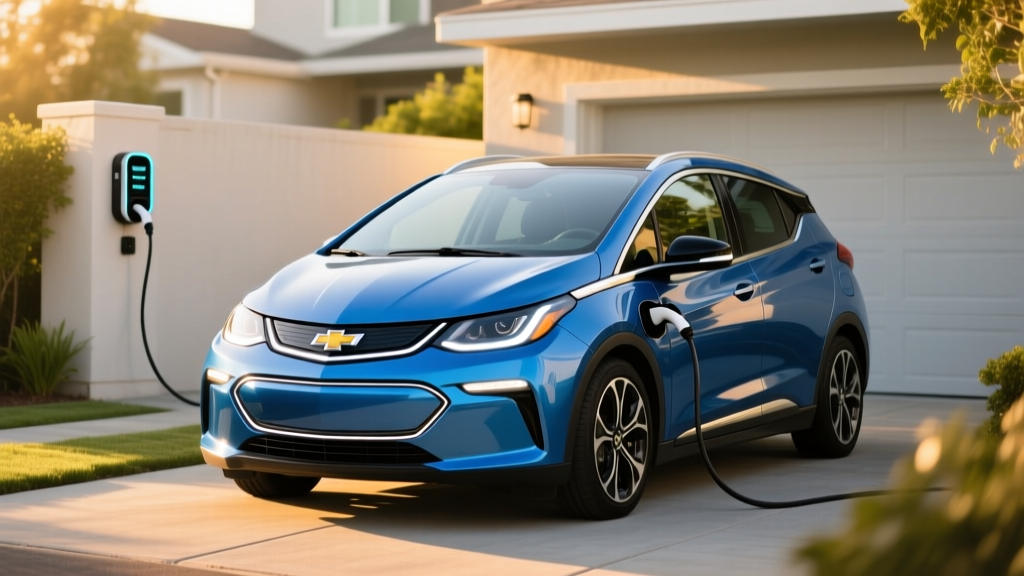
Search "Chevy Bolt gas mileage" and you'll hit a wall of confusion. The Bolt doesn't burn a single drop of gasoline — it's a fully electric vehicle (EV). But the question behind the question is real: How efficient is the Chevy Bolt compared to a gas car, and what does that mean for my wallet?
That's exactly what we'll answer. The 2025/2026 Chevrolet Bolt (now riding on GM's Ultium platform after the original's hiatus) delivers an EPA-estimated 120 MPGe combined, translating to roughly 28 kWh per 100 miles. In plain English? It costs about 3–4 cents per mile to drive on average US electricity rates — versus 12–15 cents per mile in a 30 MPG gas compact.
Below, we cover the Bolt's real-world range, charging speeds, tax-credit pricing, and whether it's still the value king of the EV market.
Spec Snapshot: 2025/2026 Chevy Bolt at a Glance
| Spec | 2025/2026 Chevy Bolt (Ultium) |
|---|---|
| EPA Range | ~259 miles (est.) |
| Battery Capacity | ~65 kWh usable, NMC (Ultium) |
| Efficiency | 120 MPGe combined / ~28 kWh/100 mi |
| DC Fast Charge (Peak) | ~115 kW (CCS/NACS) |
| 10–80% DCFC Time | ~30 minutes |
| Level 2 Home Charge | 11.5 kW (~39 mi/hr) |
| 0–60 mph | ~6.5 seconds |
| Horsepower | 200 hp / 236 lb-ft torque |
| Drivetrain | FWD (front-wheel drive) |
| Cargo (rear seats up / down) | ~16.3 / 54.0 cu ft |
| Base MSRP | ~$27,900 (1LT) |
| Battery Warranty | 8 years / 100,000 miles |
Chevy Bolt Gas Mileage Equivalent: MPGe Explained
MPGe — miles per gallon equivalent — is the EPA's way of comparing EV energy use to gasoline. One gallon of gasoline contains about 33.7 kWh of energy. So when we say the Bolt achieves 120 MPGe combined (roughly 131 city / 109 highway per fueleconomy.gov), it means the Bolt uses the energy equivalent of one gallon to travel 120 miles in mixed driving.
For comparison:
- Toyota Corolla (gas): ~35 MPG combined
- Honda Civic (gas): ~36 MPG combined
- Toyota Prius (hybrid): ~57 MPG combined
- Chevy Bolt EV: 120 MPGe combined
That's roughly 3.4× the efficiency of a Corolla and more than double a Prius. The Bolt's advantage comes from electric motor efficiency (~90%) versus internal combustion (~25–35%), plus regenerative braking that recaptures energy during deceleration.
Real-World Range: What to Actually Expect
EPA sticker: ~259 miles
Real-world highway (70 mph, 75°F): ~220–235 miles
Real-world city (mixed, mild weather): ~250–265 miles
Cold weather (30°F, highway, heater on): ~175–200 miles
EVs lose range at sustained highway speeds because there's no multi-speed transmission to optimize efficiency. Cold weather compounds the loss — battery chemistry slows, and cabin heating draws significant power. The Bolt's heat pump (if equipped on the Ultium generation) helps mitigate this, but plan for a 20–30% range reduction in deep winter.
Charging Speed: DC Fast, Level 2, and the Curve Reality
The original Bolt's biggest weakness was its painfully slow DC fast-charging speed (peaking at just 55 kW). The Ultium-based Bolt corrects this substantially, though it still doesn't match the 250 kW class-leaders.
| Charging Level | Power / Rate | Speed | Typical Use Case |
|---|---|---|---|
| Level 1 (120V household) | ~1.4 kW | ~4 miles/hour | Overnight trickle; emergency top-ups |
| Level 2 (240V home/public) | 11.5 kW | ~39 miles/hour | Daily home charging; full charge in ~6 hours |
| DC Fast Charge | Peak ~115 kW | 10–80% in ~30 min | Road trips; highway corridor charging |
The charge curve matters. Like all EVs, the Bolt doesn't sustain peak kW throughout the session. You'll see ~115 kW from roughly 10–40% state of charge (SoC), then a taper to ~80 kW through 60%, and further reduction above 80%. This is why manufacturers quote 10–80% times — charging from 80–100% can take nearly as long as the 10–80% portion.
Home charging tip: A 240V Level 2 home charger (like a ChargePoint Home Flex or Wallbox Pulsar Plus) is essential for daily Bolt ownership. Budget $500–$800 for the unit and $500–$1,500 for professional installation, depending on your panel capacity and run length. If your home has a 100-amp panel, you may need a $1,500–$3,000 panel upgrade to support a 48-amp charger circuit.
Performance and Driving Dynamics
The Ultium Bolt pushes 200 horsepower and 236 lb-ft of instant torque to the front wheels. The 0–60 mph time of roughly 6.5 seconds puts it in warm-hatch territory — not a Tesla Model 3 Performance, but genuinely quick for a sub-$30K compact. Electric torque delivery means the Bolt feels punchy around town, where you'll use that torque far more than peak horsepower.
Ride quality is compliant but not plush. The Bolt is tuned for city agility — tight turning radius, light steering, and one-pedal driving via aggressive regen braking. On the highway, it's stable and quiet, though wind noise becomes noticeable above 75 mph. FWD means you'll want winter tires if you face snow; there's no AWD option.
Pricing, Trims, and Federal Tax Credit Eligibility
The Bolt's headline story remains its price. GM has positioned it as the entry point to the EV lineup.
| Trim | MSRP (est.) | Potential §30D Credit | Effective Price |
|---|---|---|---|
| 1LT | ~$27,900 | Up to $7,500* | ~$20,400 |
| 2LT | ~$31,500 | Up to $7,500* | ~$24,000 |
| RS | ~$33,900 | Up to $7,500* | ~$26,400 |
*Federal tax credit eligibility under IRS §30D depends on multiple factors:
- MSRP cap: Vehicle must be under $55,000 (cars) — Bolt qualifies easily
- Buyer income cap: AGI must not exceed $150K (single), $225K (head of household), or $300K (joint)
- Battery sourcing: Critical minerals and battery components must meet escalating domestic-content thresholds (verify current-year requirements at purchase)
- Point-of-sale transfer: As of 2024+, you can transfer the credit to the dealer for an upfront price reduction rather than claiming it at tax time
Consult a tax professional before relying on credit eligibility. Battery-sourcing rules tighten annually, and a vehicle that qualifies in January may not in December if supply chains shift.
Interior, Tech, and Cargo Practicality
The Bolt is a compact hatchback, and its interior reflects that segment. You get:
- Front legroom: ~42.1 inches
- Rear legroom: ~36.0 inches (adequate for adults on short trips; tight for tall passengers on long drives)
- Cargo behind rear seats: ~16.3 cu ft
- Cargo with seats folded: ~54.0 cu ft
The 54 cu ft maximum cargo space beats many compact SUVs and makes the Bolt surprisingly practical for IKEA runs or camping-gear hauls with the seats down.
Tech highlights:
- 11.3-inch diagonal touchscreen infotainment with wireless Apple CarPlay and Android Auto
- Google Built-in (on higher trims) with native Google Maps, Assistant, and Play Store
- Wireless phone charging pad
- Chevy Safety Assist suite: automatic emergency braking, lane-keep assist, following-distance indicator, IntelliBeam auto high beams
- Available Super Cruise (hands-free Level 2 driver assist on mapped highways) — driver must remain attentive; this is SAE Level 2, not autonomous driving
⚠️ Driver Assist ≠ Self-Driving
Chevy's Super Cruise is an excellent SAE Level 2 system that allows hands-free driving on pre-mapped divided highways. However, the driver must keep eyes on the road (monitored by a steering-column camera). It does not handle city streets, construction zones, or unmapped roads. You are legally and operationally responsible for the vehicle at all times.
Pros and Cons: The Honest Verdict
✅ Pros
- Sub-$28K starting MSRP — the most affordable long-range EV available
- 259-mile EPA range eliminates daily range anxiety
- 120 MPGe efficiency keeps per-mile costs extremely low
- Practical hatchback cargo space (54 cu ft max)
- Improved DC fast-charging over the original Bolt
- Available Super Cruise for highway commuting
- 8-year/100,000-mile battery warranty
❌ Cons
- FWD only — no AWD option for snow-belt buyers
- DC fast-charge speed (~115 kW peak) lags 250 kW competitors
- Rear-seat legroom is tight for tall adults
- Road-trip charging takes ~30 min per stop vs. ~18 min in 800V vehicles
- Interior materials are budget-grade (hard plastics on lower door panels and dash)
- No front trunk (frunk) — Ultium packaging uses that space
Who Should Buy the Chevy Bolt?
Choose the Chevy Bolt if:
- You want the cheapest possible entry into a 250+ mile EV
- Your daily commute is under 80 miles round-trip and you can charge at home
- You primarily drive in cities and suburbs, with occasional highway trips
- You value low running costs over luxury materials or performance thrills
- You live in a mild climate (or are willing to budget for winter range loss)
Look elsewhere if:
- You need AWD for heavy snow (consider the Subaru Solterra or Hyundai Ioniq 5 AWD)
- You take frequent 400+ mile road trips and need 250 kW charging speeds
- You regularly carry tall adults in the rear seat
- You need towing capability (the Bolt is not rated for towing)
Competitor Comparison: Bolt vs. the Field
| Spec | Chevy Bolt | Nissan Leaf | Hyundai Kona Electric | Tesla Model 3 RWD |
|---|---|---|---|---|
| EPA Range | ~259 mi | ~212 mi (SV+) | ~261 mi | ~272 mi |
| Base MSRP | ~$27,900 | ~$29,135 | ~$33,975 | ~$38,990 |
| DCFC Peak | ~115 kW | ~100 kW | ~100 kW | ~170 kW |
| Efficiency | 120 MPGe | 114 MPGe | 118 MPGe | 132 MPGe |
| 0–60 mph | ~6.5s | ~6.9s | ~6.5s | ~5.8s |
| AWD Option? | No | No | No | Yes (LR/AWD) |
The Bolt's price advantage is enormous — $5,000–$11,000 less than every competitor listed. If budget is the primary constraint, nothing else in the US market competes on value per mile of range.
Frequently Asked Questions
Does the Chevy Bolt use gas?
No. The Chevrolet Bolt is a battery-electric vehicle (BEV). It has no gasoline engine, no fuel tank, and no tailpipe. It runs entirely on electricity stored in its ~65 kWh Ultium battery pack. If you see "Chevy Bolt gas mileage" referenced online, it's usually referring to MPGe — the EPA's miles-per-gallon-equivalent metric for comparing EV efficiency to gas cars.
What is the real-world range of the Chevy Bolt?
The EPA estimates ~259 miles. In real-world driving, expect 220–235 miles at sustained highway speeds in mild weather, and as low as 175–200 miles in freezing temperatures with cabin heat running. City driving with regenerative braking can actually exceed the EPA estimate in moderate weather.
How fast does the Chevy Bolt charge?
On a DC fast charger, the Bolt peaks at ~115 kW, reaching 10–80% in about 30 minutes. At home on a 240V Level 2 charger (11.5 kW), a full charge takes roughly 6 hours, adding ~39 miles of range per hour. On a standard 120V outlet (Level 1), expect ~4 miles per hour — useful only for overnight trickle charging.
How much does the Chevy Bolt cost after the federal tax credit?
With a base MSRP of ~$27,900 and a potential $7,500 federal tax credit under IRS §30D, the effective price can drop to approximately $20,400. However, eligibility depends on your income (must be under $150K single / $300K joint), the vehicle's battery-sourcing compliance, and the MSRP cap. Always verify eligibility with a tax professional and the IRS clean vehicle credit page before purchasing.
Is the Chevy Bolt worth buying over competitors?
If your priority is the lowest cost per mile of EV range, the Bolt is difficult to beat. At under $21,000 after the tax credit, you get 259 miles of range, practical cargo space, and strong efficiency. Its weaknesses — slower DC charging, FWD-only, and a tight rear seat — matter mostly for road-trip-heavy or snow-belt buyers. For a commuter-focused, budget-conscious EV buyer, the Bolt remains the segment benchmark.
What is the Bolt's battery warranty?
Chevrolet covers the Bolt's battery pack and electric powertrain components for 8 years or 100,000 miles (whichever comes first). The warranty guarantees the battery will retain a minimum capacity threshold (typically ~60–70% of original capacity, though exact terms vary by model year). If degradation exceeds the threshold within the warranty period, GM will repair or replace the battery at no cost.
How much does it cost to charge a Chevy Bolt vs. buying gas?
At the US average electricity rate of ~$0.16/kWh, fully charging the Bolt's ~65 kWh battery costs about $10.40 for 259 miles — roughly 4 cents per mile. A 30 MPG gas car at $3.50/gallon costs about 11.7 cents per mile. Over 15,000 annual miles, the Bolt saves approximately $1,155 per year in fuel costs alone.