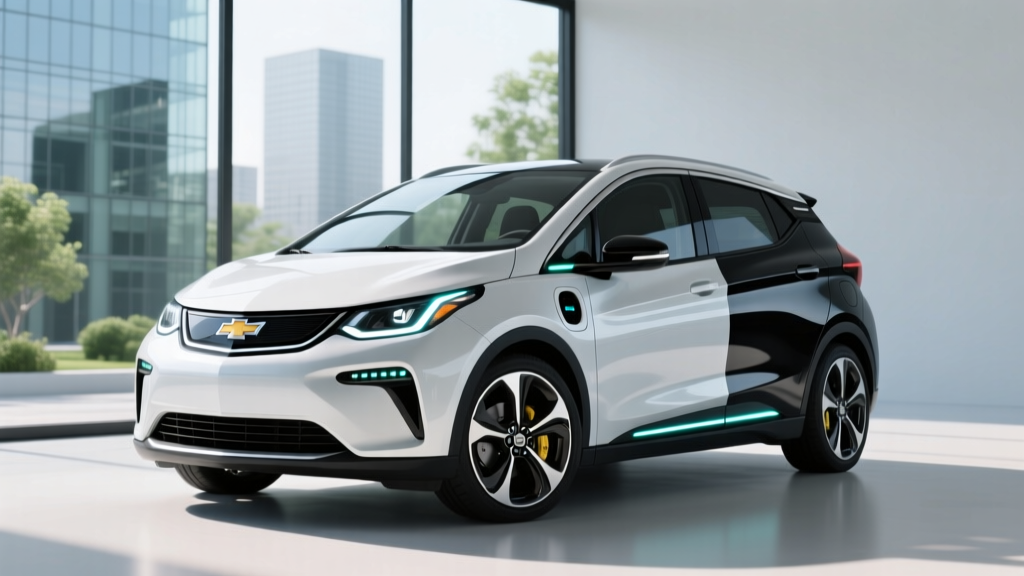
The Chevrolet Bolt EV remains one of the most practical and affordable electric vehicles on the market, even as newer, more expensive competitors flood the segment. For buyers researching the Chevy Bolt EV weight, range, and real-world ownership costs, this guide provides exact specifications, charging data, and tax-credit context you need before signing on the dotted line.
Originally discontinued after the 2023 model year, the Bolt EV returned for 2025 on GM's updated Ultium platform with a new LFP (lithium iron phosphate) battery, faster DC charging, and a slightly revised design. It continues to anchor the affordable end of the EV market with a sub-$30,000 starting price and competitive 259-mile EPA range.
2025 Chevy Bolt EV: Core Specifications at a Glance
| Specification | 2025 Chevy Bolt EV |
|---|---|
| EPA Range | 259 miles |
| Battery Capacity (Usable) | 65 kWh (LFP chemistry) |
| Curb Weight | 3,563 lbs (1LT) / 3,589 lbs (2LT) |
| Motor Output | 200 hp / 236 lb-ft torque |
| Drivetrain | FWD (single motor, front axle) |
| 0–60 mph | ~6.5 seconds |
| Max DC Fast Charge Rate | 115 kW (peak) |
| 10–80% DC Fast Charge Time | ~30 minutes |
| Level 2 Home Charge Rate | 11.5 kW (48A) |
| MPGe (Combined) | 120 MPGe |
| Efficiency | 28 kWh / 100 miles |
| Cargo Volume (rear seats up) | 16.3 cu ft |
| Cargo Volume (rear seats folded) | 57.0 cu ft |
| Rear Legroom | 36.0 inches |
| Battery Warranty | 8 years / 100,000 miles |
| Base MSRP (1LT) | $28,900 (incl. destination) |
Understanding Chevy Bolt EV Weight and What It Means
At 3,563 pounds for the 1LT trim, the 2025 Bolt EV is one of the lightest battery-electric vehicles sold in the United States. For context, the Hyundai Kona Electric weighs approximately 3,759 lbs, and the Tesla Model 3 RWD tips the scales at 3,862 lbs. The Bolt's relatively low curb weight delivers tangible benefits:
- Efficiency: Less mass means less energy required to accelerate and maintain speed. The Bolt's 28 kWh/100 mi efficiency rating is among the best in its class, directly enabled by its lighter platform.
- Tire and brake wear: Heavier EVs chew through tires and brake components faster. The Bolt's weight keeps consumable costs closer to those of a conventional compact car.
- Handling: While not a sports car, the Bolt's lower weight contributes to a more nimble feel in urban driving compared to heavier crossovers like the VW ID.4 (4,682 lbs).
The 2LT trim adds roughly 26 lbs due to additional standard equipment (leatherette seats, Bose audio, enhanced driver-assist features), bringing its curb weight to 3,589 lbs. Neither figure includes passengers or cargo — expect real-world operating weight closer to 4,000–4,200 lbs with a driver and typical load.
The Bolt EV's weight advantage traces back to its compact footprint and the LFP battery's design. While LFP cells are slightly heavier per kWh than NMC (nickel manganese cobalt) chemistry, the Bolt's 65 kWh pack is smaller than many competitors' batteries, keeping total vehicle mass low.
Real-World Range: Beyond the EPA Sticker
Real-World Highway (70 mph, moderate weather): ~220–235 miles
Real-World City / Mixed Commuting: ~245–260 miles (regen braking recovers energy)
Cold Weather (below 32°F): ~175–210 miles (30–35% reduction typical for LFP without heat pump)
The 2025 Bolt EV's 259-mile EPA rating is a strong number for a sub-$30K vehicle, but real-world results depend heavily on how and where you drive. On a fueleconomy.gov basis, the Bolt's combined cycle blends city and highway driving.
In sustained highway driving at 70–75 mph, expect to see approximately 220–235 miles of range before needing to charge. Aerodynamic drag increases exponentially with speed, and the Bolt's compact crossover shape is less slippery than a sedan like the Tesla Model 3 or Hyundai Ioniq 6.
Cold weather is the Bolt EV's most significant range vulnerability. LFP batteries experience greater capacity loss at low temperatures than NMC chemistry, and the 2025 Bolt does not include a heat pump (a resistive heater handles cabin warmth). In sub-freezing conditions, plan for a 30–35% range reduction. If your winter commute is 80 miles round-trip, the Bolt can handle it — but a 150-mile cold-weather highway trip will require a charging stop.
The Bolt's regenerative braking system offers one-pedal driving mode, which recovers significant energy in stop-and-go traffic. City drivers who use regen effectively often report matching or slightly exceeding the EPA estimate.
Charging Speeds: DC Fast Charging and Home Level 2
The biggest upgrade for the 2025 Bolt EV over the pre-2024 generation is DC fast charging. The previous Bolt was limited to 55 kW, making road trips painful. The 2025 model peaks at 115 kW, a meaningful improvement that makes highway travel practical.
| Charging Level | Power / Rate | Speed / Time |
|---|---|---|
| Level 1 (120V household outlet) | ~1.2 kW | ~4 miles per hour |
| Level 2 (240V home / public) | 11.5 kW (48A) | ~39 miles per hour / full charge in ~6 hours |
| DC Fast Charge (CCS/NACS) | 115 kW peak | 10–80% in ~30 minutes |
Understanding the charge curve: The Bolt EV hits its 115 kW peak at a low state of charge (around 10–20% SoC) and sustains strong speeds through about 50%. Above 80%, charging tapers significantly to protect the LFP battery — expect the final 20% to take as long as the first 60%. For road trips, charge from 10–80% and move on rather than waiting for a full battery.
Home charging: With an 11.5 kW Level 2 home charger (requiring a 60-amp circuit and professional installation), you'll add roughly 39 miles of range per hour of charging. A full overnight charge from 10% takes about 6 hours. Most Bolt owners who install a Level 2 charger wake up to a full battery every morning, eliminating any daily range concern.
The 2025 Bolt EV comes equipped with a NACS (North American Charging Standard) port, granting native access to the Tesla Supercharger network — the most reliable and widespread DC fast-charging network in North America. This is a major practical advantage over CCS-only vehicles that still rely on Electrify America or EVgo.
Performance and Drivetrain
The 2025 Bolt EV is powered by a single permanent-magnet electric motor driving the front wheels, producing 200 horsepower and 236 lb-ft of torque. The instant torque delivery characteristic of electric motors makes the Bolt feel punchy around town, even though the 0–60 mph time of approximately 6.5 seconds is merely adequate by modern EV standards.
This is a front-wheel-drive vehicle designed for efficiency and practicality, not performance. There is no AWD or dual-motor option. For commuters, city dwellers, and budget-conscious buyers, the FWD setup keeps cost and weight down while providing perfectly acceptable acceleration for merging and passing.
Ride quality is compliant but not plush — the Bolt's suspension is tuned for urban roads and cost efficiency. Road noise is noticeable at highway speeds, a trade-off of the vehicle's price point. The steering is light and direct, ideal for parking lots but lacking feedback on twisty roads.
Pricing, Trims, and Federal Tax Credit Eligibility
The 2025 Chevy Bolt EV is offered in two trims:
- 1LT: $28,900 (including $1,195 destination charge) — 17-inch wheels, 11-inch infotainment touchscreen, wireless Apple CarPlay/Android Auto, cloth seats, heated front seats, single-zone climate
- 2LT: $32,400 — adds Bose 7-speaker audio, leatherette seats, heated steering wheel, 360-degree camera, adaptive cruise control, enhanced automatic emergency braking
Does the 2025 Bolt EV Qualify for the Federal Tax Credit?
The 2025 Bolt EV is expected to qualify for up to $7,500 under IRS §30D Clean Vehicle Credit rules, but eligibility depends on several buyer-specific factors:
- ✅ MSRP Cap: Vehicle must have MSRP ≤ $55,000 (sedans/wagons) or ≤ $80,000 (SUVs/trucks/vans). The Bolt EV qualifies — classified as a hatchback/wagon at $28,900–$32,400.
- ⚠️ Buyer Income Cap: Adjusted gross income must not exceed $150,000 (single), $225,000 (head of household), or $300,000 (married filing jointly).
- ⚠️ Battery Sourcing: A percentage of critical minerals and battery components must be sourced from the US or FTA partners. GM has indicated the 2025 Bolt's LFP battery meets current thresholds, but verify at purchase.
- ✅ Point-of-Sale Transfer: The credit can be transferred to the dealer at purchase, reducing your out-of-pocket cost immediately rather than waiting for tax filing.
- ⚠️ Tax Liability: The credit is non-refundable — you must owe at least $7,500 in federal taxes to capture the full benefit (if not transferring at POS).
Always confirm eligibility with your tax professional and check the latest fueleconomy.gov listings before purchasing. Rules and qualifying vehicles can change.
| Trim | MSRP | After $7,500 Credit | Effective Price |
|---|---|---|---|
| 1LT | $28,900 | −$7,500 | $21,400 |
| 2LT | $32,400 | −$7,500 | $24,900 |
At an effective price of $21,400 for the 1LT after the federal credit, the Bolt EV is arguably the best value in the entire EV market. Many state and utility incentives can stack on top — check your local programs for additional savings.
Interior, Cargo, and Technology
The Bolt EV's cabin prioritizes function over luxury. The 11-inch infotainment touchscreen runs GM's latest software with wireless Apple CarPlay and Android Auto as standard. Physical buttons for climate control are a welcome usability choice. Build quality is solid for the price point, though hard plastics are prevalent on door panels and the lower dashboard.
Passenger space is generous for a subcompact:
- Front legroom: 42.1 inches
- Rear legroom: 36.0 inches
- Front headroom: 39.7 inches
- Rear headroom: 37.8 inches
Cargo capacity is 16.3 cubic feet behind the rear seats — adequate for groceries, gym bags, and a couple of carry-ons. Fold the 60/40 split rear seats and you get 57.0 cubic feet, enough for furniture-store runs or camping gear. There is no front trunk (frunk) — the space under the hood houses the motor and power electronics.
Driver assistance: The Bolt EV comes standard with Chevy Safety Assist, which includes automatic emergency braking with pedestrian detection, lane-keeping assist, following-distance indicator, and IntelliBeam automatic high beams. The 2LT adds adaptive cruise control and a 360-degree surround-view camera. GM's Super Cruise hands-free driving system is not available on the Bolt EV.
Battery Warranty and Longevity
Chevrolet covers the 2025 Bolt EV's battery and electric powertrain with an 8-year / 100,000-mile warranty (whichever comes first). The warranty guarantees that the battery will retain at least 60% of its original capacity during the coverage period. If degradation drops below that threshold, GM will repair or replace the battery at no cost.
LFP battery chemistry offers a longevity advantage over NMC: LFP cells typically endure more charge cycles before significant degradation and are more thermally stable. Real-world data from LFP-equipped Tesla Model 3 vehicles shows degradation curves that flatten after the first 20,000–30,000 miles, with many vehicles retaining 90%+ capacity at 100,000 miles. Expect similar behavior from the Bolt's LFP pack.
GM also provides a 3-year / 36,000-mile bumper-to-bumper limited warranty and 5-year / 60,000-mile powertrain coverage for non-battery drivetrain components.
Pros and Cons
Pros
- Lowest effective price in the EV market after federal tax credit (~$21,400)
- 259-mile EPA range is ample for most daily driving
- NACS port provides native Tesla Supercharger access
- LFP battery offers strong longevity and thermal stability
- Lightest curb weight in class (3,563 lbs) aids efficiency
- Spacious interior for a subcompact footprint
- 11.5 kW Level 2 charging is fast for home use
Cons
- 115 kW DC fast charging is slower than rivals (Ioniq 5: 240 kW)
- No heat pump — cold-weather range loss is significant (30–35%)
- FWD only — no AWD option for snow-belt buyers
- Hard plastics and basic interior materials reflect the price point
- No frunk (front trunk) for additional storage
- Super Cruise not available — basic driver assists only
- Highway range drops to ~220 mi at sustained 70+ mph speeds
Who Should Buy the 2025 Chevy Bolt EV?
Choose the Bolt EV if:
- You want the most affordable new EV available and qualify for the federal tax credit
- Your daily commute is under 100 miles round-trip
- You primarily drive in moderate climates or can tolerate cold-weather range loss
- You have access to home Level 2 charging (or can install it)
- You value low vehicle weight for efficiency and reduced tire/brake wear
Look elsewhere if:
- You frequently take 300+ mile road trips and need 200+ kW charging speeds
- You live in a region with harsh winters and need AWD or a heat pump
- You want premium interior materials or advanced driver-assist systems like Super Cruise
- You need more than 57 cu ft of total cargo space
The Bolt EV is a commuter's EV, not a road-trip warrior. If your life revolves around a daily drive, school runs, and weekend errands within a 120-mile radius, the Bolt delivers outstanding value. If you regularly drive cross-country or face brutal winters, consider the Hyundai Kona Electric, Tesla Model 3, or a PHEV like the Toyota Prius Prime as alternatives.
Frequently Asked Questions
What is the real-world range of the 2025 Chevy Bolt EV?
The EPA rates the Bolt EV at 259 miles combined. In real-world highway driving at 70 mph, expect approximately 220–235 miles. City driving with regenerative braking can match or slightly exceed the EPA estimate. In cold weather below freezing, plan for 175–210 miles of usable range due to LFP battery characteristics and the lack of a heat pump.
How fast does the Chevy Bolt EV charge at home and on the road?
At home on a Level 2 charger (11.5 kW / 48A), the Bolt adds about 39 miles of range per hour, with a full charge taking roughly 6 hours. On a DC fast charger, it peaks at 115 kW and charges from 10–80% in approximately 30 minutes. This is adequate for road trips but slower than competitors like the Hyundai Ioniq 5 (240 kW peak, 10–80% in ~18 minutes).
How much does the 2025 Bolt EV cost after the federal tax credit?
The 1LT trim starts at $28,900 MSRP. If you qualify for the full $7,500 federal §30D Clean Vehicle Credit (subject to income caps, tax liability, and battery-sourcing requirements), the effective price drops to approximately $21,400. The 2LT at $32,400 falls to about $24,900 after credit. You can transfer the credit to the dealer at point of sale for an immediate price reduction.
Is the Chevy Bolt EV worth buying compared to competitors?
At its effective price point, the Bolt EV is difficult to beat on pure value. The Hyundai Kona Electric offers a similar range (261 mi) but starts higher at ~$33,000. The Tesla Model 3 provides superior performance, charging speed, and tech but starts at ~$39,000 before credit. If budget is your top priority and you can accept the Bolt's charging-speed and cold-weather trade-offs, it is the best deal in the EV market.
Does the 2025 Chevy Bolt EV qualify for the $7,500 federal tax credit?
The Bolt EV is expected to qualify for up to $7,500 under current IRS §30D rules. The MSRP is well under the $55,000 cap, and GM has indicated battery-sourcing compliance. However, buyer income must not exceed $150K (single) / $300K (joint), and the credit is non-refundable unless transferred at point of sale. Always verify current eligibility on fueleconomy.gov and consult a tax professional before relying on the credit.
What is the Chevy Bolt EV's curb weight and why does it matter?
The 2025 Bolt EV weighs 3,563 lbs (1LT) or 3,589 lbs (2LT), making it one of the lightest EVs on sale. Lower weight improves energy efficiency (28 kWh/100 mi), reduces tire and brake wear, and contributes to nimble urban handling. For comparison, the Tesla Model 3 weighs 3,862 lbs and the Hyundai Kona Electric weighs 3,759 lbs.
Does the Bolt EV have all-wheel drive?
No. The 2025 Bolt EV is front-wheel drive only, with a single motor on the front axle. There is no AWD or dual-motor option. If AWD is essential for your climate or driving conditions, consider the Tesla Model 3 Long Range AWD, Hyundai Ioniq 5 AWD, or a PHEV with AWD capability.