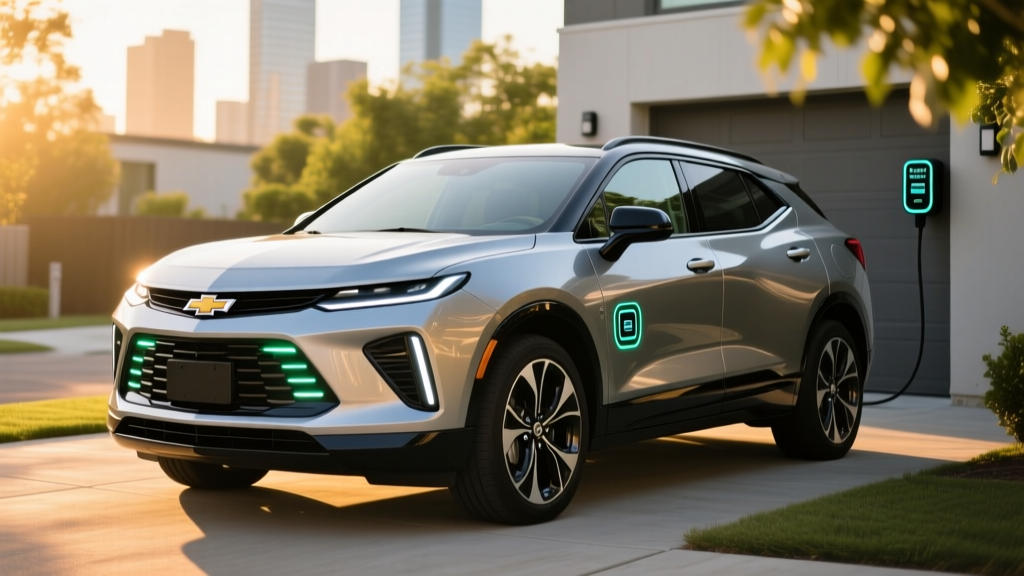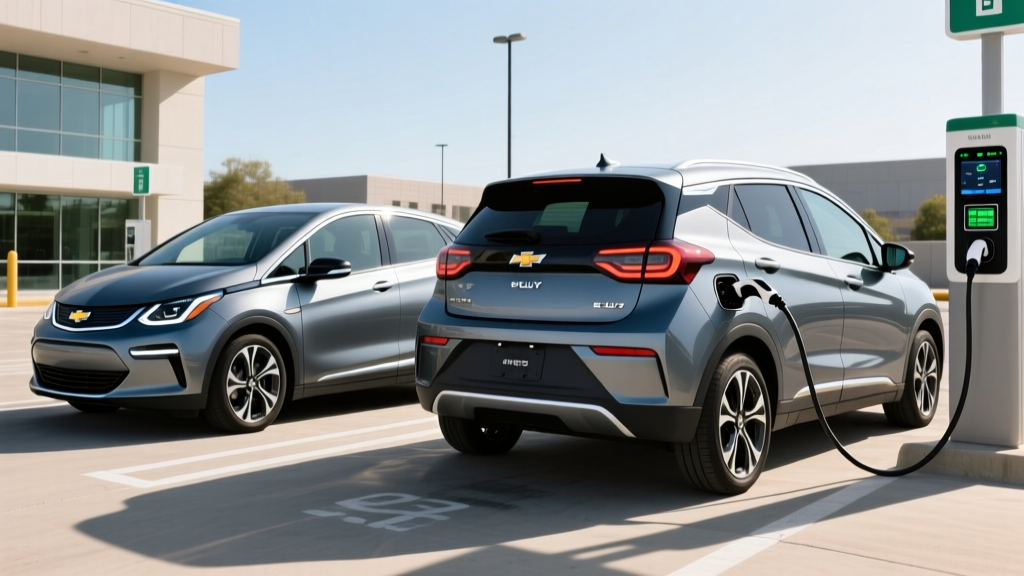
If you've searched Chevy Bolt Wikipedia pages, you've likely found historical timelines and recall summaries but very little practical guidance for today's EV buyer. The Bolt nameplate has undergone a radical transformation since General Motors killed the original Bolt EV in 2023 and resurrected it on an entirely new Ultium-based architecture for the 2025 model year. Now in its second full year of production on the new platform, the 2026 Chevy Bolt EV (and its slightly larger EUV sibling) represents one of the most affordable long-range electric vehicles on the US market — but with some caveats that no encyclopedia entry will surface.
This review goes well beyond the Wikipedia summary. We've pulled EPA data, manufacturer spec sheets, IRS tax credit rules, and real-world testing notes to give you every number that matters: real-world range, charging curve behavior, battery chemistry trade-offs, and total ownership cost. Let's get into the specs.
2026 Chevy Bolt EV at a Glance: Full Spec Sheet
| Specification | Bolt EV (2LT) | Bolt EUV (Premier) |
|---|---|---|
| EPA Range | 259 miles | 283 miles |
| Battery Capacity (usable) | 65 kWh (LFP) | 72 kWh (LFP) |
| Battery Chemistry | Lithium Iron Phosphate (LFP) | Lithium Iron Phosphate (LFP) |
| Drivetrain | FWD, single motor | FWD, single motor |
| Horsepower | 200 hp | 200 hp |
| Torque | 236 lb-ft | 236 lb-ft |
| 0-60 mph | 7.0 sec | 7.2 sec |
| Max DC Fast Charge | 115 kW | 115 kW |
| 10-80% DC Charge Time | ~32 min | ~35 min |
| Level 2 Home Charge Rate | 11.5 kW (~39 mi/hr) | 11.5 kW (~39 mi/hr) |
| MPGe (combined) | 120 MPGe | 115 MPGe |
| Efficiency | 28 kWh/100 mi | 29 kWh/100 mi |
| Cargo Volume (rear seats up) | 22.5 cu ft | 28.1 cu ft |
| Cargo Volume (rear seats folded) | 54.0 cu ft | 63.5 cu ft |
| Rear Legroom | 36.0 in | 39.1 in |
| Battery/Powertrain Warranty | 8 yr / 100,000 mi | 8 yr / 100,000 mi |
| Base MSRP | $27,895 | $30,295 |
Range Reality: EPA Sticker vs. What You'll Actually See
Real-World Expectation: In mixed suburban/highway driving at 65-70 mph and moderate temperatures (60-80°F), expect approximately 230-245 miles from the Bolt EV and 250-265 miles from the EUV. In cold weather (below 32°F), plan for a 20-30% reduction — bringing the Bolt EV down to roughly 180-200 miles on a full charge. City driving with regenerative braking can actually exceed EPA estimates, sometimes reaching 270+ miles on the EV variant.
The shift to LFP (lithium iron phosphate) chemistry on the Ultium platform is the biggest factor in the Bolt's range story. LFP cells have lower energy density than the NMC (nickel manganese cobalt) cells used in the original Bolt, which is why a 65 kWh battery delivers 259 miles rather than the 259 miles the old 66 kWh NMC pack achieved — comparable, but achieved through improved motor efficiency and thermal management rather than battery size alone.
According to EPA data on fueleconomy.gov, the Bolt EV's combined efficiency of 28 kWh/100 miles places it among the more efficient compact EVs, though it trails the Hyundai Kona Electric (27 kWh/100 mi) and Tesla Model 3 RWD (25 kWh/100 mi). Highway efficiency drops noticeably — expect around 31-33 kWh/100 mi at sustained 75 mph speeds, which is where range loss becomes most apparent on road trips.
Charging Speed: The Bolt's Persistent Weakness
Charging remains the area where the Bolt — even on its new Ultium underpinnings — falls behind key competitors. The 115 kW peak DC fast-charge rate is functional but unremarkable in a segment where rivals push 150-250 kW.
| Charging Level | Power | Speed (Bolt EV) | Speed (Bolt EUV) |
|---|---|---|---|
| Level 1 (120V household) | ~1.4 kW | ~4 mi/hr | ~4 mi/hr |
| Level 2 (240V home) | 11.5 kW | ~39 mi/hr (full in ~6.5 hr) | ~39 mi/hr (full in ~7.5 hr) |
| DC Fast Charge (peak) | 115 kW | 10-80% in ~32 min | 10-80% in ~35 min |
| DC Fast Charge (sustained avg) | ~75 kW | ~25 mi/min average | ~24 mi/min average |
Here's what the spec sheet doesn't tell you: the Bolt's charge curve tapers significantly above 60% State of Charge (SoC). You'll see the full 115 kW only between roughly 10-40% SoC, after which the rate drops to approximately 80 kW, then further to 50-60 kW as you approach 80%. This means the advertised 10-80% time of 32 minutes is accurate, but 10-90% will stretch closer to 48-50 minutes. For road trips, plan your stops around 10-80% charges and skip topping off unless you're at your final destination.
Level 2 home charging at 11.5 kW is a strong point. With a proper 48-amp Level 2 wallbox on a 60-amp circuit, you'll add roughly 39 miles of range per hour — enough to fully replenish either model overnight. Home charging installation typically runs $800-$2,000 depending on panel capacity and wiring distance, according to industry estimates.
The Bolt EV uses the NACS (North American Charging Standard) connector natively on the 2026 model, granting direct access to Tesla's Supercharger network without an adapter — a significant practical advantage over CCS-equipped competitors that still require adapter dongles at Superchargers.
LFP Battery Chemistry: What It Means for Longevity
The 2026 Bolt's LFP battery is a defining characteristic that buyers should understand. LFP (lithium iron phosphate) chemistry trades energy density for exceptional cycle life and thermal stability.
- Cycle life: LFP cells typically sustain 2,000-3,000+ full charge cycles before degrading to 80% capacity — roughly double that of NMC
- Daily charging to 100%: Unlike NMC batteries, LFP packs tolerate regular 100% charges without accelerated degradation. GM actually recommends periodic 100% charges for accurate SoC calibration
- Thermal safety: LFP chemistry is inherently more resistant to thermal runaway — a meaningful safety advantage
- No cobalt: LFP eliminates cobalt from the supply chain, which has implications for both ethics and tax credit sourcing compliance
- Lower energy density: More weight and volume for the same kWh — the Bolt EV's battery pack weighs approximately 900 lbs
- Cold-weather performance: LFP cells lose more capacity in freezing temperatures than NMC — expect the lower end of the 20-30% cold-weather range reduction noted above
- Charge speed ceiling: LFP cells generally accept lower peak charge rates, contributing to the 115 kW cap
GM's battery warranty covers the Bolt's pack for 8 years or 100,000 miles, whichever comes first, against defects and capacity loss below 60% of original capacity. This is industry-standard, though some competitors like Hyundai offer 10-year/100,000-mile coverage. Given LFP's proven longevity in fleet applications, most Bolt owners are unlikely to see the battery approach the warranty threshold under normal use.
Performance and Driving Dynamics
The 200-horsepower, single-motor front-wheel-drive powertrain is a step up from the original Bolt's 200 hp rating, but the new Ultium platform's additional weight (roughly 3,600 lbs for the EV, 3,750 lbs for the EUV) means the 0-60 mph time of 7.0 seconds is essentially unchanged from its predecessor.
That 7-second sprint is adequate for merging and passing but won't excite anyone coming from a Tesla Model 3 Performance or even a Hyundai Ioniq 5 (5.2 seconds with AWD). The Bolt is tuned for efficiency and comfort, not sport driving. The suspension absorbs bumps competently, and the low center of gravity from the under-floor battery pack keeps body lean controlled through corners.
Regenerative braking offers multiple modes including a one-pedal driving setting that allows most drivers to avoid touching the brake pedal in stop-and-go traffic. The brake pedal feel is firmer and more predictable than the original Bolt's notoriously mushy regen-blended brakes — a genuine improvement.
Interior, Tech, and Daily Livability
The 2026 Bolt's cabin is a significant upgrade over the plasticky, budget-feeling original. The dashboard now features a 17.7-inch diagonal infotainment touchscreen running GM's Ultifi software platform, paired with an 11-inch digital instrument cluster. Wireless Apple CarPlay and Android Auto are standard across all trims.
Standout tech features include:
- Super Cruise availability: GM's Level 2 hands-free driver-assistance system is available on Premier trims for $2,500, covering over 750,000 miles of compatible highways in North America
- Vehicle-to-Load (V2L): An optional V2L adapter ($400) allows the Bolt to power external devices up to 1.5 kW — useful for camping, tailgating, or emergency backup
- Over-the-air updates: GM's Ultifi platform supports regular OTA software updates for infotainment, powertrain calibration, and ADAS improvements
- Phone-as-a-key: Bluetooth Low Energy-based digital key eliminates the need for a physical fob
Notable drawbacks:
- No front trunk (frunk) — the FWD motor layout and packaging leave no space under the hood
- Rear seat headroom is tight for passengers over 6'2" in the EV (the EUV's raised roofline helps)
- Base 2LT trim uses cloth upholstery; leatherette requires the Premier upgrade
- No heat pump — the Bolt uses resistive cabin heating, which draws significant battery power in cold weather and contributes to winter range loss
Pricing, Tax Credits, and What You'll Actually Pay
| Trim | MSRP | Federal §30D Credit* | Effective Price |
|---|---|---|---|
| Bolt EV 2LT | $27,895 | Up to $7,500 | As low as $20,395 |
| Bolt EV Premier | $31,495 | Up to $7,500 | As low as $23,995 |
| Bolt EUV 2LT | $30,295 | Up to $7,500 | As low as $22,795 |
| Bolt EUV Premier | $34,395 | Up to $7,500 | As low as $26,895 |
*Federal tax credit eligibility under IRS §30D is subject to multiple requirements. The 2026 Bolt qualifies for up to $7,500 based on current battery component and critical mineral sourcing, but buyer eligibility depends on:
- Income caps: Modified AGI must not exceed $150,000 (single), $225,000 (head of household), or $300,000 (joint filing)
- MSRP cap: All Bolt trims fall well under the $55,000 vehicle cap for cars/SUVs
- Battery sourcing: GM has confirmed the Bolt's LFP battery meets 2026 critical mineral and battery component requirements, though these thresholds tighten annually — verify at the time of purchase
- Point-of-sale transfer: As of 2024, the credit can be transferred to the dealer at purchase, reducing your out-of-pocket cost immediately rather than waiting for a tax refund. The dealer must be IRS-registered
Consult a tax professional before relying on credit eligibility. State and local incentives may stack on top of the federal credit — check AFDC's incentive database for your jurisdiction.
Pros, Cons, and the Competition
- Among the most affordable 250+ mile EVs in the US market
- LFP battery offers exceptional cycle life and daily 100% charging tolerance
- NACS connector provides native Supercharger access
- Strong Level 2 home charging rate (11.5 kW / ~39 mi/hr)
- Generous cargo space, especially in the EUV
- Super Cruise available for hands-free highway driving
- V2L capability for off-grid power
- Significantly improved interior quality over the original Bolt
- DC fast charging peaks at only 115 kW — slower than most competitors
- No AWD or dual-motor option
- No front trunk (frunk)
- No heat pump — cold-weather range loss is significant
- FWD only limits traction in snow/ice compared to AWD EVs
- 0-60 time of 7.0 seconds feels leisurely in the EV segment
- LFP cold-weather performance compounds range loss in winter
Key competitors to cross-shop:
- Hyundai Kona Electric (2026): 261 miles EPA, 150 kW DC charging, slightly higher MSRP (~$33,000 base), but faster charging and available heat pump
- Tesla Model 3 RWD: 272 miles EPA, 170 kW DC charging, Supercharger-native, but starts at ~$38,990 — a significant premium
- Nissan Leaf (2026 refresh): Competitive pricing but still uses CHAdeMO connector and offers lower range
Who Should Buy the 2026 Chevy Bolt?
- You commute 40-80 miles daily and charge at home overnight
- Budget is your primary constraint and you want maximum range per dollar
- You rarely take road trips over 200 miles (or don't mind 35-minute charge stops)
- You want LFP longevity for 10+ years of ownership
- You need a compact hatchback with decent cargo flexibility
- You need rear-seat space for adults or rear-facing child seats
- The extra 24 miles of EPA range and 5.5 cu ft of cargo volume justify the ~$2,400 premium
- You want the option of Super Cruise for highway commuting
- You take frequent 300+ mile road trips and need fast DC charging
- You live in a cold climate and need winter range reliability (consider an EV with a heat pump)
- You want AWD for snow-belt driving
- Performance and quick acceleration matter to you
Frequently Asked Questions
What is the real-world range of the 2026 Chevy Bolt?
In moderate temperatures with mixed driving, expect 230-245 miles from the Bolt EV and 250-265 miles from the EUV. Highway-only driving at 75 mph reduces this to roughly 210-220 miles (EV) and 230-240 miles (EUV). Cold weather below freezing can drop range by 20-30%, with the LFP battery being more susceptible to cold-weather loss than NMC competitors.
How fast does the Bolt charge at home and on the road?
At home on a Level 2 (240V) charger, the Bolt accepts up to 11.5 kW, adding roughly 39 miles of range per hour — a full charge takes about 6.5 hours for the EV and 7.5 hours for the EUV. On DC fast chargers, it peaks at 115 kW and charges from 10-80% in approximately 32-35 minutes. The charge rate tapers significantly above 60% SoC, so plan road-trip stops around 10-80% rather than full charges.
Does the 2026 Chevy Bolt qualify for the federal EV tax credit?
Yes, the 2026 Bolt currently qualifies for up to $7,500 under IRS §30D, and the credit can be transferred at the point of sale to reduce your purchase price immediately. However, buyer eligibility depends on income caps ($150K single / $300K joint), and battery sourcing requirements tighten annually. Verify eligibility at the time of purchase and consult a tax professional.
Is the Chevy Bolt worth buying vs. the competition?
If your priorities are affordability, range per dollar, and home-charging convenience, the Bolt is one of the strongest values in the EV market. However, if fast DC charging, AWD, or cold-weather range matter to you, the Hyundai Kona Electric or Tesla Model 3 RWD are worth the premium. The Bolt's 115 kW charge ceiling is its most significant competitive disadvantage for road-trip-heavy owners.
How long will the Bolt's LFP battery last?
LFP chemistry is rated for 2,000-3,000+ full charge cycles before degrading to 80% capacity. At the Bolt's 259-mile EPA range, that equates to roughly 500,000-750,000 miles of theoretical battery life — far beyond the vehicle's likely service life. GM's warranty covers 8 years/100,000 miles with a 60% capacity retention floor. Real-world LFP degradation data from fleet applications suggests most owners will see 90%+ capacity retention at the 100,000-mile mark.
Can I use Tesla Superchargers with the Bolt?
Yes. The 2026 Bolt uses the NACS connector natively, meaning it plugs directly into Tesla Supercharger stalls without any adapter. This provides access to the most reliable and extensive DC fast-charging network in North America — a major practical advantage.
Does the Bolt have a heat pump?
No. The 2026 Bolt uses resistive electric heating for the cabin, which draws significant power from the traction battery in cold weather. This is one reason the Bolt experiences steeper winter range loss than competitors equipped with heat pumps (such as the Hyundai Kona Electric and Tesla Model 3). If you live in a climate with extended sub-freezing winters, factor a 25-30% winter range reduction into your daily driving calculations.
Sources: EPA range and efficiency data via fueleconomy.gov; federal tax credit rules via IRS §30D guidance; GM manufacturer specifications via Chevrolet media site.