Quick Verdict: The Value King Returns Refreshed
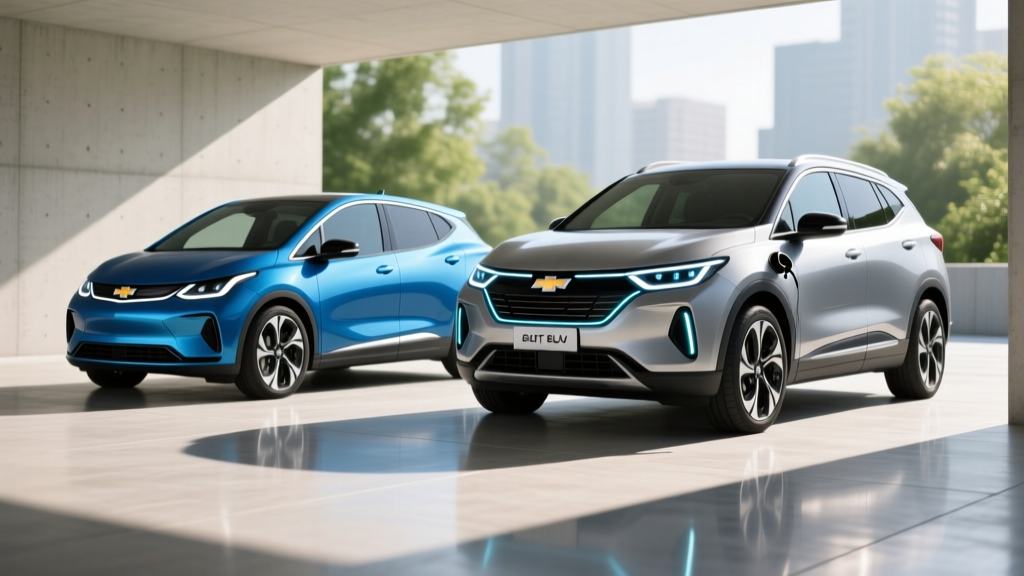
The Chevrolet Bolt EV and Bolt EUV occupy a rare space in the 2026 electric-vehicle market: genuinely affordable, practical, and now equipped with faster DC charging that addresses the single biggest complaint about the previous generation. With an EPA-estimated 259 miles of range (Bolt EV) and a starting price well under $30,000 before incentives, the Bolt lineup remains the default recommendation for budget-conscious EV buyers who need real daily usability rather than headline-grabbing performance figures.
For owners and upgraders coming from conventional Chevrolet sedans — and who may be searching for specs like the bolt pattern for 2014 Chevy Malibu wheels to see if they cross-fit — the Bolt EV uses a 5x105 mm bolt pattern (5-lug, 105 mm circle diameter) with a 56.6 mm center bore and M12x1.5 lug nuts. This is unique to the Bolt platform and does not share fitment with the Malibu's 5x115 mm pattern. Wheel swaps between these models are not possible without adapters, which we do not recommend for safety and load-rating reasons.
Range, Battery, and Real-World Efficiency
The 2026 Bolt EV is powered by a revised 65 kWh (usable) Ultium-format NMC (nickel manganese cobalt) lithium-ion battery pack, an evolution from the previous-generation 66 kWh pack but now integrated into GM's Ultium platform architecture for improved packaging and thermal management. The standard Bolt EV hatchback carries an EPA-estimated 259 miles of range, while the longer-wheelbase Bolt EUV is rated at 247 miles.
EPA 259 mi (Bolt EV) / 247 mi (Bolt EUV). In mixed highway driving at 70-75 mph in moderate temperatures, expect approximately 225-240 miles before needing to charge. In cold weather (below 32°F), range drops to roughly 185-210 miles depending on cabin heat usage and whether you precondition the battery. City driving with regenerative braking can push range to 270+ miles thanks to the Bolt's excellent low-speed efficiency. The NMC chemistry delivers strong energy density but is more cold-sensitive than LFP alternatives.
| Specification | Bolt EV (Hatchback) | Bolt EUV (Crossover) |
|---|---|---|
| EPA Range | 259 miles | 247 miles |
| Battery Capacity (usable) | 65 kWh NMC | 65 kWh NMC |
| Efficiency (MPGe combined) | 120 MPGe | 115 MPGe |
| Energy Consumption | 28 kWh/100 mi | 29 kWh/100 mi |
| Motor Output | 200 hp / 266 lb-ft | 200 hp / 266 lb-ft |
| Drivetrain | FWD (single motor) | FWD (single motor) |
| 0-60 mph | 6.5 seconds | 6.8 seconds |
| Max DC Fast Charge | 170 kW | 170 kW |
| 10-80% DC Charge Time | ~22 minutes | ~22 minutes |
| Level 2 Charge Rate | 11.5 kW (~39 mi/hr) | 11.5 kW (~39 mi/hr) |
| Wheel Bolt Pattern | 5x105 mm | 5x105 mm |
| Cargo Volume (rear seats up) | 16.3 cu ft | 16.3 cu ft |
| Cargo Volume (rear seats folded) | 57.0 cu ft | 56.9 cu ft |
| Rear Legroom | 36.0 in | 39.1 in |
| Base MSRP (2LT) | $28,785 | $29,385 |
Efficiency is a Bolt strong suit. At 120 MPGe combined (approximately 28 kWh per 100 miles), the Bolt EV is among the most efficient vehicles in its class. This translates directly to lower charging costs: at the national average residential electricity rate of ~$0.17/kWh, a full home charge costs roughly $11.05 and yields 259 miles — about 4.3 cents per mile, compared to ~12 cents per mile for a 30 MPG gas car at $3.60/gallon.
Charging Speed: The Generational Leap
The most consequential upgrade for 2026 is the Bolt's DC fast-charging capability. The previous-generation Bolt was limited to 55 kW peak, making road trips a patience exercise. The 2026 model on the Ultium platform supports up to 170 kW peak DC fast charging via CCS1 connector (with NACS adapter compatibility for Tesla Supercharger access).
| Charge Level | Power / Voltage | Rate (mi/hr added) | Notes |
|---|---|---|---|
| Level 1 (120V household) | 1.4 kW | ~4 mi/hr | Emergency/trickle only; full charge ~48 hours |
| Level 2 (240V, 48A) | 11.5 kW | ~39 mi/hr | Full charge in ~7 hours; recommended home setup |
| DC Fast Charge (CCS1) | 170 kW peak | ~100+ mi in 10 min | 10-80% in ~22 min; tapers significantly above 80% |
The charge curve matters more than the peak number. The Bolt hits its 170 kW peak only between approximately 10-30% state of charge, then tapers to ~120 kW through 50%, ~80 kW through 70%, and drops to ~40 kW above 85%. This is typical NMC behavior managed by the Ultium thermal system. On a road trip, plan your stops around the 10-80% window for the fastest throughput — charging past 80% adds time disproportionately.
For home Level 2 charging, the onboard 11.5 kW charger is excellent. A standard 48-amp, 240-volt home station (such as a ChargePoint Home Flex or Emporia Level 2) will replenish the full 65 kWh battery in roughly 7 hours. Most owners who charge overnight at home never visit a public charger except on road trips.
Performance, Ride, and Daily Drivability
The Bolt EV's single front-mounted permanent-magnet motor produces 200 horsepower and 266 lb-ft of torque, delivering a 0-60 mph time of 6.5 seconds. That's genuinely quick for daily driving — the instant torque from a standstill makes the Bolt feel quicker than its numbers suggest, particularly in city merging and passing situations.
The Bolt is front-wheel drive only; there is no AWD option. This is a deliberate cost and efficiency decision. For the vast majority of commuters in moderate climates, FWD with traction control and the instant torque modulation of an electric motor is perfectly adequate. If you live in heavy snow country and require AWD, you'll need to look at competitors like the Hyundai Ioniq 5 (AWD available) or Subaru Solterra.
Ride quality is compliant and tuned for comfort over sportiness. The low center of gravity from the floor-mounted battery pack gives the Bolt confident handling with minimal body roll. The One Pedal Driving mode provides aggressive regenerative braking that enables true one-pedal operation in most city driving — a feature many EV owners come to prefer exclusively.
Interior, Tech, and Practicality
The 2026 Bolt EV features a modernized interior anchored by an 11.3-inch diagonal infotainment touchscreen running Google Built-In (Google Maps, Google Assistant, Play Store). Wireless Apple CarPlay and Android Auto are standard. A 10.2-inch digital instrument cluster replaces the previous analog-digital hybrid display.
Driver assistance includes Chevrolet's Super Cruise on trimmed EUV models — a SAE Level 2 hands-free highway driving system that operates on over 400,000 miles of mapped divided highways in the US and Canada. Super Cruise requires an active subscription (~$25/month after the initial trial period) and demands continued driver attention via an infrared eye-tracking camera. This is not autonomous driving; you must remain alert and ready to resume steering at any time.
Super Cruise is an SAE Level 2 driver-assistance system. It is NOT self-driving. The driver must maintain visual attention and cognitive engagement at all times. The system will disengage and issue escalating warnings if the driver monitoring camera detects inattention. Hands-free operation is permitted only on pre-mapped divided highways — it will not function on local roads, in construction zones, or in severe weather.
Standard safety tech across all trims includes Chevy Safety Assist: automatic emergency braking with pedestrian detection, forward collision alert, lane keep assist with lane departure warning, following distance indicator, and IntelliBeam automatic high beams. The Bolt EV has earned strong crash-test ratings from NHTSA, with a 5-star overall safety rating.
Cargo and passenger space is practical for a compact hatchback. The Bolt EV offers 16.3 cu ft behind the rear seats and 57.0 cu ft with the 60/40 split rear seats folded. The EUV's slightly longer wheelbase translates primarily to rear legroom (39.1 inches vs. 36.0 in the EV), making it the better choice for families with rear-facing child seats. Neither variant has a frunk (front trunk); the space under the hood houses the motor and power electronics.
Pricing, Trims, and Federal Tax Credit Eligibility
The 2026 Bolt EV is offered in two trims, while the EUV adds a third:
| Model / Trim | Base MSRP | As-Tested (typical options) | Est. Federal Credit (§30D) | Effective Price |
|---|---|---|---|---|
| Bolt EV 2LT | $28,785 | $29,985 | Up to $7,500* | ~$21,285 - $22,485 |
| Bolt EV Premier | $32,585 | $35,185 | Up to $7,500* | ~$25,085 - $27,685 |
| Bolt EUV 2LT | $29,385 | $31,585 | Up to $7,500* | ~$21,885 - $24,085 |
| Bolt EUV Premier (w/ Super Cruise) | $35,185 | $38,885 | Up to $7,500* | ~$27,685 - $31,385 |
*Federal tax credit eligibility under IRS §30D is subject to multiple requirements that change periodically and depend on your individual tax situation. Key 2026 rules include:
- Buyer income caps: Modified AGI must not exceed $150,000 (single), $225,000 (head of household), or $300,000 (married filing jointly).
- MSRP caps: The vehicle's MSRP must not exceed $55,000 for sedans/hatchbacks or $80,000 for SUVs/pickups/vans. All Bolt trims clear this threshold.
- Battery sourcing requirements: The credit is split into two halves — $3,750 for critical minerals sourcing and $3,750 for battery component manufacturing. The Bolt's eligibility for each half depends on GM's supply chain compliance for the specific model year. Check the latest IRS qualified vehicle list before purchasing.
- Point-of-sale transfer: You can transfer the credit to the dealer at purchase to reduce the sale price directly, rather than waiting to claim it on your tax return. This effectively functions as a down-payment reduction.
We strongly recommend consulting a tax professional and verifying current eligibility on fueleconomy.gov before making a purchase decision based on credit assumptions.
Warranty and Long-Term Battery Outlook
Chevrolet provides the following warranty coverage for the 2026 Bolt EV and EUV:
- Battery Pack: 8 years / 100,000 miles (whichever comes first), warranted against capacity loss below 60% of original capacity.
- Powertrain (motor, power electronics): 5 years / 60,000 miles.
- Bumper-to-bumper limited warranty: 3 years / 36,000 miles.
- Roadside assistance: 5 years / 60,000 miles.
The NMC battery chemistry in the Bolt is proven across millions of miles of real-world GM EV operation. Based on data from the previous-generation Bolt (which used similar chemistry), typical degradation is approximately 8-12% over the first 100,000 miles, with the steepest drop occurring in the first 20,000 miles before leveling into a gradual linear decline. The Ultium thermal management system — which uses active liquid cooling and heating — should improve longevity over the prior generation by keeping cells in their optimal temperature window more consistently.
For maximum battery lifespan, follow the 20-80% daily charging rule for NMC chemistry: charge to 80% for daily use and reserve 100% charges for road trips. The Bolt's infotainment system includes a "Target Charge Level" setting and a "Delayed Departure" feature that lets you schedule charging to finish right before you leave — both tools that help manage battery health over years of ownership.
Bolt EV vs. Key Competitors: Which Should You Buy?
The Bolt doesn't exist in a vacuum. Here's how it stacks up against its closest 2026 rivals:
- Budget is your primary constraint and you want the lowest effective price after tax credits
- You primarily drive in-city or suburban commutes under 100 miles round-trip
- You want proven NMC battery chemistry with strong efficiency (120 MPGe)
- Super Cruise hands-free highway driving is a priority (EUV Premier)
- You need AWD (look at Hyundai Ioniq 5 AWD, Subaru Solterra, or Tesla Model Y AWD)
- You need 300+ miles of range for frequent road trips (Tesla Model 3 LR, Hyundai Ioniq 6)
- You prefer LFP chemistry for its longer cycle life and 100% daily charging tolerance (Tesla Model 3 RWD, base Ioniq 5)
- You need DC charging above 200 kW for minimal road-trip downtime (Ioniq 5 at 240 kW, Tesla at 250 kW)
- Best-in-class value: under $29K before credits
- Strong 259-mile EPA range for the price point
- Dramatically improved 170 kW DC charging
- Excellent 120 MPGe efficiency keeps running costs low
- Super Cruise availability on EUV (rare at this price)
- Practical hatchback cargo space with 60/40 split fold
- FWD only — no AWD option for snow-belt buyers
- NMC chemistry requires 20-80% daily management
- Charging curve tapers hard above 80% SoC
- No frunk (front trunk) for additional storage
- Rear seats don't fold completely flat
- Super Cruise requires ongoing subscription after trial
Frequently Asked Questions
What is the real-world range of the 2026 Chevy Bolt EV?
The EPA rates the Bolt EV at 259 miles and the EUV at 247 miles. In real-world mixed highway driving at 70-75 mph, expect approximately 225-240 miles. In cold weather below freezing, plan for 185-210 miles depending on how aggressively you use cabin heating and whether you precondition the battery while plugged in. City driving with regenerative braking can exceed the EPA estimate, reaching 270+ miles.
How fast does the 2026 Bolt charge at home and on DC fast chargers?
On a DC fast charger, the Bolt peaks at 170 kW and charges from 10-80% in approximately 22 minutes, though the rate tapers significantly above 80%. At home on a 48-amp Level 2 station (240V), the 11.5 kW onboard charger adds roughly 39 miles per hour, fully replenishing the battery in about 7 hours. Level 1 (120V household outlet) adds only ~4 miles per hour and is suitable only for emergency or very low-mileage situations.
Does the 2026 Bolt EV qualify for the $7,500 federal tax credit?
The Bolt EV's MSRP falls well under the $55,000 sedan/hatchback cap, and its pricing makes it a strong candidate. However, the full $7,500 credit depends on your personal income (must be under IRS thresholds), the battery's critical mineral and component sourcing compliance for the specific build date, and your tax liability. The credit can be transferred to the dealer at point of sale as a price reduction. Always verify current eligibility on the IRS qualified vehicle list and consult a tax professional before purchasing.
What is the wheel bolt pattern on the Chevy Bolt EV?
The Chevrolet Bolt EV and EUV use a 5x105 mm bolt pattern (5 lugs on a 105 mm bolt circle diameter) with a 56.6 mm center bore and M12x1.5 lug nuts. This is specific to the Bolt platform and is not shared with most other GM vehicles. For reference, the 2014 Chevy Malibu uses a 5x115 mm bolt pattern — wheels from a Malibu will not fit a Bolt without adapters, which are not recommended due to safety and load-rating concerns.
Is the Bolt EV worth buying over a Tesla Model 3 or Hyundai Ioniq 5?
It depends on your priorities. The Bolt wins on upfront price — even before tax credits, it undercuts both competitors by $5,000-$10,000. If budget is paramount and your daily driving is under 100 miles, the Bolt is an outstanding value. However, the Model 3 offers more range (341 mi LR), faster charging (250 kW), AWD availability, and a more mature Supercharger network. The Ioniq 5 offers 800V architecture, 240 kW charging, AWD, and available LFP chemistry. For road-trip-heavy buyers or those needing AWD, the premium for a Model 3 or Ioniq 5 is justified.
How long will the Bolt EV battery last?
Chevrolet warrants the battery for 8 years or 100,000 miles against degradation below 60% of original capacity. Based on real-world data from prior-generation Bolts, NMC batteries typically lose 8-12% capacity over 100,000 miles, with most of that loss in the first 20,000 miles. With proper care (20-80% daily charging, preconditioning, avoiding repeated 100% charges), the Bolt's battery should provide well over 150,000 miles of usable service before capacity loss becomes a daily inconvenience.