Quick Verdict: The 2026 Chevy Bolt EUV Still Punches Above Its Price
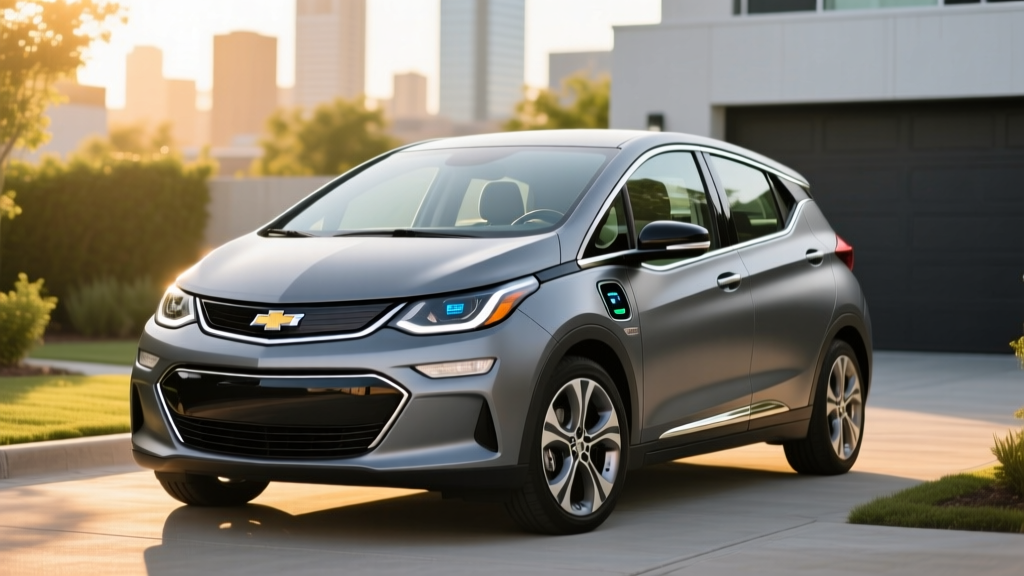
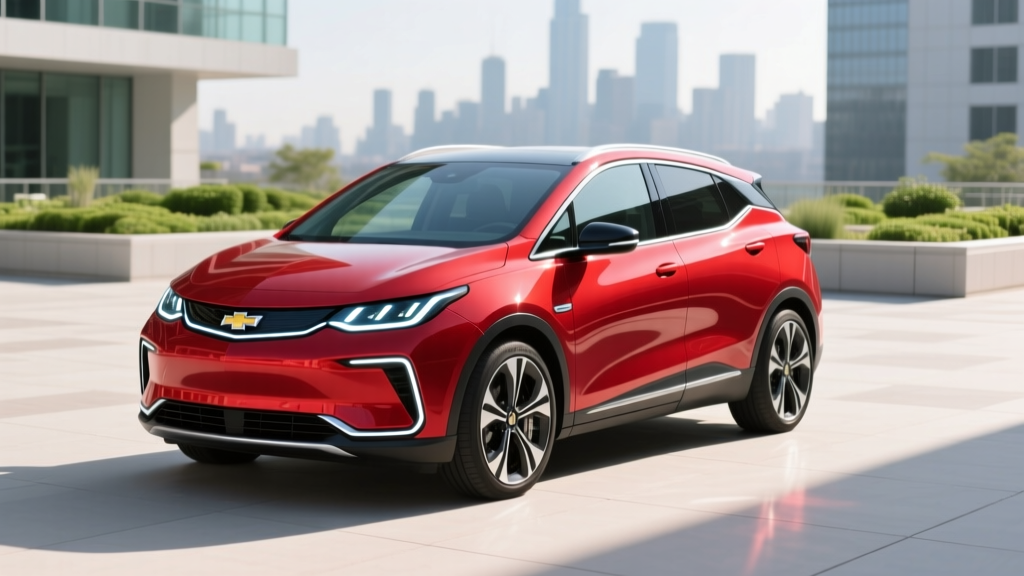
The 2026 Chevrolet Bolt EUV returns with a refreshed design, an LFP battery, and a starting price that undercuts nearly every other electric crossover on the market. Dressed in the eye-catching Radiant Red Tintcoat — a $495 premium color that's become the most-searched Bolt configuration online — this compact EV delivers 247 miles of EPA-estimated range, practical interior space, and standard DC fast charging. It isn't the quickest-charging EV you'll find, and its highway efficiency trails rivals, but for buyers who charge primarily at home and commute under 50 miles daily, the Bolt EUV remains one of the most rational EV purchases available.
EPA Estimated: 247 miles (combined city/highway)
Real-World Highway (70 mph, 75°F): ~210–225 miles
Cold Weather (30°F, mixed driving): ~175–195 miles
City Commute (stop-and-go with regen): 240–255 miles (can exceed EPA)
The Bolt EUV's LFP chemistry handles repeated 100% charges better than NMC competitors, meaning daily full charges won't accelerate degradation the way they might in a Model Y or Ioniq 5.
Full Specifications at a Glance
| Specification | 2026 Chevy Bolt EUV |
|---|---|
| EPA Range | 247 miles |
| Battery (usable) | 65 kWh (LFP chemistry) |
| Drivetrain | FWD, single-motor |
| Horsepower / Torque | 200 hp / 266 lb-ft |
| 0–60 mph | 7.0 seconds |
| Max DC Fast Charge | 55 kW (CCS) |
| 10–80% DC Charge Time | ~45 minutes |
| Level 2 Home Charging | 11.5 kW (~37 miles/hr) |
| Efficiency (combined) | 115 MPGe / 29 kWh/100mi |
| Cargo Volume (rear seats up/down) | 16.3 / 56.9 cu ft |
| Rear Legroom | 39.1 inches |
| Battery Warranty | 8 years / 100,000 miles |
| Base MSRP (LT trim) | $28,800 (incl. destination) |
| As-Tested (Premier, Radiant Red) | $34,290 |
Battery Chemistry and What It Means for Ownership
Chevrolet equips the 2026 Bolt EUV with a 65 kWh (usable) lithium iron phosphate (LFP) battery pack. This is a deliberate trade-off: LFP cells offer lower energy density than the nickel-manganese-cobalt (NMC) packs found in rivals like the Hyundai Kona Electric or Volkswagen ID.4, which is why the Bolt EUV's range doesn't stretch past 250 miles despite a reasonably sized pack.
However, LFP brings two major ownership advantages:
- Daily 100% charging is safe. GM recommends charging to 100% regularly — unlike NMC packs where 80% daily limits extend longevity. This means your full 247 miles are always available.
- Superior cycle life. LFP cells typically endure 3,000+ full charge cycles before significant degradation, compared to ~1,500–2,000 for NMC. At 247 miles per cycle, that's well over 700,000 theoretical miles before hitting 80% state of health.
The battery warranty covers 8 years or 100,000 miles against defects and excessive capacity loss (below 60% retention), per Chevrolet's official specs. In practice, LFP degradation curves are remarkably flat — expect 90%+ state of health at 100,000 miles based on fleet data from similar packs.
Charging Speed: The Bolt EUV's Biggest Compromise
Here's where the 2026 Bolt EUV reveals its budget-EV roots. Peak DC fast charging tops out at 55 kW — a figure that was acceptable in 2022 but feels dated when the Hyundai Kona Electric hits 100+ kW and the Tesla Model Y peaks at 250 kW.
| Charging Level | Power / Rate | Time / Range Added |
|---|---|---|
| Level 1 (120V household) | 1.2 kW | ~4 miles per hour |
| Level 2 (240V, 48A) | 11.5 kW | ~37 miles per hour; full charge in ~7 hrs |
| DC Fast Charge (peak) | 55 kW | 10–80% in ~45 min; adds ~120 mi in 30 min |
The charging curve reality: The Bolt EUV sustains close to its 55 kW peak from roughly 10% to 50% state of charge, then tapers progressively. From 80% to 100%, expect trickle speeds under 15 kW. On a road trip, plan your stops around 30-minute sessions that keep you in the 20–70% sweet spot where charging is most efficient.
For home charging, the 11.5 kW onboard charger is genuinely excellent. A full overnight charge from empty takes about 7 hours on a hardwired Level 2 station — meaning even a late-evening plug-in delivers a full battery by morning. If you're installing a home Level 2 charger, budget $500–$1,500 for equipment plus $800–$2,500 for electrician labor and permits, depending on your panel capacity and run length.
Performance, Efficiency, and Daily Drivability
The Bolt EUV's single front-mounted motor produces 200 horsepower and 266 lb-ft of torque, launching the crossover to 60 mph in 7.0 seconds. That's not sports-car territory, but the instant torque delivery makes it feel brisk in city traffic and confident during highway merges. The front-wheel-drive layout means some torque steer under hard acceleration, especially on wet pavement.
Efficiency registers at 115 MPGe combined (29 kWh per 100 miles) according to fueleconomy.gov. City driving with aggressive regenerative braking can push that to 120+ MPGe, while sustained 75 mph highway cruising drops it closer to 105 MPGe. In practical terms, expect to spend roughly $0.04–$0.06 per mile on electricity at national average residential rates ($0.16/kWh) — about one-third the per-mile fuel cost of a 30 mpg gas crossover.
One-pedal driving is available via the steering-wheel regen paddle and a dedicated drive mode. It's strong enough to bring the car to a complete stop in most traffic situations, reducing brake pad wear to near-zero over typical ownership periods.
Pricing, Trims, and Federal Tax Credit Eligibility
The 2026 Bolt EUV is offered in two trims:
| Trim | Base MSRP | Est. Price After §30D Credit* |
|---|---|---|
| LT | $28,800 | $21,300 |
| Premier | $32,400 | $24,900 |
| Premier + Radiant Red + Sunroof | $34,290 | $26,790 |
*Estimated price assumes full $7,500 federal tax credit applied at point of sale. Eligibility is not guaranteed — see requirements below.
The Radiant Red Tintcoat is a $495 premium paint option available on both trims. It's a deep, metallic-leaning red that photographs well and has become the most popular Bolt color configuration among online shoppers.
- Vehicle MSRP cap: Must be under $80,000 for SUVs/crossovers — Bolt EUV qualifies easily.
- Buyer income cap: Modified AGI must not exceed $150,000 (single), $225,000 (head of household), or $300,000 (joint filers).
- Battery sourcing: Critical minerals and battery components must meet phased percentage thresholds from US/FTA countries. GM sources LFP cells for the Bolt EUV from suppliers that currently satisfy these requirements.
- Point-of-sale transfer: The $7,500 credit can be applied as a down-payment reduction at the dealer, rather than waiting for a tax refund.
- Assembly: Must be assembled in North America — the Bolt EUV is built in Lake Orion, Michigan.
Rules change frequently. Verify your eligibility at IRS.gov or consult a tax professional before purchasing.
Interior, Cargo, and Technology
The Bolt EUV's cabin prioritizes function over flash. A 10.2-inch touchscreen running Chevrolet's latest Infotainment 3 system anchors the dash, with wireless Apple CarPlay and Android Auto as standard. A 10-inch digital driver display replaces the analog gauges, showing real-time energy flow, regen levels, and range estimates.
Cargo and passenger dimensions:
- Rear cargo (seats up): 16.3 cubic feet — enough for a week's groceries or two large suitcases
- Rear cargo (seats folded): 56.9 cubic feet — competitive with the Hyundai Kona Electric
- Rear legroom: 39.1 inches — genuinely generous; adults sit comfortably behind tall drivers
- Front legroom: 40.9 inches
- No front trunk (frunk) — the space is occupied by charging electronics
On the driver-assistance front, Chevy Safety Assist comes standard: automatic emergency braking, lane-keeping assist, following-distance indicator, and automatic high beams. Available Super Cruise (Premier trim, $2,200 package) enables hands-free driving on over 750,000 miles of mapped highways — a SAE Level 2 system that still requires driver attention and eye monitoring. It's one of the most reliable Level 2 systems available, though it's not "self-driving" in any legal or practical sense.
- Lowest entry price in the EV crossover segment after tax credit
- LFP battery supports daily 100% charging with minimal degradation
- Spacious rear seat (39.1" legroom) for the footprint
- Strong Level 2 home charging (11.5 kW)
- Super Cruise availability at a budget price point
- Michigan-built, qualifies for full §30D credit
- DC fast charging limited to 55 kW — slow for road trips
- FWD only; no AWD option for snow-belt buyers
- No front trunk (frunk)
- Real-world highway range drops to ~210 miles
- Radiant Red is a premium upcharge with long wait times
- CCS connector (NACS adapter required for Tesla Superchargers)
How It Compares: Bolt EUV vs. Key Rivals
At the ~$28,800 starting point, the Bolt EUV's closest competitors are the Hyundai Kona Electric ($33,000), the Nissan Leaf SV Plus ($31,000, hatchback), and the base Tesla Model Y ($44,000 before credit). The Kona charges faster (100+ kW DC) and offers slightly more range, but costs $4,200 more before incentives. The Model Y is in a different price league entirely — faster charging, AWD, and more cargo space, but at a ~$15,000 premium.
The Bolt EUV wins on pure value: no other electric crossover delivers 247 miles of range, a modern interior, and full tax-credit eligibility under $30,000 MSRP. If your driving is primarily local and you charge at home, the slow DC charging speed rarely matters.
Who Should Buy the 2026 Chevy Bolt EUV?
- You commute under 50 miles daily and charge at home overnight
- Budget is your top priority and you qualify for the $7,500 tax credit
- You want an LFP battery you can charge to 100% without guilt
- You need rear-seat space for kids or carpool passengers
- You take frequent 300+ mile road trips (the 55 kW charging will frustrate)
- You need AWD for winter traction
- You want 300+ miles of real-world highway range
- Towing is on your list (the Bolt EUV is not rated for towing)
Frequently Asked Questions
What is the real-world range of the 2026 Chevy Bolt EUV?
The EPA rates it at 247 miles combined. In real-world highway driving at 70 mph in mild temperatures, expect 210–225 miles. In cold weather (below freezing), range can drop to 175–195 miles due to battery resistance and cabin heating demands. City driving with regenerative braking can match or slightly exceed the EPA figure.
How fast does the Bolt EUV charge at home and on DC fast chargers?
At home on a 240V Level 2 charger, the Bolt EUV accepts up to 11.5 kW, adding about 37 miles of range per hour and achieving a full charge in roughly 7 hours. On DC fast chargers, it peaks at 55 kW, taking about 45 minutes from 10–80%. This is the vehicle's main weakness for road-trip-heavy owners.
How much does the Chevy Bolt EUV cost after the federal tax credit?
The LT trim starts at $28,800 MSRP. With the full $7,500 §30D credit applied at point of sale, that drops to an estimated $21,300. The Premier trim with Radiant Red paint and available sunroof tests at $34,290, or roughly $26,790 after credit. Eligibility depends on income caps, MSRP limits, and battery sourcing rules — verify at IRS.gov.
Does the Bolt EUV qualify for the federal EV tax credit?
Yes — the 2026 Bolt EUV is assembled in Michigan, priced well under the $80,000 SUV MSRP cap, and its LFP battery currently meets critical-mineral sourcing requirements. However, the buyer must also meet income limits ($150K single / $300K joint) and the credit may be affected by future sourcing-rule changes. Always confirm before purchase.
Is the Chevy Bolt EUV worth buying over the Hyundai Kona Electric?
If budget is paramount and you charge at home, the Bolt EUV wins — it's $4,200 cheaper and offers comparable range. If you road-trip frequently, the Kona Electric's faster DC charging (100+ kW vs. 55 kW) makes it the better choice despite the higher price.
Can I get the Bolt EUV with all-wheel drive?
No. The 2026 Bolt EUV is front-wheel drive only. There is no AWD or dual-motor variant. For AWD electric crossovers in a similar footprint, consider the Hyundai Kona Electric AWD (if available in your market) or the Subaru Solterra, though both cost significantly more.
What connector does the Bolt EUV use?
The 2026 Bolt EUV uses a CCS1 (Combined Charging System) connector for both Level 2 AC and DC fast charging. GM has announced a transition to NACS (Tesla-style) for future models, and a GM-approved NACS adapter allows Bolt EUV owners to access Tesla Supercharger stations — though at the vehicle's 55 kW peak, you won't see Supercharger speeds.