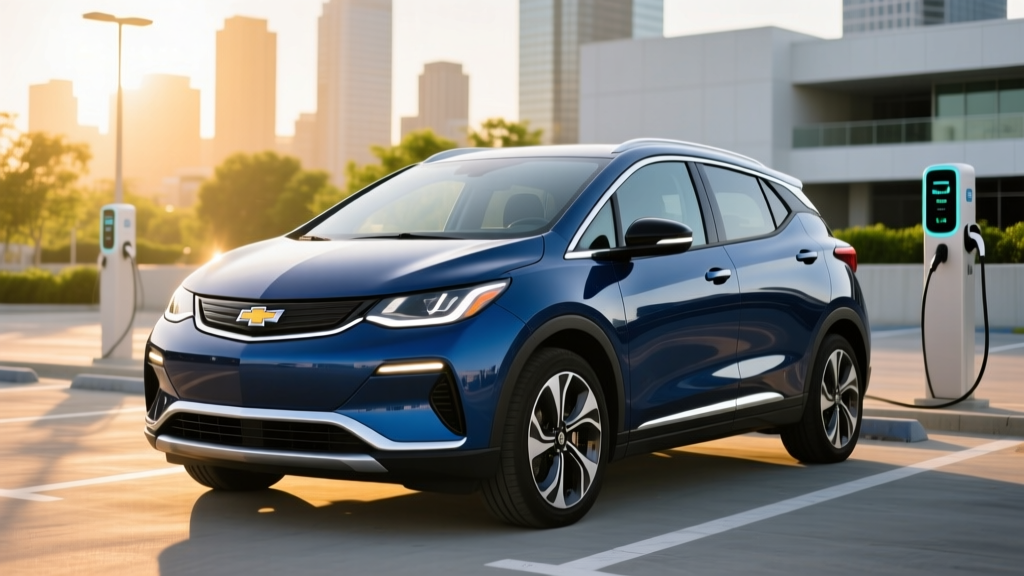
The 2023 Chevrolet Bolt EUV occupies a strange space in the used EV market of 2026. Discontinued after the 2023 model year to make way for the next-generation Equinox EV, the Bolt EUV remains one of the most affordable ways to get a 250+ mile electric crossover — provided you understand its charging limitations and can navigate the used-EV tax credit rules. Having spent extensive time with the platform, here's the unvarnished data buyers need.
Spec Sheet: 2023 Chevrolet Bolt EUV at a Glance
| Specification | 2023 Bolt EUV |
|---|---|
| EPA Range | 247 mi (Premier) / 259 mi (LT) |
| Battery (Usable) | 65 kWh (NMC lithium-ion) |
| Peak DC Fast Charge | 55 kW (CCS1) |
| 10-80% DC Time | ~56 minutes |
| Level 2 AC Charge Rate | 11.5 kW (~37 mi/hr) |
| Motor Output | 200 hp / 266 lb-ft torque |
| 0-60 mph | ~7.0 seconds |
| Drivetrain | FWD (single motor, front axle) |
| Efficiency | 115 MPGe combined / 29 kWh/100mi |
| Cargo Volume | 36.3 cu ft (rear seats up) / 56.9 cu ft (folded) |
| Rear Legroom | 39.1 inches |
| Battery Warranty | 8 years / 100,000 miles |
| Original Base MSRP | $27,800 (LT) / $32,400 (Premier) |
Real-World Range: Beyond the EPA Sticker
The Bolt EUV's 65 kWh NMC (nickel-manganese-cobalt) battery pack provides solid energy density, but the vehicle's tall, bluff-fronted crossover shape hurts highway efficiency compared to sleeker sedans. According to fueleconomy.gov, the combined efficiency rating is 115 MPGe (29 kWh per 100 miles). City driving actually yields better range thanks to regenerative braking recapturing energy — some owners report approaching or exceeding EPA numbers in stop-and-go commuting.
For context, a 2026 Hyundai Kona Electric achieves 261 EPA miles from a similar-sized pack but with better aerodynamics and a heat pump. The Bolt EUV's range remains competitive for daily use, but the absence of a heat pump is a meaningful drawback for buyers in northern climates.
Charging Speed: The Bolt EUV's Biggest Weakness
| Charge Level | Power (kW) | Rate (mi/hr added) | Notes |
|---|---|---|---|
| Level 1 (120V) | 1.4 kW | ~4 mi/hr | Emergency/trickle only |
| Level 2 (240V) | 11.5 kW | ~37 mi/hr | Full charge in ~6.5 hrs |
| DC Fast (CCS1) | 55 kW peak | ~150-170 mi/hr (peak) | 10-80% in ~56 min |
Here's where the 2023 Bolt EUV shows its age. The 55 kW peak DC fast-charging rate was already slow when the vehicle launched, and in 2026's landscape of 150-350 kW chargers, it's a significant limitation. At a modern Electrify America or EVgo station capable of delivering 150+ kW, the Bolt EUV will accept only about a third of that available power.
The charge curve is relatively flat — the Bolt EUV holds near its 55 kW peak from roughly 10% to 50% State of Charge, then tapers gradually. A 10-80% session takes approximately 56 minutes. Compare this to a 2026 Hyundai Ioniq 5, which achieves 10-80% in roughly 18 minutes on a 350 kW charger, and the practical road-trip difference becomes stark: you'll spend roughly three times longer at charging stops.
Home charging is more competitive. The 11.5 kW onboard charger is actually above average for the segment, meaning a properly installed 48-amp Level 2 home station will add about 37 miles of range per hour — enough to fully replenish the battery overnight in roughly 6.5 hours. Most Bolt EUV owners report that home charging entirely eliminates the fast-charging concern for daily use.
Performance and Driving Dynamics
The Bolt EUV's single front-mounted motor produces 200 horsepower and 266 lb-ft of torque, delivering a 0-60 mph time of approximately 7.0 seconds. That's adequate for merging and passing, though it won't surprise anyone accustomed to dual-motor EVs in the 3-4 second range. The instant torque delivery makes it feel quicker around town than the numbers suggest.
Ride quality is the Bolt EUV's dynamic highlight. The wheelbase is 2.9 inches longer than the standard Bolt EV, and GM tuned the suspension for compliance over sportiness. It absorbs potholes and expansion joints with a maturity that belies its price point. Steering is light and numb — acceptable for a commuter, disappointing on a canyon road.
Regenerative braking offers two modes: standard driving with a brake pedal feel similar to a conventional automatic, or "One-Pedal Driving" mode that provides aggressive regen allowing most stops without touching the brake. The system is well-calibrated and one of the better implementations in the segment.
Interior Space, Tech, and Daily Practicality
The Bolt EUV's cabin prioritizes function over form. Rear legroom measures 39.1 inches — genuinely generous for the segment and enough to accommodate adult passengers comfortably on longer trips. Cargo volume behind the rear seats is 36.3 cubic feet, expanding to 56.9 cubic feet with the 60/40 split rear seats folded. There is no front trunk (frunk); the space under the hood houses conventional drivetrain components.
Technology centers on a 10.2-inch diagonal infotainment touchscreen running Chevrolet's Infotainment 3 system. Wireless Apple CarPlay and Android Auto are standard, as is a Wi-Fi hotspot. The instrument cluster is a 10.2-inch digital display with configurable range and energy-flow readouts. Physical buttons for climate control are retained — a welcome decision over touch-capacitive alternatives.
Available driver-assistance features include Super Cruise on the Premier trim (when equipped with the optional package), which provides hands-free driving on over 400,000 miles of mapped highways in North America. This is a SAE Level 2 system — the driver must remain attentive and eyes on the road, monitored by an infrared camera. It is not autonomous driving. Standard safety features include automatic emergency braking, lane-keep assist, following-distance indicator, and IntelliBeam automatic high beams.
Pricing and Federal Tax Credit Eligibility
Since the Bolt EUV was discontinued after the 2023 model year, all purchases in 2026 occur on the used market. Original MSRP was $27,800 for the LT trim and $32,400 for the Premier (before destination). Used pricing in early 2026 typically ranges from $16,000-$24,000 depending on mileage, condition, and trim.
- Sale price must be $25,000 or less
- Buyer income caps: $75,000 single / $112,500 head of household / $150,000 joint
- Vehicle must be at least 2 model years old (2023 models qualify in 2025+)
- Must purchase from a licensed dealer (private sales excluded)
- Credit is non-refundable — you must have tax liability to claim it
- Available once per taxpayer per 3-year period
| Scenario | Dealer Price | Max Credit | Effective Cost |
|---|---|---|---|
| LT, 35k miles | $17,500 | $4,000 | $13,500 |
| LT, 20k miles | $20,000 | $4,000 | $16,000 |
| Premier, 15k miles | $24,000 | $4,000 | $20,000 |
Warranty and Long-Term Battery Outlook
GM covers the Bolt EUV's battery and electric drivetrain with an 8-year/100,000-mile warranty (whichever comes first), guaranteeing the battery will retain at least 60% of its original capacity during that period. For a 2023 model, that factory coverage extends through the 2031 model year — meaningful protection for used buyers.
The Bolt platform's battery longevity data is encouraging. The original Bolt EV (2017-2022) has accumulated substantial real-world mileage data, with most packs showing degradation of 5-10% over 5-7 years of typical use. The 2023 EUV uses GM's updated Ultium-adjacent battery module design with improved thermal management compared to early Bolts. NMC chemistry in this application has proven durable, though buyers should request a State of Health (SoH) reading from any dealer before purchase.
One historical note: GM issued a recall for 2017-2019 Bolt EVs due to battery fire risk, leading to battery replacements on affected vehicles. The 2023 Bolt EUV uses a fundamentally different battery pack design and was not subject to that recall. Still, it's worth confirming clean recall status on any used example via NHTSA's VIN lookup tool.
Bolt EUV vs. the Used EV Competition
Pros
- 259-mile EPA range at a sub-$20K effective price (with credit)
- Spacious rear seat (39.1" legroom) and usable cargo area
- Strong 11.5 kW Level 2 home charging rate
- Super Cruise availability on Premier trim
- Comfortable, compliant ride quality
- Factory battery warranty remains through 2031
Cons
- 55 kW DC fast charging is painfully slow for road trips
- No heat pump — significant cold-weather range penalty
- CCS1 connector (NACS adapters available but add cost/bulk)
- FWD only — no AWD option for snow-belt buyers
- No front trunk (frunk)
- Discontinued — no future OTA updates or new features
Against key used competitors in the $15,000-$25,000 range:
- vs. 2022-2023 Hyundai Kona Electric: Kona offers slightly better range (258 mi), similar charging speeds (also slow), and a heat pump. Bolt EUV wins on rear seat space.
- vs. 2021-2022 Tesla Model 3 Standard Range: Model 3 charges far faster (170 kW), has Supercharger access, and offers better performance. Bolt EUV wins on price (often $5,000-$8,000 less) and crossover utility.
- vs. 2022-2023 Nissan Leaf Plus: Leaf uses CHAdeMO (a dying standard) and has less range (212 mi). Bolt EUV is the stronger buy for most shoppers.
Who Should Buy the 2023 Chevy Bolt EUV?
- You need an affordable commuter EV with 200+ real-world miles of range
- You have reliable Level 2 home charging and rarely DC fast-charge
- Rear passenger space matters (car seats, adult passengers)
- Your budget is firm below $20,000 after incentives
- You live in a moderate climate where cold-weather range loss is manageable
- You road-trip frequently and need 20-minute DC charging stops
- You need AWD for mountain or heavy-snow driving
- You live in a cold climate and can't tolerate 30-35% winter range loss
- Tesla Supercharger network access is a priority for your area
Frequently Asked Questions
What is the real-world range of the 2023 Chevy Bolt EUV?
EPA rates it at 259 miles (LT) or 247 miles (Premier). In mixed real-world driving at highway speeds, expect 210-230 miles. In freezing temperatures, plan for 160-190 miles due to the resistive cabin heater and battery thermal demands.
How fast does the Bolt EUV charge at home and on DC fast chargers?
On a 240V Level 2 home charger, it accepts 11.5 kW and adds about 37 miles of range per hour — a full charge takes roughly 6.5 hours. On DC fast chargers, it peaks at just 55 kW, requiring about 56 minutes for a 10-80% charge. This is the vehicle's most significant limitation.
Does the 2023 Bolt EUV qualify for any EV tax credit in 2026?
Not the new-vehicle §30D credit (the model is discontinued and only available used). However, it may qualify for the Used Clean Vehicle Credit (§25E) — up to $4,000 when purchased from a licensed dealer for $25,000 or less, subject to buyer income limits. The credit is non-refundable and limited to once per taxpayer per three years.
Is the 2023 Bolt EUV worth buying in 2026 vs. newer EVs?
At used prices of $16,000-$24,000 (potentially $12,000-$20,000 after the used-EV credit), it offers remarkable range-per-dollar. If your driving is primarily commuting with home charging, it's an excellent value. If you need fast road-trip charging or AWD, look at a used Model Y, Ioniq 5, or wait for newer models to depreciate further.
What connector does the Bolt EUV use, and can it charge at Tesla Superchargers?
The 2023 Bolt EUV has a CCS1 connector. GM has approved the use of a CCS-to-NACS adapter for Supercharger access, which GM began providing to Bolt owners. Check with your dealer or GM's owner portal for adapter availability. Charging speed at Superchargers remains limited to the vehicle's 55 kW maximum.
How long will the Bolt EUV battery last?
GM warrants the battery for 8 years/100,000 miles with a 60% capacity retention floor. Based on data from earlier Bolt EVs, most packs lose 5-10% capacity over 5-7 years of normal use. A 2023 model should have substantial factory warranty coverage remaining through the end of the decade.