Quick Verdict: The Bolt EV's Digital Cluster and Everyday Value
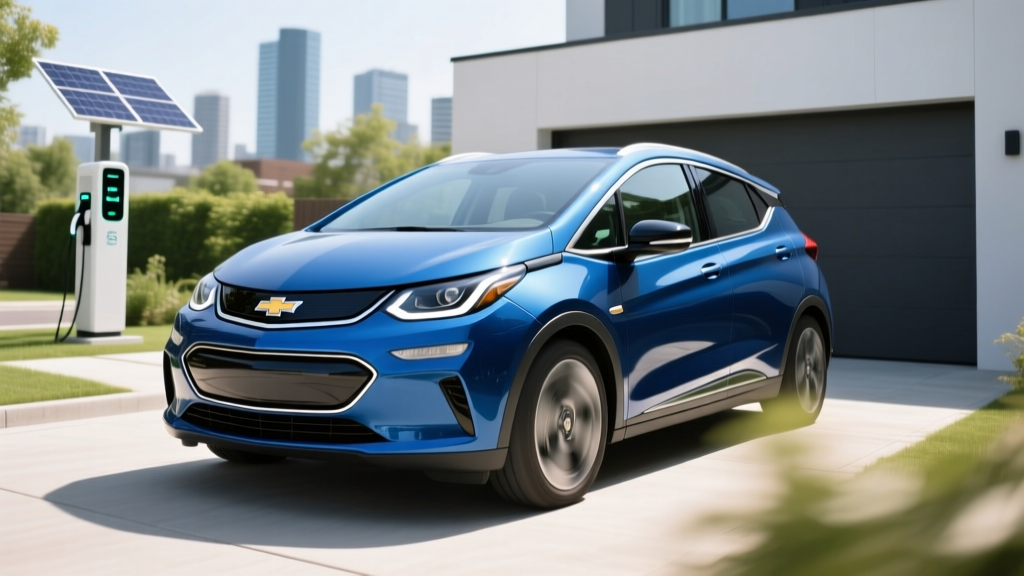
The Chevrolet Bolt EV remains one of the most accessible battery-electric vehicles on the U.S. market, and its driver information cluster — the digital instrument panel behind the steering wheel — is a big reason why first-time EV buyers adapt quickly. Rather than overwhelming you with data, the Chevy Bolt cluster prioritizes the three metrics that matter most: remaining range, battery state of charge (SoC), and energy flow. For 2026, the Bolt EV continues with the Ultium-platform refresh that debuted for the 2024 model year, bringing improved DC fast-charging capability and a more informative 8-inch diagonal driver display paired with an 11.3-inch infotainment touchscreen.
At a starting MSRP under $28,000 and with potential eligibility for the full $7,500 federal tax credit under IRS §30D, the Bolt EV occupies a price tier that few competitors can touch. But value only matters if the vehicle delivers on daily usability. This review breaks down every spec that counts — range, charging, performance, cargo, and ownership cost — so you can decide whether the Bolt EV fits your driving life.
Range and Efficiency: EPA Numbers vs. Real-World Driving
Real-World Expectation: 220–240 miles on highway trips at 70+ mph; 180–210 miles in sub-freezing winter conditions with cabin heat. City and suburban driving with regenerative braking can meet or slightly exceed the 259-mile sticker.
The 2026 Bolt EV carries an EPA-estimated 259 miles of range from its 65 kWh (usable) lithium-ion battery pack. That figure is measured on the EPA's multi-cycle test, which blends city, highway, and temperature-adjusted driving. In practice, the Bolt's efficiency shines in stop-and-go traffic where regenerative braking recaptures energy aggressively — especially in one-pedal driving mode, which can bring the car to a full stop without touching the brake pedal.
On highway road trips at sustained 70–75 mph speeds, expect to see roughly 220–240 miles before the cluster warns you to find a charger. Cold weather is the equalizer for all EVs, and the Bolt is no exception. At 20°F with the cabin heater running, range can drop to 180–210 miles. The Bolt EV does not include a heat pump (a feature found on competitors like the Hyundai Kona Electric), so resistive heating draws more from the pack in winter. If you live in a cold climate, preconditioning the battery while plugged in — a feature accessible through the myChevrolet app — helps preserve range and improves charging speed when you do plug into a DC fast charger.
Efficiency is rated at 120 MPGe combined (119 city / 122 highway), which translates to roughly 28 kWh per 100 miles. That's competitive within the subcompact EV segment, though the Hyundai Kona Electric edges slightly ahead at 123 MPGe combined.
Battery Chemistry, Capacity, and Longevity
| Specification | Detail |
|---|---|
| Battery Chemistry | NMC (Nickel Manganese Cobalt) |
| Total Battery Capacity | ~67 kWh |
| Usable Capacity | 65 kWh |
| Thermal Management | Active liquid cooling/heating |
| Battery Warranty | 8 years / 100,000 miles (capacity retention ≥ 60%) |
| Powertrain Warranty | 5 years / 60,000 miles |
| Bumper-to-Bumper | 3 years / 36,000 miles |
The Bolt EV uses an NMC (nickel manganese cobalt) lithium-ion pack built on GM's Ultium platform architecture. NMC chemistry offers higher energy density than LFP (lithium iron phosphate), which is why the Bolt can pack 65 usable kWh into a relatively compact underfloor layout while keeping curb weight around 3,600 lbs. The trade-off: NMC cells are more sensitive to sustained high states of charge and extreme temperatures than LFP. GM recommends daily charging to 80% for routine commuting and reserving 100% charges for road trips — a setting you can configure directly through the infotainment system or the Chevy Bolt cluster's charge-limit menu.
Long-term degradation data from earlier Bolt generations (2017–2023) shows typical capacity loss of 8–12% over 100,000 miles, which is within the industry norm. The 8-year/100,000-mile battery warranty guarantees at least 60% of original capacity — though most owners report far better retention. GM's active liquid thermal management system helps, keeping cell temperatures in an optimal window during both fast charging and extreme ambient conditions.
Charging Speed: DC Fast, Level 2, and Level 1
| Charging Level | Power / Rate | Time / Miles Added |
|---|---|---|
| DC Fast Charge (CCS) | Peak 55 kW | 10–80% in ~55 minutes; ~150 miles in 30 min |
| Level 2 (240V, Home/Public) | 11.5 kW (48A) | ~39 miles per hour of charging; full charge in ~7 hours |
| Level 1 (120V, Standard Outlet) | ~1.4 kW (12A) | ~4 miles per hour; full charge in ~45+ hours |
Charging is where the Bolt EV reveals its most significant compromise. The DC fast-charging peak of 55 kW is the slowest among current mainstream EVs. Competitors like the Hyundai Kona Electric (peak ~100 kW on the latest generation) and the Tesla Model 3 (peak ~170 kW) can add range far more quickly on road trips. The Bolt's charge curve is relatively flat — it sustains close to 55 kW from roughly 10% to 50% SoC, then tapers gradually. A 10–80% session takes approximately 55 minutes at a capable CCS station.
For daily use, this limitation barely matters. Most Bolt owners charge at home on a Level 2 (240V) connection, where the onboard charger accepts up to 11.5 kW. That means a full overnight charge in about 7 hours — plug in when you get home, wake up to a full battery every morning. If you're installing a home Level 2 charger, expect to spend $500–$1,500 on equipment and electrician labor depending on your panel capacity and run distance. A 240V/48A circuit requires a 60-amp breaker.
Level 1 charging on a standard 120V household outlet delivers roughly 4 miles of range per hour. That's adequate if you drive under 30 miles per day and can plug in overnight, but impractical as a sole charging strategy for most drivers.
Performance and Driving Dynamics
| Performance Spec | Detail |
|---|---|
| Motor Type | Single permanent-magnet electric motor |
| Drivetrain | Front-wheel drive (FWD) |
| Horsepower | 200 hp |
| Torque | 266 lb-ft |
| 0–60 mph | ~6.5 seconds |
| Top Speed | ~93 mph (electronically limited) |
| Regenerative Braking | One-pedal driving mode + steering-wheel regen paddle |
The Bolt EV's single front-mounted motor produces 200 horsepower and 266 lb-ft of torque, delivered instantly from a standstill. The 0–60 mph sprint takes roughly 6.5 seconds — quick enough for confident highway merging and genuinely fun around town. Electric torque delivery makes the Bolt feel peppier than the numbers suggest, especially in the 0–35 mph range where most daily driving happens.
Handling is competent but not sporty. The low center of gravity from the underfloor battery pack keeps body roll in check, and the 3,600-lb curb weight is modest by EV standards. Ride quality is firm over sharp bumps but settles nicely on the highway. The steering is light and precise — ideal for parking lots and urban navigation, less engaging on back roads.
One-pedal driving is a standout feature. Engage it via the shift lever's "L" mode, and lifting off the accelerator slows the car decisively, often bringing you to a complete stop without the brake pedal. A regen-on-demand paddle behind the left steering-wheel spoke (visible in the Chevy Bolt cluster's peripheral view) provides additional braking force when you need it. Once you adapt, one-pedal driving reduces fatigue in traffic and extends range through constant energy recapture.
The Chevy Bolt Cluster: What the Driver Display Shows
The 8-inch diagonal digital instrument cluster in the 2026 Bolt EV is designed for clarity over complexity. Here's what it surfaces and why it matters for EV ownership:
- Range Estimator: A prominent remaining-miles readout that updates dynamically based on your recent driving pattern, ambient temperature, and HVAC usage. Unlike some EVs that show an optimistic "guess-o-meter," the Bolt's range estimator tends to be conservative — it often underestimates slightly, which builds confidence rather than anxiety.
- Energy Flow Display: A real-time graphic showing whether energy is flowing from battery to motor, from motor back to battery (regen), or to climate systems. Useful for learning how your driving habits affect efficiency.
- State of Charge (SoC): Displayed as both a percentage and a bar graph, similar to a smartphone battery indicator.
- Charging Status: When plugged in, the cluster shows current charge rate in kW, estimated time to full, and target SoC if you've set a charge limit.
- Efficiency History: A rolling bar chart of your kWh/mile consumption over recent trips, helping you identify when heavy acceleration or climate use is eating into range.
- Driver Assist Indicators: Icons for Chevy Safety Assist features — forward collision alert, lane keep assist, following distance — appear contextually without cluttering the main view.
The cluster is flanked by analog-style gauges for speed (digital readout) and power consumption. It's not the most graphically rich display in the segment — the Hyundai Ioniq 5's augmented-reality head-up display and the Tesla Model 3's single-screen approach represent different philosophies — but it communicates essential EV data without requiring you to navigate menus while driving.
Interior Space, Cargo, and Practicality
| Dimension | Measurement |
|---|---|
| Seating Capacity | 5 passengers |
| Front Legroom | 42.1 inches |
| Rear Legroom | 36.0 inches |
| Front Headroom | 39.7 inches |
| Rear Headroom | 37.8 inches |
| Cargo Volume (behind rear seats) | 24.2 cu ft |
| Cargo Volume (rear seats folded) | 57.1 cu ft |
| Front Trunk (Frunk) | None |
The Bolt EV's packaging is surprisingly practical for its subcompact footprint. Front-seat occupants enjoy generous legroom and headroom, and the seats are comfortable for long drives. The rear seat fits two adults comfortably, though the 36.0 inches of rear legroom is tight for tall passengers on extended trips. The upright hatchback body style pays dividends in cargo space: 24.2 cubic feet behind the rear seats is enough for a week's groceries or two large suitcases, and folding the 60/40 split rear seat opens up 57.1 cubic feet — rivaling many compact SUVs.
Notable omissions: there is no front trunk (frunk), as the motor and power electronics occupy the space under the hood. There's also no spare tire — just a tire inflator kit. For road-trippers who prefer a full-size spare, this is a consideration.
Technology and Driver Assistance
The 11.3-inch infotainment touchscreen runs GM's latest infotainment software with wireless Apple CarPlay and Android Auto, built-in Google compatibility (on higher trims), and over-the-air update capability. The interface is responsive, and physical shortcut buttons for volume and climate complement the touchscreen well.
Standard Chevy Safety Assist includes:
- Automatic emergency braking with pedestrian detection
- Forward collision alert
- Lane keep assist with lane departure warning
- Following distance indicator
- IntelliBeam automatic high beams
- Rear vision camera
Available on higher trims: adaptive cruise control, HD surround vision (360° camera), rear cross-traffic alert, and enhanced automatic parking assist. Note that the Bolt EV does not offer GM's Super Cruise hands-free driving system — that feature is reserved for larger, more expensive GM vehicles. The Bolt's adaptive cruise is a Level 2 SAE driver-assist system that requires your hands on the wheel and eyes on the road at all times.
Pricing, Trims, and Federal Tax Credit Eligibility
| Trim | Base MSRP | Est. After §30D Credit |
|---|---|---|
| EV 1LT | $27,495 | ~$19,995* |
| EV 2LT | $30,695 | ~$23,195* |
*Tax credit estimates assume full $7,500 eligibility under IRS §30D. Actual credit depends on buyer income, battery sourcing, and MSRP cap compliance. See eligibility details below.
The 2026 Bolt EV is offered in two trims. The 1LT at $27,495 includes the 11.3-inch touchscreen, Chevy Safety Assist suite, 17-inch alloy wheels, heated front seats, and a heated steering wheel. The 2LT at $30,695 adds adaptive cruise control, a 360° camera, heated rear seats, a Bose premium audio system, and a wireless phone charger. A destination charge of approximately $1,095 applies to both.
- MSRP Cap: The Bolt EV qualifies — it is a passenger car and must be under $55,000 MSRP. ✓
- Buyer Income Cap: Modified AGI must not exceed $150,000 (single), $225,000 (head of household), or $300,000 (married filing jointly). Check IRS §30D guidelines for current-year thresholds.
- Battery Sourcing: The $7,500 credit is split into two halves — $3,750 for critical-minerals sourcing and $3,750 for battery-component manufacturing. GM has worked to qualify the Bolt's supply chain, but sourcing rules tighten annually. Verify current-year eligibility on the fueleconomy.gov tax credit tracker before purchasing.
- Point-of-Sale Transfer: As of 2024, buyers can transfer the credit to the dealer at purchase, reducing the purchase price directly rather than waiting for a tax refund. This applies to the Bolt EV.
- Final Assembly: Must be in North America. The Bolt EV is assembled in Lake Orion, Michigan. ✓
Pros, Cons, and Who Should Buy the Bolt EV
- Lowest starting MSRP in the mainstream EV segment
- Strong 259-mile EPA range for the price
- Generous cargo space (57.1 cu ft with seats folded)
- Peppy 200-hp motor with instant torque
- Effective one-pedal driving and regen paddle
- Clear, intuitive driver cluster display
- Full Chevy Safety Assist suite standard
- Eligible for up to $7,500 federal tax credit
- DC fast charging capped at 55 kW — slowest in class
- No heat pump (reduces winter range and charging speed)
- No front trunk (frunk)
- Rear seat legroom is tight for tall passengers
- Super Cruise not available
- NMC battery requires more charge-management care than LFP
- You primarily commute or drive locally (under 100 miles/day) and can charge at home
- You want the most affordable new EV with 250+ miles of range
- Road trips are occasional, not weekly — the 55 kW DC charging is manageable with planning but adds time
- You value cargo versatility (hatchback practicality) in a compact footprint
- You take frequent long road trips and need 150+ kW DC charging (consider Hyundai Ioniq 5, Tesla Model 3)
- You need AWD for snow-belt driving (consider the Bolt EUV or a dual-motor competitor)
- You want hands-free highway driving assist (GM Super Cruise on the Equinox EV or Cadillac Lyriq)
Frequently Asked Questions
What is the real-world range of the Chevy Bolt EV?
The EPA rates the 2026 Bolt EV at 259 miles combined. In real-world highway driving at 70+ mph, expect 220–240 miles. In cold weather (below 30°F) with cabin heating, range can drop to 180–210 miles. City driving with regenerative braking can match or slightly exceed the EPA number.
How fast does the Chevy Bolt charge?
On a DC fast charger, the Bolt peaks at 55 kW — a 10–80% charge takes about 55 minutes. At home on a Level 2 (240V/48A) charger, it accepts 11.5 kW and adds about 39 miles of range per hour, fully charging in roughly 7 hours. On a standard 120V outlet, expect about 4 miles per hour.
How much does the Bolt EV cost after tax credits?
The 1LT starts at $27,495 MSRP. If you qualify for the full $7,500 federal tax credit under IRS §30D (income, sourcing, and MSRP requirements met), the effective price drops to approximately $19,995. The 2LT starts at $30,695, or about $23,195 after the credit. State and local incentives may reduce cost further — check your jurisdiction's programs.
Is the Chevy Bolt EV worth buying vs. competitors?
If price is your top priority and you charge at home, the Bolt EV is arguably the best value in the EV market. The Hyundai Kona Electric offers slightly more range and faster DC charging at a higher price (~$33,000). The Tesla Model 3 is significantly quicker and charges far faster but starts above $38,000. For budget-focused buyers who don't road-trip frequently, the Bolt is hard to beat.
Does the Chevy Bolt EV qualify for the federal EV tax credit?
The Bolt EV meets the MSRP cap (under $55,000 for passenger cars) and North American final assembly requirement. Full $7,500 credit eligibility depends on your income (must be under IRS thresholds), and the battery's critical-mineral and component sourcing meeting current-year requirements. Verify on fueleconomy.gov and consult a tax professional before relying on the credit.
What does the Chevy Bolt cluster display while charging?
When plugged in, the Bolt's 8-inch driver cluster shows current charge rate in kW, the battery's state of charge as a percentage, estimated time to reach your target SoC, and a charging-progress bar. You can also set charge limits (e.g., 80%) and departure times through the infotainment system or the myChevrolet app.
Does the Bolt EV have a heat pump?
No. The 2026 Bolt EV uses a resistive heating system for cabin warmth, which draws more energy from the battery in cold weather compared to a heat pump. This contributes to the 15–25% range reduction observed in sub-freezing conditions. Preconditioning while plugged in helps mitigate this.