Quick Verdict: The Blazer EV Finds Its Lane in 2026
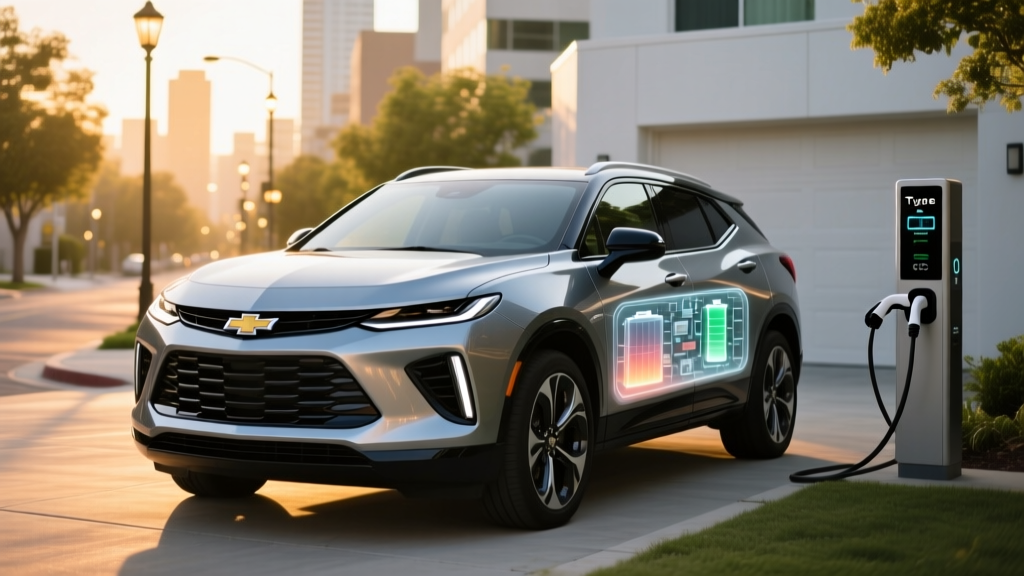
After a turbulent launch year, the 2026 Chevrolet Blazer EV arrives at dealers with improved software stability, a refined Ultium powertrain, and a starting price that undercuts key rivals like the Ford Mustang Mach-E and Hyundai Ioniq 5. For buyers searching for a Chevy Blazer EV for sale in Rochester, the midsize electric crossover offers a compelling mix of 300+ mile range, spacious cargo capacity, and GM's growing Super Cruise availability — though it still trails some competitors on DC fast-charge speed and infotainment polish.
Rochester's cold winters and growing public charging infrastructure make the Blazer EV's heat pump and available AWD particularly relevant. Below, we break down every spec that matters before you visit a local dealer.
Range, Battery, and Real-World Efficiency
The 2026 Blazer EV 2LT AWD carries an EPA-estimated 324 miles of range. In real-world highway driving at 70 mph, expect 265–285 miles. During Rochester winters (20–35°F), range can drop to 220–250 miles due to cabin heating demands and battery chemistry limitations — a 20–30% reduction typical of NMC packs in cold climates.
The Blazer EV uses GM's Ultium platform with an 85 kWh usable lithium-ion battery (approximately 102 kWh gross). The cell chemistry is NMC (nickel manganese cobalt), which prioritizes energy density over the ultra-long cycle life of LFP packs found in some Tesla and Ford models. For most owners driving 12,000–15,000 miles per year, NMC degradation is well-managed by GM's active thermal management system.
| Trim / Drivetrain | EPA Range | Battery (Usable) | MPGe (City/Hwy/Comb) | kWh/100 mi |
|---|---|---|---|---|
| 2LT FWD | 312 mi | 85 kWh NMC | 103 / 88 / 96 | 35 |
| 2LT AWD | 324 mi | 85 kWh NMC | 99 / 84 / 92 | 36 |
| RS AWD | 324 mi | 85 kWh NMC | 99 / 84 / 92 | 36 |
| SS AWD | 293 mi | 85 kWh NMC | 89 / 76 / 83 | 40 |
Source: EPA fueleconomy.gov
The AWD models achieve slightly higher EPA range than FWD because the dual-motor setup enables more aggressive regenerative braking recapture. However, the SS performance trim sacrifices range for its 557-hp output.
Charging Speed: DC Fast, Level 2, and Level 1
Charging speed remains the Blazer EV's most debated spec. The 2026 model peaks at 190 kW on DC fast charging (CCS1 connector), which is competitive but trails the Hyundai Ioniq 5's 240 kW capability. On a 350 kW Electrify America or EVgo stall, the Blazer EV will charge from 10% to 80% in approximately 28 minutes.
The charge curve is the real story. The Blazer EV sustains close to peak rate through roughly 40% SoC, then tapers progressively. Charging from 80% to 100% on DC adds another 35–40 minutes — plan accordingly on road trips and aim to charge to 80% then drive on.
| Charging Level | Power (kW) | Speed (mi/hr added) | Notes |
|---|---|---|---|
| Level 1 (120V household) | 1.4 kW | ~4 mi/hr | Emergency/trickle only |
| Level 2 (240V, 48A) | 11.5 kW | ~34 mi/hr | Full charge in ~8.5 hrs |
| DC Fast Charge (peak) | 190 kW | ~650 mi/hr (peak) | 10–80% in ~28 min |
Home charging setup: The Blazer EV's 11.5 kW onboard charger means a 48-amp Level 2 wall connector on a 60-amp circuit delivers a full overnight charge. For Rochester homeowners, a typical Level 2 installation runs $800–$2,000 depending on panel capacity and conduit run. Preconditioning the battery via the MyChevrolet app before arriving at a DC fast charger is essential in cold weather — without it, peak charge rates can be cut in half until the pack warms up.
Rochester-area drivers have access to EVgo and Electrify America stations along I-90 and I-490, plus a growing network of ChargePoint Level 2 chargers at shopping centers and workplaces throughout Monroe County.
Performance, Drivetrain, and Driving Dynamics
| Trim | Drivetrain | Horsepower | Torque (lb-ft) | 0–60 mph |
|---|---|---|---|---|
| 2LT FWD | Single motor (rear) | 220 hp | 236 | 7.8 sec |
| 2LT AWD | Dual motor | 288 hp | 343 | 6.2 sec |
| RS AWD | Dual motor | 288 hp | 343 | 6.2 sec |
| SS AWD | Dual motor (performance) | 557 hp | 648 | 3.8 sec |
The dual-motor AWD trims are the sweet spot for Rochester buyers. The 288-hp output delivers confident highway merging and all-weather traction without the SS trim's range and price penalty. Ride quality is composed — GM tuned the Blazer EV's suspension for comfort over sportiness, which suits its family-crossover mission. The low center of gravity from the under-floor battery pack keeps body roll well-controlled in corners.
Regenerative braking offers two modes: standard coasting and one-pedal driving. The one-pedal mode is strong enough to bring the Blazer EV to a complete stop in traffic, reducing brake wear significantly — a real cost saver over years of ownership.
Pricing, Trims, and Federal Tax Credit Eligibility
| Trim | Base MSRP | Est. As-Tested* | §30D Credit Eligible? |
|---|---|---|---|
| 2LT FWD | $44,600 | $47,200 | Yes (up to $7,500) |
| 2LT AWD | $47,600 | $50,800 | Yes (up to $7,500) |
| RS AWD | $51,400 | $55,500 | Yes (up to $7,500) |
| SS AWD | $57,400 | $62,000 | Yes (up to $7,500) |
*As-tested estimates include common option packages and destination charge. Actual dealer pricing varies.
The Blazer EV qualifies for the federal §30D clean vehicle credit of up to $7,500, but eligibility depends on three conditions that change frequently:
- MSRP cap: SUVs must be under $80,000 — all Blazer EV trims qualify.
- Buyer income cap: AGI must not exceed $150,000 (single), $225,000 (head of household), or $300,000 (joint filers).
- Battery sourcing: A percentage of critical minerals and battery components must be sourced from the U.S. or free-trade-agreement countries. GM has significantly improved domestic sourcing for 2026, but verify the specific VIN's compliance at the point of sale.
As of 2026, the §30D credit can be transferred to the dealer as a point-of-sale discount, reducing your out-of-pocket cost at purchase rather than waiting for a tax refund. Confirm eligibility with your tax professional before signing — IRS rules on battery sourcing are subject to periodic updates.
Interior, Cargo, and Technology
The Blazer EV's cabin is a clear step up from the Equinox EV, with soft-touch materials on the dash and door panels, available ventilated front seats, and a panoramic sunroof on RS and SS trims.
| Measurement | Dimension |
|---|---|
| Cargo (behind 2nd row) | 30.5 cu ft |
| Cargo (seats folded) | 62.8 cu ft |
| Front legroom | 43.1 in |
| Rear legroom | 38.4 in |
| Front headroom | 40.3 in |
| Rear headroom | 38.8 in |
The 17.7-inch diagonal infotainment touchscreen dominates the dashboard, running GM's latest Google Built-in interface with native Google Maps navigation, Google Assistant voice control, and access to the Play Store for apps like Spotify and Audible. Wireless Apple CarPlay and Android Auto are standard across all trims.
Driver assistance: Chevy Safety Assist is standard (automatic emergency braking, lane keep assist, adaptive cruise control, following distance indicator). Available Super Cruise enables hands-free driving on over 750,000 miles of mapped roads in North America — including stretches of I-90 through New York. Important: Super Cruise is a Level 2 SAE driver-assist system. You must remain attentive, and the system monitors your eyes via an infrared camera on the steering column.
SAE Level 2 systems like Super Cruise require continuous driver supervision. You are legally and operationally responsible for the vehicle at all times. The system will disengage if it detects inattention and cannot handle construction zones, unmapped roads, or severe weather. True driverless operation (Level 4) is currently limited to geofenced robotaxi services like Waymo.
Warranty, Ownership Costs, and Reliability
Chevrolet backs the 2026 Blazer EV with competitive warranty coverage:
- Battery & propulsion: 8 years / 100,000 miles (covers capacity loss below 70% of original)
- Bumper-to-bumper: 3 years / 36,000 miles
- Corrosion: 6 years / 100,000 miles
- Roadside assistance: 5 years / 100,000 miles
The 70% battery capacity retention threshold is industry-standard, though some buyers prefer Hyundai's more generous 70% at 10 years/100,000 miles. For Rochester owners who plan to keep the vehicle 5+ years, GM's Ultium platform has demonstrated modest degradation curves in fleet data — typically 5–8% loss over the first 60,000 miles.
Insurance premiums for the Blazer EV run 10–18% higher than a comparably priced gas SUV, according to industry averages. Factor this into your total cost of ownership alongside the savings from eliminated fuel and reduced maintenance costs (no oil changes, fewer brake replacements thanks to regen braking).
Pros, Cons, and Who Should Buy
- 324-mile EPA range (AWD) — among the best in the midsize EV SUV class
- Spacious 30.5 cu ft cargo area with flat load floor
- Available Super Cruise hands-free driving on mapped highways
- Full §30D tax credit eligibility (up to $7,500 point-of-sale)
- Heat pump standard — critical for Rochester winters
- Comfortable, quiet ride quality
- 190 kW peak DC charge rate trails Ioniq 5 and Mach-E
- Infotainment can lag; software still maturing post-launch
- No front trunk (frunk) — under-hood space is occupied by HVAC components
- SS trim is expensive and range drops to 293 miles
- Rear visibility is limited by thick C-pillars; camera mirror recommended
Choose the Blazer EV if: You need a spacious family crossover with 300+ mile range, want hands-free highway driving via Super Cruise, and value a strong federal tax credit. The AWD trims handle Rochester winters well with standard heat pump and dual-motor traction.
Look elsewhere if: You prioritize the fastest possible DC charging (consider Ioniq 5 or EV6), want a frunk for gear storage, or prefer a sportier driving feel (Mach-E GT).
Finding a Chevy Blazer EV for Sale in Rochester
Rochester-area Chevrolet dealerships along West Ridge Road, East Henrietta Road, and in nearby Penfield and Victor typically stock 2LT and RS trims. The SS remains limited-allocation and may require a factory order with a 6–10 week lead time. When shopping:
- Verify the specific VIN's §30D tax credit eligibility on the IRS portal before committing.
- Ask the dealer to demonstrate Super Cruise activation on a mapped road segment.
- Confirm the included Level 2 charging cable (Dual Level Charge Cord) or negotiate a wall connector installation package.
- Request a cold-weather range demonstration if test-driving between November and March.
Inventory fluctuates seasonally. As of early 2026, Rochester dealers report improving Blazer EV availability compared to the constrained 2024–2025 launch period.
Frequently Asked Questions
What is the real-world range of the 2026 Chevy Blazer EV?
The EPA rates the AWD trims at 324 miles. In real-world mixed driving, expect 270–295 miles. On the highway at 70+ mph, that drops to 265–285 miles. In Rochester winter conditions (20–35°F), plan for 220–250 miles per charge.
How fast does the Blazer EV charge at home and on the road?
On a 48-amp Level 2 home charger (240V), the Blazer EV adds about 34 miles of range per hour, reaching a full charge in roughly 8.5 hours. On DC fast charging, it peaks at 190 kW and charges from 10–80% in about 28 minutes on a capable 350 kW station.
Does the Blazer EV qualify for the $7,500 federal tax credit?
Yes — all 2026 Blazer EV trims fall under the $80,000 SUV MSRP cap. However, your personal eligibility depends on income limits ($150K single / $300K joint) and the specific VIN's battery sourcing compliance. The credit can be applied at the point of sale as a direct discount. Verify details at IRS.gov.
Is the Blazer EV worth buying over the Mustang Mach-E or Ioniq 5?
The Blazer EV wins on cargo space (30.5 cu ft vs. Mach-E's 29.7 and Ioniq 5's 27.2) and available Super Cruise. The Ioniq 5 charges faster (240 kW peak) and the Mach-E offers sportier handling. If interior room and highway driver assist are priorities, the Blazer EV is the stronger pick. If charging speed and driving dynamics matter more, cross-shop the alternatives.
Does the Blazer EV have a frunk?
No. The Blazer EV does not include a front trunk. The space under the hood is occupied by the HVAC system and power electronics. All cargo goes in the rear hatch area.
How does the Blazer EV handle Rochester winters?
Well, with caveats. The standard heat pump improves cold-weather efficiency, and the available AWD dual-motor system provides confident traction on snow and ice. However, expect 20–30% range loss in sustained sub-freezing temperatures. Garage parking and battery preconditioning before DC charging are strongly recommended.
What is the battery warranty on the Blazer EV?
Chevrolet covers the battery and propulsion system for 8 years or 100,000 miles, whichever comes first. The warranty covers defects and capacity loss below 70% of the original usable capacity.