Chevy Blazer EV Range, Charging & Performance Review
The Chevy Blazer EV represents General Motors' bold push into the mainstream electric SUV segment, slotting between the compact Equinox EV and the full-size Silverado EV in Chevrolet's rapidly expanding electric lineup. With bold styling, competitive range figures, and access to GM's Ultium battery platform, the Blazer EV aims to win over buyers who want an electric vehicle without sacrificing the midsize SUV practicality they've come to expect.
In this comprehensive review, we break down everything you need to know about the Blazer EV — from its real-world range and charging performance to interior technology, driving dynamics, and total ownership costs. Whether you're cross-shopping against rivals like the Ford Mustang Mach-E, Hyundai Ioniq 5, or Tesla Model Y, this deep dive will help you determine if the Blazer EV deserves a spot on your shortlist. Be sure to also check out our best electric SUVs roundup for more top picks in this competitive segment.
Vehicle Overview: What Is the Chevy Blazer EV?
The Chevy Blazer EV is a midsize, all-electric crossover SUV built on GM's Ultium platform — the same flexible architecture underpinning vehicles like the Cadillac Lyriq, GMC Hummer EV, and the Chevy Silverado EV. Despite sharing a nameplate with the gasoline-powered Blazer, the EV variant rides on an entirely different platform and features unique styling, proportions, and powertrain configurations.
Chevrolet offers the Blazer EV in multiple trims — typically including 2LT, RS, and the performance-oriented SS — with a choice of front-wheel drive, rear-wheel drive, or all-wheel drive depending on the configuration. Battery pack sizes vary by trim and drivetrain, which directly impacts range and performance figures. The available configurations allow buyers to prioritize maximum range, sporty acceleration, or all-weather capability depending on their needs.
At its core, the Blazer EV competes directly with some of the most popular electric SUVs on the market. Its blend of aggressive design, a spacious cabin, and GM's growing Super Cruise hands-free driving technology makes it a compelling package — but how does it actually perform when you take it out into the real world? Let's dig into the details, starting with the metric that matters most to EV buyers: range.
Real-World Range: How Far Can the Blazer EV Actually Go?
Range anxiety remains one of the top concerns for prospective EV buyers, and the Chevy Blazer EV addresses it with competitive EPA-estimated range figures that vary depending on trim and drivetrain. The most range-oriented configurations — typically the rear-wheel-drive models equipped with the larger battery pack — achieve an EPA-estimated range of up to approximately 320 miles on a full charge. All-wheel-drive variants and the performance-focused SS trim see reduced estimates, generally falling in the 270 to 290-mile range.
However, EPA estimates tell only part of the story. Real-world range depends heavily on driving conditions, ambient temperature, speed, and driving style. Independent testing by organizations such as Edmunds and Car and Driver has shown that most modern EVs fall somewhere between 85% and 100% of their EPA estimates in mixed driving, and the Blazer EV largely follows this pattern.
In favorable conditions — moderate temperatures, a mix of city and highway driving, and conservative use of climate control — the Blazer EV with the larger battery can comfortably achieve 290 to 310 miles before needing a recharge. Highway-heavy driving at sustained speeds above 70 mph tends to reduce range more noticeably, with results dipping closer to 260 to 280 miles in some tests.
Cold weather is the great equalizer for all EVs, and the Blazer EV is no exception. In freezing temperatures, expect a range reduction of approximately 15% to 25%, which is typical for the segment. Using the vehicle's preconditioning feature while plugged in can help mitigate some of this loss by warming the battery before departure.
Compared to key competitors, the Blazer EV holds its own. The Tesla Model Y Long Range offers slightly more range at around 330 miles EPA, while the Ford Mustang Mach-E Extended Range AWD lands in a similar ballpark at roughly 290 to 310 miles. For a broader look at how these vehicles stack up, see our EV range comparison guide.
Charging Speed & Infrastructure: How Fast Can You Recharge?
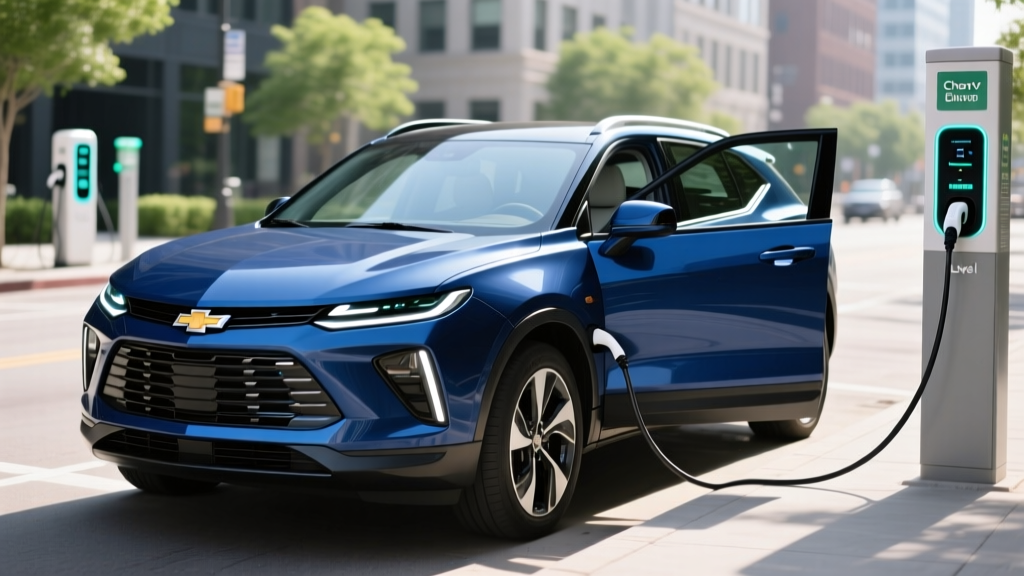
Charging performance is arguably just as important as total range, and the Blazer EV delivers respectable — though not class-leading — charging speeds. The vehicle supports DC fast charging at up to 190 kW on properly equipped models, which Chevrolet estimates can add approximately 78 miles of range in just 10 minutes under optimal conditions.
On a typical 150 kW DC fast charger — the kind commonly found along highway corridors and at shopping centers — the Blazer EV can charge from 10% to 80% in roughly 30 to 35 minutes. This is competitive with rivals like the Ford Mustang Mach-E and Volkswagen ID.4, though it falls short of the blistering 800-volt charging speeds offered by the Hyundai Ioniq 5 and Kia EV6, which can achieve 10% to 80% charges in under 20 minutes on compatible 350 kW chargers.
For Level 2 home charging, the Blazer EV supports up to 11.5 kW of AC charging when connected to a 48-amp home charger (such as a hardwired Level 2 wallbox). At this rate, a full charge from empty takes approximately 9 to 10 hours, making overnight charging convenient for most daily driving needs. Owners using a standard 240-volt outlet with a lower-amperage mobile connector will see longer charge times, typically around 12 to 14 hours for a full battery replenishment.
One significant advantage for Blazer EV owners is access to the Tesla Supercharger network. Thanks to GM's adoption of the North American Charging Standard (NACS) and adapter availability, Blazer EV drivers can tap into Tesla's vast and reliable Supercharger network, dramatically expanding the available fast-charging infrastructure for road trips. This is a major differentiator compared to EVs that remain limited to the CCS-only networks.
For a detailed breakdown of home charging setup options and costs, check out our complete home EV charging guide.
Interior, Technology & Comfort
Step inside the Blazer EV, and you're greeted by a cabin that blends modern EV aesthetics with Chevrolet's familiar design language. The centerpiece is a sweeping 17.7-inch diagonal infotainment touchscreen that dominates the center stack, angled slightly toward the driver for easier reach and visibility. A 11.0-inch digital instrument cluster sits behind the steering wheel, providing key driving data including range, speed, navigation, and driver-assistance information.
The infotainment system runs GM's latest software interface, which supports wireless Apple CarPlay and Android Auto, built-in Google services (including Google Maps navigation, Google Assistant voice control, and access to the Google Play Store for apps), and over-the-air software updates that can improve vehicle functionality without a dealership visit.
Material quality in the Blazer EV is generally good for the segment, with soft-touch surfaces on the upper dashboard and door panels, though some harder plastics appear on lower surfaces — a common trade-off in this price range. The available ventilated front seats, heated steering wheel, and panoramic-style fixed glass roof elevate the cabin experience on higher trims.
Passenger space is generous thanks to the EV platform's flat floor and optimized packaging. Front-seat occupants enjoy ample headroom and legroom, while rear-seat passengers benefit from comfortable seating for two adults on longer trips, though the sloping roofline slightly compromises headroom for taller riders. Cargo capacity behind the rear seats is competitive with the segment, and folding the rear seats flat opens up substantial hauling capability.
On the driver-assistance front, the Blazer EV comes equipped with Chevy's suite of active safety features, including automatic emergency braking, lane-keeping assist, adaptive cruise control, and rear cross-traffic alert. Available Super Cruise — GM's hands-free driving technology — is a standout feature that allows truly hands-free driving on hundreds of thousands of miles of compatible highways across North America. It remains one of the most refined and confidence-inspiring semi-autonomous systems available, and you can learn more in our best EVs with autonomous driving features roundup.
Driving Dynamics & Performance
The Blazer EV's driving character varies meaningfully depending on the configuration you choose, but across the lineup, the overarching impression is one of composed, comfortable cruising rather than outright sportiness.
The rear-wheel-drive models deliver smooth, linear acceleration that feels effortless in daily driving. Electric motors provide instant torque, and the Blazer EV leverages this to deliver confident passing power and quick off-the-line performance. The ride quality is well-damped, soaking up bumps and road imperfections with a maturity that makes it an excellent daily commuter and road-trip companion.
The all-wheel-drive variants add a second electric motor to the front axle, boosting total system output and providing improved traction in inclement weather. Acceleration is noticeably quicker, and the dual-motor setup gives the Blazer EV a planted, sure-footed feel through corners and on slippery surfaces.
At the top of the lineup, the Blazer EV SS is the performance flagship, boasting significantly more horsepower and the ability to sprint from 0 to 60 mph in approximately 4 seconds. The SS features a sport-tuned suspension, more aggressive steering calibration, and available performance braking hardware. While it can't quite match the raw acceleration of a Tesla Model Y Performance, it delivers a genuinely engaging driving experience that feels more athletic than the standard Blazer EV models.
One area where the Blazer EV shines is its regenerative braking system. Drivers can select from multiple levels of regen, including a one-pedal driving mode that allows the vehicle to come to a complete stop without touching the brake pedal in most situations. This feature reduces brake wear, maximizes energy recapture, and becomes second nature after a short adjustment period.
Steering feel is weighted appropriately for a comfort-oriented SUV, though enthusiasts may find it slightly numb compared to sportier rivals like the Ford Mustang Mach-E GT. Overall, the Blazer EV prioritizes ride comfort and daily livability, which will suit the majority of buyers in this segment. For more performance-focused alternatives, explore our fastest electric SUVs list.
Ownership Costs, Pricing & Value
The Chevy Blazer EV is positioned as a premium-but-accessible electric SUV, with pricing that generally starts in the mid-$40,000s for base 2LT trims and climbs to the low $60,000s for the SS when fully optioned. This places it squarely in competition with the Ford Mustang Mach-E, Hyundai Ioniq 5, and base variants of the Tesla Model Y.
When evaluating total cost of ownership, the Blazer EV benefits from several key advantages inherent to electric vehicles:
- Fuel savings: Electricity costs per mile are typically 40% to 60% lower than gasoline on a cost-per-mile basis, depending on local utility rates and driving patterns. Home charging on off-peak electricity rates maximizes these savings.
- Reduced maintenance: EVs have far fewer moving parts than internal combustion vehicles — no oil changes, no spark plugs, no transmission fluid flushes. Brake pad life is also extended thanks to regenerative braking.
- Tax credits and incentives: Depending on current federal, state, and local programs, Blazer EV buyers may qualify for significant purchase incentives that effectively reduce the vehicle's net cost. Always check the latest eligibility requirements, as these programs evolve regularly.
- Insurance considerations: EV insurance rates vary by provider, but the Blazer EV's strong safety ratings and GM's parts availability help keep premiums competitive with other EVs in its class.
Depreciation is an important factor for any vehicle purchase, and EVs have historically experienced steeper depreciation curves than some gasoline counterparts. However, as the EV market matures and consumer adoption accelerates, residual values for mainstream EVs like the Blazer EV are expected to stabilize. Chevrolet's battery warranty — typically covering 8 years or 100,000 miles — provides additional peace of mind for long-term ownership.
For a side-by-side look at how the Blazer EV compares in value against the competition, see our best value electric SUVs comparison.
Chevy Blazer EV vs. the Competition: Key Specs Comparison
The following table compares the Chevy Blazer EV against several of its most direct competitors in the midsize electric SUV segment. Specifications reflect the most range-oriented or comparable trims available.
| Specification | Chevy Blazer EV (RWD, Large Battery) | Ford Mustang Mach-E (Ext. Range RWD) | Hyundai Ioniq 5 (Long Range RWD) | Tesla Model Y (Long Range AWD) | Volkswagen ID.4 (Pro S RWD) |
|---|---|---|---|---|---|
| EPA Est. Range | ~320 miles | ~310 miles | ~303 miles | ~330 miles | ~275 miles |
| Max DC Fast Charge Rate | 190 kW | 150 kW | 240 kW (800V) | 250 kW | 175 kW |
| 10-80% DC Fast Charge Time | ~30-35 min | ~35-40 min | ~18 min (350 kW) | ~25-30 min | ~30-35 min |
| Level 2 AC Charging (Max) | 11.5 kW | 10.5 kW | 10.9 kW | 11.5 kW | 11 kW |
| 0-60 mph (Best Available) | ~4.0 sec (SS) | ~3.5 sec (GT) | ~5.0 sec (AWD) | ~3.5 sec (Perf.) | ~5.4 sec (AWD) |
| Cargo Volume (Behind Rear Seats) | ~27 cu ft | ~29 cu ft | ~27 cu ft | ~30 cu ft | ~30 cu ft |
| Hands-Free Driving Assist | Super Cruise (available) | BlueCruise (available) | Not available | Autopilot / FSD (available) | Travel Assist (w/ hands-on) |
| Starting MSRP (approx.) | Mid-$40,000s | Low-$40,000s | Low-$40,000s | Mid-$40,000s | Low-$40,000s |
As the table illustrates, the Blazer EV holds its ground across most metrics. Its standout advantages include the available Super Cruise system, strong maximum range, and access to the Tesla Supercharger network. Where it trails slightly is in peak DC fast-charging speed compared to 800-volt rivals like the Ioniq 5. For a deeper dive into these matchups, read our Blazer EV vs. Model Y head-to-head comparison.
Pros & Cons
Here's a quick summary of the Blazer EV's greatest strengths and most notable weaknesses based on our evaluation:
Pros
- Strong maximum range: Up to ~320 miles EPA in the best configuration puts it among the leaders in the segment.
- Super Cruise availability: GM's hands-free driving technology is one of the best semi-autonomous systems on the market.
- Tesla Supercharger access: Expands fast-charging options significantly for road trips and daily use.
- Comfortable ride quality: Well-damped suspension and quiet cabin make it an excellent daily driver and long-distance cruiser.
- Modern interior technology: Large infotainment screen with wireless phone integration and built-in Google services.
- Multiple drivetrain options: FWD, RWD, and AWD configurations let buyers tailor the vehicle to their priorities.
- Competitive warranty: 8-year/100,000-mile battery coverage provides long-term confidence.
Cons
- Charging speed isn't class-leading: 190 kW peak rate trails 800-volt competitors capable of 240+ kW charging.
- Cargo space is average: Slightly less room behind the rear seats than some rivals like the Model Y and ID.4.
- Steering feel could be sportier: Enthusiasts may find the steering less engaging than the Mustang Mach-E.
- Cold weather range loss: Like all EVs, expect notable range reduction in freezing temperatures.
- Rear headroom: The sloping roofline can feel tight for taller rear-seat passengers.
Frequently Asked Questions
What is the real-world range of the Chevy Blazer EV?
In mixed driving conditions with moderate temperatures, the Blazer EV with the larger battery and rear-wheel drive typically achieves between 290 and 310 miles of real-world range. Highway-heavy driving at high speeds may reduce this to around 260 to 280 miles, while cold weather can reduce range by 15% to 25%. These figures are broadly consistent with the vehicle's EPA estimates and competitive with other midsize electric SUVs.
How long does it take to charge the Chevy Blazer EV at home?
Using a Level 2 home charger rated at 48 amps (11.5 kW), the Blazer EV can charge from empty to full in approximately 9 to 10 hours. This makes overnight charging ideal — plug in when you get home and wake up to a full battery every morning. On a standard 240-volt outlet with a lower-amperage mobile connector, expect 12 to 14 hours for a full charge.
Can the Chevy Blazer EV use Tesla Superchargers?
Yes. Thanks to GM's adoption of the North American Charging Standard (NACS), Blazer EV owners can access Tesla's Supercharger network using an adapter. This dramatically expands the available fast-charging infrastructure, particularly for long road trips where Tesla's network offers superior coverage and reliability compared to some third-party CCS networks.
Is the Chevy Blazer EV good for road trips?
The Blazer EV is a solid road-trip companion thanks to its comfortable ride, quiet cabin, strong range, and access to multiple fast-charging networks including Tesla Superchargers. With approximately 320 miles of range and the ability to add 78 miles of range in 10 minutes on a DC fast charger, most road trips require only brief charging stops. Available Super Cruise further reduces fatigue on long highway stretches.
How does the Blazer EV compare to the Tesla Model Y?
The Blazer EV and Model Y are closely matched competitors. The Model Y offers slightly more range, faster charging, and more cargo space, while the Blazer EV counters with a more comfortable ride, available Super Cruise hands-free driving, a more traditional SUV design, and a generally more intuitive build quality. Your preference will likely come down to whether you prioritize Tesla's software ecosystem and charging network (though the Blazer EV now accesses Superchargers too) or Chevy's comfort-focused driving experience and hands-free tech. See our full Blazer EV vs. Model Y comparison for more details.
Final Verdict
The Chevy Blazer EV is a well-rounded electric SUV that delivers where it counts: competitive range, a comfortable and tech-forward cabin, flexible drivetrain options, and access to one of the best charging networks available. While it doesn't lead the segment in every single metric — particularly when it comes to peak charging speed — it offers a compelling overall package that will satisfy a wide range of buyers transitioning from gasoline to electric.
If you value ride comfort, hands-free driving technology, and the flexibility of multiple range and drivetrain configurations, the Blazer EV deserves serious consideration. It's a strong entry in the midsize electric SUV segment and a worthy addition to any EV shopping list. Browse our complete collection of electric vehicle reviews for more in-depth analysis and comparisons.