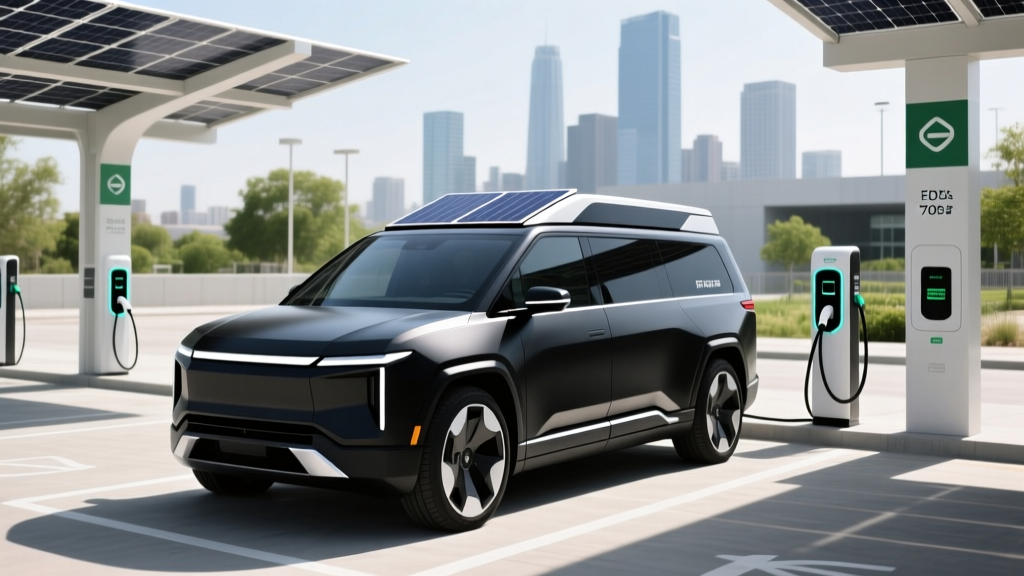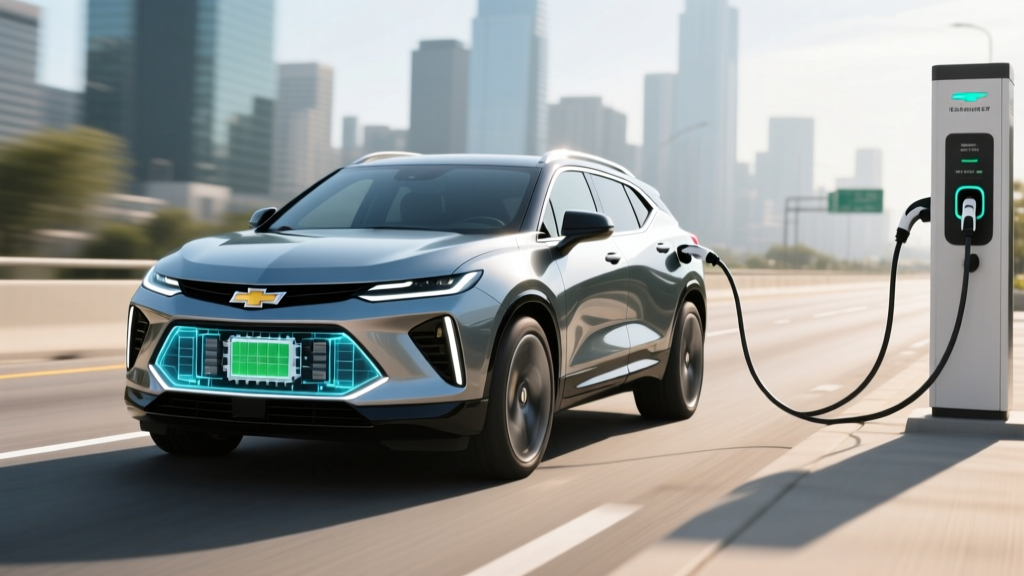
The Chevrolet Blazer EV occupies an unusual space in the midsize electric crossover segment. It is not the longest-range option, nor the quickest to charge, but it pairs a roomy cabin with a performance variant—the SS trim—that posts genuinely quick acceleration for the class. If you have landed on this page searching for the Chevy Blazer EV 0-60 time, the short answer is that it depends heavily on which trim you choose: the dual-motor SS cuts the sprint to around 4.0 seconds, while the volume-selling RS and LT models run closer to the mid-to-high seven-second range. This review breaks down every trim's performance, range, charging behavior, pricing, and federal tax credit eligibility so you can decide whether the Blazer EV fits your garage.
2026 Chevy Blazer EV at a Glance: Specs by Trim
Chevrolet restructured the Blazer EV lineup for the 2026 model year, dropping the troubled launch-year 2LT and simplifying trims around the LT, RS, and SS badges. Below is the consolidated spec sheet based on current manufacturer data and EPA filings.
| Spec | LT (RWD) | RS (AWD) | SS (AWD) |
|---|---|---|---|
| Drivetrain | Rear-Wheel Drive | Dual-Motor AWD | Dual-Motor AWD (Performance) |
| Horsepower | ~340 hp | ~340 hp | ~557 hp (Wide Open Watts) |
| Torque (lb-ft) | ~325 | ~325 | ~648 |
| 0-60 mph | ~7.8 sec | ~7.5 sec | ~4.0 sec |
| Battery (usable, kWh) | ~102 kWh (NMC) | ~102 kWh (NMC) | ~102 kWh (NMC) |
| EPA Range | ~324 mi | ~283 mi | ~279 mi |
| MPGe (combined) | ~89 MPGe | ~82 MPGe | ~78 MPGe |
| Max DC Fast Charge | ~190 kW | ~190 kW | ~190 kW |
| 10-80% DC Time | ~30 min | ~30 min | ~30 min |
| Level 2 Home Charge | 11.5 kW (~34 mi/hr) | 11.5 kW (~34 mi/hr) | 11.5 kW (~34 mi/hr) |
| Base MSRP | $44,600 | $48,600 | $62,800 |
Performance Deep Dive: Chevy Blazer EV 0-60 and Driving Dynamics
The headline number for performance seekers is the SS trim's 0-60 mph time of approximately 4.0 seconds when Wide Open Watts (WOW) mode is engaged. This is Chevy's launch-control-style feature that temporarily unlocks the full 557 horsepower and 648 lb-ft of torque from the dual-motor powertrain. In real-world driving, WOW mode delivers a hard, linear shove off the line that will surprise passengers accustomed to conventional crossovers. It slots the Blazer EV SS into territory occupied by the Tesla Model Y Performance (3.5 sec) and the Ford Mustang Mach-E GT (3.5 sec)—not quite as quick, but competitive for a heavier, more comfort-oriented vehicle.
Outside of WOW mode, the SS is still brisk at roughly 5.0-5.5 seconds to 60, which is where most daily driving will happen. The LT and RS trims, with around 340 hp on tap, feel adequate for merging and passing but never urgent. Their 0-60 times in the 7.5-7.8 second range are unremarkable but perfectly acceptable for family hauling.
Ride quality is where the Blazer EV differentiates itself from sportier rivals. The platform (GM's Ultium / BEV3 architecture) is tuned more for compliance than corner-carving. You get a quiet, well-damped ride that absorbs highway expansion joints and broken pavement without fuss. Steering is light and numb—this is a cruiser, not a canyon carver, even in SS guise.
Real-World Range vs. EPA Estimates
EPA range stickers tell only part of the story. Here is what to actually expect from each Blazer EV trim when you leave the dealership.
- LT RWD (EPA 324 mi): Expect ~275-290 mi on a highway-heavy road trip at 70-75 mph. City and suburban driving can push close to or above the EPA number thanks to regenerative braking. In cold weather (below 30°F), plan for 220-250 mi of usable range.
- RS AWD (EPA 283 mi): Highway real-world range drops to ~235-255 mi. Cold-weather driving may yield 190-220 mi. This is the most popular trim, and the range is adequate but not class-leading.
- SS AWD (EPA 279 mi): Similar to the RS in practice—roughly 230-250 mi highway. Aggressive driving in WOW mode will slash range further. Cold weather: 190-215 mi.
Note: The Blazer EV does not currently offer a heat pump on all trims (check your build sheet), which means cold-weather cabin heating draws directly from the traction battery and can reduce range by 25-35% in freezing temperatures.
The 102 kWh (usable) Ultium battery pack uses NMC (nickel manganese cobalt) chemistry, which offers strong energy density but requires more careful charging habits than LFP packs. Chevrolet recommends daily charging to 80-90% for routine use and saving 100% charges for road trips. Per fueleconomy.gov, the LT RWD achieves 89 MPGe combined, which is competitive with the Hyundai Ioniq 5 and slightly behind the Tesla Model Y Long Range.
Charging Speeds: DC Fast Charging and Home Level 2
Charging speed is often more important than total range for road-trip comfort. The Blazer EV peaks at approximately 190 kW on a DC fast charger. That is respectable but not class-leading—the Hyundai Ioniq 5 and Kia EV6 can sustain 230+ kW thanks to their 800V architectures, and the Tesla Model Y peaks around 250 kW on V3 Superchargers.
| Charging Method | Power / Rate | What You Get |
|---|---|---|
| Level 1 (120V household) | ~1.4 kW | ~3-4 miles of range per hour |
| Level 2 (240V home, 48A) | 11.5 kW | ~34 miles of range per hour; full charge in ~9-10 hours |
| DC Fast Charge (peak) | ~190 kW | 10-80% in ~30 minutes; ~150 mi added in 15 min at peak |
| DC Fast Charge (sustained avg) | ~120-140 kW | Average rate across the 10-80% window due to charge-curve taper |
Understanding the charge curve: The Blazer EV hits its 190 kW peak only at a low state of charge (roughly 10-25% SoC) on a capable 350 kW charger. Above 50% SoC, the rate tapers significantly, and above 80% it drops to roughly 40-50 kW. This is standard behavior for NMC chemistry but worth understanding: if you arrive at a charger at 30% SoC, your average rate will be lower than 190 kW, and a 30-80% session will take roughly 25-28 minutes rather than the 20 minutes a peak-rate calculation might suggest.
For home charging, the 11.5 kW onboard charger is a strong point. With a professionally installed 48-amp Level 2 station (requiring a 60-amp circuit), you can replenish roughly 34 miles of range per hour—enough to fully recharge overnight even after a near-empty battery. Most owners will wake up to a full charge every morning, which eliminates daily range concerns entirely.
Interior, Cargo, and Technology
The Blazer EV's cabin is one of its strongest selling points relative to compact EV rivals. This is a genuine midsize crossover with room for five adults and substantial cargo capacity.
Passenger space: Front legroom measures approximately 43.1 inches, and rear legroom comes in at 38.4 inches—generous for the segment and noticeably more accommodating than the Tesla Model Y's rear seat. Headroom is ample front and rear, aided by the flat floor that the Ultium platform enables.
Cargo volume: You get roughly 27.7 cubic feet behind the second row and up to 55.1 cubic feet with the rear seats folded. There is no front trunk (frunk)—a missed opportunity given the platform's architecture, and a disadvantage versus the Ford Mustang Mach-E (which offers a small frunk) and the Rivian R1S.
Infotainment: The centerpiece is a 17.7-inch diagonal touchscreen running Google Built-In, which includes native Google Maps navigation, Google Assistant voice commands, and access to the Play Store for apps. A 11.0-inch digital instrument cluster sits behind the steering wheel. Wireless Apple CarPlay and Android Auto are standard. The system is responsive and well-organized, though the heavy reliance on touchscreen controls (climate settings are embedded in the screen) can be distracting while driving.
Driver assistance: Chevy's Super Cruise—GM's hands-free highway driving system—is available on the RS and SS trims. Super Cruise is a SAE Level 2 system, meaning the driver must remain attentive and ready to take over at any time. It works on over 750,000 miles of mapped divided highways in the U.S. and Canada, using a driver-monitoring camera to ensure your eyes remain on the road. It is one of the best-executed Level 2 systems available, with smooth lane-keeping and confident adaptive cruise behavior, but it is not autonomous driving.
Pricing, Trims, and Federal Tax Credit Eligibility
The 2026 Blazer EV lineup starts at $44,600 for the LT RWD and climbs to $62,800 for the SS. Options packages (including the Super Cruise subscription, premium audio, and panoramic sunroof) can add $3,000-$6,000 to the as-tested price.
| Trim | Base MSRP | Est. As-Tested | §30D Credit Eligibility |
|---|---|---|---|
| LT RWD | $44,600 | $46,000-$49,000 | Eligible (up to $7,500, subject to sourcing/income rules) |
| RS AWD | $48,600 | $51,000-$55,000 | Eligible (up to $7,500, subject to sourcing/income rules) |
| SS AWD | $62,800 | $65,000-$69,000 | Eligible (SUV MSRP cap is $80,000; subject to sourcing/income rules) |
Federal tax credit rules (§30D): As of 2026, the IRS allows a credit of up to $7,500 for qualifying new EVs, but eligibility depends on several conditions that buyers must verify individually:
- MSRP cap: The vehicle must have an MSRP at or below $80,000 for SUVs (the Blazer EV qualifies across all trims).
- Buyer income cap: Modified adjusted gross income must not exceed $150,000 (single), $225,000 (head of household), or $300,000 (married filing jointly).
- Battery sourcing: The $7,500 credit is split into two halves—$3,750 for critical minerals sourcing and $3,750 for battery component manufacturing. Sourcing requirements tighten annually; check IRS.gov for the current-year qualifying list before purchase.
- Point-of-sale transfer: Buyers can transfer the credit to the dealer at purchase, reducing the sale price directly rather than waiting to claim it on their tax return.
- VIN verification: Confirm the specific vehicle's battery sourcing status on fueleconomy.gov before signing.
Important: Tax credit eligibility can change with updated Treasury guidance. Always verify with a tax professional and the official IRS clean vehicle credit page before finalizing a purchase.
Warranty and Long-Term Ownership
Chevrolet backs the Blazer EV with competitive warranty coverage:
- Battery warranty: 8 years / 100,000 miles (whichever comes first), covering defects and excessive capacity loss. GM defines excessive loss as falling below approximately 60-70% of original capacity during the warranty period, though exact retention thresholds should be confirmed in your purchase documentation.
- Powertrain warranty: 5 years / 60,000 miles for electric drive components.
- Bumper-to-bumper: 3 years / 36,000 miles.
- Roadside assistance: 5 years / 60,000 miles.
Long-term battery degradation for the Ultium platform remains to be fully established, as the Blazer EV is still relatively early in its lifecycle. However, GM's NMC cells with active liquid thermal management are expected to follow industry norms of roughly 10-15% capacity loss over 150,000-200,000 miles under normal use patterns. Avoid habitual DC fast charging to 100% and routine deep discharges below 10% to maximize longevity.
Blazer EV vs. the Competition
How does the Blazer EV measure up against the midsize electric crossover field? Here is a quick competitive snapshot:
| Attribute | Chevy Blazer EV SS | Tesla Model Y LR | Hyundai Ioniq 5 (Long Range AWD) | Ford Mach-E GT |
|---|---|---|---|---|
| EPA Range | 279 mi | 320 mi | 290 mi | 280 mi |
| 0-60 mph | ~4.0 sec | ~4.8 sec | ~5.1 sec | ~3.5 sec |
| Peak DC Charge | 190 kW | 250 kW | 240 kW | 150 kW |
| Rear Legroom | 38.4 in | 37.0 in | 39.4 in | 38.9 in |
| Starting Price | $62,800 | $48,990 | $50,550 | $57,995 |
| Hands-Free Driving | Super Cruise | Autopilot (L2) | None | BlueCruise |
The Blazer EV SS holds its own on acceleration and offers superior hands-free highway driving via Super Cruise. It falls behind on DC charging speed (190 kW vs. the Ioniq 5's 240 kW) and on range (the Model Y Long Range remains the efficiency benchmark). The Blazer EV's advantage is ride comfort, cabin quietness, and a more traditional crossover driving position that appeals to buyers transitioning from gas vehicles.
- SS trim delivers genuine 4.0-second 0-60 performance
- Spacious cabin with excellent rear legroom (38.4 in)
- Super Cruise is a top-tier Level 2 hands-free system
- Quiet, comfortable ride quality for long highway drives
- All trims qualify under the $80K SUV MSRP cap for §30D credit
- Strong 11.5 kW Level 2 home charging rate
- 190 kW peak DC charging lags behind Ioniq 5 and Model Y
- No front trunk (frunk) despite the dedicated EV platform
- SS trim is expensive at $62,800 before options
- Real-world highway range for AWD trims falls short of 300 mi
- No standard heat pump across all trims—cold-weather range penalty
- Touchscreen-only climate controls are distracting while driving
Who Should Buy the Chevy Blazer EV?
The Blazer EV is best suited for buyers who prioritize ride comfort, cabin space, and available hands-free highway driving over maximum range or the fastest charging times. If your typical week involves a mix of commuting, school runs, and the occasional 200-mile road trip, the RS AWD at ~$48,600 (potentially $41,100 after the full federal credit) is the value sweet spot. The SS trim is a justifiable splurge for enthusiasts who want a quick, comfortable daily driver that can still haul a family in relative silence.
If maximum range and the fastest possible DC charging are your top priorities, the Hyundai Ioniq 5 or Tesla Model Y are stronger choices. If you need three rows of seating, look at the Kia EV9 instead. But for a two-row midsize EV that balances comfort, tech, and punchy SS performance, the Blazer EV earns a solid spot on your shortlist.
Frequently Asked Questions
What is the Chevy Blazer EV 0-60 time for each trim?
The SS AWD trim achieves approximately 4.0 seconds to 60 mph using Wide Open Watts mode. The LT RWD and RS AWD trims run the sprint in roughly 7.5-7.8 seconds. The SS figure places it among the quickest midsize electric crossovers available.
What is the real-world range of the Chevy Blazer EV?
While the LT RWD carries an EPA rating of 324 miles, real-world highway driving at 70-75 mph typically yields 275-290 miles. The AWD RS and SS trims (EPA 283 and 279 mi respectively) deliver roughly 235-255 miles on the highway. Cold weather below 30°F can reduce all figures by 20-35%, depending on cabin heating demand and whether your trim includes a heat pump.
How fast does the Blazer EV charge at home and on the road?
On a DC fast charger, the Blazer EV peaks at approximately 190 kW and can charge from 10-80% in roughly 30 minutes. At home on a Level 2 (240V, 48-amp) charger, it accepts up to 11.5 kW, adding about 34 miles of range per hour and fully recharging overnight in about 9-10 hours.
Does the Chevy Blazer EV qualify for the $7,500 federal tax credit?
All 2026 Blazer EV trims fall under the $80,000 SUV MSRP cap, making them potentially eligible. However, the actual credit amount (up to $7,500) depends on battery-sourcing requirements that change annually, as well as your personal income falling below IRS thresholds ($150K single / $300K married filing jointly). Verify your specific vehicle's eligibility on IRS.gov and consult a tax professional before purchase. The credit can be transferred to the dealer as a point-of-sale discount.
Is the Blazer EV SS worth the premium over the RS?
The SS costs roughly $14,200 more than the RS and delivers 557 hp, a 4.0-second 0-60 time, and a sport-tuned suspension. If performance is a priority and the budget allows, the SS is genuinely thrilling for an electric crossover. For most buyers, the RS AWD at $48,600 offers a better balance of range, price, and daily usability, especially after applying the federal tax credit.
How does Super Cruise compare to Tesla Autopilot or Ford BlueCruise?
Super Cruise allows true hands-free driving on mapped divided highways (750,000+ miles of coverage), using a driver-monitoring camera to ensure eye attention. Tesla's Autopilot (Level 2) requires hands on the wheel (detected via torque sensing). Ford's BlueCruise also allows hands-free operation on approved highway segments. In independent evaluations, Super Cruise and BlueCruise tend to feel more confident and smooth in lane-keeping than base Autopilot, though Tesla's system covers a broader range of road types. All three are Level 2 systems requiring full driver attention.