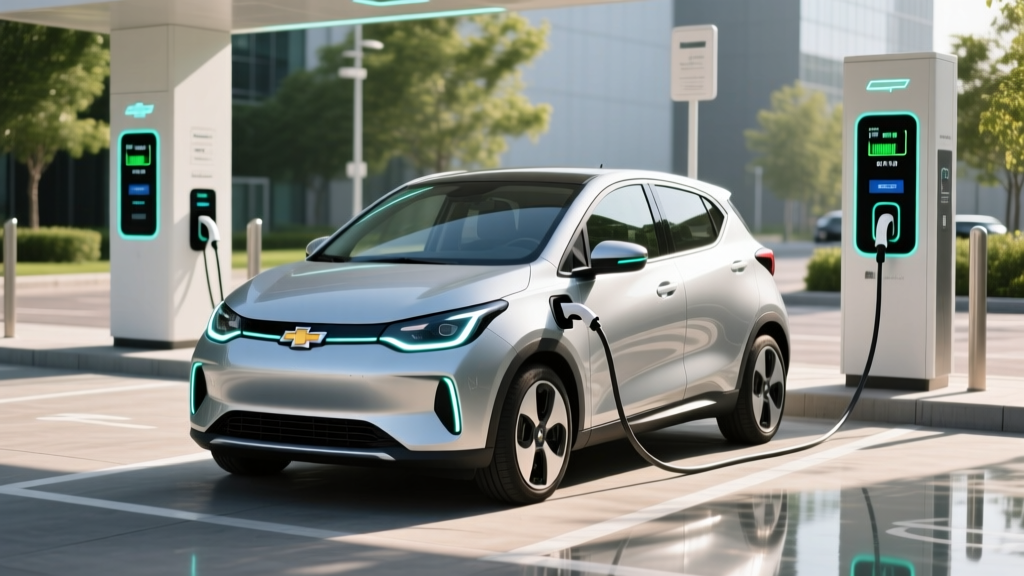
The quick answer: The Chevrolet Spark EV was a battery-electric subcompact produced from 2013 to 2016. It is not available as a new vehicle in 2026, and Chevrolet has no announced plans to revive the nameplate as an EV. If you're searching for a "Chevrolet Spark electric car" today, your only option is the used market, where Spark EVs typically sell for $5,000–$9,000 depending on battery condition, mileage, and trim. With an EPA-estimated range of just 82 miles (2014–2016 models) and a 21 kWh battery, the Spark EV is best suited as a short-commute city runabout — not a primary vehicle for most buyers.
What Was the Chevrolet Spark EV? A Spec Breakdown
Chevrolet introduced the Spark EV for the 2013 model year as a compliance car — a battery-electric vehicle produced in limited volumes to satisfy California's Zero Emission Vehicle (ZEV) mandate. It was sold primarily in California and Oregon, with limited availability elsewhere. Production ended after the 2016 model year, replaced in Chevrolet's EV lineup by the Bolt EV (2017–2023) and eventually the Equinox EV and Blazer EV.
| Specification | 2013 Spark EV | 2014–2016 Spark EV |
|---|---|---|
| EPA Range | 82 miles | 82 miles |
| Battery Capacity (usable) | ~21.3 kWh | ~19 kWh (LG Chem) |
| Battery Chemistry | NMC (nickel-manganese-cobalt) | NMC (LG Chem cells) |
| Motor Output | 114 hp / 400 lb-ft torque | 143 hp / 327 lb-ft torque |
| 0–60 mph | ~7.6 seconds | ~7.2 seconds |
| DC Fast Charge (max) | ~80 kW (CCS) | ~80 kW (CCS) |
| Level 2 Charge Rate | ~3.3 kW | ~3.3 kW |
| EPA Efficiency | 119 MPGe | 119 MPGe |
| Original MSRP | ~$27,495 (before incentives) | ~$27,495 (before incentives) |
| Battery Warranty (original) | 8 years / 100,000 miles | 8 years / 100,000 miles |
Real-world range reality: The EPA sticker says 82 miles, but expect closer to 65–75 miles on the highway at sustained speeds above 65 mph, and potentially 50–60 miles in cold weather (below 30°F) due to battery chemistry limitations and cabin heating demands. The Spark EV lacks a heat pump, relying on resistive heating that draws heavily from its small battery.
Used Spark EV in 2026: Pricing and What to Expect
As of early 2026, used Chevrolet Spark EVs appear on the market intermittently. Here's what the pricing landscape looks like:
- Low-mileage, good battery SoH (below 60k miles): $7,500–$9,000
- Mid-range (60k–90k miles, moderate degradation): $5,500–$7,500
- High-mileage or degraded battery (90k+ miles): $4,000–$5,500
The critical factor is battery State of Health (SoH). A 2014 Spark EV is now roughly 12 years old. NMC cells from this era typically retain 75–85% of original capacity at the 10-year mark, though this varies significantly based on climate exposure, charging habits, and whether the car was regularly DC fast-charged to 100%.
At 80% SoH, your usable battery drops to roughly 15.2 kWh, translating to about 65 miles of real-world range in moderate weather. This makes the Spark EV a viable second car for short errands but impractical as a sole vehicle for most households.
Spark EV vs. Gas Spark vs. Modern Budget EVs
To put the Spark EV in context, let's compare it against the gas-powered Spark (sold through 2022) and a modern budget EV option available on the used market.
| Metric | Spark EV (2014–2016) | Gas Spark (2016) | Used Bolt EV (2017–2019) |
|---|---|---|---|
| Used Price (2026) | $5,000–$9,000 | $6,000–$10,000 | $10,000–$15,000 |
| Range | 82 mi (EPA) / ~65 mi real | ~275 mi (9 gal tank) | 238 mi (EPA) |
| Fuel/Energy Cost per Mile | ~$0.04 (home charging) | ~$0.14 (gasoline) | ~$0.04 (home charging) |
| Annual Fuel Savings (12k mi/yr) | ~$1,200 vs. gas Spark | Baseline | ~$1,200 vs. gas Spark |
| Maintenance Cost (annual est.) | ~$300 | ~$600 | ~$300 |
| Charging Infrastructure Needed | Yes (Level 2 recommended) | No | Yes (Level 2 recommended) |
| DC Fast Charging | Yes (~80 kW CCS) | N/A | Yes (~55 kW CCS) |
The Spark EV's low operating cost is its strongest argument. At $0.04/mile with home electricity (national average ~$0.16/kWh), a 12,000-mile year costs roughly $480 in energy versus $1,680 in gasoline for the gas Spark at $3.50/gallon and 30 MPG combined. That's a $1,200 annual savings — meaningful on a tight budget.
However, the used Bolt EV offers nearly triple the range for roughly $3,000–$5,000 more, making it a far more versatile daily driver for most buyers.
Real Costs of Owning a Used Spark EV
| Cost Category | Spark EV (Annual Est.) | Gas Spark (Annual Est.) |
|---|---|---|
| Energy/Fuel (12k mi/yr) | $480 | $1,680 |
| Insurance | $900–$1,200 | $800–$1,100 |
| Maintenance | $250–$400 | $500–$700 |
| Home Charging Setup (amortized) | $200–$400/yr (over 5 yrs) | $0 |
| Registration (varies by state) | $100–$200 (some states add EV fees) | $100–$150 |
| Total Annual Cost | $1,930–$2,680 | $3,080–$3,630 |
Home charging installation is a real consideration. A Level 2 (240V) home charger installation typically runs $800–$2,000 depending on your electrical panel's capacity and the distance from panel to garage. With the Spark EV's 3.3 kW onboard charger, even a basic 16-amp Level 2 unit delivers a full charge in roughly 6 hours — adequate for overnight replenishment.
If you lack home charging access (apartment, street parking), the Spark EV's 80 kW DC fast-charging capability can add about 50 miles in 20 minutes, but relying on public charging erodes the cost advantage significantly, with public DC rates often $0.30–$0.48/kWh.
Common Misconceptions About the Spark EV
| Myth | Fact |
|---|---|
| "Chevy still makes a Spark electric car" | Production ended in 2016. No new Spark EV exists for 2026. |
| "The Spark EV qualifies for the $7,500 federal tax credit" | The §30D credit applies to new EV purchases only. Used EVs may qualify for up to $4,000 under the pre-owned EV credit (30% of sale price, capped at $4,000), subject to income limits and dealer requirements per IRS rules. |
| "82 miles of range is enough for anyone" | The average American drives ~37 miles/day per DOT data, but cold weather, highway driving, and battery degradation can cut real range to 50–60 miles — creating genuine range limitations for many use cases. |
| "EV batteries need expensive replacement at 100k miles" | NMC batteries from this era typically retain 70–85% capacity at 100k miles. A full replacement, if needed, runs $5,000–$8,000 — often exceeding the car's value. However, many Spark EVs are still running on original packs. |
| "It charges just as fast as modern EVs" | The Spark EV's ~80 kW peak DC rate was competitive in 2014. Modern EVs charge at 150–350 kW. The Spark EV's small battery also means the charge curve tapers early, and sustained rates are well below peak. |
Who Should (and Shouldn't) Buy a Used Spark EV
Buy a used Spark EV if:
- You need a sub-$8,000 second car for a short commute (under 30 miles round-trip)
- You have reliable home charging (garage or driveway with 240V access)
- You live in a mild climate (rarely below 30°F) where cold-weather range loss is minimal
- You want the lowest possible per-mile operating cost for city driving
- You understand the battery is aging and range will continue to decline
Look elsewhere if:
- This will be your only vehicle — 82 miles (or less) of range is too restrictive as a sole car
- You lack home charging and would rely on public infrastructure
- You regularly drive in cold climates where range drops 25–35%
- You need to carry more than two passengers or any meaningful cargo
- You want modern safety features (the Spark EV lacks automatic emergency braking, lane-keeping, and adaptive cruise)
Frequently Asked Questions
Is there a 2026 Chevrolet Spark EV?
No. Chevrolet discontinued the Spark EV after the 2016 model year and has not announced any plans to revive it. The Spark nameplate itself was retired after the 2022 model year for the gasoline version. Chevrolet's current affordable EV offerings include the Equinox EV (starting around $33,000) and the upcoming next-generation Bolt.
Can I get a tax credit on a used Spark EV?
Possibly. Under the IRS pre-owned clean vehicle credit, you may qualify for 30% of the sale price up to $4,000, provided: the vehicle is purchased from a licensed dealer, your modified adjusted gross income is below $75,000 (single) or $150,000 (joint), and the vehicle's MSRP when new did not exceed $25,000 (the Spark EV's original MSRP was ~$27,495, which may disqualify it). Consult a tax professional for your specific situation.
How long will a used Spark EV battery last?
The original 8-year/100,000-mile battery warranty has expired on all Spark EVs as of 2024. Based on NMC degradation data from this generation, expect 75–85% State of Health at 10 years. Battery replacement costs $5,000–$8,000 if needed — often uneconomical given the car's value. Before buying, request a battery health diagnostic or use an OBD-II tool to check SoH.
How does the Spark EV compare to a modern cheap EV like the Nissan Leaf?
A used 2018–2020 Nissan Leaf (40 kWh, 150-mile EPA range) typically sells for $10,000–$14,000 and offers nearly double the range with a more modern interior and available safety tech. The Spark EV is cheaper upfront but far more range-limited. For most buyers, the extra $3,000–$5,000 for a used Leaf or Bolt EV delivers significantly more daily usability.
What should I check before buying a used Spark EV?
Prioritize: (1) Battery State of Health — have a dealer or EV-savvy mechanic run a diagnostic; (2) Charging port and CCS connector condition; (3) Service history for any battery-related warranty claims; (4) Tire condition (EVs wear tires faster due to instant torque); (5) 12V auxiliary battery age — a dead 12V battery will prevent the car from starting even if the traction battery is full.